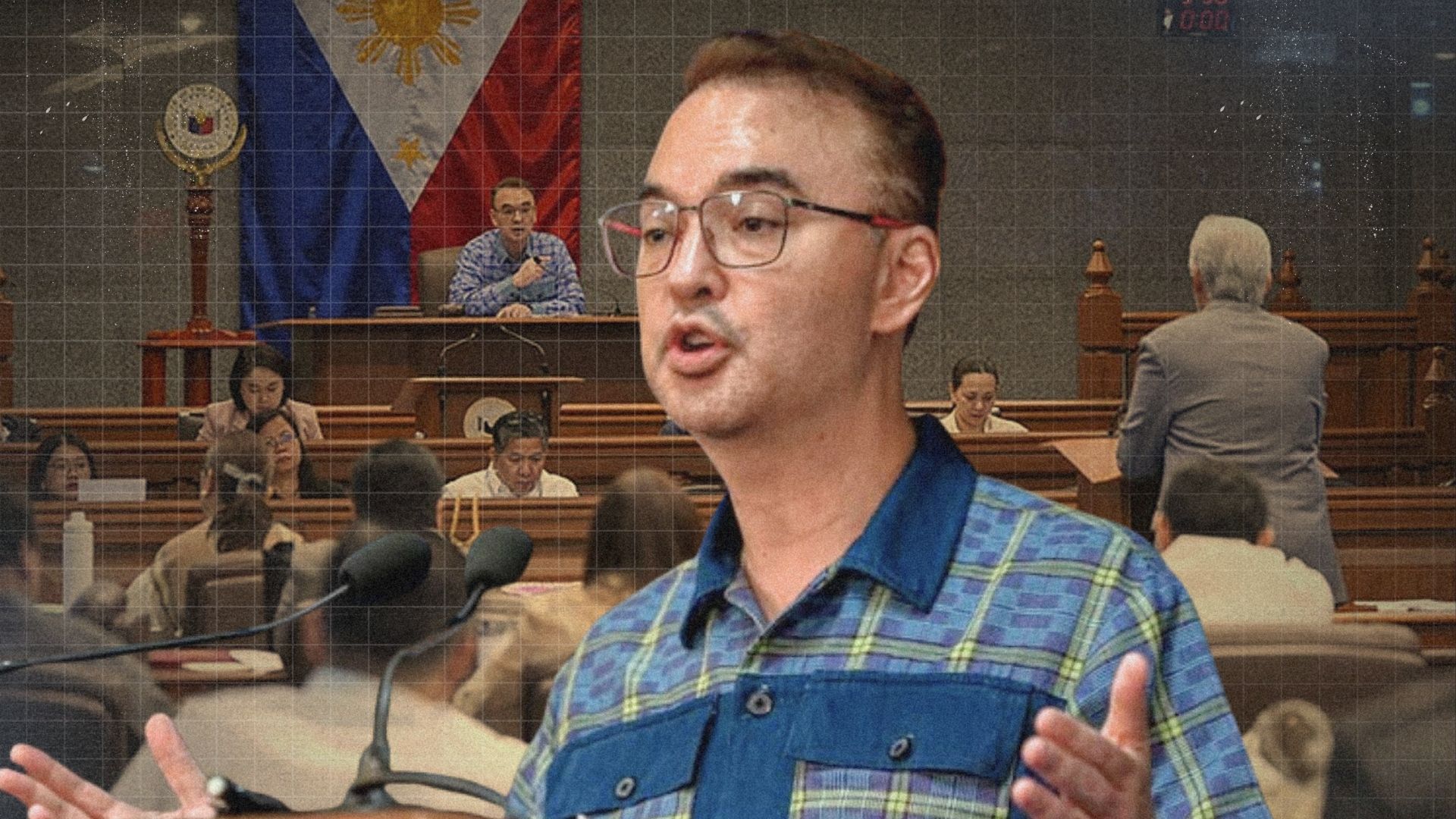
“Alan Cayetano Draws Line on Charter Change Pressure”
“‘Hindi Kami Magpapadikta’” — Alan Cayetano Warns Against Pressure on Constitutional Change
Fresh political discussions erupted online after Alan Peter Cayetano issued a strong statement regarding Senate independence, political pressure, and proposals involving Charter change or constitutional amendments.
In a statement released through his office, Cayetano emphasized that the Senate remains open to cooperation with different sectors — but only if collaboration is grounded on what is right and beneficial for the country.
One line in particular immediately exploded online:
“Pero ’yung hahawakan n’yo kami sa leeg o didiktahan, especially kung papunta tayo sa changing the Constitution, malabo kaming sumama.”
That remark quickly triggered intense reactions because constitutional change — commonly referred to as “Cha-Cha” — remains one of the most politically sensitive issues in Philippine politics.
Supporters of Cayetano praised the statement as a defense of Senate independence and institutional integrity.
Critics, however, questioned whether the remarks were directed toward specific political groups or reflected deeper tensions behind ongoing political realignments.
And once again, the issue expanded beyond policy into a broader conversation about power and influence.
Here’s what this really means…
This controversy is not simply about constitutional amendments.
It is about control.
For many Filipinos, the fear surrounding Charter change has always been tied to one core concern:
Who benefits politically if the Constitution changes?
That question immediately makes any discussion involving Cha-Cha emotionally charged.
Cayetano’s remarks resonated because they framed the Senate not merely as a legislative body, but as an institution that must resist pressure and preserve independence during politically sensitive discussions.
That message carries significant political symbolism.
Especially during a period where public trust in institutions remains deeply divided and political maneuvering is constantly scrutinized online.
The phrase “hahawakan sa leeg” especially struck many Filipinos because it paints a vivid image of coercion and political control.
And in Philippine politics, where allegations of pressure, influence, and backroom negotiations frequently dominate public discourse, that imagery quickly spread online.
This raises a bigger issue…
Has public distrust toward political motives surrounding Charter change become too deep to overcome?
Because historically, Cha-Cha discussions in the Philippines have repeatedly triggered fears involving term extensions, concentration of power, or elite political advantage.
Even when proposals are framed around economic reform or governance improvements, skepticism often remains strong.
That skepticism explains why Cayetano’s statement immediately gained traction.
For supporters, the message sounded like resistance against political bullying.
For critics, it sounded like another sign of growing fractures and distrust within the political establishment itself.
Either way, the emotional reaction revealed how sensitive constitutional discussions remain nationwide.
The controversy also highlights another reality:
Filipinos increasingly expect institutions to demonstrate independence publicly — not only privately.
Citizens want reassurance that decisions involving the Constitution are not being shaped through intimidation or political leverage.
That expectation has become even stronger in the age of viral political commentary and social media scrutiny.
What also makes the issue politically explosive is timing.
The country is already experiencing heightened political tension involving impeachment issues, Senate bloc movements, ICC-related controversies, and growing polarization.
Within that climate, even indirect references to constitutional change immediately become politically loaded.
And because the Constitution represents the foundation of national governance itself, discussions surrounding it naturally trigger emotional public reactions.
Why this matters…
Constitutional change affects far more than politicians.
It shapes the future structure of power, governance, and democratic accountability itself.
That is why citizens react strongly whenever leaders discuss Cha-Cha, Senate independence, or political pressure.
People want assurance that institutions remain guided by principle rather than coercion.
Whether one agrees with Cayetano’s position or not, his statement clearly touched a national concern many Filipinos still carry:
That the Constitution should never be changed through fear, pressure, or political manipulation.
And in today’s political climate, that concern remains extraordinarily powerful.
Exegesis Bible Verse
Proverbs 29:25
“The fear of man bringeth a snare: but whoso putteth his trust in the Lord shall be safe.”
Reflection
Leadership requires courage to stand firm on principles despite pressure or influence. Scripture reminds leaders and institutions that decisions affecting the people should be guided by truth and wisdom rather than fear or coercion.
Mainit ang Salita, Mas Mainit ang Mata ng Bayan: Ang Hamon sa Senado ngayong 2026
January 03, 2026•1 min read
Sa pagsisimula ng unang linggo ng Enero, muling umalingawngaw sa Senado ang pamilyar na panata: lalabanan ang katiwalian, bubusisiin ang badyet, at papanagutin ang may sala. Sa pangunguna ni Panfilo Lacson, muling ipinahayag na panahon na raw para “painitin” ang kampanya kontra korapsyon.

Sa papel, matapang ang pananalita. Sa entablado, matikas ang tindig. Ngunit sa mata ng taumbayan, iisa ang tanong: hanggang saan ang init—at may susunod bang apoy?
Ginamit ang simbolismo ng paparating na Year of the Fire Horse—isang imahe ng tapang, bilis, at matinding determinasyon. Ngunit sa politika, ang apoy ay may dalawang mukha: maaari itong magbigay-liwanag, o magsilbing usok na panakip sa katotohanan.
Ang Senado ay muling nasa sentro ng usapan dahil sa masusing pagtalakay sa badyet, mga “ghost projects,” at mga butas sa implementasyon. Sa nakaraang mga taon, naging pamilyar na ang mga salitang oversight, safeguards, at transparency. Ngunit ang mas pamilyar sa taumbayan ay ang pakiramdam na paulit-ulit na lang ang script.
Sa AGILA SATIRE lens, malinaw ang eksena:
May mga talumpating matatalim sa mikropono
May mga pangakong palaging “ngayon na”
At may mamamayang mas gising, mas mapanuri, at mas hindi madaling palusutin
Hindi na raw bulag ang bayan. Hindi na rin tahimik. Ang tanong ngayon: handa ba ang Senado na sabayan ang init ng galit ng publiko, o hanggang salita lang ang apoy?
📖 “For nothing is hidden that will not be made manifest.” — Luke 8:17
Sa dulo, ang tunay na laban kontra korapsyon ay hindi nasusukat sa decibel ng talumpati, kundi sa bigat ng resulta. Ang agila ay hindi kailangang sumigaw—kita ang galaw nito sa taas.