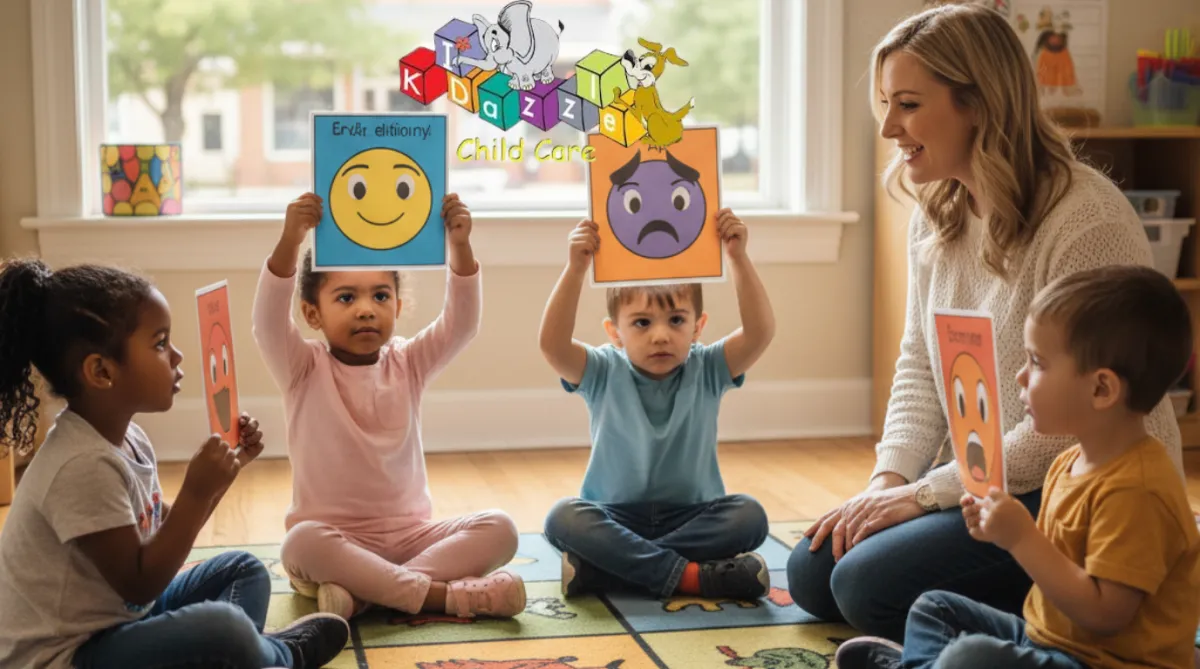
Kidazzle Hampton: Teaching Emotional Intelligence to Kids
Heartfelt Learning in a Small Town: How Kidazzle Hampton Teaches Emotional Intelligence
In Hampton, Georgia, community and connection are everything — and at Kidazzle Childcare Hampton, we bring that same warmth and care into every classroom.
Our teachers know that early learning isn’t just about counting or coloring inside the lines — it’s about helping children understand their feelings, build empathy, and express themselves confidently.
Emotional intelligence — or EQ — is the quiet strength that helps children make friends, solve problems, and feel secure in who they are. And at Kidazzle Hampton, it’s part of everything we do.
Why Emotional Intelligence Matters
Children experience big emotions long before they can put them into words.
By teaching emotional intelligence early, we give children tools to handle life’s challenges with confidence and care.
👉 According to American Psychological Association, emotional development in early childhood plays a critical role in long-term mental health and social success.
At Kidazzle Hampton, children learn to:
Recognize their feelings and name them out loud
Respect others’ emotions and respond with empathy
Build confidence in expressing needs and asking for help
Manage frustration through breathing and reflection
These early lessons shape not only calm classrooms — but compassionate futures.
Everyday Lessons in Emotional Growth
At Kidazzle, we integrate emotional learning into play and daily routines.
Morning Feelings Time: Children share how they feel using emotion cards or drawings.
Storytime with Heart: Books about kindness and courage spark conversations about how characters feel.
Friendship Games: Group play teaches sharing, patience, and cooperation.
Reflection Moments: Teachers encourage children to celebrate progress — “I waited my turn!” or “I helped a friend.”
By normalizing emotions, we help children see that all feelings — even tough ones — are part of learning and growing.
This approach aligns with research from Harvard Center on the Developing Child, which highlights how early emotional skills impact lifelong learning.
Community Connections that Shape Young Hearts
Hampton’s small-town businesses play a big role in helping families feel supported — and that community connection mirrors what we teach in class.
Russell’s Automotive Inc. on Woolsey Rd — keeping families safe for every school drive.
Wing Ranch Hampton and Waffle House on Bear Creek Blvd — favorite family spots for comfort food and conversation.
Foundation Chiropractic — helping parents and caregivers focus on wellness and balance.
Purified African Hair Braiding and Hampton Service Center — local staples that remind children what caring service looks like.
These small businesses reflect the values we teach every day — kindness, reliability, and respect.
Helping Parents Foster Emotional Intelligence at Home
Emotional growth doesn’t stop at the classroom door. Parents can nurture it at home through simple, consistent habits:
Model Calmness: Take a deep breath during frustration — your child learns emotional control by watching you.
Talk About Feelings: “You seem sad — do you want to tell me why?” builds vocabulary and trust.
Show Empathy: Ask, “How do you think your friend felt when that happened?”
Praise Effort, Not Just Outcome: “I’m proud you tried again even when it was hard.”
Continue reading: The Parenting Playbook: From Tantrums to Triumphs
The Kidazzle Hampton Difference
At Kidazzle Hampton, we blend early academics with heart-led learning.
Our small-town roots remind us that every child deserves to be seen, heard, and guided with care.
Here, feelings are celebrated, kindness is taught, and learning is full of laughter — because emotional growth is where true education begins.
📍 Visit Kidazzle Hampton and see how we help children grow brighter, stronger, and kinder — one feeling at a time.
Faqs
1. What is emotional intelligence in early childhood?
Emotional intelligence is a child’s ability to understand, express, and manage emotions while also recognizing others’ feelings.
2. Why is emotional intelligence important for kids?
It helps children build relationships, handle stress, improve behavior, and succeed academically and socially.
3. At what age should emotional learning start?
Emotional learning begins as early as infancy and should be nurtured throughout early childhood.
4. How does Kidazzle Hampton teach emotional intelligence?
Through daily activities like storytelling, group play, reflection exercises, and guided emotional conversations.
5. Can parents teach emotional intelligence at home?
Yes, through modeling behavior, open communication, and encouraging empathy.
