An Open Letter, A Fractured Trust: When Loyalty, Power, and Free Speech Collide
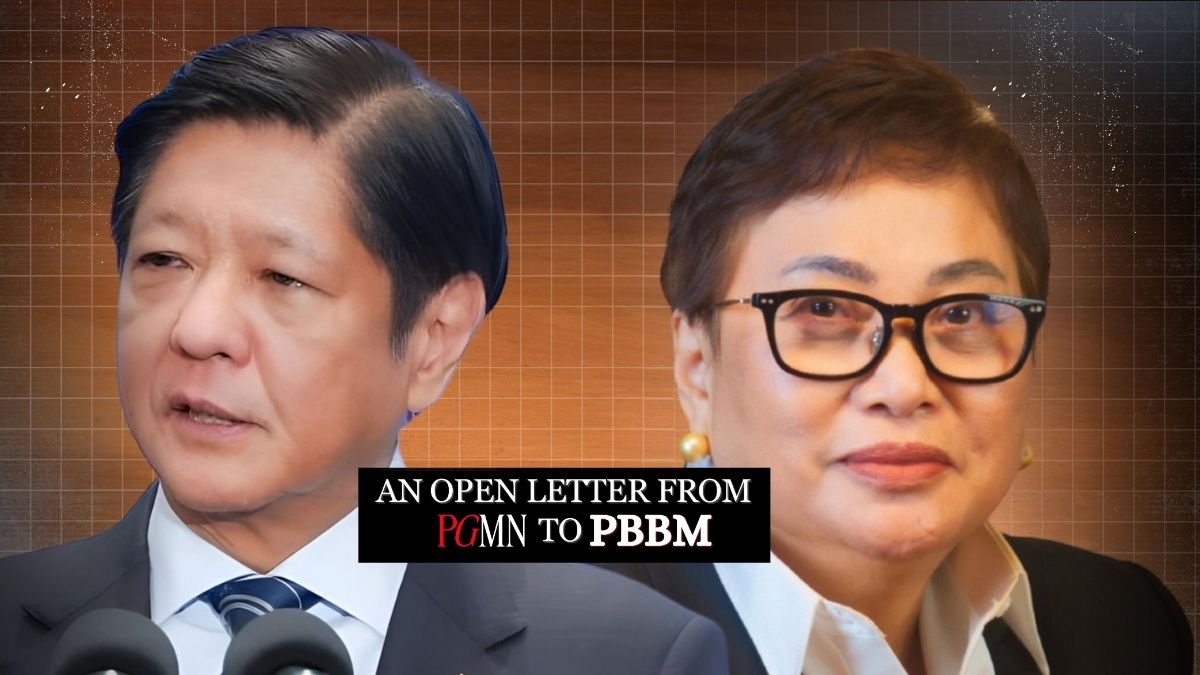
An open letter released by Peanut Gallery Media Network addressed to President Ferdinand Marcos Jr. has ignited renewed discussion about loyalty, free speech, and the growing disconnect between leadership and public sentiment.

The letter, written by PGMN’s founder, presents itself not as an attack, but as a deeply personal reflection — one rooted in years of political engagement, shared history, and uneasy realizations. It speaks from a space of conflicted loyalty: loyalty to principles, to free expression, and once, to the President himself.
At the heart of the message is discomfort. The writer describes watching the final cut of a political episode featuring Rowena Guanzon, an outspoken critic of the administration. Instead of silencing or shelving the episode, the decision was made to release it — not out of provocation, but out of principle.
This choice highlights a deeper issue now resonating across Filipino discourse: the widening gap between those in power and the people who once believed in them.
From Loyalty to Unease
The letter traces a long political journey — from building digital infrastructures during times of online suppression to surviving the era of heavy platform censorship. It recalls years when political voices were muted, shadowbanned, or erased altogether for deviating from acceptable narratives.
Ironically, the freedom once fought for is now being tested from within.
The author emphasizes that loyalty should not require silence, and friendship should not demand blind defense. True loyalty, the letter suggests, allows room for criticism — especially when governance decisions feel disconnected from everyday realities.

The Core Tension: Planning vs. Reality
One recurring theme in public frustration today is the perception that the government appears over-focused on long-term visions while current crises remain unresolved. Repeated reshuffling of officials, changing strategies, and grand development roadmaps contrast sharply with persistent inflation, employment concerns, healthcare gaps, and disaster response failures.
The letter does not deny the value of planning. Instead, it questions whether planning without visible progress risks becoming performative — a political comfort rather than a public solution.
Free Speech as the Final Line
Perhaps the most powerful assertion in the letter is this: free speech only matters when it protects voices we disagree with.
The decision to publish content critical of the President is framed not as rebellion, but as a test of democratic maturity. If media organizations fear retaliation for honest critique, the letter warns, then freedom becomes conditional — and democracy fragile.
A Nation Waiting for Reconnection
The letter closes not with condemnation, but with a cautious hope. Hope that leadership can still recalibrate. Hope that listening replaces distancing. Hope that governance once again aligns with lived realities.
For many Filipinos, this open letter reflects a quiet but growing sentiment: people are not asking for perfection — they are asking to be seen, heard, and helped today, not promised tomorrow.