GOAL.MD Health & Wellness Blog
Evidence-based insights, medical weight loss information, and practical tips from our physicians and healthcare experts.

Why You’re Eating Less But Still Not Feeling ‘Healthy’ Yet
The Label You Were Never Meant to Carry
If you’ve ever caught yourself thinking, “I think I’m addicted to food,” you’re not alone.
When cravings feel loud, when eating feels automatic, or when you keep ending up in the same pattern no matter how hard you try… It’s easy to assume something is wrong with you.
But most of the time, it isn’t addiction in the way people imagine.
What you were dealing with was a brain loop.
Your brain learned that certain foods brought quick comfort, quick dopamine, and quick relief, and it kept pulling you back there.
Not because you’re weak.
Not because you lack discipline.
But because your biology found a pattern that helped you cope in the moment.
👉 At Goal.md, patients learn that cravings aren’t moral failures. They’re signals. And signals can be rewired.

.
What a “Food Loop” Actually Is
Your brain is wired to seek reward.
And food is one of the strongest rewards we have, especially foods that hit fast and feel comforting instantly.
A loop usually looks like this:
Stress / fatigue / boredom → craving → quick comfort food → short relief → guilt → repeat
Over time, that cycle stops feeling like a choice and begins to feel automatic.
Not because you love food “too much”…
But because your brain learned, “This is how we survive hard moments.”
Why the Loop Feels So Hard to Break
1. Ultra-Processed Foods Are Built to Keep the Loop Alive
Packaged foods are often designed to be hyper-rewarding:
sweet + salty + fatty + easy to eat = instant brain hit.
Your brain doesn’t register them like a normal meal.
It registers them like a fast reward, so even when you’re not hungry, it still says, “More.”
2. Hormones Were Working Against You
When hunger and fullness hormones get out of sync, especially ghrelin and leptin, your brain treats food like an emergency.
That urgency can feel like an obsession.
But it’s hormonal biology, not a flaw in your character.
3. Dieting Often Makes the Loop Louder
Restriction can backfire hard.
When you’re constantly trying to “be good,” your brain goes into scarcity mode…
And cravings get louder, not quieter.
The loop strengthens because your body feels threatened.
4. Your Brain Was Trying to Protect You
This part matters most:
For a lot of people, the loop started as survival.
Food became comfort during stress.
Safety during chaos.
A reward when life felt heavy.
So your brain kept guiding you back to what soothed you.
That’s not dysfunction.
That’s adaptation.
👉 Goal.md reminds patients: you don’t heal a survival pattern with shame. You heal it with support.
How GLP-1s Help Break the Loop
GLP-1s like semaglutide and tirzepatide don’t just reduce appetite, they turn down the constant food thoughts that keep the loop alive.
A lot of patients describe it like this:
“The cravings aren’t yelling anymore.”
“I can stop halfway through.”
“Food feels optional now.”
“I’m not thinking about my next meal all day.”
That’s not just weight loss.
That’s brain relief.
GLP-1s create enough quiet for your brain to step out of survival mode and learn a new rhythm.
What to Do With the Silence
When that loop goes quiet, something real happens:
You finally have room to rebuild your relationship with food without fighting your brain every day.
Here’s how to support that rewiring:
✅ 1. Learn the Difference Between Hunger and Habit
Ask yourself gently:
“Am I hungry… or just used to eating right now?”
“Do I want food or do I want comfort?”
No judgment. Just awareness.
That’s how loops start to loosen.
✅ 2. Eat Enough to Feel Safe
GLP-1s can lower appetite so much that people under-eat without noticing.
But when you don’t eat enough, your body slides back into scarcity mode… and cravings can creep in again.
Protein, fiber, and steady meals send a message to your brain:
“We’re safe. We’re nourished. We’re not starving.”
👉 Goal.md helps patients find that sweet spot fueling fat loss without triggering scarcity.
✅ 3. Build New Comfort Rituals
Food used to be your fastest comfort.
Now you get to build new ones that don’t leave you feeling worse afterward.
Think:
warm tea
a walk
a shower
music
journaling
calling someone safe
a 10-minute reset
Comfort is a real human need.
You’re just learning healthier ways to meet it.
✅ 4. Let “Normal Eating” Be the Goal
Not perfect eating.
Not rules.
Not punishment.
Just normal:
Eating when you’re hungry, stopping when you’re full, enjoying food without spiraling.
That’s freedom.
And it’s absolutely possible for you.
Final Thoughts
You were never “addicted to food.”
You were caught in a loop your brain learned to survive.
And now, with GLP-1 support and the right guidance, that loop can soften.
Cravings aren’t your identity.
Old patterns aren’t who you are.
You’re not broken.
You’re rewiring.
One meal, one choice, one calmer day at a time.
✅ Medically Reviewed by Dr. Michael Fitch, MD
Last Reviewed: October 24, 2025
This article haD physician protocols. Individual results and recommendations may vary. Always consult a licensed clinician before beginning any medical pros been medically reviewed for accuracy and consistency with current clinical practice guidelines. All treatment descriptions reflect real GOAL.MD gram.

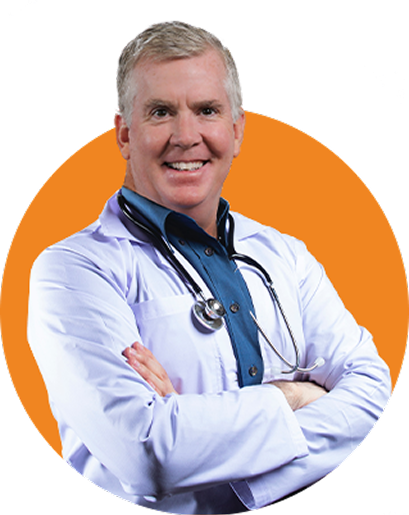
Dr. Michael Fitch, MD
Physician, GOAL.MD – Board-Certified in Internal Medicine
Dr. Fitch has treated thousands of patients using evidence-based medical weight-management therapies including GLP-1 and longevity-focused medications. He leads GOAL.MD’s national physician network and personally oversees treatment protocols for weight loss, metabolic health, and nutrition optimization.
👉 Click here and get started with Goal.md
The GOAL.MD blog is published by GOAL.MD, a medical practice dedicated to personalized, patient-centered weight management and metabolic health. Our mission is to make evidence-based care accessible through licensed providers and modern telemedicine services, empowering individuals to reach their health goals safely and sustainably. Any general health information shared on our blog, website, or social channels is provided for educational and informational purposes only. It should not be considered medical advice, diagnosis, or treatment. The content is not a substitute for consultation with a qualified healthcare professional who can provide individualized recommendations based on your specific medical history and needs. GOAL.MD and its affiliated providers make no representations or warranties and expressly disclaim all liability for any loss, injury, or damage resulting from reliance on the information provided herein. If you have questions about your health or a medical condition, please consult with a licensed medical professional before making changes to your medication, treatment plan, or lifestyle.

Disclaimer: Wegovy® and Ozempic® are trademarks of Novo Nordisk A/S. Mounjaro® and Zepbound® are trademarks of Eli Lilly and Company. GOAL.MD is a physician-owned medical practice, not a pharmacy. We do not manufacture or distribute medications. Prescriptions are issued when medically appropriate, and compounded medications are filled by FDA-monitored 503A/503B pharmacies. GOAL.MD is LegitScript Certified, BBB Accredited, and A+ Rated. We are not affiliated with Novo Nordisk or Eli Lilly.




At Eden, we believe in empowering individuals on their weight loss journey through personalized metabolic care. Our commitment to transparent pricing is reflected in our 'Same Price at Every Dose' philosophy. This ensures predictability in your costs – you'll pay the same price for your medication regardless of dosage adjustments throughout your program. Please note that this may exclude any new member discounts or specific plans. Terms& conditions apply.
*Prescription products require an online evaluation with an independent licensed medical professional who will determine if a prescription is appropriate. See important are based on 3rd party studies. Medications are prescribed by independent licensed physicians as part of our weight loss programs. Actual product packaging may appear differently than shown. Physicians may prescribe compounded medications as needed to meet patient requirements or drug shortages. The FDA does not review or approve any compounded medications for safety or effectiveness.
Should you seek a prescription item, Eden will facilitate arranging a consultation with a qualified independent provider. The Provider will assess your suitability for the prescription item. If deemed suitable, a doctor may issue a prescription for the item, which can be filled at a partner pharmacy, unless you specify an alternative preference.
You also consent to Eden using your information for third-party advertising purposes, including but not limited to targeted advertising on platforms such as Facebook, Google, and other similar sites. This includes using hashed and de-identified data to create custom audiences for targeted advertising and to exclude existing customers from certain marketing campaigns. You can opt-out of receiving marketing emails at any time by following the unsubscribe instructions provided in each email or by contacting us directly at [email protected]
Note: The above statements have not been evaluated by the Food and Drug Administration. This product is not intended to diagnose, treat, cure, or prevent any disease.
Why GOAL.MD?
✅ Sourced from audited 503a US compounding pharmacies.
✅ Custom dosages adjusted to your needs.
✅ Free consultation + 24/7 support.
How It Works
1. Quiz
90 seconds. No commitment.
2. Consult
Video chat with your GOAL.MD doctor.
3. Deliver
Meds at your door tomorrow.
Transform Your Life with Physician-Directed Care
Join thousands who've found success with physician-directed care. Take our 3-minute quiz to see if medical weight loss is right for you.