Long Term Goals, 100 Miles at a Time
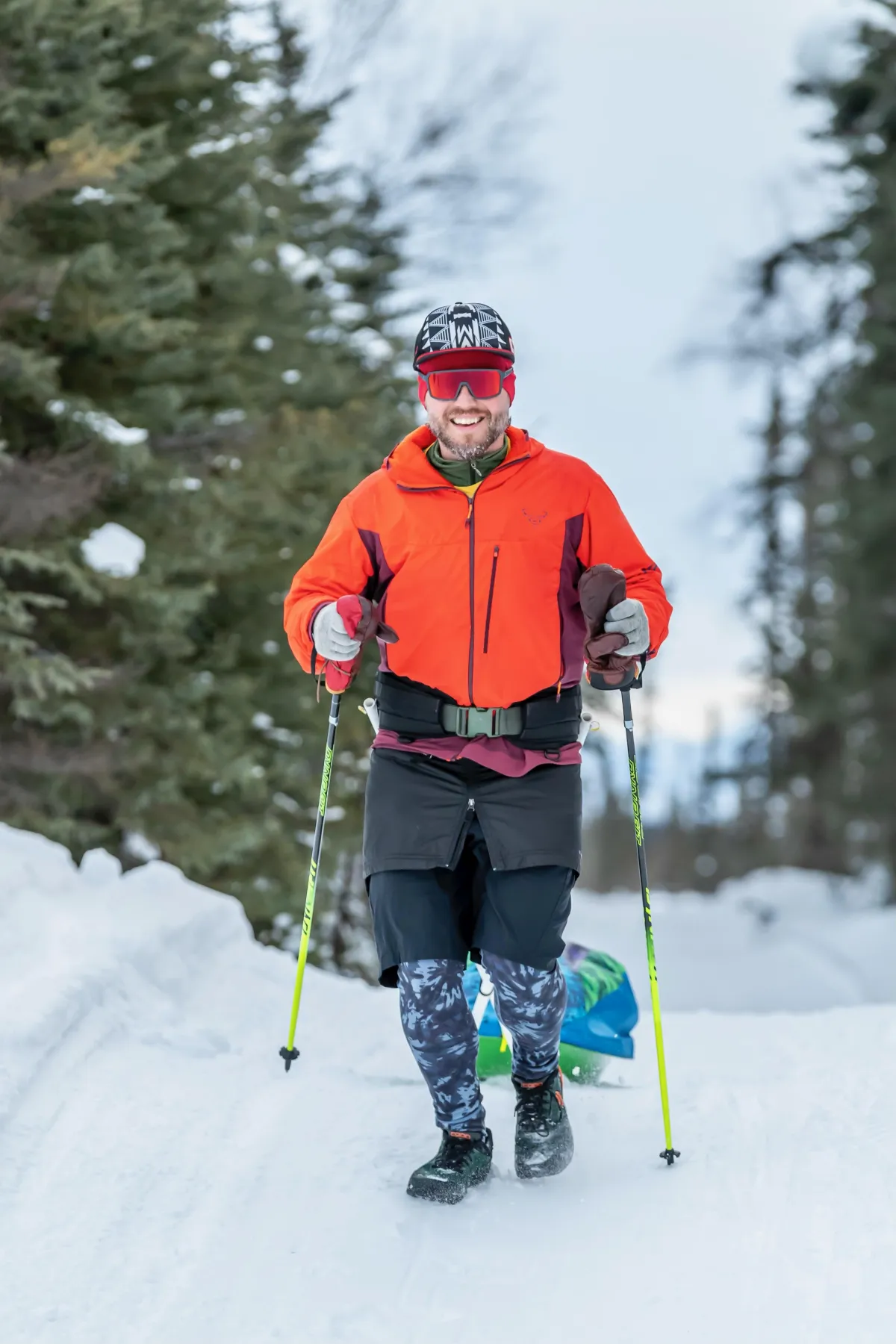
Three miles into a 100-mile race in Alaska, in below-zero temperatures, my hydration hose froze solid. And I still had 97 miles to go.
That’s when I realized something about long-term goals. You can’t plan perfectly. You will be uncomfortable. And relentless forward progress gets you to your goal.
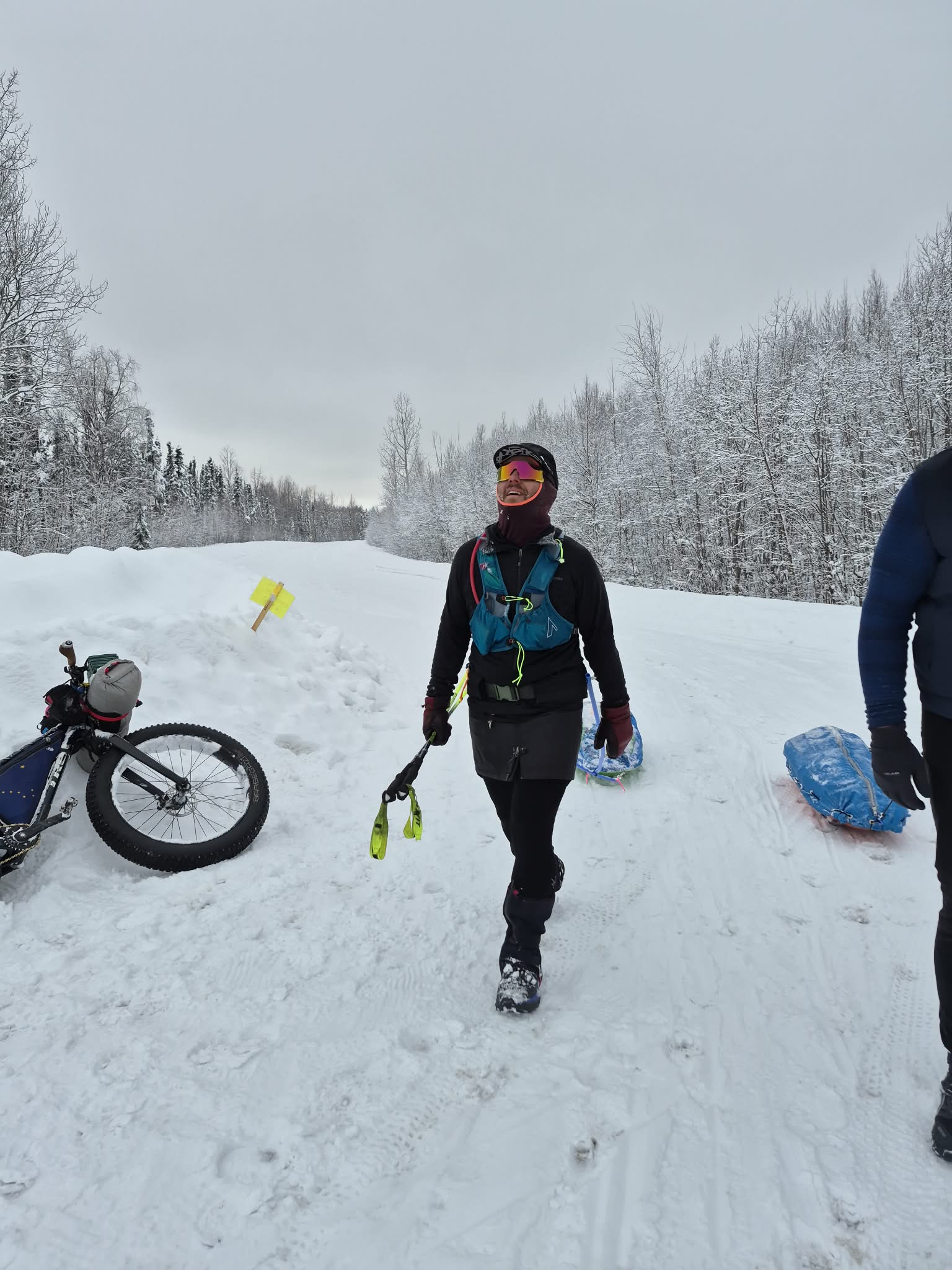
Susitna 100 is a unique race across remote frozen Alaska: on foot, skis, or bike. Whatever division you choose, you must finish in less than 48 hours. The race starts about 90 minutes north of Alaska’s largest city, Anchorage, close to where the historic Iditarod dog sled race takes place. The course travels over lakes, rivers and marshes and the trails and conditions change each year. Some years you are running on solid ice. Some years you are slogging through deep snow. Sometimes you come across “overflow” - water sitting on top of ice - and you don’t know if it’s ankle deep or waist deep. The temperature can range from 30 degrees above zero to 20 degrees below zero. Susitna 100 is never the same and constantly challenges anyone daring enough to attempt the event.
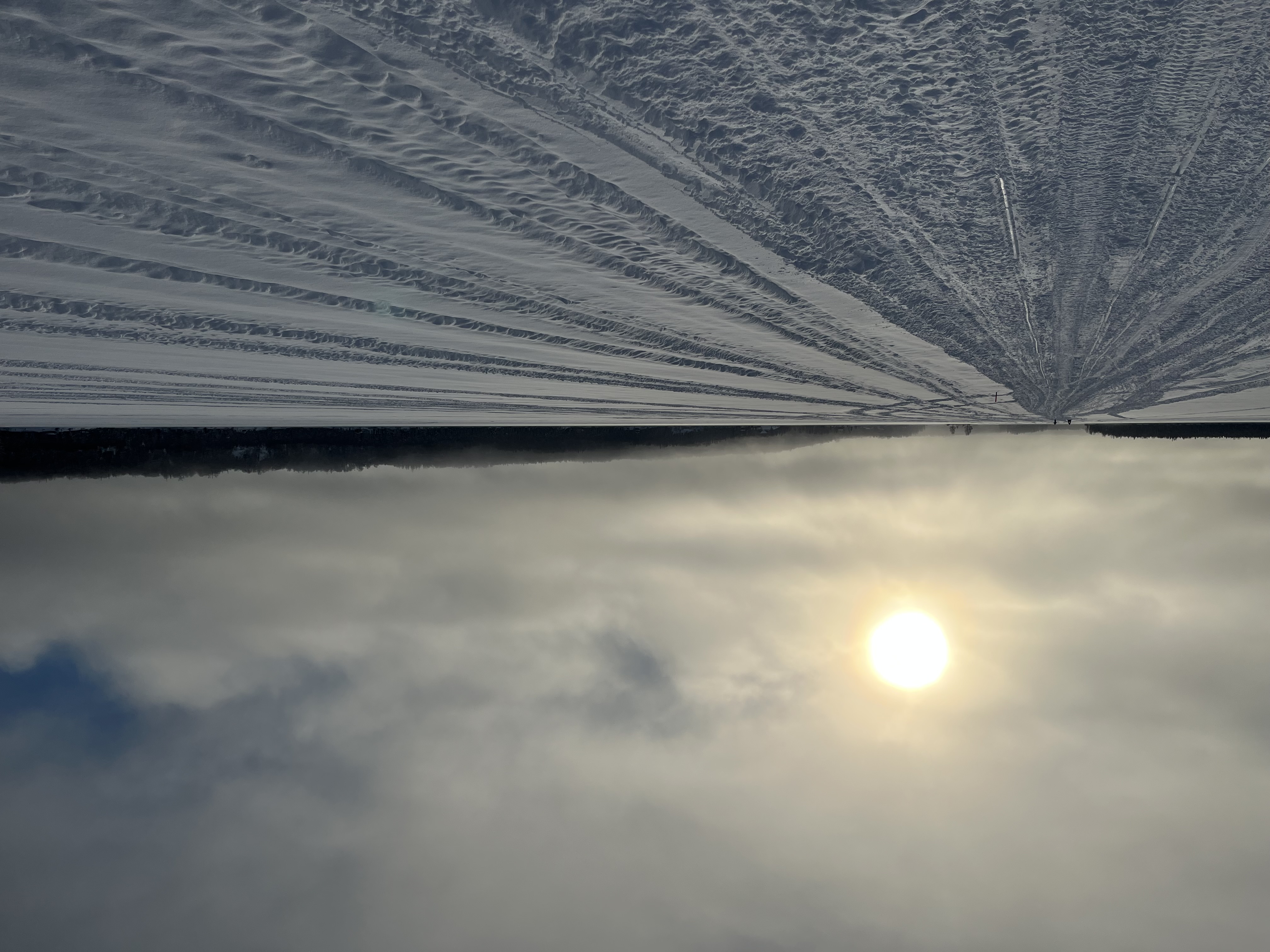
I lived near Anchorage, Alaska for 7 years, from 2009 to 2016. Before moving to Alaska, I wasn’t a runner. I was into hiking and camping and more, but not running. That changed shortly after my first long, dark winter in Alaska when I experienced Seasonal Affective Disorder. I was spending too much time indoors and starting to get severely depressed. It was recommended that I pick up an outdoor activity, so I chose skiing. I went out for my first time cross-country skiing and I got lost. It took me almost 5 hours to find my way back to my truck.
And I had no water.
Back at the truck, reflecting on my experience, I thought: there must be a way to carry water while skiing, and I should find out!
I stopped by an outdoor store on my way home and quizzed an employee named Harrison. As it turns out, this serendipitous encounter had an outsized impact on my future.
During our conversation, Harrison told me he had just finished 60 miles of Susitna 100 and I was blown away with his accomplishment. He graciously answered all of my questions:
60 miles?
Did you sleep?
What type of supplies did you carry?
How did you train for such a long run?
Are you nuts?
He could tell I was intrigued and invited me to join a Monday evening group run. That group run led me to join another Wednesday morning group run, and suddenly I was part of this new, exciting community. Most of my new friends would tell stories about this ultra or that ultra, with Susitna 100 always coming up in the conversation. (An Ultra is a run or race that is longer than a marathon or 26.2 miles). That was the first time I was exposed to the possibility of running 100 miles. That’s when the idea was planted.
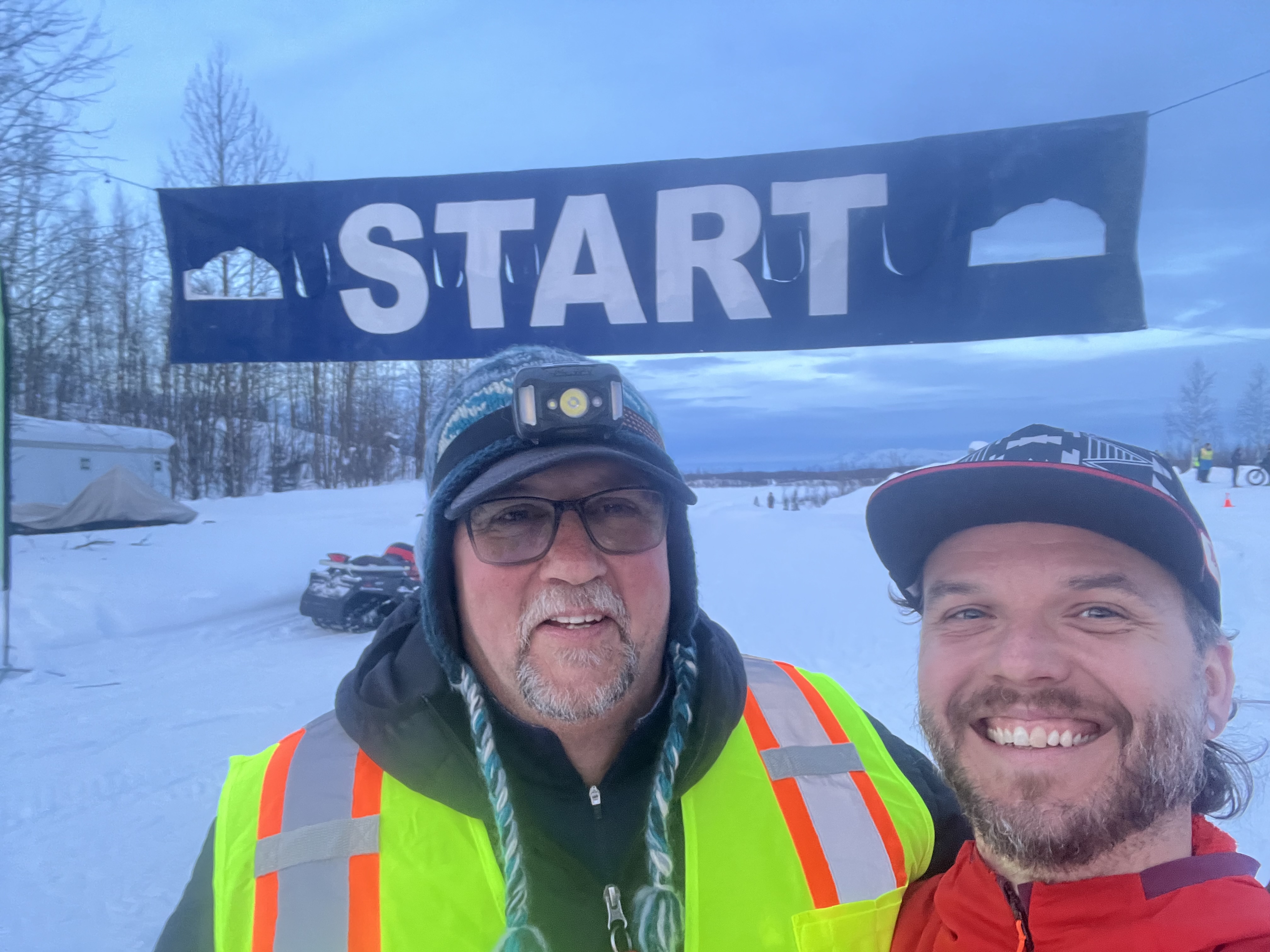
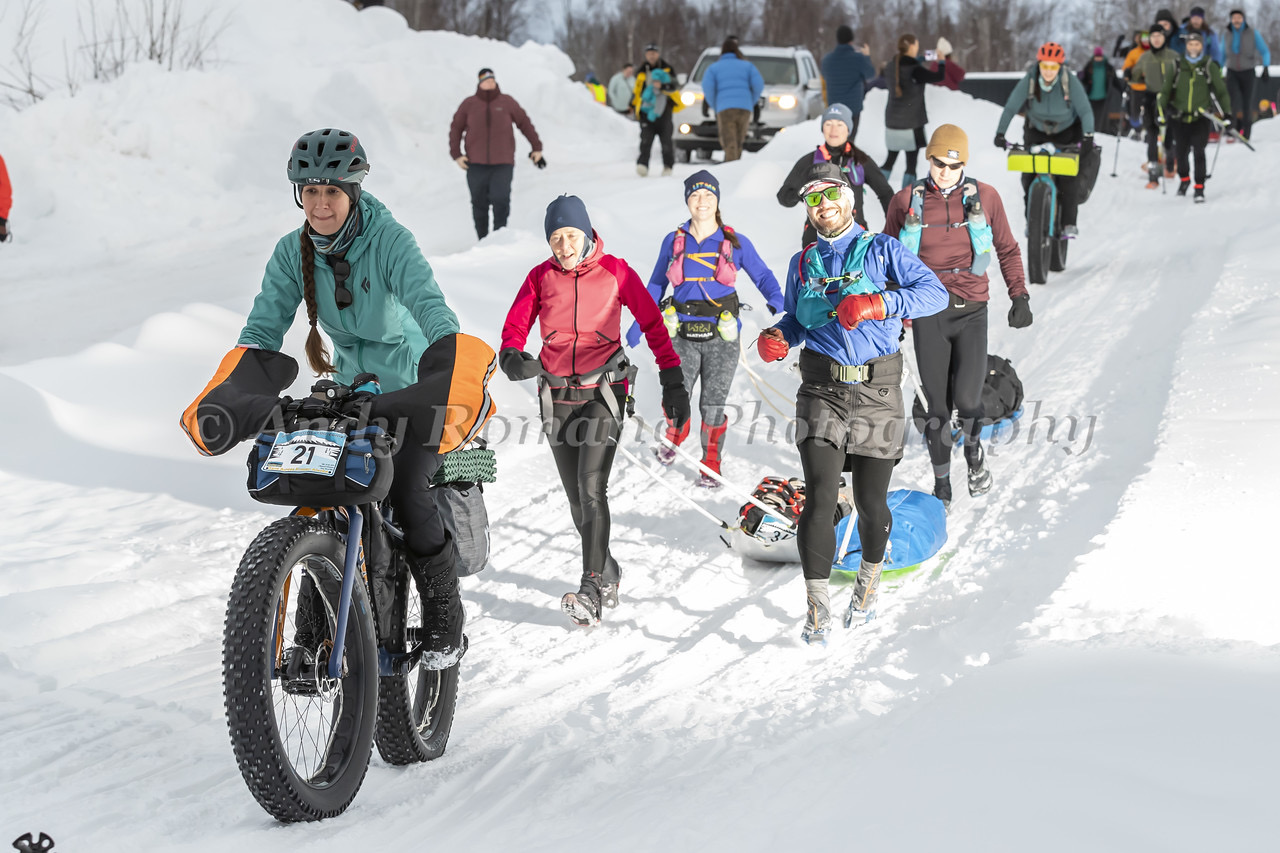
February 2012 was my first year running Susitna 100. I had meticulously planned out exactly what I needed. I calculated the calories I needed for the race, laid out all the nutrition I purchased, and added everything together. I purchased a new headlamp to see better through the long nights. I took lots of training runs where I pulled my sled filled with all my gear. I packed multiple layers to accommodate all temperatures and was feeling excellent… and nervous. I stood around a gas station in Point MacKenzie, Alaska with 21 other runners, 70 bikers and a handful of skiers waiting for the start of the Susitna 100.
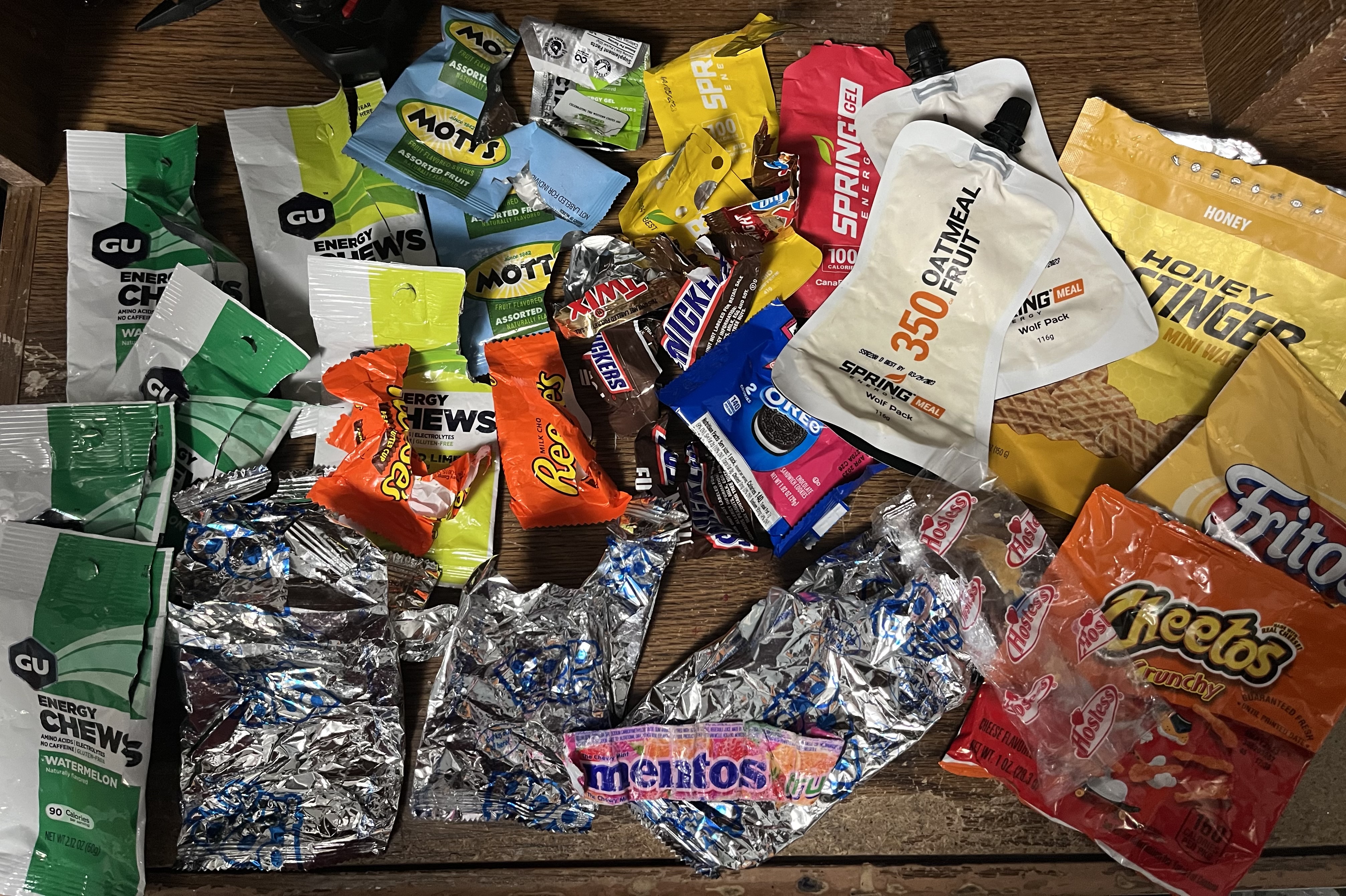
That morning was cold; the temperature was well below zero and my feet were aching from the cold. At 9AM, we all started our race in hopes that our training and preparations were enough. 3 miles down the trail I realized my hydration hose was frozen solid. In the middle of the night, my headlamp stopped working and I stumbled through the dark to the next aid station.
Somewhere in the middle of that, I remember thinking… This might have been a terrible idea.
When setting long term goals, you can’t plan perfectly.
In the summer of 2016 we moved from Alaska back to New Mexico.
After the move, training for Susitna became more difficult. I was used to loading my sled up with weight and pulling it for hours. Because Alaskan winters bring lots of cold weather and snow, I could do that right out of my front door. In New Mexico, it’s a little more difficult to find long training routes covered in snow. So, I did the best that I could. I ran through arroyos to mimic soft snow conditions. I would run intentionally underdressed with the idea that would help me with the cold conditions normally present during Susitna. But not a whole lot of sled pulling during training.
Still, I made my way up for the race in February 2017 eager to complete another Susitna. I ended up running with four of my friends and things were going surprisingly well. The miles faded away as we chatted about life’s happenings. Since we hadn’t seen each other in a year, there were endless topics to catch up on. We reached Eagle Quest lodge (mile 60 aid station) feeling great. Eagle Quest lodge is a working, remote lodge with beds to rest on and a kitchen that stays open all night for Susitna participants. We all ordered a hot meal and quickly worked on blisters and stretched. That’s when the server said something that shocked all of us: What are your plans for the blizzard?
Blizzard? That was the first I heard of this. We all looked at each other. “What blizzard?” we asked. He proceeded to tell us about the storm rolling in and how 20” of snow was projected to fall over the next four hours.
We could have dropped. We had a choice.
One phone call - and we’re back in a warm bed.
Or we step back out into a blizzard.
We chose to keep going.
By the time we left the lodge, a layer of snow had already covered the course. As the night went on, so did the snow. Above my shoes, then above my calves and finally, when the snow stopped, it was above my knees. The storm brought a full 2 feet of snow: 24”.
The course is marked with laths, which are thin wooden stakes marked with a 1” reflective top, orange stripe below that and “SU 100” handwritten in black Sharpie. The snow was so deep, all that was visible of the laths was the 1” reflective top. The 12 miles between Eagle Quest Lodge and the next aid station (Cow Lake) took us 10 hours. We were moving from trail marking to trail marking. Breaking trail through 24” of fresh snow. This was no longer a race, but a survival effort.
That’s the part no one tells you about long-term goals.
At some point, they stop being exciting… and start feeling uncomfortable.
And yet, you are the only person who can choose the end of the story.
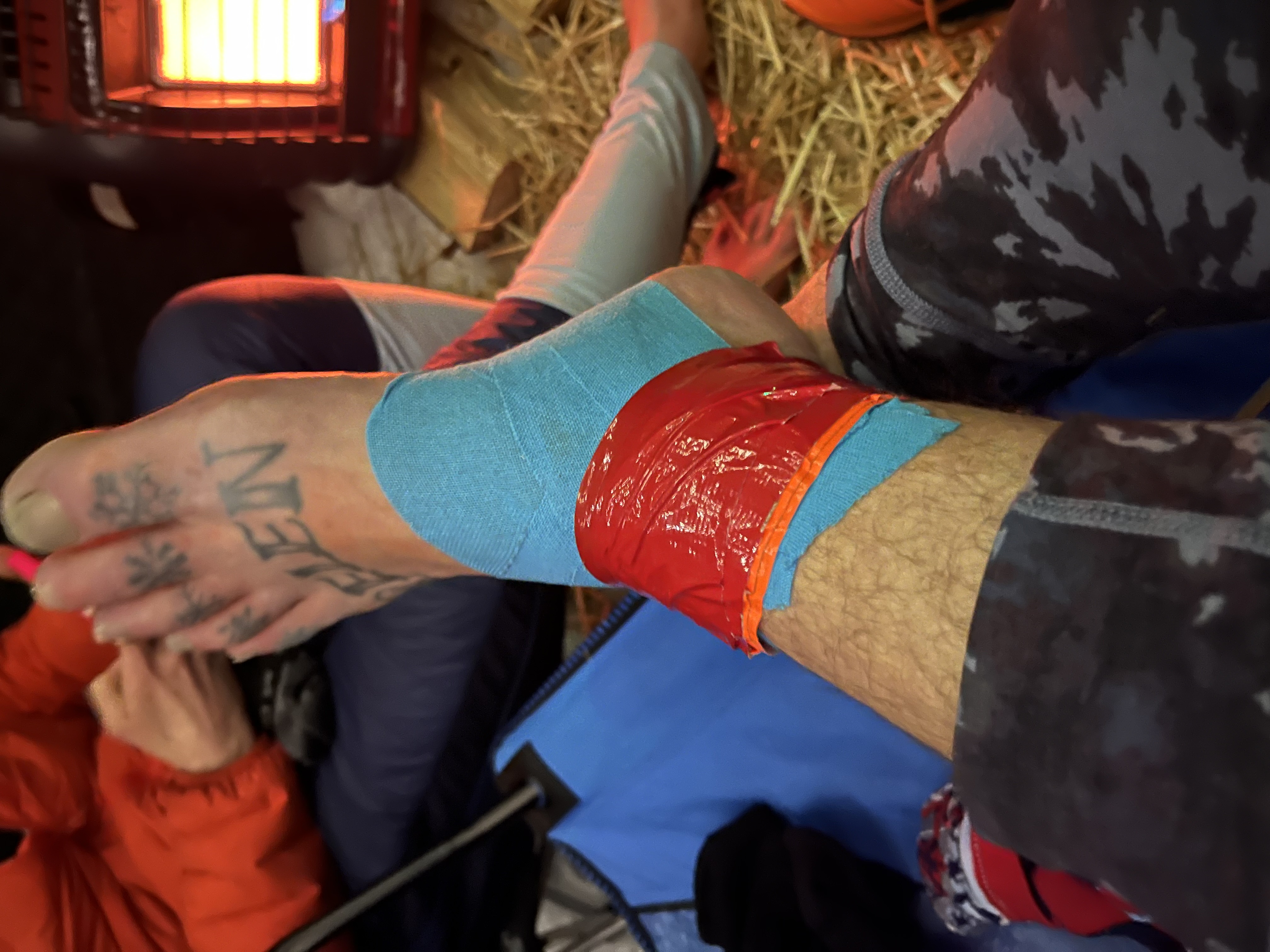
This year, 2026, I prepared for Susitna and my travels to Alaska, I knew it would be a challenge. And it did not come easy.
It snowed 14” five days before the race and the temperatures were warm - hovering around 30 degrees. When it snows and temperatures don’t get below zero, it’s not cold enough for the snow to set up and become firm. So I knew I was in for a soft snow year. Of the 28 people registered for the foot division, 14 people didn’t start the race due to the conditions. When the race started, it was snowing again.
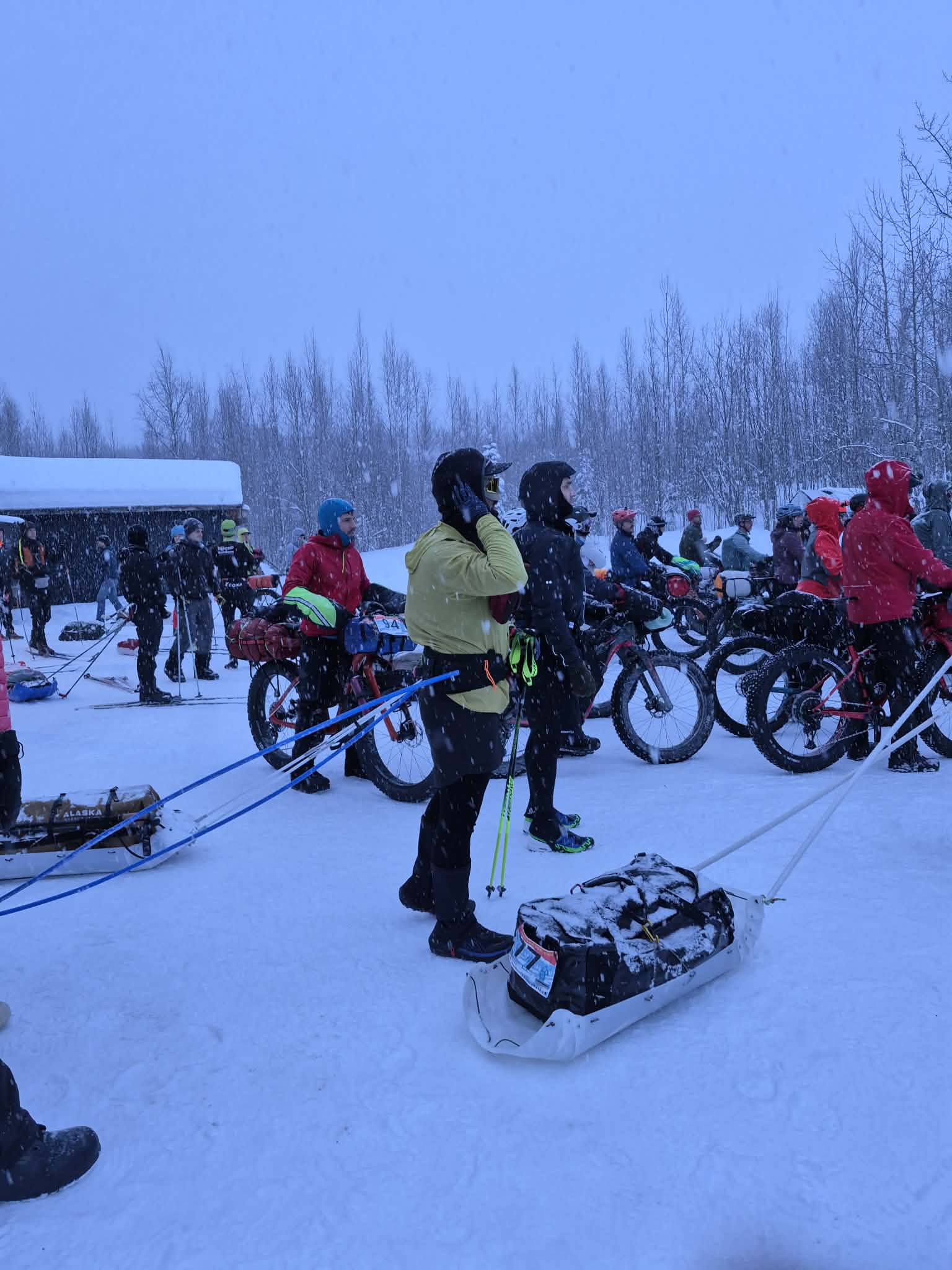
I pushed as hard as I could to make the cutoff time at the first aid station, 22 miles away. Four hours into the race, I ran out of water. I still had 3 hours before the cut off and I had more water in my sled, but I knew I did not have time to stop. Normally 7 hours would be enough time to cover that distance, but I arrived at the first aid station in 6 hours and 59 minutes. I just barely made the cut off time and just as the snow stopped. I was wet, tired, dehydrated and my left knee was hurting from the effort. I filled my water and kept running.
That night it got cold. The Northern Lights were out in full force.
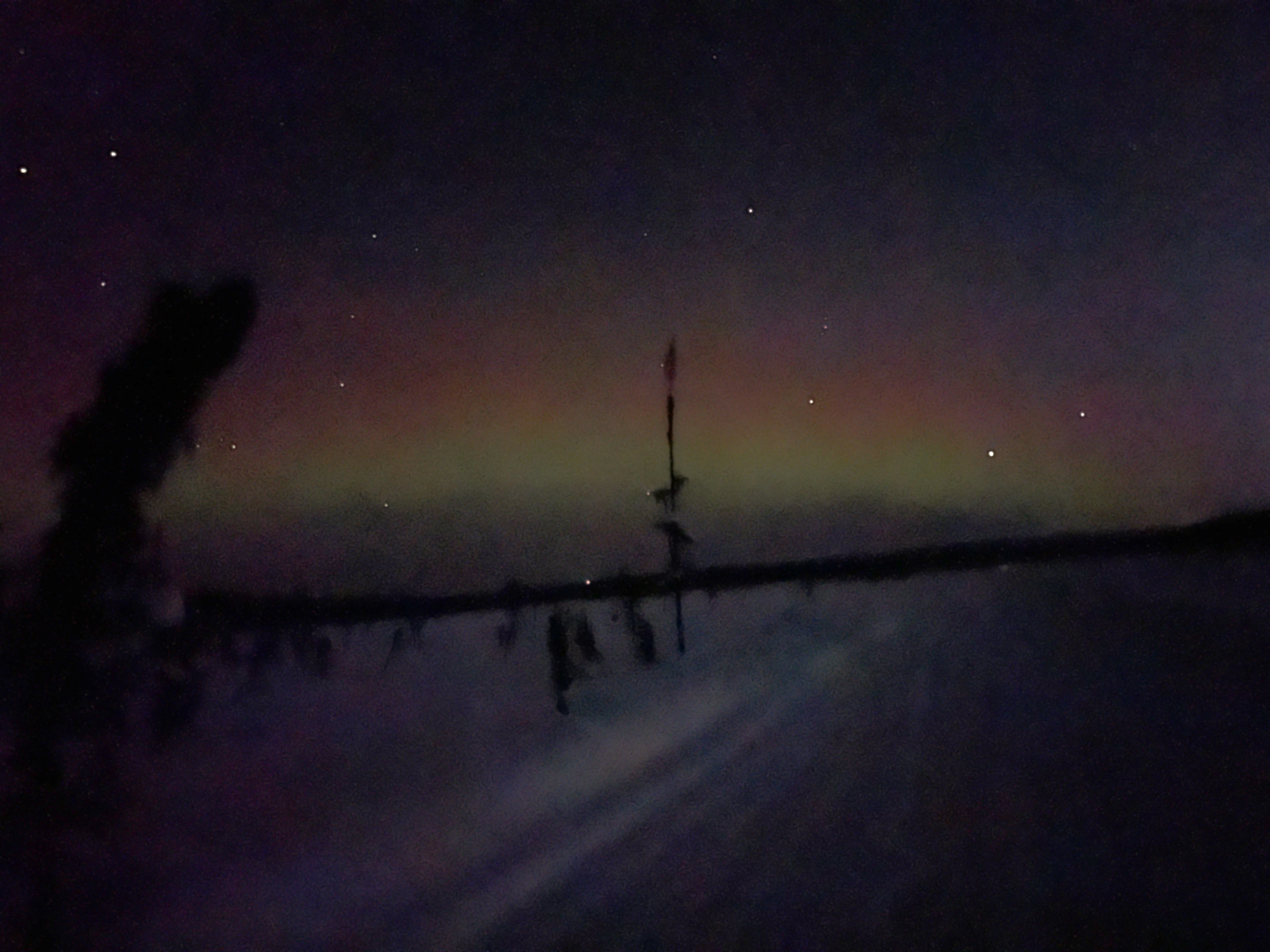
I made it to the second aid station (Flathorn Lake) with 40 mins to spare before the cut off time. I quickly shed my layers and hung them above the wood stove to dry. I changed my socks and ate as quickly as possible. I left Flathorn Lake with my friends Laura and Brandon and we found our stride, making progress through the night.
We arrived at mile 65 aid station early Sunday morning. This is one of two spots on the course where racers can drop without paying an evacuation fee, as it is on the road system. Laura and Brandon decided they had enough and dropped out.
So there I was,
Alone.
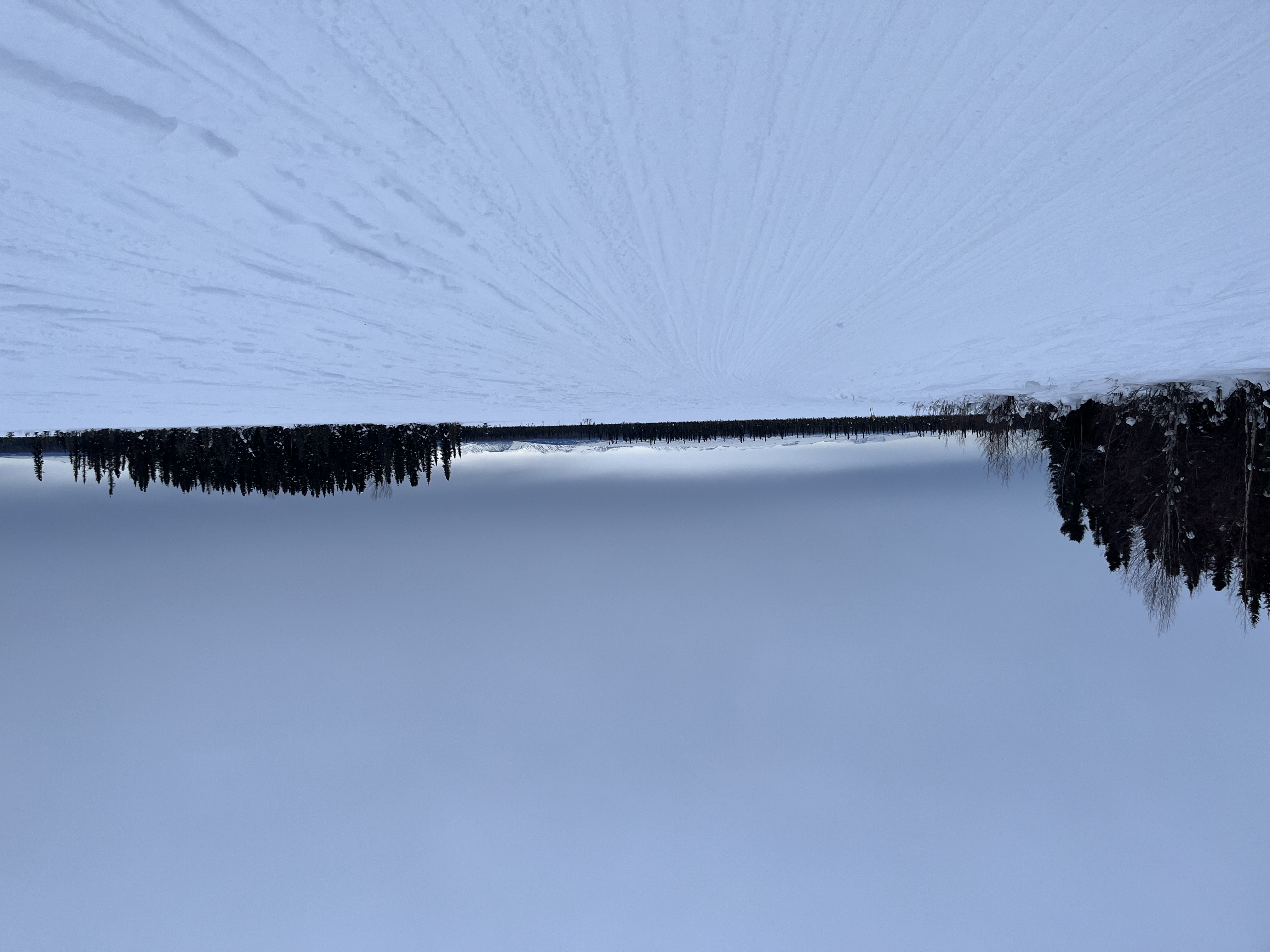
With my knee progressively getting worse, I left the aid station on a mission to finish. After all, I had taken time off work and flown to Alaska; I could not drop out.
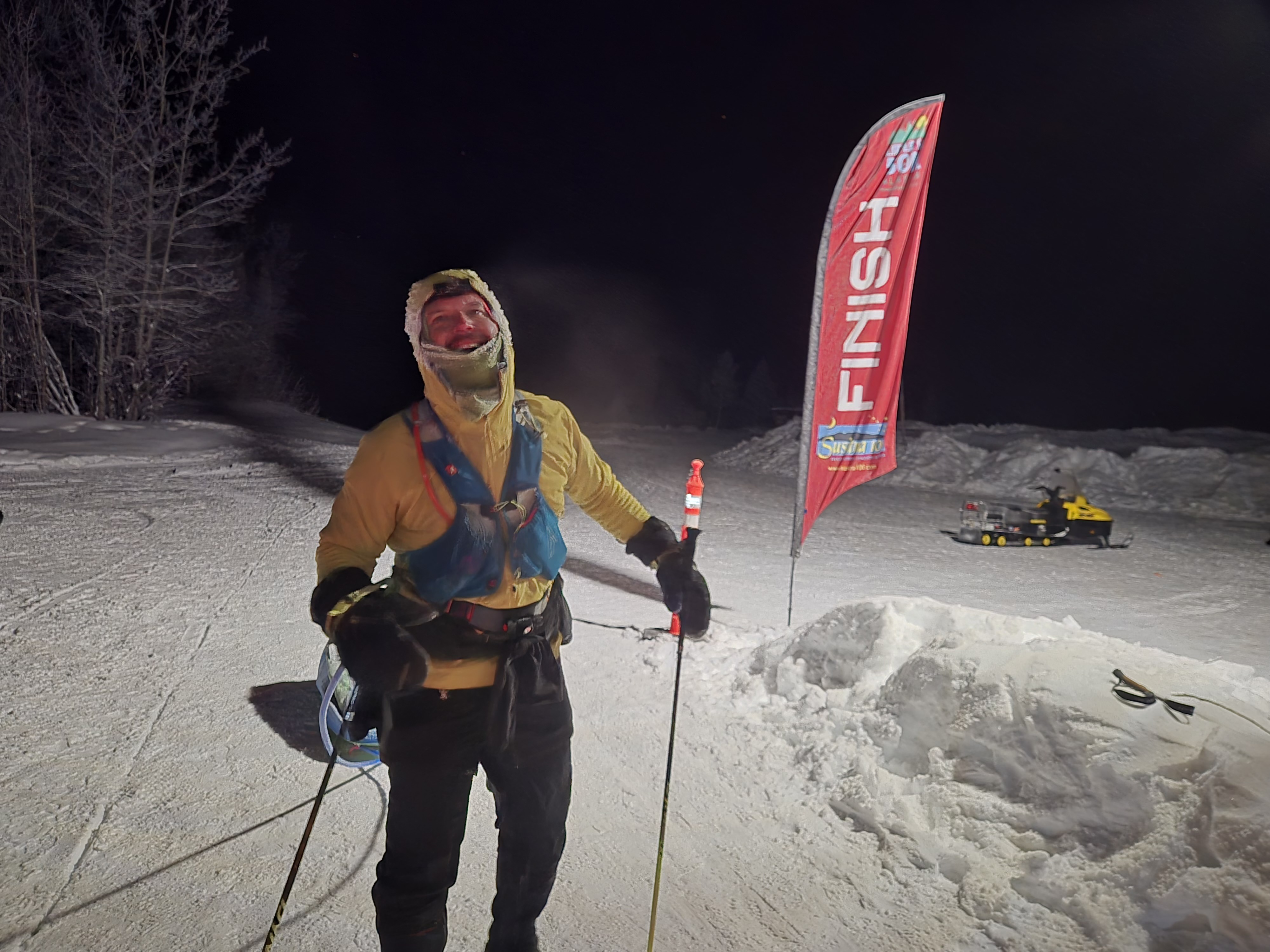
I made it to Cow Lake which meant I only had 14 miles to go. Sunday night was much colder than Saturday night with temps around 15 below zero. My eye lashes started freezing from the moisture in my breath. As I got closer, I could see the lights of the finish line, which is at Happy Trails Kennels - home of the great Iditarod dog musher Martin Buser. I crossed the finish line in 40 hours and 15 minutes. I was the second place finisher for runners. Out of 28 registered and 14 who started, only 3 runners completed the race.
There at the finish line I was in awe and disbelief that I had met my goal. I had also finished Susitna with a perfect record… 10 starts and 10 finishes. No drops.
That morning in 2012 during my first race, I thought I was running 100 miles.
But I wasn’t.
I was solving one problem at a time.
One step at a time.
One lesson at a time. For 14 years. With each mile and each 100 miles.
When reaching for long-term goals, relentless forward progress gets you there.
And that’s the thing about long-term goals.
They don’t ask you to be perfect.
They just ask you to keep going.
Not all at once. But one mile, ten miles, or a 100 miles at a time.
-Stephen Sweezey, Owner, The Running Hub
