
Before and After IRS Math Act
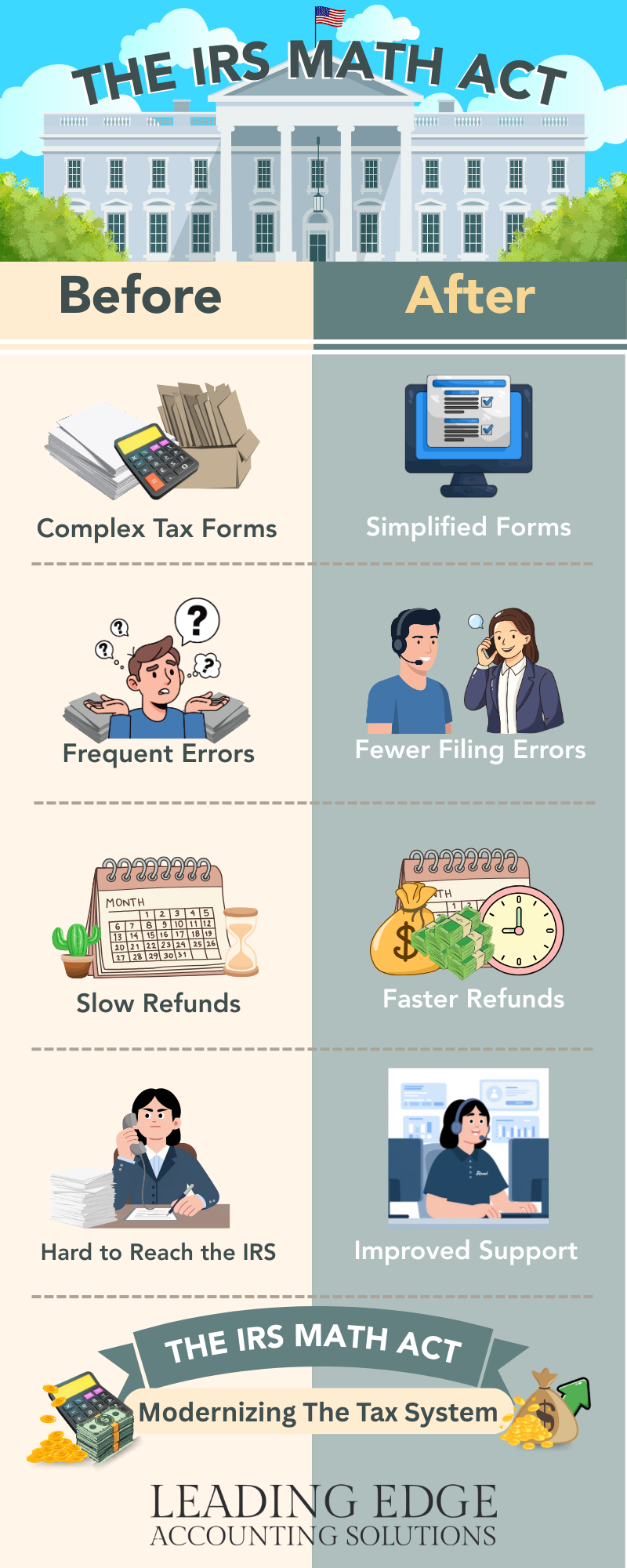
The IRS MATH Act (Modernizing Accessibility, Technology, and Hiring) represents a massive shift in how the agency operates, moving from a paper-heavy "dinosaur" era into a digital-first organization.
The Transformation: IRS MATH Act
Processing & Technology
Before: Millions of paper returns sat in literal "cafeterias" awaiting manual data entry. Systems often relied on COBOL code from the 1960s.
After: Digital-First Processing. High-speed scanning for paper returns and a "Mobile-First" interface for taxpayers. Real-time processing reduces the "where's my refund" anxiety.
Taxpayer Experience
Before: Phone wait times often exceeded 30 minutes, and the "Level of Service" frequently dipped below 15%.
After: Omnichannel Support. AI-driven chatbots handle basic queries 24/7, while callback technology ensures you don't have to stay on hold. In-person Taxpayer Assistance Centers have seen a 30% increase in staffing.
Enforcement & Compliance
Before: Audit rates for high-net-worth individuals and complex corporations plummeted due to a lack of specialized staff.
After: Data-Driven Audits. Using machine learning to identify sophisticated tax avoidance schemes in large partnerships and corporations, while maintaining (or reducing) audit rates for those earning under $400,000.
What this means for you
For the average taxpayer, the "After" looks like a much smoother interface and significantly faster refunds. For the agency, it means they finally have the "teeth" to go after complex evasion that was previously too difficult to track.
