Homeschooling with Joy and Freedom
Homeschooling with Joy and Freedom
Discover how to create a learning environment that nurtures
both academic growth and family happiness.
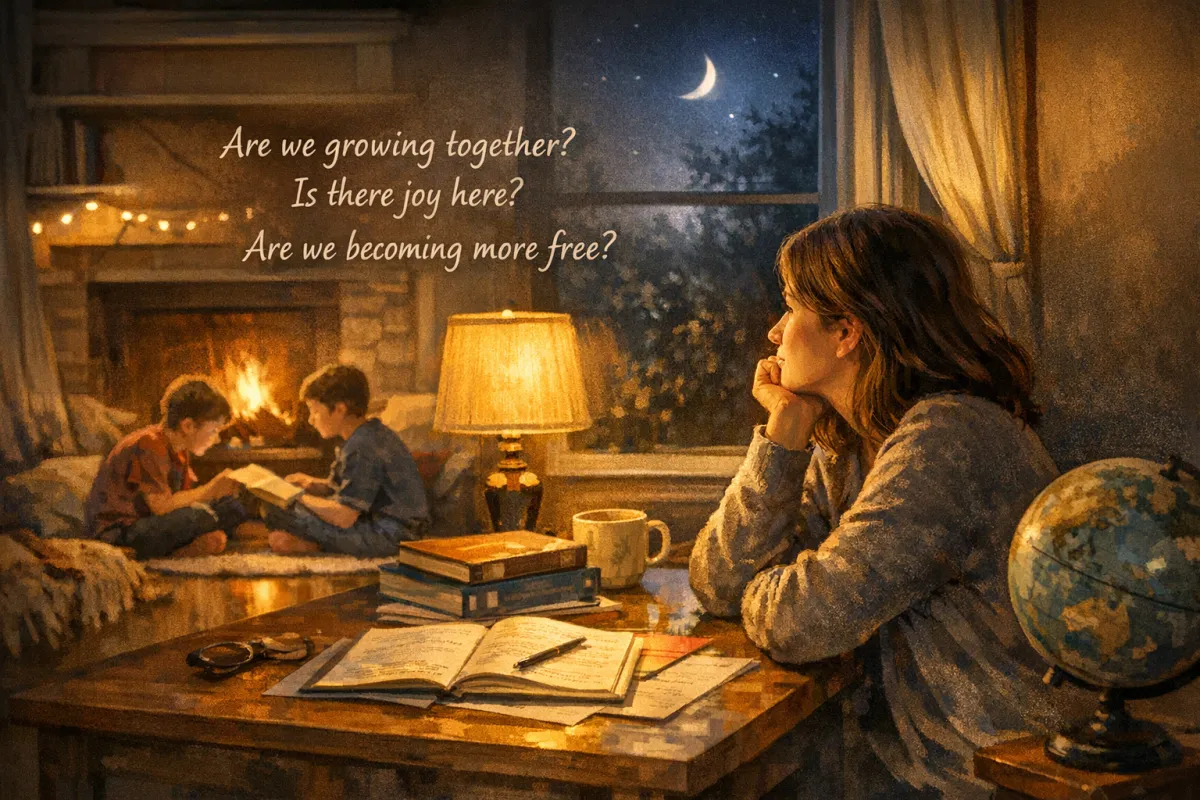
There is a quiet moment many homeschool parents experience—often late at night, after the books are closed and the house is still—when a simple question rises up:
“Is this working the way it should?”

Not, “Are we getting enough done?”
Not, “Are we keeping up?”
But something deeper.
“Are we growing together? Is there joy here? Is this education making us more free?”
Homeschooling was never meant to feel like a heavier version of school. It was meant to be something better. Something truer.
At its best, homeschooling is not a system to manage—it’s a culture to cultivate. One that honors childhood, strengthens family relationships, and invites learning to become a lifelong love rather than a daily struggle. This vision of joyful, freedom-filled education sits at the heart of Leadership Education (TJEd) and has guided thousands of families as they step off the Conveyor Belt and into something more humane and meaningful.
Joy Is the Signal—Not a Bonus
In Leadership Education, joy is not a reward for getting education “right.”
It’s feedback.
When joy is present, it tells us that learning is aligned with human development, personal readiness, and meaningful purpose. When joy disappears, it’s often a sign that something is out of order—not that parents or children are failing, but that priorities may be misaligned.
Especially in the early years, learning is meant to grow out of work, play, family connection, and curiosity. These are not distractions from education; they are the education. Core Phase learning—roughly birth through age eight—is about building security, character, and values. Academic pressure during this stage doesn’t accelerate growth; it often undermines it.
Joy emerges naturally when children feel safe, loved, and unhurried. And when joy is present, learning happens—deeply, organically, and in ways that last.
Freedom Is the Soil Where Learning Grows
Freedom in homeschooling doesn’t mean chaos or neglect. It means agency.
A free learner is not one who does whatever they want, whenever they want. A free learner is one who gradually learns to take ownership of their growth—to ask questions, pursue interests, and eventually choose to study long, hard, and effectively.
This kind of freedom cannot be forced. It must be mentored.
When parents shift from managing outcomes to modeling curiosity, something powerful happens. Children begin to see learning not as something imposed, but as something claimed. They watch a parent read, think, wrestle with ideas, and grow—and they internalize the message: This is what adults do.
This is the heart of the principle “Inspire, not require.” Freedom invites responsibility. Inspiration awakens effort. And over time, self-education replaces compliance.
The Home as a Learning Environment
A joyful homeschool is rarely defined by curriculum choices alone. More often, it is shaped by rhythm, relationships, and environment.
Consider a few simple but transformative practices:

Family reading—shared stories that open conversations and hearts
Unstructured play and meaningful work—especially for younger children
Simplified schedules—space for curiosity, rest, and spontaneous learning
Group activities—projects, nature walks, service, and shared experiences
These practices do more than “cover material.” They knit families together. They create emotional safety. They give learning a human context.
And from that context, academics flourish.
Letting Go of the Conveyor Belt Mentality
One of the hardest shifts for new homeschoolers is releasing the invisible pressure of comparison—grade levels, timelines, checklists, and external benchmarks.
But education is not a race.
Pushing rigor before readiness often produces short-term results and long-term burnout. Waiting—trusting developmental timing—builds confidence, resilience, and genuine intellectual hunger.
Families who embrace this principle often discover something surprising: when children are ready, they move faster, not slower. Scholar Phase students regularly choose levels of focus and intensity that no parent could have successfully imposed.
Freedom, rightly understood, does not delay excellence. It prepares for it.
You, Not Them
Perhaps the most freeing truth in homeschooling is this:
You don’t have to do everything right to do something meaningful.

Leadership Education begins with the parent—not as an expert with all the answers, but as a lead learner willing to grow. When you invest in your own education, your children benefit. When you model reflection, discipline, and wonder, they notice.
Homeschooling with joy and freedom is not about perfection. It’s about alignment.
Principles over pressure.
Relationship over rigidity.
Purpose over performance.
And when those align, learning becomes what it was always meant to be—not a burden to endure, but a life to live.
If you’re longing for an education that strengthens your family while nurturing curiosity, character, and confidence, trust that instinct. It’s pointing you toward something real.
Joy and freedom are not signs you’re doing less.
They’re signs you’re doing something right.
