
Email Marketing: How to Set Up a Klaviyo Welcome Flow That Converts New Subscribers Into Paying Customers
Most brands spend a lot of time and money getting people to their website. They run ads, post on social, and do all the right things to drive traffic. Then someone subscribes to their email list, and the response is a single generic "Thanks for signing up" email that disappears into the void. Solid setup if you don’t care about making money.
The welcome flow is the highest-ROI automation you will ever build in Klaviyo or any email marketing platform. New subscribers are at peak interest the moment they opt in. They just raised their hand and said they’d love nothing more than to hear from you. If you wait 48 hours to follow up, or you send something forgettable, you have already burned the best window you had.
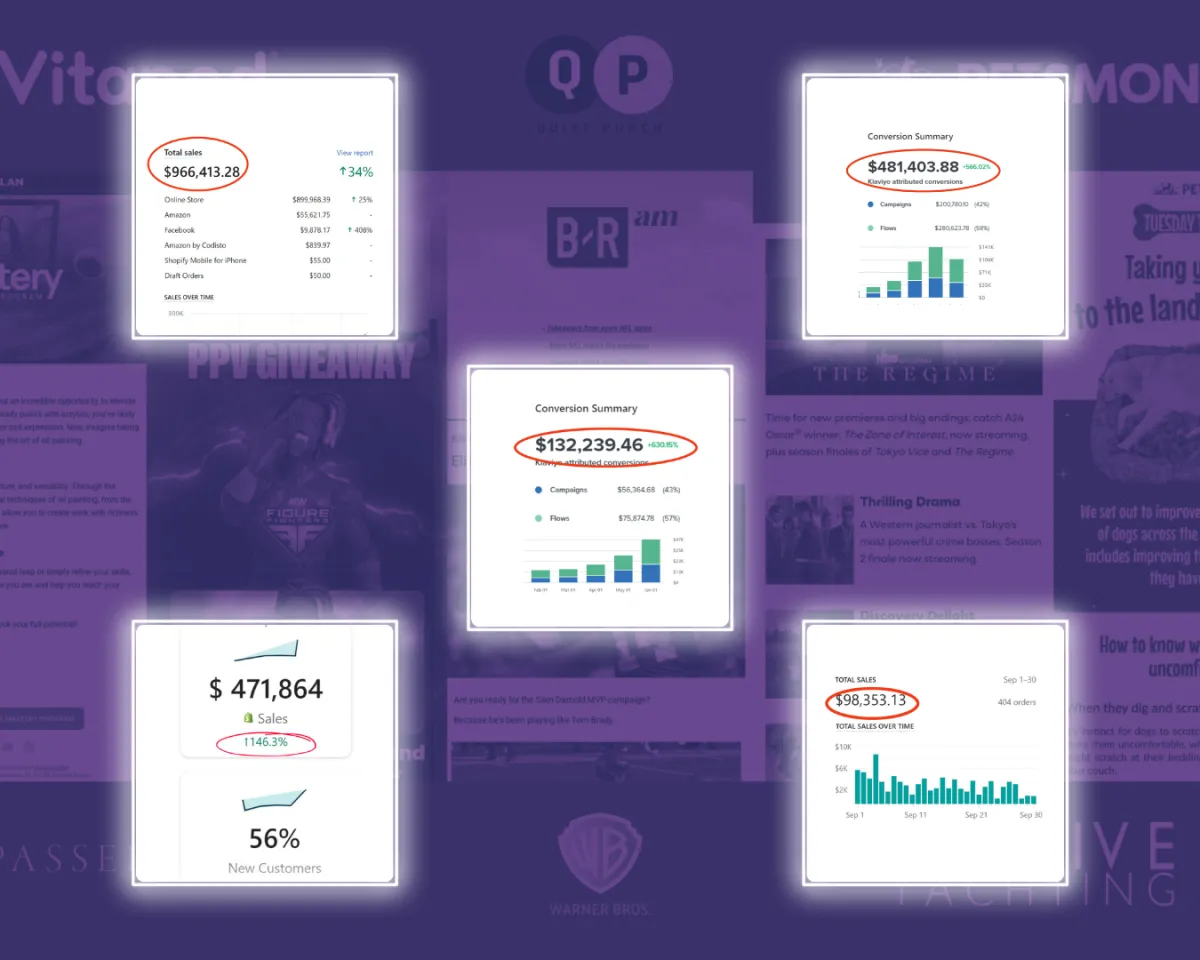
We have generated over $481,000 in Klaviyo-attributed conversions for a single client, with a 566% increase year over year. The welcome flow is not the only piece of that, but it is the foundation everything else is built on. When this is set up right, it works around the clock pulling people from subscriber to customer without you lifting a finger.
This guide will teach you how to properly build a Welcome Flow whether you’re just starting or you’ve been doing email marketing for decades..
Why Your Welcome Flow Is the Most Important Automation in Your Entire Account
Before getting into the build, it helps to understand why this sequence deserves so much attention.
When someone joins your list, the timing is everything. According to Klaviyo's own benchmarks, welcome emails should generate open rates of 40-60% on average, compared to 30% for typical campaign emails. That gap exists because the subscriber is fresh. They remember signing up. They are curious about what comes next.
A lot of marketers don't know it but the welcome flow is also doing multiple jobs at once.
It introduces your brand to someone who may have only visited once
It builds educates customers about your brand and establishes trust before you ask for a purchase
It surfaces your best-selling products to someone who is already interested
It filters buyers from browsers early, which improves your deliverability over time
It sets the tone for the entire customer relationship going forward
A weak welcome flow ignores these traits and probably only focuses on the “big” discount. Smh.
Setting Up the Welcome Flow Trigger the Right Way
In Klaviyo, navigate to Flows and click Create Flow. You can start from a template or build from scratch. For this build, use the trigger: Metric > Subscribed to List.
Select the list your opt-in form is connected to. This is usually your main newsletter list or a lead magnet list, depending on your setup.
A few things to check before moving forward:
Confirm your Shopify (or other ecommerce platform) pop-up form is syncing to the correct Klaviyo list
Turn off Smart Sending for this flow. Welcome emails need to reach every new subscriber regardless of recent email activity
Keep the flow status set to Manual while building, then switch to Live once you have reviewed every email
Quick note: if you are running multiple shopify stores with different offers for example, a sweepstakes brand with different niche prizes, each store email signup form or popup should feed into its own welcome flow.
The Email Sequence to Build Inside Your Ecommerce Welcome Flow
Email 1: Deliver the Offer and Introduce the Store (Send Immediately)
If someone signed up for a discount code, deliver it immediately. Do not make them hunt for it or wait for it. The job of this first email is straightforward:
Fulfill the offer you made on the pop-up
Give a brief, human introduction to your brand
Point them toward your best-selling products
Keep this email clean and focused. One primary CTA, probably a "Shop Now" button linked to your bestsellers or a featured collection. You have more emails coming to do the heavier lifting.
Subject line direction: Lead with the discount or the benefit they signed up for. "Your 10% off is inside" does not need to be clever. It just needs to be clear and clicked.
Email 2: Tell the Brand Story and Build Product Conviction (Send 1 Day Later)
By day two, the subscriber is still warm but starting to shift attention elsewhere. This email brings them back with substance.
This is where you tell the brand story. Not a polished corporate blurb, but the real version. Why the store exists, what problem the products solve, who built it and why. Shoppers buy from brands they feel connected to, and a well-told origin story creates that connection faster than any product description can.
If you sell skincare, talk about the skin issue that made you create the formula. If you sell fitness gear, talk about the gap you saw in the market. Give subscribers a reason to care about your products beyond the product itself.
Include a soft CTA here pointing to a collection or a hero product. The goal at this stage is to deepen interest, not to pressure a purchase.
Email 3: Use Social Proof to Remove Purchase Hesitation (Send 2 Days After Email 2)
At this point the subscriber knows your brand. The reason they have not bought yet usually comes down to one of three things:
They are not convinced the product will actually work for them
They do not fully trust a brand they just discovered
They are comparison shopping or sitting on the fence about price
This email handles all three. Load it with customer reviews, before and after photos if your product lends itself to that, UGC from happy buyers, or star rating callouts from your most-reviewed products. Real words from real customers do more conversion work than any copy you write yourself.
You can also use this email to pre-empt the most common objection your customer has. If people worry about sizing, address it. If they wonder about returns or shipping speed, put that right in front of them.
Remove the friction before it becomes the reason someone closes the tab.
End with a stronger CTA than email two. They have received the offer, learned the story, and seen the proof. They are ready to be asked.
Email 4: Create Urgency and Close the Sale (Send 2 Days After Email 3)
This is the conversion email. It is where you close.
If you offered a discount at opt-in, remind them it is expiring. If your pop-up uses a genuine limited-time offer, this is where you drive that home. Real scarcity performs. Fake countdown timers that reset every time someone visits trained ecommerce shoppers to ignore them years ago, so only use urgency if it is real.
If your brand does not run discounts, use this email to anchor on value. Break down exactly what the customer gets with their order, what separates your product from alternatives they might be looking at, and why waiting does not make sense. Sometimes the most effective conversion email is simply the clearest one.
Subject lines here should create forward motion:
"Your discount expires tonight"
"Are you thinking about us?"
"Last chance on your welcome offer"
These work because they meet the subscriber where they are in the decision without being aggressive about it.
Using Conditional Splits to Separate Buyers From Non-Buyers Mid-Flow
One of the most impactful things you can add to your welcome flow is a conditional split that checks whether the subscriber has already placed an order. Here is the setup:
After the first email, add a time delay of 4-6 hours
Add a conditional split based on: Placed Order > zero times > since starting this flow
Route buyers down a separate path with a different experience, something like a post-purchase thank you, a product onboarding tip, or a cross-sell sequence
Route non-buyers down the main conversion path as planned
This keeps customers from receiving emails designed to push them toward a purchase they already made. It also personalizes the journey meaningfully without requiring you to build an entirely separate flow.
Stores that get this logic right consistently see improvements in both conversion rate and post-purchase repeat order behavior. It is one of those small technical details that pays off more than it looks like it should.
In the case of customers not opening email 1, just resend to non openers either using a conditional split or turning on the “resend email to non openers” setting depending on your email platform.
Deliverability Hacks to Determine Whether Your Flow Actually Reaches the Primary Inbox
A welcome flow that lands in spam produces zero revenue. These are the deliverability fundamentals that matter for ecommerce stores:
Use a verified custom sending domain. Sending from a shared domain or an unverified address is one of the fastest ways to tank your deliverability. Set up your DNS records and get this verified before going live.
Do not blast a cold imported list through the flow all at once. If you are migrating from another platform or importing subscribers, ramp up gradually.
Suppress unengaged subscribers on a regular schedule. A smaller, engaged list outperforms a large dead one every single time.
Balance your text-to-image ratio. Emails that are mostly images get filtered more aggressively. Your welcome emails should have real copy alongside any product visuals. (Design for mobile and dark mode first)
Run your emails through a tool like Mail-Tester or GlockApps before switching the flow live, especially on a newer sending domain.
Stores generating over 7 figures in annual sales through email all treat deliverability as a priority, not an afterthought. The welcome flow only earns what actually reaches the inbox. Not the spam or promotional folders.
The Metrics That Show Your Welcome Flow Is Performing
Numbers to track inside Klaviyo's flow analytics:
Open rate: 40%+ is a healthy benchmark for welcome emails
Click rate: 3-5% is a solid baseline for ecommerce; 7%+ means your offer and product presentation are doing their job
Placed Order rate per email: Even 1-2% on a fresh subscriber sequence adds up fast at volume
Revenue attributed to the flow: Klaviyo surfaces this directly in the flow tab
If open rates are strong but conversions are low, the issue is almost always in the offer, the product page experience, or the copy. If open rates are low, you have a deliverability or subject line problem. Both are fixable once you know which one you are looking at.
One of our client stores generated $481,000 in sales with the welcome flow serving as the primary automated driver of new customer conversions and a secret post purchase flow we set up (will talk about in a later blog). Those numbers only happen when every piece of the sequence is working together though.
