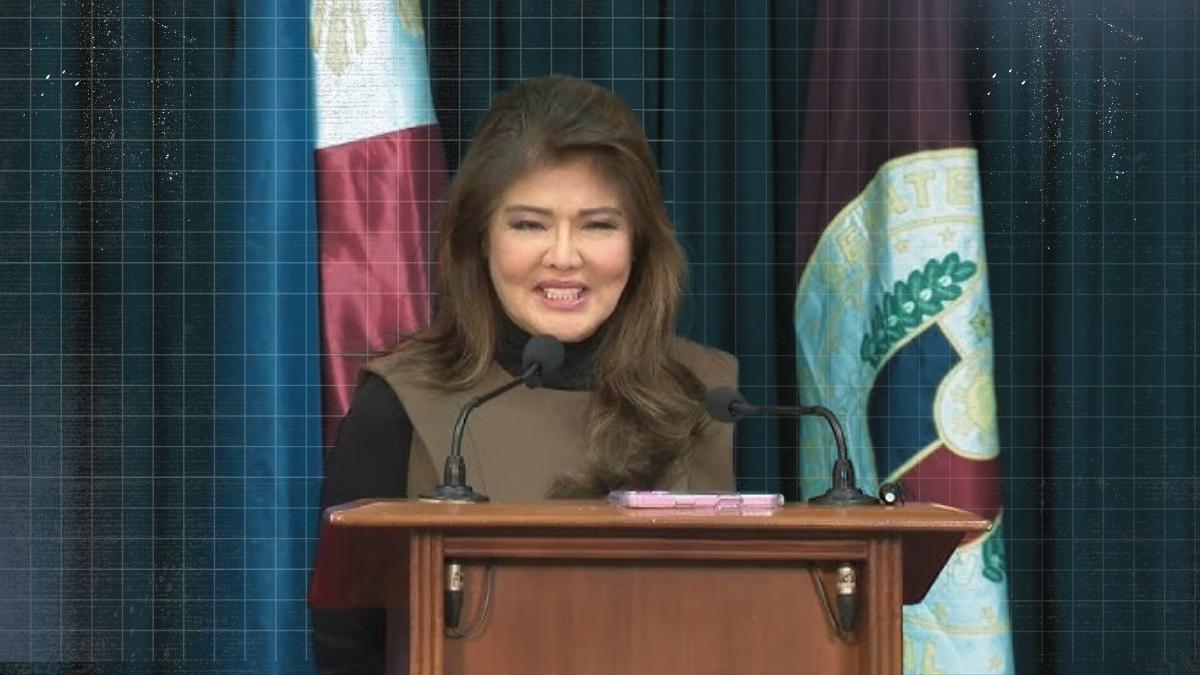
Imee Marcos Seeks Senate Probe on 18 Former Marines: Accountability or Political Crossfire?
Imee Marcos has filed a resolution calling for a Senate inquiry into the allegations involving 18 former Marines, following developments that have sparked intense national discussion.
During a Senate press briefing dated February 25, 2025, Marcos emphasized the need for legislative scrutiny over the claims surrounding the former military personnel.
The move places the Senate at the center of yet another politically sensitive investigation — one that intersects with national security, institutional integrity, and public trust.
What Is the Resolution About?
The resolution seeks a formal Senate inquiry into the allegations raised by or against the 18 former Marines. While details remain under public examination, the issue reportedly involves claims of misconduct and possible financial inducements tied to controversial investigations.
A Senate probe could:
Clarify the credibility of the allegations
Identify potential violations of law
Recommend legislative safeguards
Protect institutional integrity
Marcos framed the initiative as part of the Senate’s constitutional duty to conduct oversight when public interest is at stake.
Oversight or Political Arena?
Senate investigations in the Philippines are rarely quiet affairs.
They often become high-profile events where:
Witnesses testify under oath
Political alliances shift
Media narratives intensify
Supporters of the resolution view it as necessary transparency.
Critics warn that Senate inquiries can sometimes become platforms for political positioning.
The truth likely depends on how the hearings are conducted — whether focused on facts or framed by factional tension.
The Military Dimension
Any issue involving former Marines carries weight.
The Armed Forces of the Philippines remains one of the country’s most respected institutions. Allegations touching on former service members can impact morale, public perception, and civil-military relations.
That is precisely why clarity matters.
If wrongdoing occurred, accountability is essential.
If accusations are unfounded, reputations must be defended.
Either way, due process must guide proceedings.
Political Timing
The resolution arrives amid heightened political polarization.
With ongoing national debates surrounding sovereignty, foreign investigations, and institutional credibility, any inquiry related to those themes is bound to draw attention.
And in Philippine politics, timing is never accidental.
Some observers interpret the move as institutional vigilance.
Others see it as strategic positioning.
In the arena of governance, both interpretations can coexist.
A Satirical Reality Check
Let’s be honest.
In the Philippines, Senate hearings can sometimes resemble a primetime series.
There are opening statements.
There are dramatic exchanges.
There are viral clips.
But unlike television, real consequences follow — at least in principle.
The real test will not be how many views the hearing gets.
It will be whether facts emerge stronger than rhetoric.
A Biblical Reflection on Inquiry and Justice
Scripture reminds us in Proverbs 18:13 (KJV):
“He that answereth a matter before he heareth it, it is folly and shame unto him.”
Investigations exist precisely because conclusions should follow examination — not precede it.
In times of tension, wisdom calls for patience.
Truth requires listening.
Justice requires process.
Leadership requires restraint.
