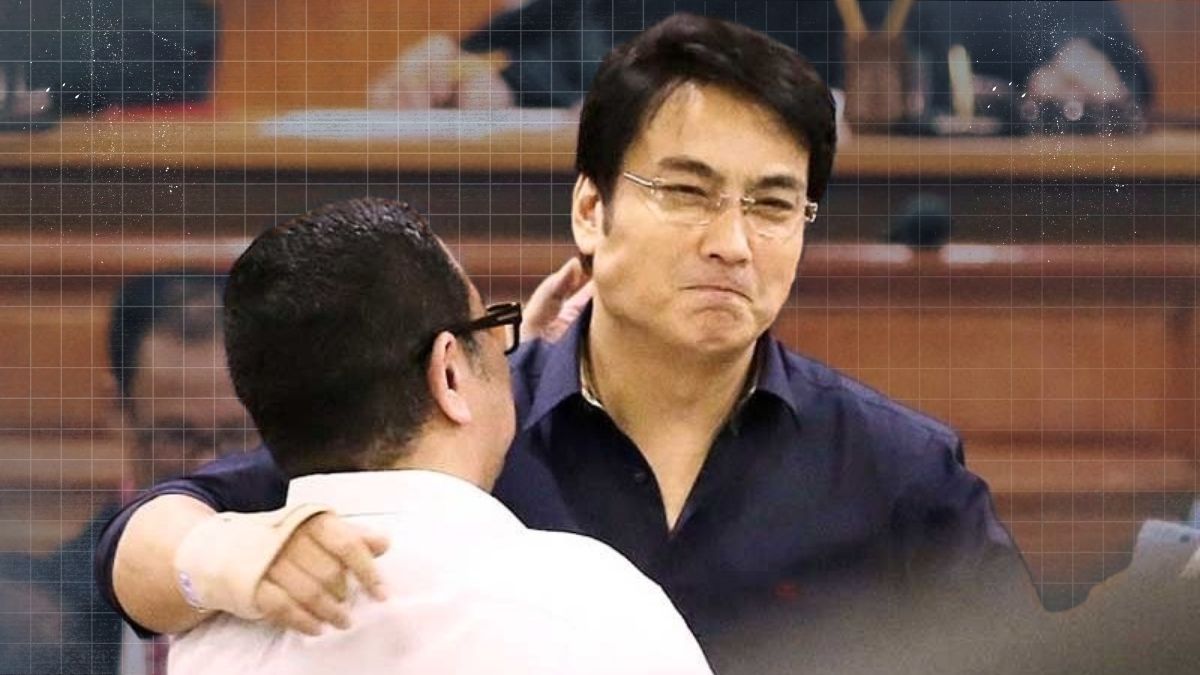
🚨 Political Watch | Revilla Refuses to Enter Plea in Graft Case Arraignment
A Tactical Pause: What It Means When an Accused Refuses to Plead
Former senator Bong Revilla declined to enter a plea during his arraignment in a graft case, prompting the court to note the refusal and proceed under established criminal procedure.
The move immediately drew public attention, but in legal terms, it is not unprecedented—nor does it halt the case.
Under Philippine rules, when an accused refuses to plead, the court typically enters a plea of “not guilty” on the accused’s behalf, ensuring proceedings continue while preserving the accused’s constitutional rights.
Why Refuse to Plead?
Defense lawyers may advise a refusal for several procedural reasons, including:
pending motions that could affect jurisdiction or validity of charges,
unresolved questions about the information filed, or
objections to how the arraignment is being conducted.
In short, a refusal is often a procedural signal, not a declaration of innocence or guilt.
The Court’s Response
The Sandiganbayan followed standard practice by recording the refusal and ensuring the case remains on track. This prevents delays that could otherwise arise if defendants could stall cases simply by declining to plead.
The court’s approach underscores a key principle: arraignment is a gateway, not a roadblock.
Context: The Graft Case
The charges stem from alleged irregularities tied to a flood control project—part of a broader cluster of cases scrutinizing infrastructure spending. Such cases are complex, document-heavy, and politically sensitive, which explains why defense teams often pursue every available procedural safeguard.
Importantly, refusing to plead does not invalidate the charges, dismiss the case, or weaken the prosecution’s evidence by itself.
Public Optics vs. Legal Reality
To the public, a refusal to plead can look defiant—or strategic. In court, it’s neutral.
Legal experts caution against overreading the move:
It does not delay trial indefinitely
It does not imply special treatment
It does not change the presumption of innocence
What it does do is preserve objections the defense may later raise on appeal.
What Happens Next
With a plea effectively entered by the court, the case proceeds to:
pre-trial conferences,
presentation of evidence, and
resolution of pending motions.
Any challenge raised by the defense will be addressed through written pleadings and hearings, not through the arraignment alone.
Why This Matters
High-profile cases test the justice system’s balance between rights and efficiency. Allowing procedural protections while preventing obstruction is the court’s tightrope.
This episode shows that:
defendants retain full procedural rights, and
courts retain control over the pace of justice.
Quiet takeaway: Refusing to plead pauses nothing essential—it simply preserves process.
Bible verse anchor:
Ecclesiastes 8:6 — “For there is a proper time and procedure for every matter.”
