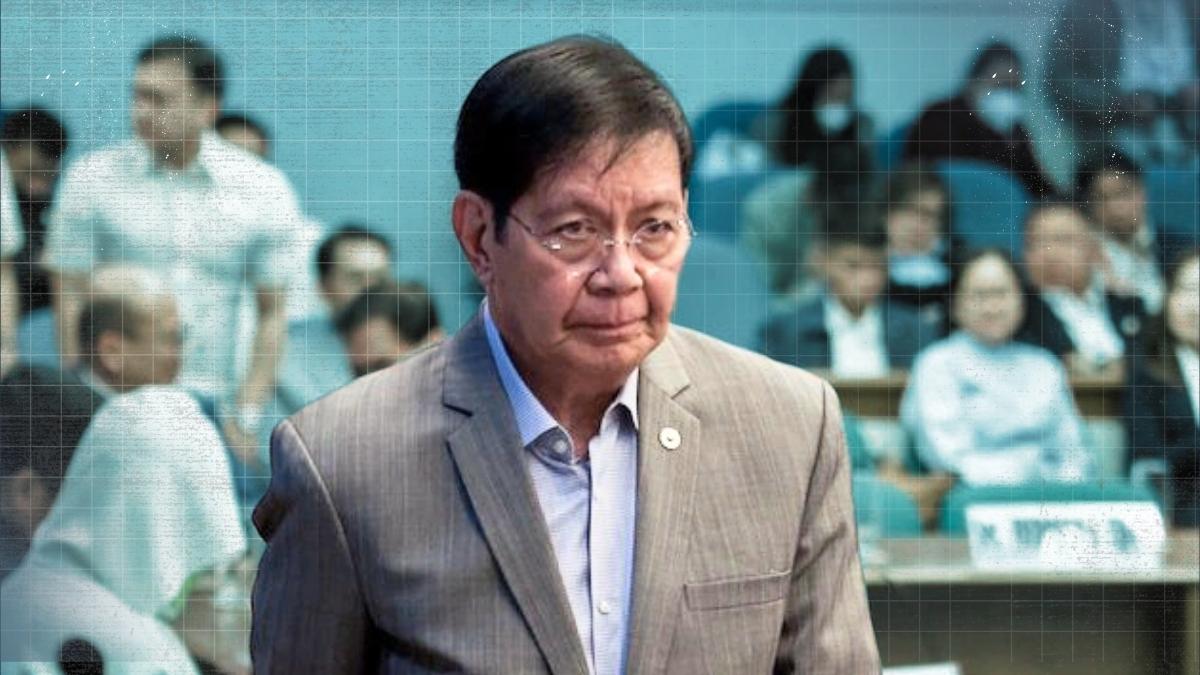
Lacson Orders Validation of 18 Ex-Marines’ Claims: Due Process or Political Smoke?
Senate President Pro Tempore Ping Lacson has ordered the validation of allegations made by 18 supposed former soldiers who claimed they delivered cash-filled suitcases to certain lawmakers and government officials — allegedly linked to anomalous flood control projects.
According to reports, the former soldiers alleged that from 2023 to 2025, billions of pesos were delivered to specific personalities, including former lawmaker Zaldy Co, and even cited an alleged residence connected to President Ferdinand Marcos Jr..
Lacson, however, noted discrepancies between the amounts cited by the alleged former soldiers and official budget allocations for flood control projects during the same period — raising questions about the credibility of the claims.
Verification Before Amplification
Rather than immediately endorsing or dismissing the accusations, Lacson stated that he wrote to the Armed Forces of the Philippines — including the Philippine Navy and Army — requesting background checks and service record verification of the 18 individuals.
This approach signals something critical:
Before conclusions, there must be confirmation.
Before outrage, there must be authentication.
In a political climate where allegations go viral within minutes, institutional validation becomes a stabilizing force.
The Timing Question
Lacson also raised concerns about timing.
He observed that the surfacing of the claims coincided with:
ICC confirmation of charges proceedings
The anniversary of the EDSA People Power Revolution
He suggested that the context creates the appearance of political color or even an element of destabilization.
In Philippine politics, timing often shapes perception as much as content.
Whether coincidence or coordination, public reaction tends to interpret events through broader national narratives.
Joint Affidavit: Does It Carry Weight?
One of the pressing questions raised publicly is about the joint affidavit reportedly submitted by the 18 individuals — including pictures and attachments.
Does it carry value?
Legally, an affidavit is evidence.
But its strength depends on:
Authenticity of the affiants
Verifiability of documents
Corroboration through independent sources
Consistency with financial records
An affidavit alone does not equal proof — but neither is it automatically dismissed.
That is precisely why validation matters.
Oversight vs. Destabilization
There are two dominant interpretations circulating:
Interpretation A:
The claims reveal large-scale corruption requiring urgent accountability.
Interpretation B:
The claims are politically timed narratives designed to undermine stability during sensitive national moments.
Reality may lie somewhere in between — or outside both frames entirely.
What remains constant is this:
Serious allegations require serious verification.
A Satirical Observation
In the Philippines, “maleta politics” has become almost symbolic — a recurring image in corruption controversies.
But here’s the irony:
Sometimes the loudest claims come with the lightest documentation.
And sometimes the quietest investigations uncover the heaviest truths.
Public discourse often demands immediate judgment.
Institutions, however, are built for deliberate process.
The difference between mob reaction and mature governance is patience.
Biblical Reflection on Discernment
Scripture offers timeless guidance in moments of accusation and uncertainty.
1 Thessalonians 5:21 (KJV):
“Prove all things; hold fast that which is good.”
Validation is not denial.
Verification is not suppression.
Inquiry is not guilt.
Truth survives scrutiny.
Falsehood collapses under it.
What Happens Next?
Lacson’s move suggests the issue may proceed through:
Service record confirmation
Senate-level scrutiny
Possible hearings if warranted
Cross-checking against official budget data
If discrepancies are validated, the claims weaken.
If documentation aligns with evidence, accountability intensifies.
Either path demands discipline over drama.
A Discreet Agila Note
Strong institutions are not shaken by allegations — they are strengthened by transparent processes.
The true measure of governance is not how loudly accusations are made,
but how firmly procedures are followed.
When sovereignty, stability, and national credibility are involved, careful steps matter more than viral moments.
