
The Overlooked Trio Behind Women's Hair Thinning
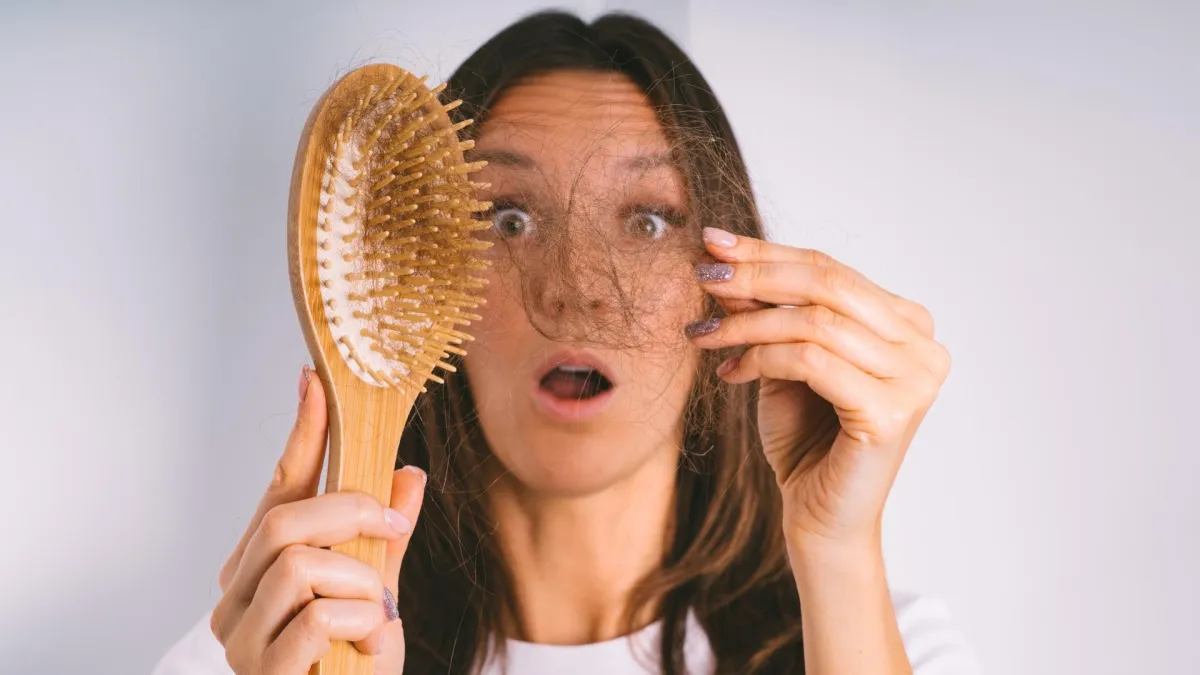
You’ve noticed it. Your hairbrush fills faster than it used to. Your ponytail feels thinner. The part in your hair looks just a bit wider than last year. For many women, hair thinning creeps in slowly, and it’s easy to dismiss it as “just stress” or “part of getting older.” But thinning hair can be a sign of deeper issues happening in the body.
Hair Thinning Due To Iron Deficiency
Hair Thinning Due To Thyroid Dysfunction
Hair Thinning Due To Androgen Excess
Why These Causes Of Hair Thinning Are Overlooked
Symptoms are subtle or nonspecific– Fatigue, mood changes, and mild hair shedding are easy to dismiss or attribute to stress, busy schedules, or aging.
Testing is incomplete– Many standard lab panels focus on ruling out obvious disease rather than assessing for optimal function, which can miss early imbalances.
Siloed medical care– Hair loss might be addressed by a dermatologist, energy concerns by a primary care doctor, and menstrual changes by a gynecologist, without anyone connecting the dots.
Time constraints– A brief office visit may not leave room to explore all possible contributing factors, especially if the patient isn’t aware of other subtle symptoms.
Taking a Functional Medicine Approach
●Detailed health history– Reviewing not only hair loss patterns but also menstrual history, energy levels, digestion, diet, stress, and other systemic clues.
●Comprehensive lab testing– Going beyond standard panels to include ferritin, full thyroid panels, and androgen profiles when warranted.
●Root-cause investigation– Asking why a lab result is abnormal. For example, if ferritin is low, is it due to poor intake, absorption issues, or chronic blood loss?
●Targeted nutrition and supplementation– Replenishing deficiencies and supporting hormonal balance with individualized plans.
●Lifestyle and environmental support– Managing stress, improving sleep, reducing toxin exposures, and supporting metabolic health.
References
Carmina, E., Azziz, R., Bergfeld, W., Futterweit, W., Huddleston, H., Lobo, R., ... & Yildiz, B. O. (2019). Female pattern hair loss and androgen excess: A report from the multidisciplinary androgen excess and PCOS committee. Journal of Clinical Endocrinology & Metabolism, 104(7), 2875–2883. https://doi.org/10.1210/jc.2019-00221
Ho, C. H., Sood, T., & Zito, P. M. (2024). Androgenetic Alopecia. In StatPearls. StatPearls Publishing. https://www.ncbi.nlm.nih.gov/books/NBK430924/
Kantor, J., Kessler, L. J., Brooks, D. G., & Cotsarelis, G. (2003). Decreased serum ferritin is associated with alopecia in women. Journal of Investigative Dermatology, 121(5), 985–988. https://doi.org/10.1046/j.1523-1747.2003.12540.x
Sinclair, R. D. (2015). Diffuse hair loss. International Journal of Dermatology, 54(10), 1112–1124.