Rent vs. Own: Why Paying Rent May Be Costing You Long-Term
For millions of people, renting feels like the safer and more flexible option. No long-term commitment, fewer responsibilities, and predictable monthly payments. But what many renters don’t realize is that paying rent year after year may be costing them far more in the long run than owning a home.
Understanding the difference between renting and owning isn’t just about monthly payments—it’s about long-term wealth, stability, and control over your financial future.
Let’s break down why renting can quietly hold you back—and how owning a home can change your financial trajectory.
The True Cost of Renting
Rent is often seen as a short-term convenience, but over time it becomes a long-term expense with no return on investment.
When you rent:
Your monthly payments build your landlord’s equity, not yours
Rent typically increases every year
You gain no ownership or asset value
You have limited control over your living space
After 10 or 20 years of renting, you may have spent hundreds of thousands of dollars—with nothing to show for it.

Why Homeownership Builds Long-Term Wealth
Owning a home turns your monthly housing payment into a financial asset.
When you own:
Each payment builds equity in your home
Homes historically appreciate in value over time
Mortgage payments can become more stable than rent
You create a tangible asset that supports long-term wealth
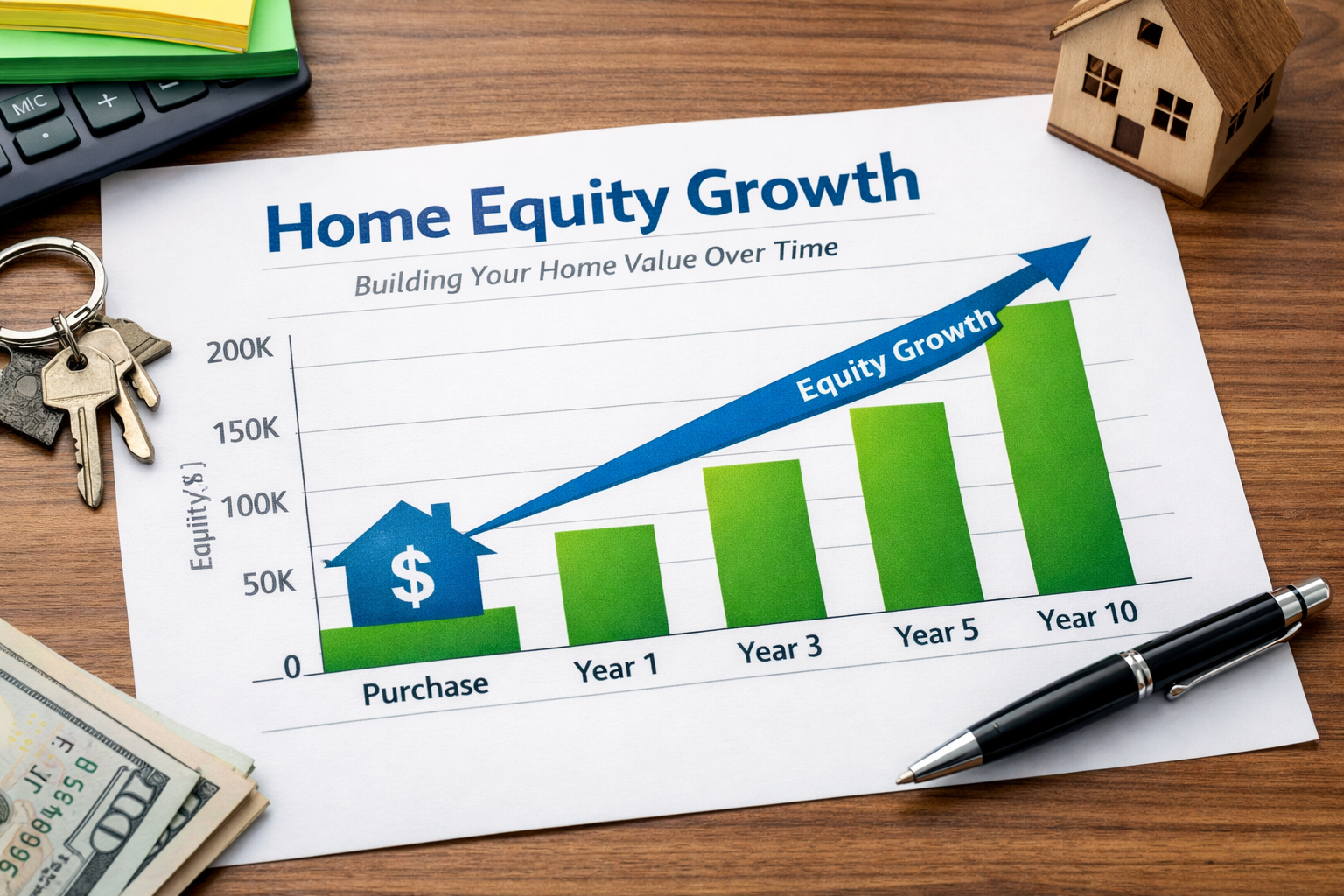
Instead of money leaving your bank account forever, part of your payment stays with you—in the form of home equity.
Rent Increases vs. Stable Mortgage Payments
One of the biggest financial challenges renters face is uncertainty. Rent can increase at the end of each lease, often without warning.
Homeownership offers:
More predictable monthly payments (especially with fixed-rate mortgages)
Protection from sudden rent hikes
Greater control over long-term housing costs
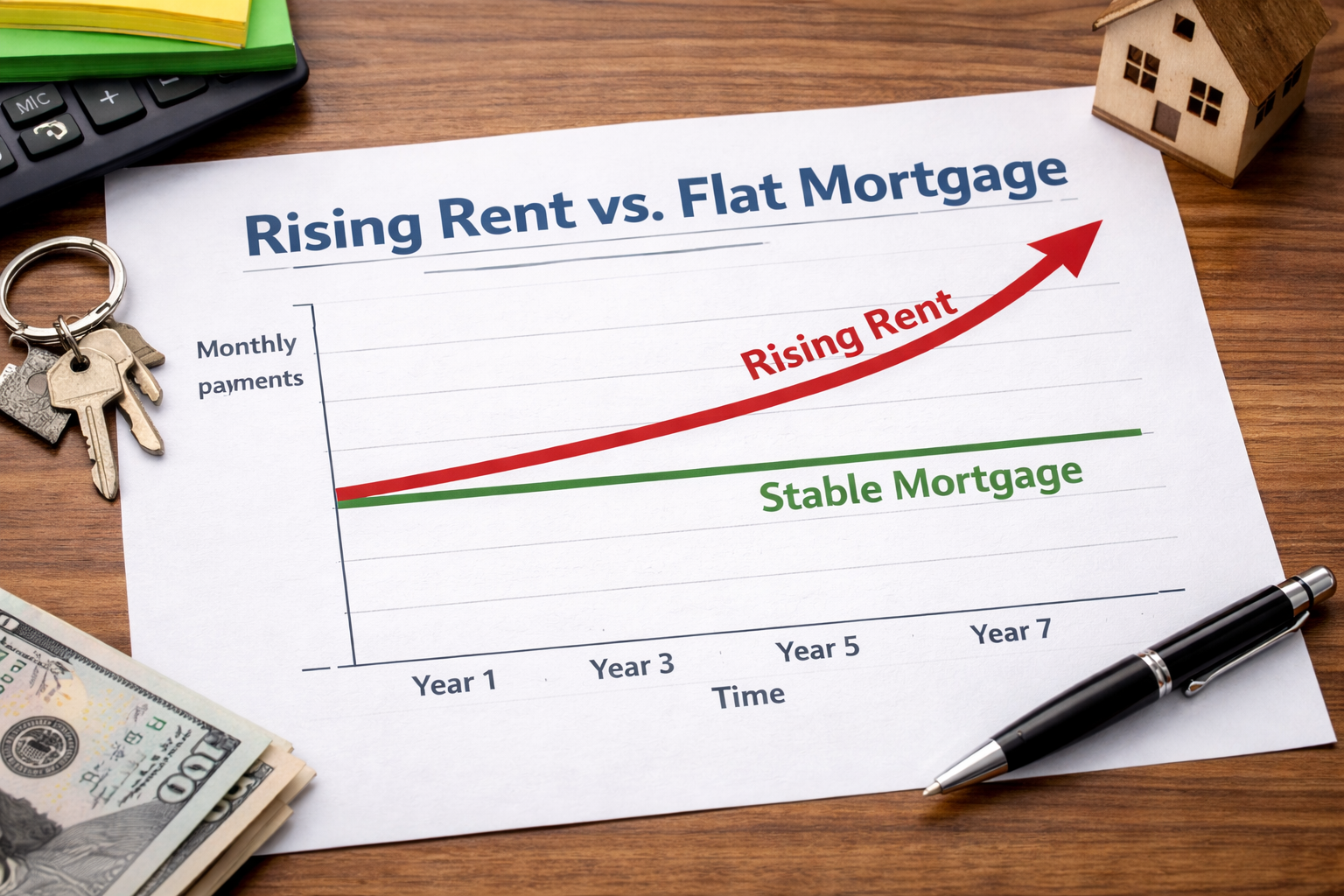
Over time, the gap between rising rent and stable mortgage payments can become substantial.
The Opportunity Cost of Renting
Opportunity cost is what you give up by choosing one option over another.
By renting long-term, you may be giving up:
Home equity growth
Tax advantages tied to homeownership
A hedge against inflation
A future asset you can borrow against or sell
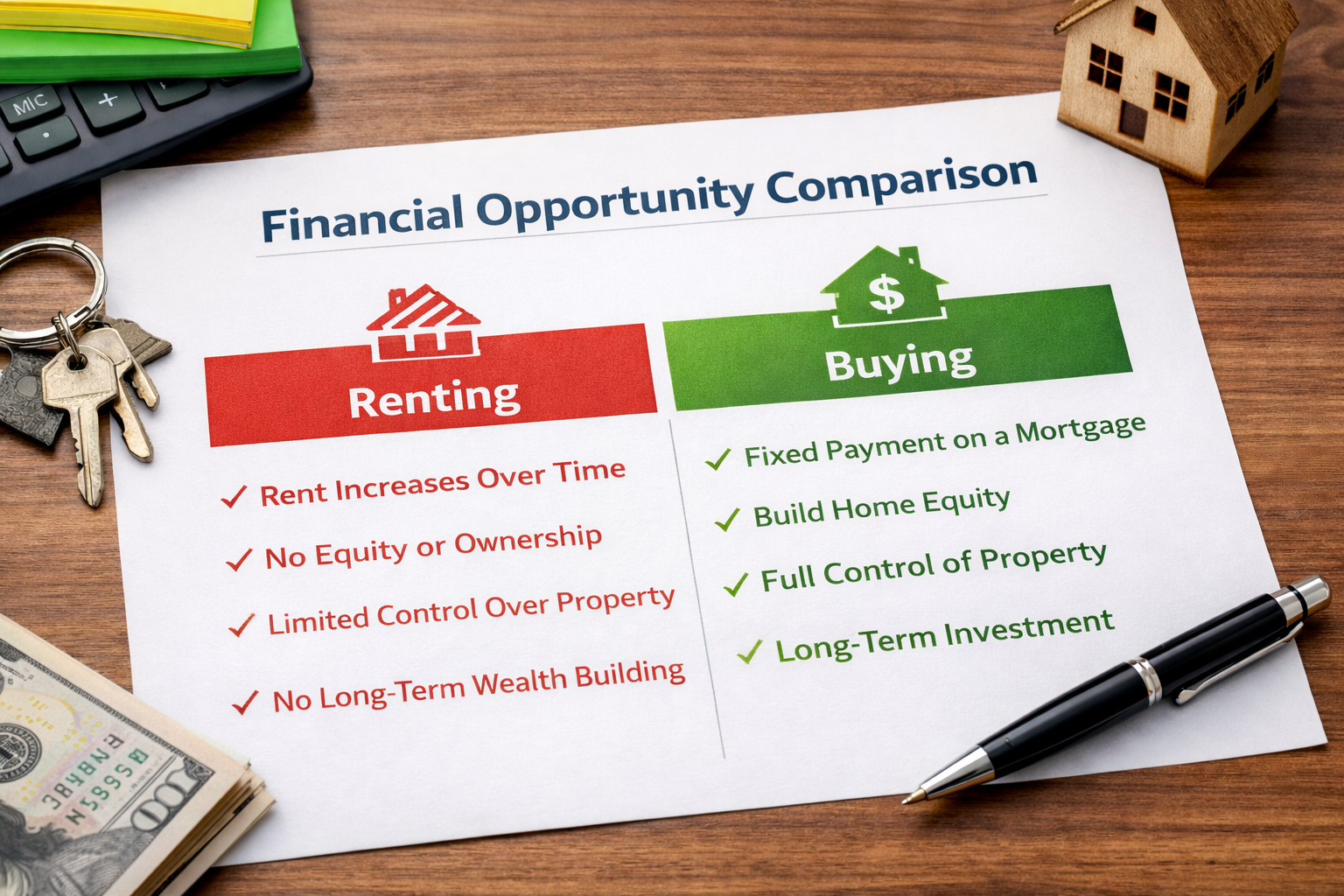
Renting may feel cheaper today—but it can cost significantly more over decades.
Common Myths That Keep People Renting
Many renters delay buying because of misconceptions, such as:
“I need perfect credit to buy a home”
“I need 20% down”
“Buying is always more expensive than renting”
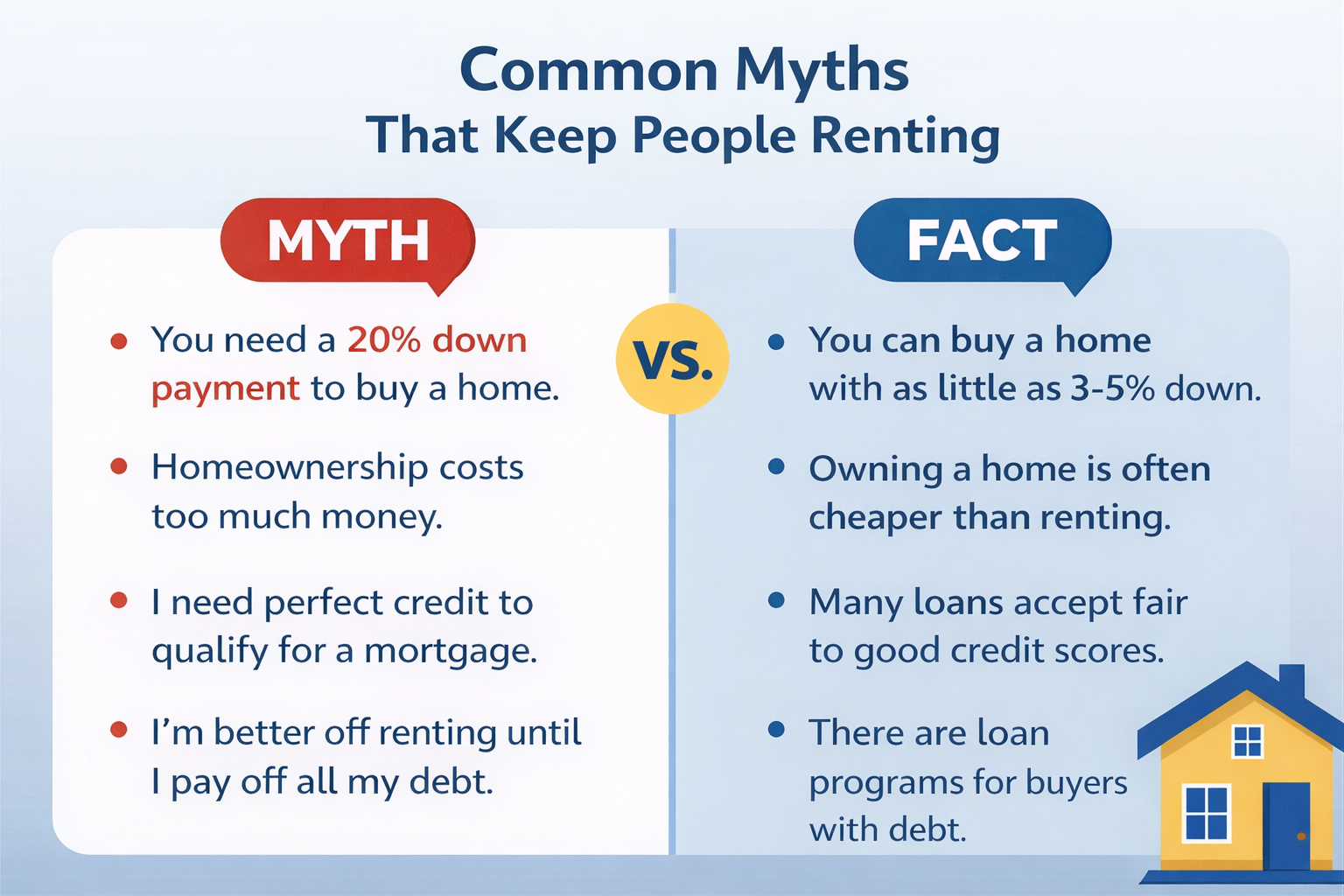
In reality, many first-time buyers qualify with lower down payments and improve their finances while preparing to buy.
The biggest cost often isn’t buying too early—it’s waiting too long.
📸 Recommended image: Myth vs fact graphic
Is Owning Right for Everyone?
Renting can make sense in some situations—such as short-term living, frequent relocation, or major life transitions. But for people planning to stay in one place for several years, owning often becomes the financially smarter long-term choice.
The key is understanding:
Your financial readiness
Your timeline
Your long-term goals

How to Decide If You’re Ready to Own
If you’re unsure whether owning is right for you, start by asking:
Am I planning to stay in one area for at least 3–5 years?
Can I manage monthly payments similar to rent?
Am I willing to prepare financially over time?
If the answer is yes, homeownership may be closer than you think.
Take the Next Step With OwnTheRoof
To make your homeownership journey even smoother, OwnTheRoof offers resources that guide you through every stage of the timeline:
🔗 FREE Weekly Webinars: Step-by-step guidance – https://f.mtr.cool/mvbroydmbn
📘 OwnTheRoof Book: Complete roadmap to buying your home – https://f.mtr.cool/nufhjercna
📞 Free One-on-One Call: Personalized advice from homeownership experts – https://owntheroof.com/book-free-call

Final Thoughts: Rent Is a Payment—Ownership Is an Investment
Renting keeps a roof over your head. Owning builds something lasting.
While renting offers flexibility, long-term renting can quietly drain your financial potential. Homeownership, when approached responsibly, offers stability, equity, and a path toward long-term wealth.
If you’re currently renting, the most powerful step you can take isn’t rushing to buy—it’s learning what it would take to own and creating a plan to get there.