
How to Find Your Purpose (Without Forcing It)
Purpose doesn’t reveal itself through pressure.
It surfaces through attention.
It’s unsettling when you realize how many people are quietly dissatisfied with their work.
Not angry.
Not failing.
Just… disconnected.
Nearly half of people say they’re unhappy or only marginally satisfied with what they do.
Only a small fraction describe their work as something they feel passionate about.
A third feel stuck—like they’ve reached a dead end.
And yet, very few are eager to change.
Pause here. This matters.
Because this tension isn’t about laziness or fear.
It’s about uncertainty.
You might recognize it in yourself:
You’re doing a lot—but you’re not sure you’re doing the right things
You’re competent, capable, even successful—yet something feels misaligned
You wonder whether you’re truly making a difference, or just staying busy
You ask yourself, quietly, Is this it?
Purpose confusion often shows up not as crisis—but as numbness.
And numbness is harder to name.
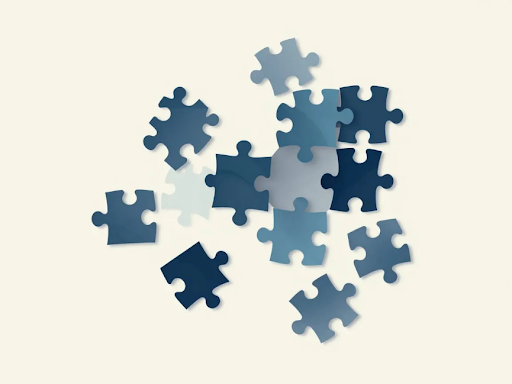
Purpose isn’t something you force into existence.
It’s something you uncover through attention.
I once read about a highly successful professional—a cardiologist—who struggled to articulate his purpose. His coach didn’t ask him to define a mission statement or map out a bold vision. Instead, he asked something simpler:
When have you felt most fulfilled in your life?
The answers had nothing to do with career milestones.
Time with his grandfather.
Playing with his grandchildren.
Sailing—unhurried, free, fully present.
When asked what these moments had in common, the answer wasn’t status or success.
It was freedom.
Then came a second question:
When have you felt most fulfilled as a doctor?
Again, not promotions or recognition.
But moments when he stayed longer than required.
When he reduced fees.
When he took extra time to comfort frightened families.
The realization was quiet but decisive.
His purpose hadn’t been absent.
It had simply been mislabeled.
That’s often the case.
We look for purpose in titles, outcomes, or dramatic change—when it’s already present in patterns we’ve overlooked.
Here’s another truth that steadies rather than pressures:
Purpose isn’t something you invent.
It’s something you notice.

Here’s the reframe most people need:
You don’t “find” your purpose by thinking harder.
You uncover it by paying better attention.
Purpose leaves clues.
Not grand ones—but consistent ones.
Instead of asking “What should I do with my life?”, try these quieter questions:
A Simple Purpose Inventory
What activities energize you rather than drain you?
(Not what you’re good at—but what restores you.)What did you love before anyone told you it had to be practical?
(If your younger self heard your current reasoning, would they understand—or grieve?)What do people consistently thank you for?
(Gratitude often reveals contribution.)Where have you made a difference without trying to optimize it?
(Purpose shows up most clearly in unforced moments.)What habits protect your energy, focus, and spirit?
(Low-impact noise crowds out high-impact clarity.)What responsibilities are you avoiding—but know matter?
(Purpose grows alongside ownership.)What passions are you allowed to pursue—without needing them to be “the one”?
(Purpose is often plural before it’s cohesive.)
One writer once posed a haunting question:
What is true about you today that would make your younger self grieve?
Not out of shame—but out of lost connection.
Many people don’t lose their purpose.
They lose permission.
Permission to enjoy what energizes them.
Permission to explore more than one path.
Permission to let passion exist before it’s justified.
Here’s another reframe worth keeping close:
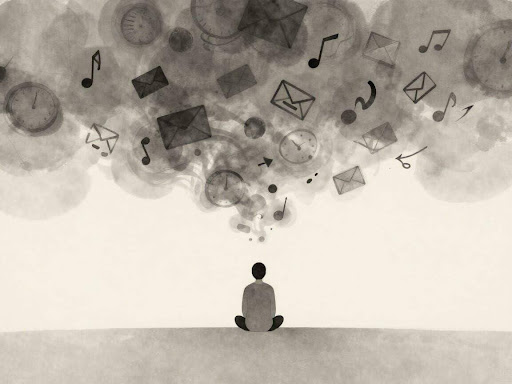
Purpose isn’t a single destination.
It’s a direction shaped by daily ownership.
When you stop forcing clarity, something changes.
The pressure softens.
The noise quiets.
Your posture shifts—from chasing answers to listening for patterns.
You stop asking, “What’s wrong with me?”
And start asking, “What’s trying to surface?”
You realize that purpose isn’t missing.
It’s just been crowded out by:
Other people’s expectations
Low-impact habits
The myth that there’s only one right path
The belief that passion must be justified before it’s explored
This shift doesn’t make life smaller.
It makes it lighter.

Purpose expands when you give yourself permission to engage fully—right where you are.
This isn’t about quitting your job tomorrow.
Or making a dramatic declaration.
It’s about aligned action, practiced consistently.
Try this instead:
A Gentle Call to Implement
Over the next seven days:
Notice what gives you energy—and what quietly drains it
Protect one small block of time each day from low-impact noise
Engage one activity simply because it brings clarity or aliveness
Write down what you’re learning—not what you’re deciding
No pressure to conclude.
No demand to label.
Just attention.
Because when you steward your time and energy with care, purpose doesn’t need to be chased.
It emerges.
A purposeful life isn’t built through urgency.
It’s built through faithful, attentive ownership—one day at a time.
