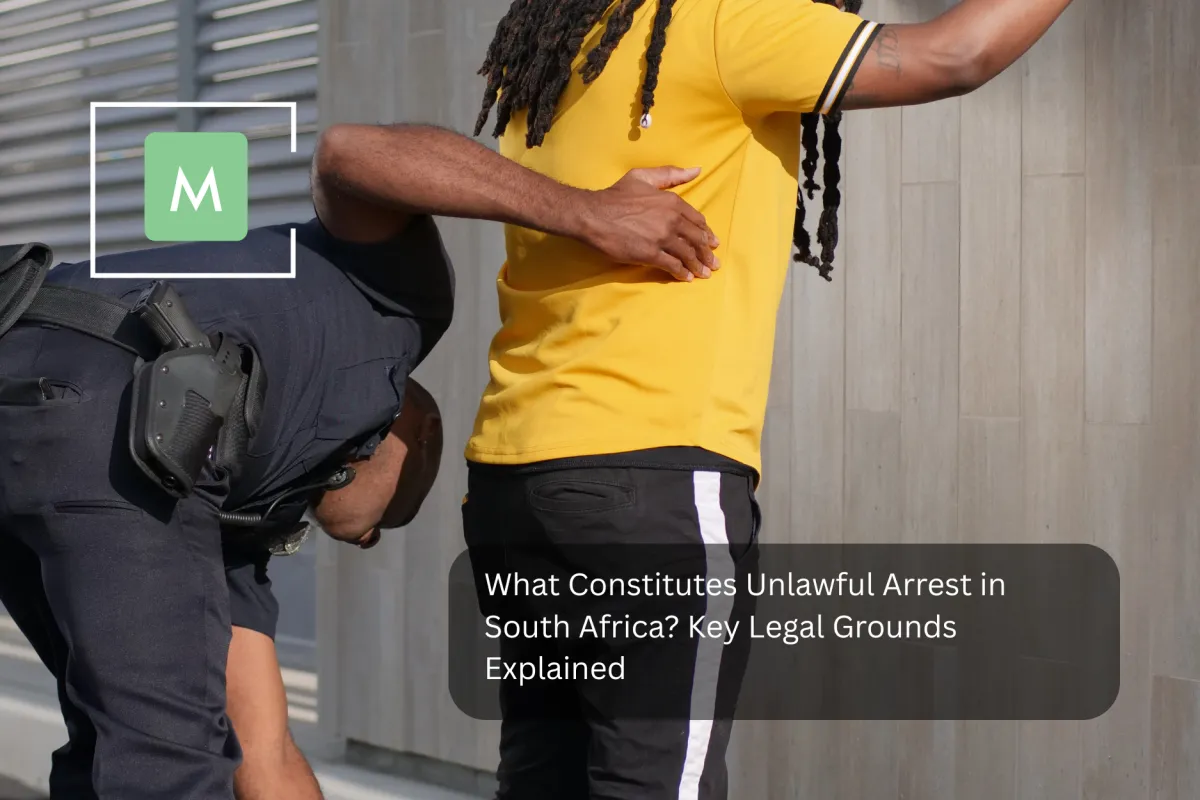
What Constitutes Unlawful Arrest in South Africa? Key Legal Grounds Explained
What Constitutes Unlawful Arrest in South Africa? Key Legal Grounds Explained
Being arrested is a serious event that impacts your fundamental rights and freedoms. While law enforcement officers have the authority to make arrests under certain circumstances, this power is not absolute and is subject to strict legal limitations. If you believe you or someone you know has been arrested without proper legal justification, understanding what constitutes an unlawful arrest in South Africa is crucial.
At Mopeli & Co Attorneys, with our offices strategically located in Gauteng and the Free State, we are dedicated to upholding the rights of individuals across South Africa. Our experienced team of attorneys provides expert legal guidance on matters of unlawful arrest, assisting clients nationwide in understanding their rights and pursuing claims for compensation when those rights have been violated. For our valued clients, we also offer a secure client portal on our website where you can conveniently log in to access updates and important documents related to their case.
The Bedrock of Lawful Arrest: Reasonable Suspicion and Warrants
For an arrest to be lawful in South Africa, it generally needs to be based on either a valid warrant issued by a magistrate or the existence of reasonable suspicion that the person being arrested has committed an arrestable offence. These two pillars form the foundation of lawful arrest, and their absence can render an arrest unlawful.

Reasonable Suspicion: A Necessary Foundation
In situations where a warrant is not immediately available or when an officer encounters someone in the act of committing a crime, an arrest can be made without a warrant. However, this power is contingent upon the officer having a reasonable suspicion, based on credible information and objective facts, that the person has committed an arrestable offence. Mere suspicion or a hunch is not sufficient.
Objective Facts: The suspicion must be based on tangible evidence, witness statements, or the officer's direct observations.
Arrestable Offence: The suspected crime must be one for which arrest is a permissible legal consequence. Minor offences often do not warrant an arrest.
Reasonable Person Standard: The suspicion must be such that a reasonable person in the officer's position, with the same information, would also hold the suspicion.
The Importance of a Valid Warrant
A warrant of arrest is a written order issued by a magistrate or judge, directing law enforcement officers to arrest a specific individual. For a warrant to be valid, it must:
Clearly identify the person to be arrested.
Specify the offence that the person is alleged to have committed.
Be issued by a magistrate or judge with the necessary jurisdiction.
An arrest made without a valid warrant, in circumstances where a warrant was legally required, can be deemed unlawful.
Key Legal Grounds That Can Render an Arrest Unlawful:
Beyond the absence of reasonable suspicion or a valid warrant (where required), several other legal grounds can lead to an arrest being considered unlawful in South Africa:
Arrest for a Non-Arrestable Offence: South African law distinguishes between offences for which arrest is a permissible initial step and those where other methods, such as issuing a summons to appear in court, should be used. Arresting someone for a minor offence that does not carry a risk of them evading justice may be considered unlawful.
Failure to Follow Correct Arrest Procedures: Even if there is a basis for the arrest, law enforcement officers must adhere to specific procedures. Failure to do so can render the arrest unlawful. This includes:
Not informing the arrested person of the reason for their arrest: The officer must clearly and understandably explain why the person is being arrested at the time of the arrest.
Not informing the arrested person of their constitutional rights: Individuals must be informed of their right to remain silent, their right to legal representation, and other fundamental rights upon arrest.
Mistaken Identity: If an individual is arrested due to a genuine error in identity, and the police did not take reasonable steps to verify their identity before the arrest, the arrest may be unlawful. The onus is on law enforcement to exercise due diligence in identifying the correct person.
Arrest Based on an Unlawful Warrant: If the warrant itself was improperly obtained (e.g., based on false information) or is technically invalid, an arrest executed under that warrant can be challenged as unlawful.
Arrest for an Unlawful Purpose or with Malice: If the arrest is carried out for reasons other than bringing the person before a court of law to face charges – such as harassment, intimidation, or to settle a personal vendetta – it constitutes an abuse of power and can be deemed unlawful.
Unlawful Detention Following a Lawful Arrest: While the initial arrest may have been lawful, if the person is detained for an unreasonably long period without being brought before a court (beyond the constitutionally mandated 48 hours, with limited exceptions), the continued detention can become unlawful.

The Importance of Understanding Your Rights:
Knowing what constitutes a lawful arrest and understanding your rights when confronted by law enforcement is crucial. If you believe your arrest was unlawful, it is vital to remain calm, not resist, but clearly state your belief that the arrest is unlawful. Take note of all the details surrounding the arrest, and as soon as possible, request legal representation.
Seeking Legal Recourse with Mopeli & Co Attorneys:
If you believe you have been the victim of an unlawful arrest in South Africa, Mopeli & Co Attorneys, serving clients nationwide from our offices in Gauteng and the Free State, can provide you with the expert legal assistance you need. Our experienced attorneys can:
Thoroughly assess the circumstances of your arrest to determine if it was lawful.
Advise you on your legal rights and options.
Gather evidence and build a strong case on your behalf.
Initiate legal proceedings to claim compensation for the infringement of your rights, including damages for unlawful detention, emotional distress, and reputational harm.
Represent you in negotiations with the relevant authorities and in court if necessary.
We are committed to upholding the rule of law and protecting the fundamental rights of individuals across South Africa. Our secure client portal ensures that you stay informed and have access to your case information throughout the legal process.

If you believe your arrest was unlawful anywhere in South Africa, don't hesitate to contact Mopeli & Co Attorneys for a confidential and free, no-obligation consultation.
Share your experiences or any questions you have about what constitutes unlawful arrest in the comments section below.
For a confidential and free, no-obligation consultation to discuss the specifics of your potential unlawful arrest claim with our expert legal team at Mopeli & Co Attorneys, please click here or send us a WhatsApp on 082 071 3041. Existing clients can log in to our secure client portal on our website for updates and important documents related to their case. Let us help you understand your rights and pursue the justice you deserve, serving you nationwide from our offices in Gauteng and the Free State.
