
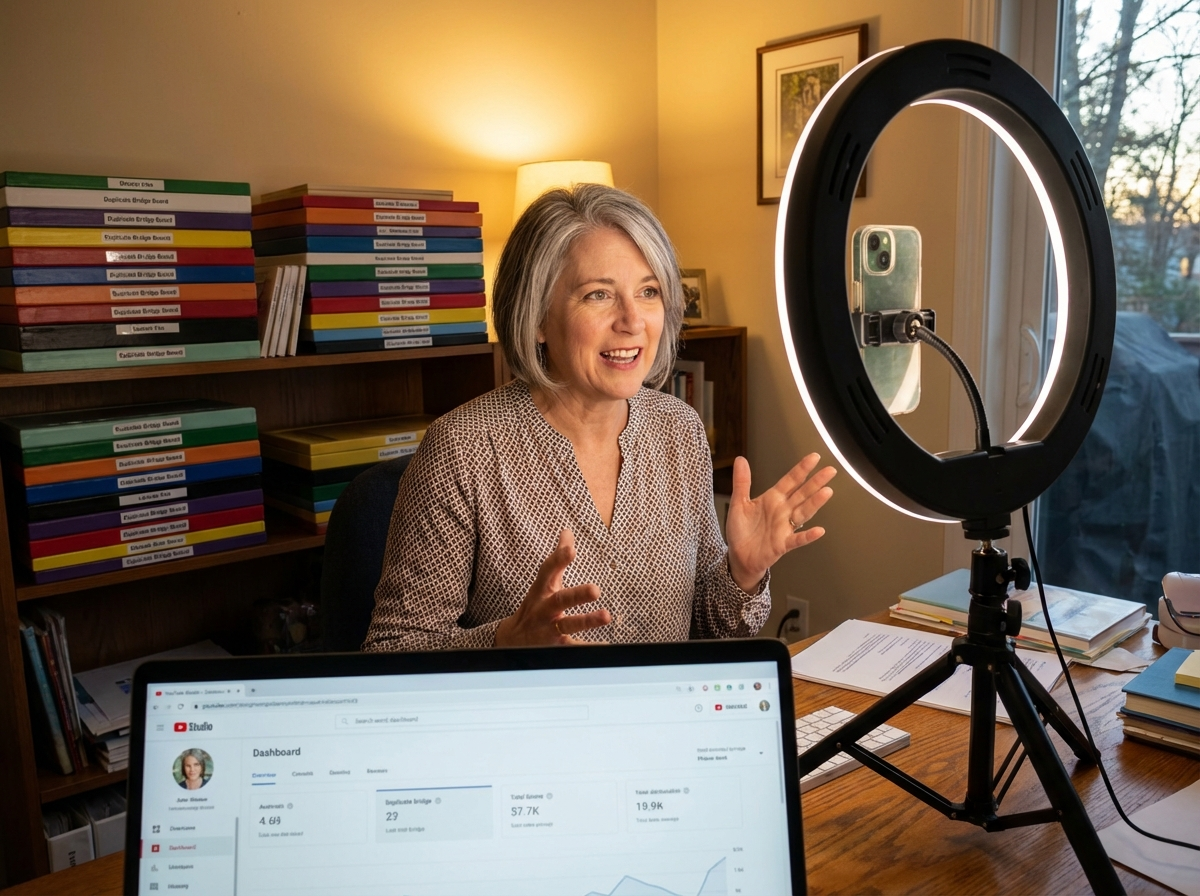
Unlock the YouTube Algorithm: Bridge Player's Guide to Viral Content
The bridge community faces a fascinating challenge: our game possesses incredible strategic depth and dramatic moments that should captivate audiences, yet much of our content remains invisible to the millions of potential viewers scrolling through YouTube every day. The difference between a bridge video that reaches 200 views and one that attracts 20,000 isn't necessarily the quality of the bridge being played—it's understanding how YouTube's algorithm decides which videos deserve promotion.
For bridge clubs, tournament organizers, educators, and players who want to share their passion with the world, mastering YouTube's ecosystem isn't optional anymore. It's the difference between preaching to a small choir of existing enthusiasts and introducing thousands of new players to the game we love. Let's decode exactly how the algorithm works and how you can leverage it to amplify bridge content.
Understanding the YouTube Algorithm: What Actually Drives Video Success

YouTube's recommendation algorithm is fundamentally designed to accomplish one goal: keep people watching videos on YouTube for as long as possible. Every decision the algorithm makes—which videos to suggest, which to promote in search results, which to feature on the homepage—stems from predicting what will keep viewers engaged.
This creates a crucial insight: YouTube doesn't care whether your video is "good" in an absolute sense. It cares whether your video keeps people watching and interacting. A technically imperfect bridge lesson that generates engaged comments and watch time will outperform a cinematically beautiful tournament highlight reel that viewers click away from after thirty seconds.
The Initial Testing Phase
When you upload a new video, YouTube doesn't immediately blast it to millions of people. Instead, it conducts a careful test by showing your content to a small percentage of your subscribers—typically 10-20% initially. This test group determines your video's fate.
During this critical initial phase, YouTube obsessively measures specific metrics: what percentage of people click on your video when they see the thumbnail (click-through rate), how long they watch before clicking away (average view duration and watch time), and most importantly, how they interact with the content (likes, comments, shares, subscriptions).
If your video performs well with this test audience—meaning people click on it, watch a substantial portion, and engage with it—YouTube interprets this as a signal that the content has broad appeal. The algorithm then expands distribution, showing your video to more subscribers and beginning to recommend it to non-subscribers who watch similar content.
Conversely, if your initial test audience largely ignores the video or clicks away quickly, YouTube concludes the content lacks appeal and severely restricts its distribution. This is why even channels with thousands of subscribers sometimes get only a few hundred views on certain videos—the algorithm decided based on early performance that the content wasn't worth promoting.
The Engagement Trinity: Comments, Likes, and Meaningful Interaction
Among all the metrics YouTube tracks, engagement signals carry extraordinary weight because they're the clearest indicators that content resonated with viewers. Let's examine why each type of engagement matters and how bridge creators can generate more of it.
The Disproportionate Power of Comments
Comments represent the gold standard of engagement because they require significantly more effort than clicking a like button. When someone takes thirty seconds to type out their thoughts about your bridge video, they're demonstrating genuine interest that the algorithm rewards handsomely.
But not all comments are created equal. YouTube's algorithm has become sophisticated enough to distinguish between meaningful engagement and throwaway interactions. A three-word generic comment like "Great video!" provides some engagement value, but significantly less than a substantive comment like "The safety play you demonstrated in that 3NT contract at 8:45 was brilliant—I never would have thought to duck the first round of that suit to guard against the 4-1 break."
Even more valuable are comment threads—when your original commenter receives replies and a conversation develops. These multi-comment exchanges signal to YouTube that your video sparked genuine discussion, which is exactly the kind of sticky engagement the platform wants to promote.
Strategic Approaches to Generating Comments:
Directly ask questions in your videos that prompt comments. Instead of just explaining a bidding sequence, conclude with "How would you bid this hand? Drop your auction in the comments!" or "What would you lead against this contract? Let me know below and I'll respond with my analysis."
Create mild controversy or present debatable decisions. Bridge offers endless opportunities for this: "I chose to open 1NT with this hand, but I know many of you would open 1♠—tell me why I'm wrong in the comments!" Playful disagreement sparks discussion.
Respond to comments consistently, especially in the first 24-48 hours after publishing. When viewers see that you actually read and reply to comments, they're much more likely to leave thoughtful contributions. This also triggers YouTube notifications to your commenters, bringing them back to the video and generating additional watch time.
Pin a compelling question as the top comment immediately after publishing. This frames the comment section around discussion rather than leaving it empty, which psychologically encourages participation.
Likes: The Low-Effort Engagement Multiplier
While comments reign supreme, likes still contribute meaningfully to algorithmic performance. They require minimal effort, which means you can generate higher volumes. However, you actually need to ask for them—viewers often simply forget unless prompted.
The key is making like requests feel natural and non-annoying. The bridge community tends to be somewhat skeptical of overt self-promotion, so the approach matters. Instead of begging for likes, frame it as helping the algorithm: "If you found this defense technique useful, clicking the like button helps YouTube show this to other players who might benefit from it."
Timing also matters. Don't ask for likes in your first fifteen seconds—that feels presumptuous before you've delivered value. Instead, ask after you've demonstrated something genuinely useful, ideally at a natural break point in your content.
10 Content Strategies That Make Bridge Videos Algorithm-Friendly
1.Hook Viewers in the First 15 Seconds
YouTube measures viewer retention second-by-second, and the first 15 seconds determine whether most viewers continue watching. Don't open with lengthy introductions or channel branding—immediately demonstrate why this video matters. Show the dramatic bridge hand you'll be analyzing, pose the question you'll be answering, or preview the mistake you'll be explaining. Create immediate curiosity that compels continued viewing.
2.Optimize for Search with Strategic Keywords
Bridge players search YouTube for specific information: "how to count distribution in bridge," "weak two bid strategy," "fourth suit forcing explained," "defensive signals tutorial." Research what actual searches your target audience makes using tools like YouTube's autocomplete or Google Trends. Incorporate these exact phrases in your title, description, and naturally within your video dialogue. This helps YouTube understand what searches should trigger your video as a result.
3.Create Irresistible Thumbnails
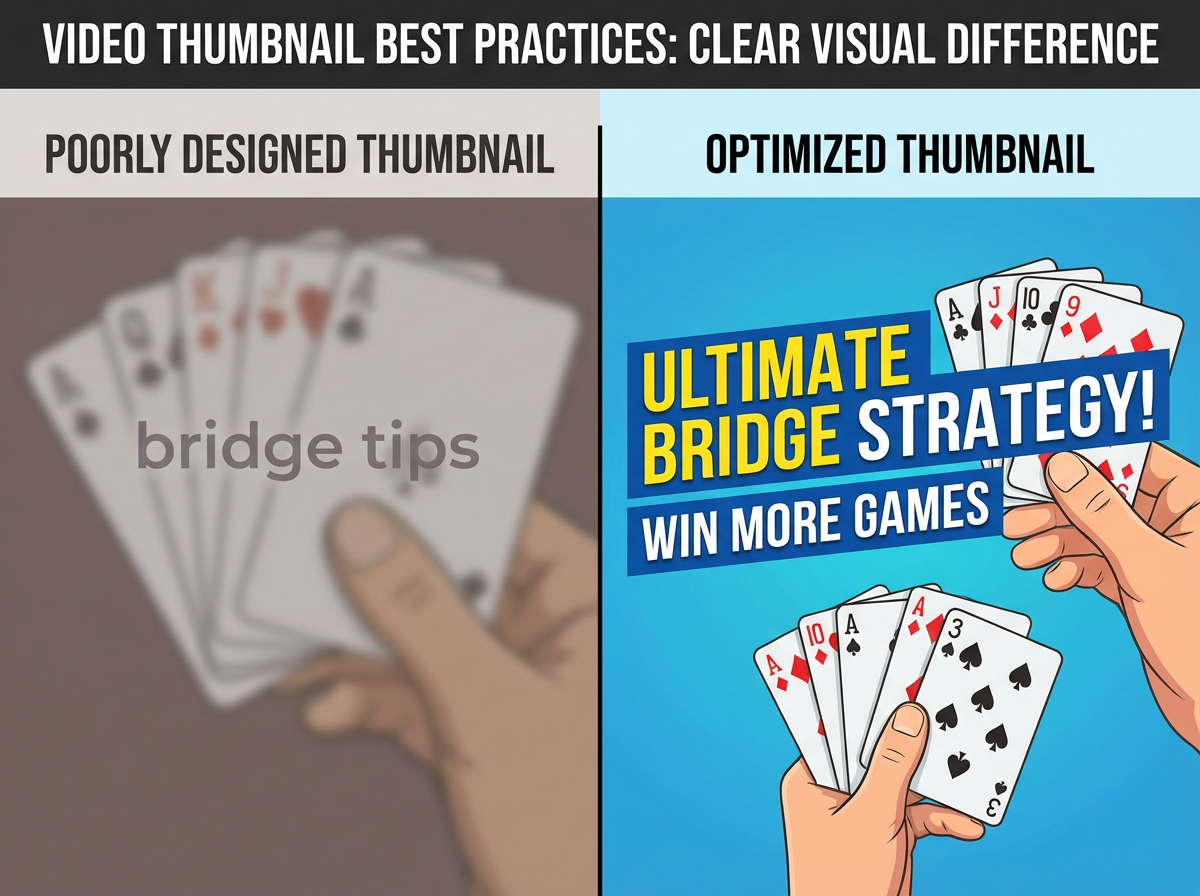
Your thumbnail is a billboard competing for attention against dozens of other videos. Bridge content faces a specific challenge—bridge hands don't naturally create visually dramatic thumbnails. Compensate by adding bold, readable text overlays summarizing the value proposition: "This Lead Wins 70% More" or "The Bidding Rule Everyone Gets Wrong." Use high-contrast colors and faces showing emotion when possible—human faces naturally draw attention.
4.Maintain Strong Watch Time Percentage
Absolute watch time matters, but YouTube also heavily weights what percentage of your video people watch. A 20-minute video where viewers watch an average of 3 minutes (15%) will underperform compared to an 8-minute video where viewers watch an average of 5 minutes (62.5%). This creates a powerful incentive for bridge creators to edit ruthlessly. If a segment doesn't directly contribute to the video's core promise, cut it. Respect your viewers' time and the algorithm will reward you.
5.Structure Content in Chapters with Pattern Interrupts
Long-form bridge analysis can feel monotonous, causing viewers to click away. Combat this by using YouTube chapters (timestamps in your description) to break content into digestible segments. Also employ pattern interrupts—moments that create visual or auditory variety. This might mean changing camera angles, incorporating relevant B-roll, using graphics to illustrate points, or verbally signposting transitions: "Now here's where it gets really interesting..."
6.Create Series and Playlists for Session Time
YouTube doesn't just measure how long people watch individual videos—it tracks session time, meaning total time users spend on YouTube after clicking your video. Creating series content (bidding lessons 1-10, tournament vlog series, "hand of the week" recurring segments) encourages binge-watching. When viewers finish one video and immediately start your next one, YouTube interprets your content as highly valuable.
7.Leverage End Screens and Cards Strategically
The last 5-20 seconds of your videos can include end screens directing viewers to related content. Use this feature strategically by recommending your next logical video ("If you found this weak two bid lesson helpful, next watch my preemptive opening complete guide"). Cards can appear earlier in videos to reference related content. Both features help retain viewers within your content ecosystem, boosting session time.
8.Publish Consistently on a Schedule
The algorithm rewards channels that publish regularly because they generate predictable watch time and engagement. You don't need daily uploads—weekly or even biweekly works fine for bridge content. What matters is consistency so subscribers know when to expect new content, creating habitual viewing. Announce your schedule: "New bridge lessons every Tuesday" trains your audience.
9.Analyze Performance and Double Down on Winners
YouTube Studio provides detailed analytics showing exactly which videos performed well and why. Don't just upload and forget—study your data. Which videos had highest click-through rates (successful thumbnails and titles)? Which retained viewers longest (engaging content structure)? Which generated most engagement (topics that spark discussion)? Create more content in the style of your top performers.
10.Collaborate with Other Bridge Creators
Cross-promotion with other bridge YouTube channels exposes your content to new audiences already interested in bridge. Guest appearances, collaboration videos, or even simple shoutouts help both channels grow. YouTube's algorithm notices when viewers who watch Channel A also watch Channel B, and begins recommending your content to each other's audiences.
SEO Fundamentals: Making Your Bridge Content Discoverable
Search engine optimization determines whether your videos appear when people search YouTube or Google for bridge-related information. Since many potential viewers are actively searching for instructional content, strong SEO dramatically increases your discoverability.
Title Optimization:Your title should include your primary keyword near the beginning while remaining compelling and clickable. Compare "Bridge Video #47" with "Stayman Convention Explained: When to Use 2♣ Response to 1NT Opening." The second title is searchable, informative, and targeted.
Description Best Practices:YouTube allows 5,000 characters in descriptions—use this space strategically. Your first 2-3 sentences are critical because they appear before the "show more" button. Include your primary keyword and summarize the video's value proposition here. The full description should elaborate on content, include relevant secondary keywords naturally, provide timestamps for chapters, and link to related resources or products.
Tags Selection:While tags are less influential than they once were, they still help YouTube understand your content, especially for new channels. Include a mix of specific tags ("stayman convention tutorial") and broader tags ("bridge bidding lessons," "bridge for beginners"). Don't spam tags—15-20 relevant tags suffice.
Transcript and Closed Captions:YouTube automatically generates transcripts, but they're often inaccurate, especially with bridge terminology. Uploading a clean transcript or editing the auto-generated one helps YouTube better understand your content for search purposes while making your videos accessible to deaf or hard-of-hearing viewers.
The Dedication Factor: Consistency Compounds Success
Creating YouTube content that breaks through requires commitment that surprises many bridge players. Consider bridge vlogger Steve Raine's approach at national tournaments: filming content throughout each day, editing videos each evening, and uploading fresh content daily. This level of dedication isn't strictly necessary—many successful channels post weekly—but it illustrates an important principle.
YouTube success rarely happens accidentally. Channels that break through typically share common characteristics: they publish consistently over months or years, they continuously refine their approach based on performance data, they actively engage with their audience in comments, and they treat content creation as a serious craft worth investing time in mastering.
This doesn't mean bridge content creation should become a burdensome second job. But it does mean that uploading sporadically whenever you happen to have content, without strategic consideration of titles, thumbnails, or engagement optimization, will likely yield disappointing results regardless of your content's intrinsic quality.
Building Community: The Virtuous Cycle of Engagement
The most successful bridge YouTube channels don't just create content—they cultivate communities. Viewers become participants who feel invested in the channel's success. This creates a virtuous cycle: engaged community members watch videos longer, comment more frequently, and share content more readily, which triggers favorable algorithmic treatment, which exposes the content to more potential community members.
Strategies for Community Building:
Acknowledge regular commenters by name in videos when responding to their questions or feedback. Feature viewer-submitted hands for analysis. Create members-only perks for channel supporters. Host live streams where real-time interaction creates connection. Share behind-the-scenes content that humanizes the creator. Celebrate community milestones (subscriber counts, watch time achievements). Maintain a consistent posting schedule so community members know when to expect new content.
This community dimension separates bridge content that becomes a sustainable presence from content that briefly appears then fades into obscurity.
The Bridge Content Opportunity: An Underserved Audience
Despite bridge's rich strategic depth and millions of players worldwide, bridge content remains relatively sparse on YouTube compared to games like chess or poker. This represents both challenge and opportunity.
The challenge: smaller existing audience means less initial traction for new channels. The opportunity: less competition for attention within the niche, and massive potential audience of lapsed bridge players and curious card game enthusiasts who would engage with accessible bridge content if they encountered it.
The creators who master YouTube's mechanics while producing genuinely valuable bridge content—instruction that actually improves players' games, entertainment that showcases bridge's dramatic moments, documentation that preserves memorable events—will capture disproportionate attention as the bridge community's online presence continues growing.
Beyond Virality: Sustainable Growth and Meaningful Impact
While this guide focuses on algorithmic optimization and viral potential, the ultimate measure of success isn't view counts or subscriber numbers—it's impact. Are your videos helping players improve? Are they attracting new people to bridge? Are they preserving and celebrating great moments in the game?
The beauty of understanding the algorithm is that it allows you to amplify genuinely valuable content rather than creating empty clickbait. When you combine authentic passion for bridge with strategic distribution knowledge, you maximize the probability that your contributions reach the audience they deserve.
So if you've been filming bridge content but feeling frustrated by minimal views, or if you've hesitated to start creating because you assume nobody will watch—understand that content quality is only half the equation. The other half is algorithmic literacy: creating content structured to succeed within YouTube's ecosystem.
The bridge community needs more visible, accessible, engaging content to introduce new generations to this remarkable game. By mastering both the substance of great bridge content and the technical requirements of YouTube success, you can become one of the ambassadors who helps bridge thrive in the digital age.
About the Author:Tracey Bauer is a member of the World Bridge Federation (WBF), United States Bridge Federation (USBF), and American Contract Bridge League (ACBL) with over 20 years of playing experience. Through Bridge Unleashed, she combines 30 years of marketing and technology expertise with her passion for bridge to help modernize the game through AI innovation, video content, social media, and strategic marketing for clubs and organizations.
Ready to create bridge content that reaches thousands?Contact Bridge Unleashed to discuss video strategy, content optimization, and building your bridge channel's presence.
FAQ SECTION (8 QUESTIONS)
Q1: How long should bridge videos be to perform well on YouTube?
Video length depends on content type and audience retention. Instructional content explaining a single concept performs well at 8-12 minutes. More complex topics or hand analysis can extend to 15-20 minutes if you maintain engagement. What matters most isn't absolute length but percentage watched—a 10-minute video where viewers watch 7 minutes outperforms a 20-minute video where they watch 5 minutes. Test different lengths and review your analytics.
Q2: How often should bridge creators upload to YouTube?
Consistency matters more than frequency. A realistic schedule you can maintain long-term (weekly or biweekly) outperforms an ambitious schedule (daily) that you abandon after a month. The algorithm rewards channels that publish predictably. Many successful bridge channels thrive with one quality video per week. Choose a schedule that fits your production capacity and commit to it for at least 3-6 months.
Q3: Do I need expensive equipment to create successful bridge content?
No. Modern smartphones shoot excellent video quality, and free editing software like DaVinci Resolve offers professional capabilities. Audio quality matters more than video quality—invest in a decent microphone ($50-100) before upgrading cameras. Many successful bridge channels use simple setups. Content substance and optimization matter far more than production values for algorithmic performance and viewer satisfaction.
Q4: Should bridge videos target beginners or advanced players?
Beginner and intermediate content typically attracts larger audiences because there are more players at those levels actively seeking instructional content. However, advanced content often generates higher engagement from serious players. Many successful channels create both, using playlists to organize content by skill level. Consider your expertise and passion—authentic enthusiasm for your content type matters more than purely strategic audience targeting.
Q5: How do I create effective thumbnails for bridge content?
Bridge hands aren't naturally visual, so add text overlays with clear benefit statements ("Win More Tricks with This Lead" or "The Bidding Mistake Costing You Games"). Use high-contrast colors (bright text on dark backgrounds or vice versa). Include human faces when possible—emotion draws clicks. Ensure text is readable on mobile devices where most viewing happens. Test different thumbnail styles and track which generate highest click-through rates.
Q6: What's more important: watch time or engagement?
Both matter significantly but serve different purposes. Watch time (how long people watch) is YouTube's primary ranking signal because it indicates content quality and keeps users on the platform. Engagement (likes, comments, shares) signals content resonates emotionally and prompts the algorithm to promote it more aggressively. Prioritize watch time through compelling, well-paced content, then optimize engagement through strategic calls-to-action.
Q7: How long does it take for bridge YouTube channels to gain traction?
Most channels experience slow growth initially—expect 3-6 months of consistent posting before seeing significant momentum. YouTube needs time to understand your content, identify your audience, and begin recommending your videos. Occasional breakout videos can accelerate growth dramatically, but sustainable success typically requires patience and consistency. Focus on improving each video and studying analytics rather than obsessing over early subscriber counts.
Q8: Should I create bridge content for YouTube or other platforms like TikTok?
Each platform has advantages. YouTube offers longest content lifespan (videos continue attracting views for years) and best monetization options. TikTok and Instagram Reels provide easier initial discovery and viral potential but shorter content lifespans. Many successful bridge creators use a multi-platform approach: create primary content for YouTube, then create short-form clips from that content for TikTok and Reels, driving traffic back to YouTube.

Bridge the gap between mastery and visibility.
With a seasoned approach to marketing, developed through decades of competitive Bridge play and marketing expertise,
I'm here to guide you to:

Expand Your Audience
Together, we’ll accelerate your audience growth using targeted marketing techniques that highlight what sets you apart. From navigating the digital landscape to leveraging the power of social media, you’ll receive personalized guidance to enhance your visibility and attract more students, clients, or members.

Craft Your Unique Brand
I’ll guide you through developing a marketing strategy that’s as unique as your approach to Bridge. We’ll work together to build a personal or organizational brand that captures the essence of your expertise and differentiates you.

Learn in a Community
Success in marketing is often about who you know as much as what you know. Expand your professional network, securing partnerships and collaborations that elevate your strategies while meeting and learning from your peers around the globe.

Master Engagement and Conversion
Learn the secrets to engaging your target audience and converting their interest into tangible outcomes. I’ll share with you the strategies behind effective communication, persuasive content creation, and delivering value that encourages your audience to take action.

About Me
BRIDGING COMPETITION AND MARKETING
Two decades of competitive Bridge experience melded with marketing expertise
Corporate career in sales and marketing working on global brands, Chanel and RayBan.
Innovative approach to marketing, tailored specifically to the needs of the Bridge community
Passionate about leveraging marketing to grow the game of Bridge at all levels
Let’s elevate your game, together.