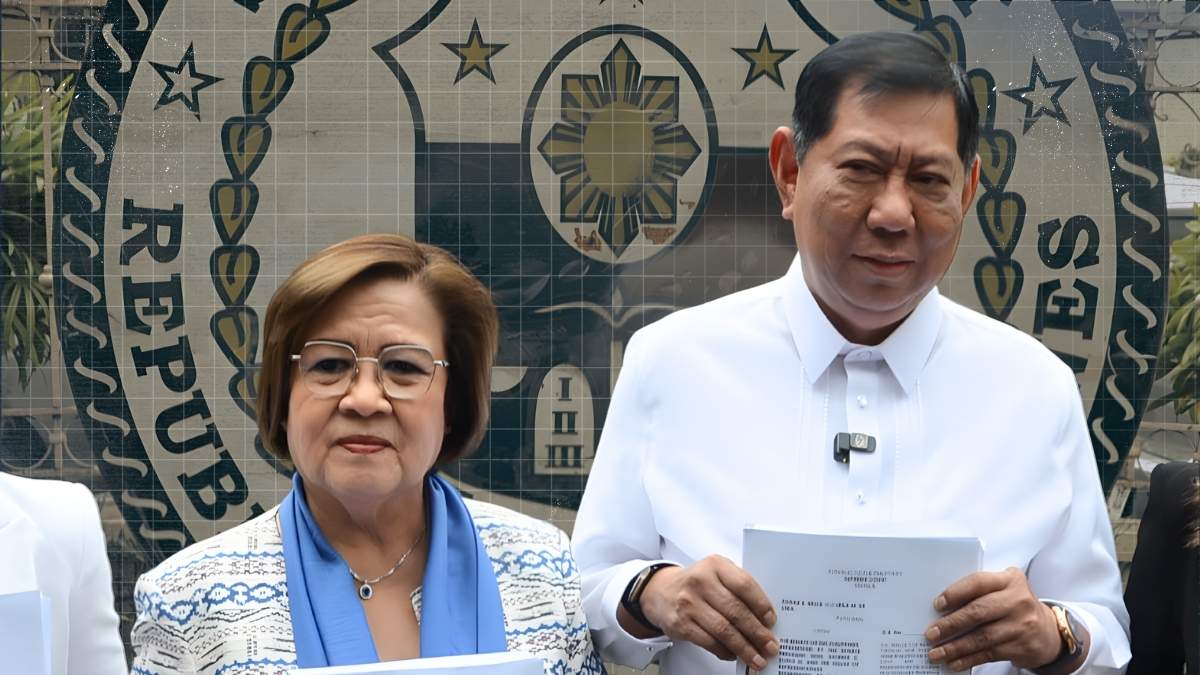
De Lima, Erice Ask Supreme Court to Strike Down ₱150B in Unprogrammed Funds
Minority lawmakers Leila de Lima and Edgar Erice have asked the Supreme Court to declare ₱150 billion in unprogrammed appropriations in the 2026 national budget unconstitutional, intensifying scrutiny over how public funds may be released outside clearly programmed expenditures.
In a petition filed before the high court, De Lima and Erice sought the issuance of a temporary restraining order and injunctive relief to stop the implementation of the questioned funds. The petition argues that unprogrammed appropriations—sometimes referred to as “standby funds”—violate key constitutional safeguards because they lack a definite and identifiable source of financing at the time of approval.

According to the petitioners, the Constitution requires that national expenditures be based on clearly identified revenue sources. They cited provisions in the 1987 Constitution that limit Congress to approving budgets proposed by the executive branch and prohibit lump-sum items that weaken transparency and accountability. The lawmakers warned that allowing unprogrammed appropriations to stand opens a pathway for spending beyond declared means, potentially undermining the discipline required in public finance.
Unprogrammed funds are designed to be released only when excess revenues materialize, such as higher-than-expected tax collections or additional foreign grants. However, critics argue that in practice, these funds can be activated through administrative discretion, raising concerns that they may function as flexible spending pools without the same level of congressional scrutiny as programmed items.
The petition notes that while unprogrammed appropriations have existed in previous budgets, their size has expanded significantly in recent years. In the 2026 National Expenditure Program, the proposed amount reached ₱249.9 billion before congressional deliberations. Although lawmakers trimmed the figure during the bicameral conference committee, the final amount remained substantial, prompting renewed legal and constitutional questions.
De Lima and Erice also pointed to a prior Supreme Court ruling that struck down the transfer of PhilHealth reserve funds to unprogrammed appropriations, emphasizing that the Court had already recognized limits on such fiscal mechanisms. They argued that the same constitutional reasoning applies to the current budget, especially when funds may be released without explicit legislative authorization tied to a concrete revenue source.
The petition further contends that unprogrammed appropriations blur the separation of powers by effectively allowing the executive branch to determine when and how funds are spent, even after Congress has approved the budget. This, they argue, diminishes the role of lawmakers in safeguarding the public purse and weakens institutional checks designed to prevent misuse of funds.
From a governance perspective, the case arrives amid broader public debate over budget transparency and accountability. Questions surrounding unprogrammed funds have surfaced alongside ongoing discussions about flood control projects, infrastructure spending, and the role of oversight institutions in tracing the flow of public money. While the petition does not accuse any official of wrongdoing, it frames the issue as one of constitutional compliance rather than political disagreement.
Legal observers note that if the Supreme Court grants the requested relief, it could have wide-ranging implications for how future budgets are crafted. A ruling against unprogrammed appropriations would likely force stricter alignment between approved expenditures and available revenues, potentially reshaping budgetary practices across administrations.
For now, the petition places the issue squarely before the judiciary, asking the Court to clarify whether flexibility in fiscal planning can coexist with constitutional limits. As the case proceeds, it may serve as a defining test of how far discretionary funding can go before it crosses the line from contingency planning into constitutional overreach.
