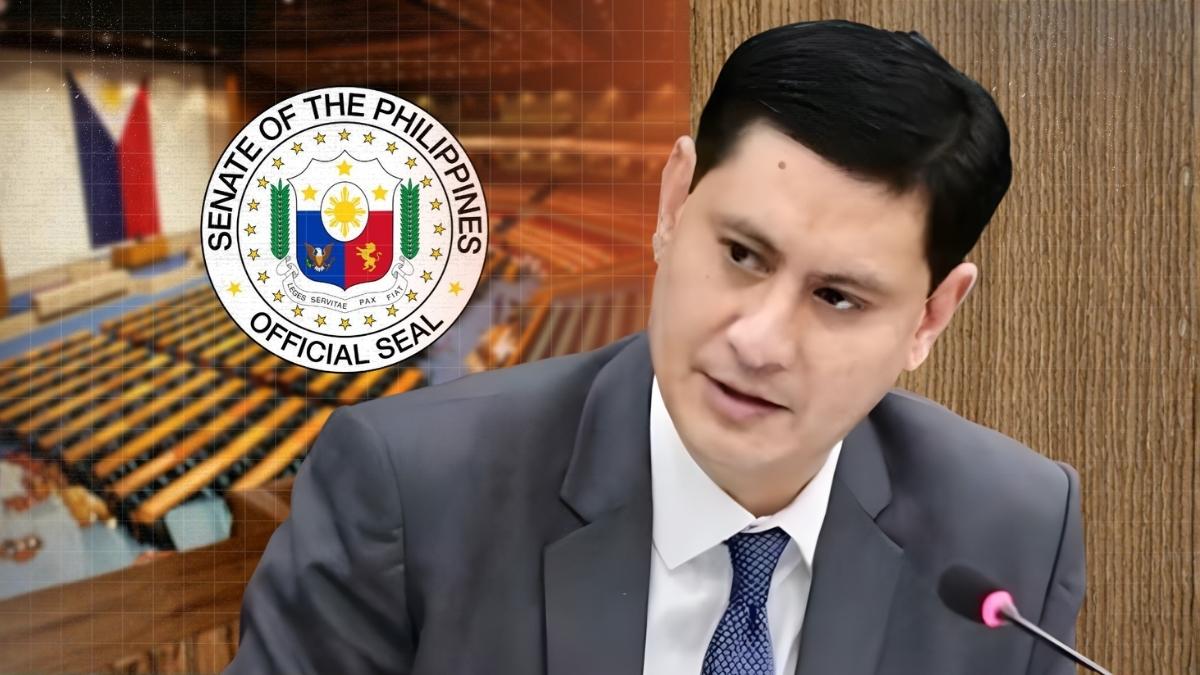
Defensor Questions Senate’s “Guts” to Conduct Impeachment Trial — Is the Upper Chamber Ready for the Moment?
Senior Deputy Majority Leader Lorenz Defensor has stirred political discussion after publicly questioning whether the Senate of the Philippines has the “guts” to proceed with an impeachment trial.
The remark comes amid mounting political tensions surrounding impeachment proceedings that have sharply divided both chambers of Congress and the public.
But beyond the soundbite, Defensor’s challenge raises a deeper institutional question:
Is the Senate prepared to handle the political, constitutional, and historical weight of an impeachment trial?
The Role of the Senate in Impeachment
Under the Philippine Constitution, the House of Representatives has the sole power to initiate impeachment. The Senate, however, serves as the impeachment court.
This is not merely procedural. It is historic.
When senators sit as impeachment judges, they are no longer legislators debating bills. They are constitutional arbiters weighing evidence, credibility, and national consequence.
Defensor’s statement appears to question whether the Senate is politically willing — or institutionally ready — to take on that responsibility in the current climate.
Political Pressure vs. Constitutional Duty
Impeachment trials are never purely legal exercises.
They are:
Political events
Media spectacles
Tests of coalition strength
Moments that define reputations
Senators must balance:
Party alliances
Public opinion
Legal standards
Long-term legacy
When Defensor uses the word “guts,” it suggests that what lies ahead is not just a procedural matter, but a politically risky undertaking.
Holding an impeachment trial means forcing senators to publicly declare where they stand — on record, in history, and before voters.
Is the Senate Hesitant?
Observers have noted visible divisions among lawmakers regarding how impeachment complaints are handled.
Some argue the Senate must assert independence and proceed decisively.
Others caution against turning impeachment into a political weapon.
Defensor’s remark appears to challenge the upper chamber to demonstrate institutional courage rather than hesitation.
But hesitation, to some, may reflect prudence — not fear.
An impeachment trial impacts:
Investor confidence
Market stability
International perception
Governance continuity
The Senate must weigh these broader consequences alongside constitutional obligation.
Democracy in Tension
In any democracy, impeachment is the ultimate accountability mechanism short of elections.
However, frequent or highly politicized impeachment attempts risk:
Normalizing instability
Weaponizing constitutional processes
Eroding institutional trust
This is why the Senate’s approach matters.
If it proceeds too hastily, critics will accuse it of bias.
If it delays or dismisses prematurely, critics will accuse it of cowardice.
Defensor’s challenge puts the spotlight squarely on that balancing act.
The Strategic Undertone
Politically, Defensor’s statement also functions as pressure.
By publicly questioning the Senate’s resolve, it forces senators to respond — directly or indirectly.
No lawmaker wants to be seen as lacking courage.
At the same time, no senator wants to be boxed into a narrative that frames constitutional caution as weakness.
This is political chess, not checkers.
Each statement shifts momentum.
Each response recalibrates alliances.
The 2028 Factor
Impeachment proceedings rarely exist in isolation from electoral cycles.
With 2028 positioning already in motion, every major political action is interpreted through that lens.
Senators are acutely aware that how they vote — or whether they even proceed — could define:
Reelection bids
Presidential ambitions
Coalition alignment
Defensor’s remark may resonate particularly with voters who demand decisiveness from institutions.
But it may also unsettle those who fear that impeachment fatigue weakens governance.
Institutional Integrity on Trial
Ultimately, the question is not simply whether the Senate has “guts.”
It is whether it will:
Uphold constitutional process
Ensure due process
Protect institutional credibility
Impeachment is not meant to be easy.
It is designed to be deliberate.
The framers of the Constitution placed the trial in the Senate precisely to introduce:
A higher threshold
Broader deliberation
A cooling mechanism after House initiation
Whether that cooling mechanism is interpreted as caution or avoidance depends largely on public perception.
The Public’s Role
In a democratic system, institutions respond to public sentiment — even when they claim independence.
Filipinos are watching:
How evidence is handled
How proceedings are framed
Whether political alliances overshadow facts
Public trust in the Senate will depend less on speed and more on transparency.
If the upper chamber proceeds methodically and clearly explains its reasoning, it strengthens democracy.
If it appears evasive or politically shielded, skepticism will grow.
Conclusion
Lorenz Defensor’s challenge is bold — but it places an important spotlight on institutional responsibility.
The Senate now faces a defining moment.
Will it proceed assertively and transparently?
Will it exercise constitutional prudence?
Or will political calculations overshadow constitutional duty?
Impeachment trials are never just about the accused.
They are also about the credibility of the institution conducting them.
And history tends to remember how institutions act in moments of pressure.
The question now is not simply whether the Senate has “guts.”
It is whether it will demonstrate constitutional steadiness.
