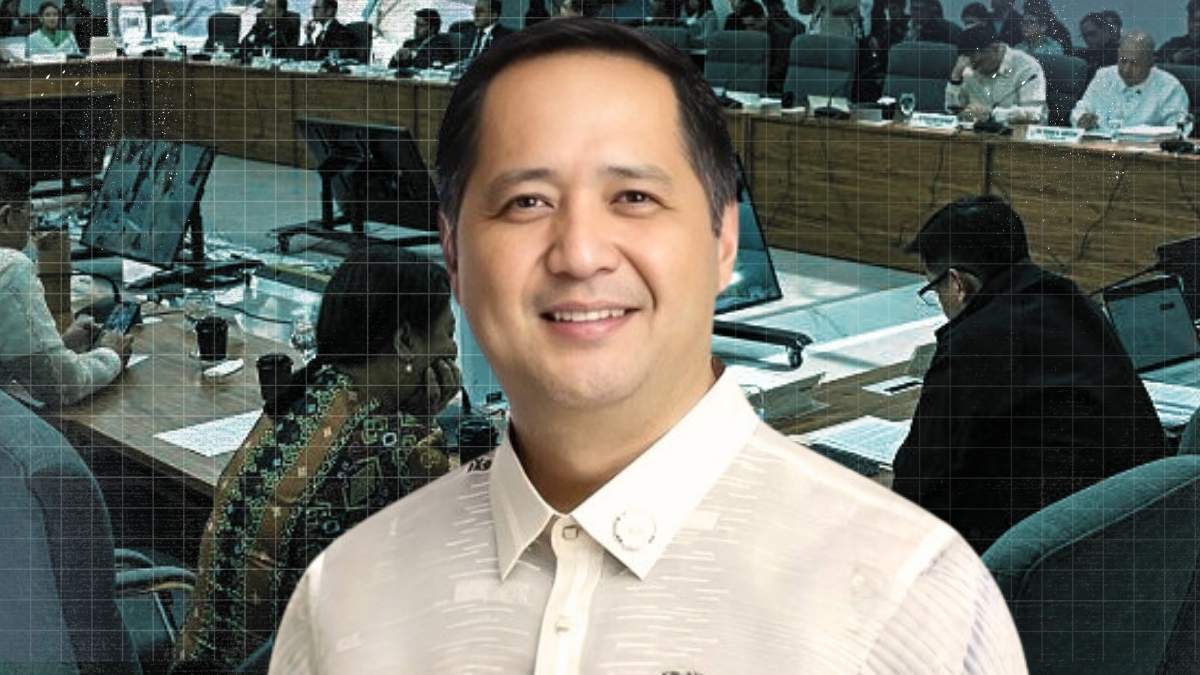
“Why Are We So Guilty?” — Bong Suntay Cut Off After Raising ‘Male-Maleta’ Issue in Impeachment Hearing
Quezon City 4th District Representative Bong Suntay was not allowed to finish his remarks during a House session after referencing the controversial “male-maleta” allegations involving certain lawmakers.
The committee clarified that the ongoing hearing was focused on the impeachment complaint against Vice President Sara Duterte, and that Suntay’s remarks were not directly related to the matter under deliberation.
But the moment triggered a bigger question — one that echoed beyond the session hall:
“Why are we so guilty?”
The Context
During the session at the House of Representatives of the Philippines, Suntay reportedly attempted to address allegations involving so-called “male-maleta” money delivery claims that have circulated in recent weeks.
However, the committee ruled the issue out of order, stating that:
• The session’s scope was impeachment proceedings
• The male-maleta issue was not on the agenda
• Discussion must stay within the defined topic
Parliamentary procedure allows committees to limit discussion strictly to agenda items.
Still, the optics raised eyebrows.
Procedure vs. Perception
Legislative bodies operate under rules of order.
But politics operates under perception.
When a lawmaker is cut off while raising an allegation — even if deemed off-topic — it can create public speculation.
Supporters argue:
✔️ The committee followed rules
✔️ Agenda discipline is necessary
✔️ Focus must remain on impeachment
Critics counter:
✔️ Why silence discussion?
✔️ Why not allow clarification?
✔️ What’s the harm in transparency?
And that’s where the tension lies.
The Bigger Political Atmosphere
The impeachment complaint against VP Sara Duterte has intensified partisan lines.
Allies view the complaint as politically motivated.
Opponents frame it as accountability.
In that environment, any attempt to introduce parallel controversies — especially those involving members of Congress — becomes highly sensitive.
Because here’s the reality:
When impeachment is on the table, control of narrative becomes everything.
The Satirical Jab
Funny how in politics, when the spotlight turns toward one camp, suddenly microphones develop “technical discipline.”
Agenda rules are sacred — unless the narrative benefits you.
Transparency is championed — unless timing is inconvenient.
Democracy, it seems, sometimes comes with a mute button.
But let’s be fair:
Procedure exists for a reason.
The question is whether procedure is applied consistently — or selectively.
Faith Reflection
Scripture reminds us:
📖 Luke 8:17
“For nothing is hidden that will not be made manifest, nor is anything secret that will not be known and come to light.”
Truth does not expire.
It does not depend on microphone time.
It does not fear scheduling.
If allegations lack basis — they collapse.
If they hold weight — they surface.
History has a long memory.
Political Strategy at Play?
Some observers suggest that bringing up the male-maleta issue during an impeachment session may have been strategic.
Others argue it was simply an attempt to clarify matters affecting colleagues.
But timing in politics is never accidental.
Raising an unrelated controversy during impeachment deliberations can:
• Shift attention
• Create media diversion
• Force narrative expansion
Or — depending on perspective — simply demand fairness.
Legal Standing
It’s important to clarify:
• The male-maleta allegations remain unproven.
• No formal conviction or finding has been issued.
• Impeachment proceedings follow constitutional mechanisms.
Both matters — if pursued — require evidence, due process, and formal review.
Public commentary is not judicial determination.
Why the Moment Matters
The short exchange may not change policy.
But it changes optics.
And in today’s political climate, optics travel faster than rulings.
For Duterte supporters, it reinforces the belief that political institutions are being used selectively.
For critics, it reinforces the need to keep impeachment discussions focused and procedural.
Either way, polarization deepens.
Final Reflection
“Why are we so guilty?”
That question is not just rhetorical.
It reflects the broader tension in Philippine politics today:
• Trust vs. skepticism
• Procedure vs. perception
• Accountability vs. political maneuvering
If discussions are silenced, people speculate.
If discussions are allowed, people debate.
But in a democracy, the answer cannot be fear of dialogue.
Because truth — real truth — survives scrutiny.
Keith Flores Moves to Dismiss Impeachment Complaint vs VP Sara Over One-Year Bar Rule
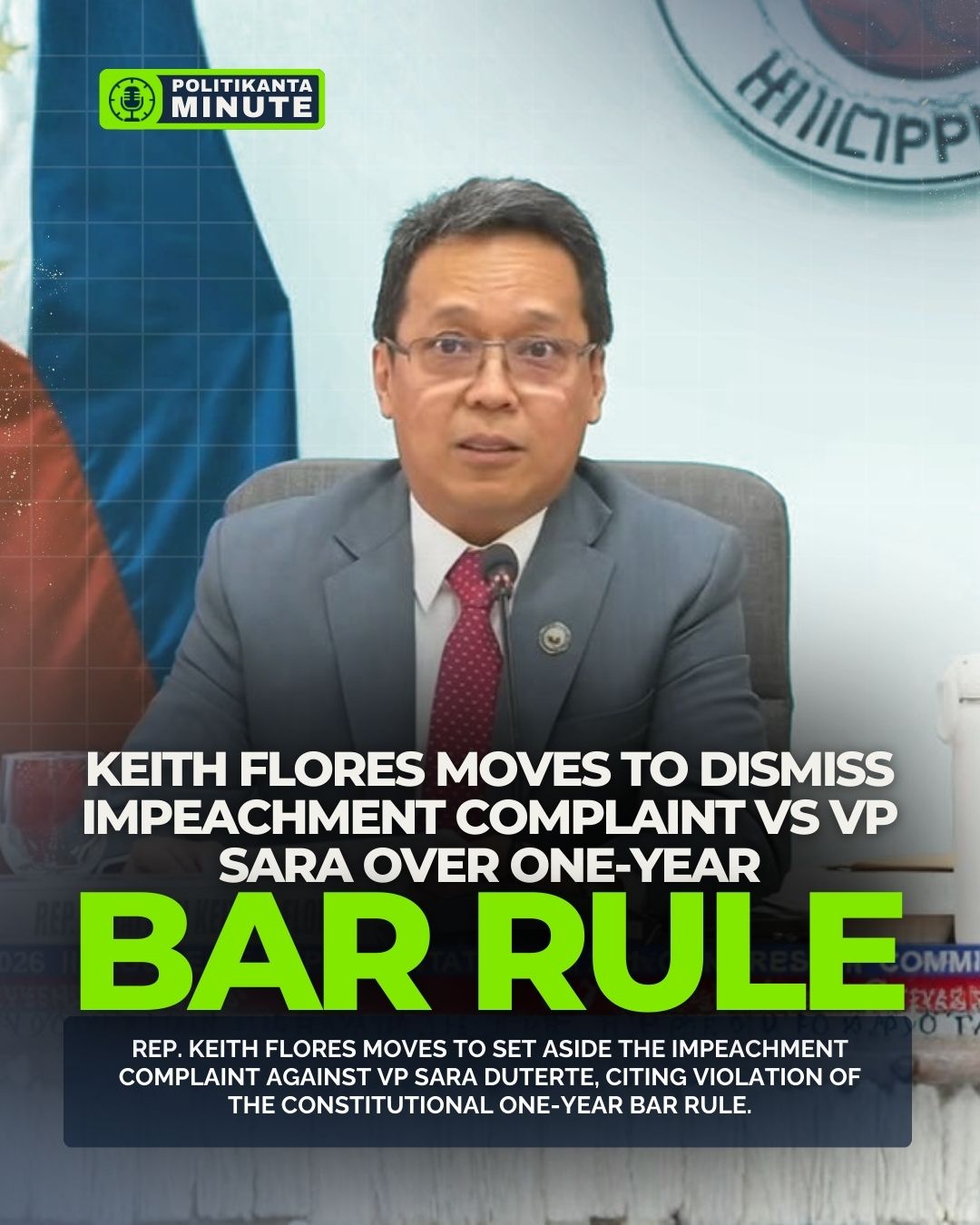
A motion has been filed at the House of Representatives of the Philippines seeking to set aside the first impeachment complaint against Vice President Sara Duterte, citing the constitutional one-year bar rule.
Rep. Keith Flores moved to dismiss the complaint on the grounds that it was filed before the expiration of the one-year prohibition period for impeachment filings.
The complaint, submitted by a member of the Makabayan Bloc on February 2, 2026, came just days before the one-year bar would lapse on February 6, 2026.
The issue now centers not on political arguments — but on constitutional timing.
What Is the One-Year Bar Rule?
Under the Philippine Constitution, impeachment proceedings cannot be initiated against the same official more than once within a one-year period.
This safeguard exists to prevent harassment through repeated impeachment filings.
Supporters of VP Sara argue:
✔️ The Constitution is clear
✔️ Timing matters
✔️ Procedure must be respected
Critics counter:
✔️ Substance should prevail over technicality
✔️ Allegations deserve hearing
✔️ The public deserves clarity
But in constitutional law, procedure is not a minor detail.
It is the backbone of due process.
The Legal Battlefield
The Supreme Court’s interpretation of the one-year bar rule has been referenced in similar cases in the past.
The question now becomes:
Did the February 2 filing violate that rule?
If the complaint was indeed premature, legal precedent suggests dismissal may be warranted — regardless of political sentiment.
And here’s the reality:
In constitutional governance, timing is not cosmetic.
It is decisive.
The Political Undercurrent
This development comes amid heightened political tension surrounding VP Sara Duterte.
Allies see the impeachment push as politically motivated.
Opponents frame it as accountability.
But when legal timelines enter the conversation, the battlefield shifts from rhetoric to rules.
And rules — when applied fairly — protect everyone.
Not just allies.
Not just critics.
Everyone.
The Satirical Jab
Funny how impeachment is suddenly urgent — except when the Constitution gets in the way.
When it suits the narrative, we shout “Accountability!”
But when procedure blocks the charge, suddenly the Constitution becomes “technicality.”
The same Constitution everyone swore to uphold.
It’s not obstruction.
It’s order.
You can’t preach rule of law and ignore it when inconvenient.
Faith Reflection
📖 1 Corinthians 14:40
“But let all things be done decently and in order.”
Governance without order becomes chaos.
Justice without process becomes vengeance.
Faith reminds us that truth and order are not enemies — they walk together.
If accusations are valid, they will withstand legal scrutiny.
If they are rushed, they collapse under constitutional weight.
Why This Matters Beyond Politics
This is bigger than VP Sara.
Today it is her.
Tomorrow it could be anyone.
The one-year bar rule protects:
• Stability in governance
• Protection from harassment
• Constitutional integrity
Without such safeguards, impeachment could become a political weapon filed repeatedly to paralyze elected officials.
The framers of the Constitution anticipated this risk.
That’s why the rule exists.
What Happens Next?
The House Justice Committee will deliberate on the motion.
Possible outcomes include:
• Dismissal on procedural grounds
• Continuation of evaluation
• Referral for further review
Whatever the outcome, it must align with constitutional standards — not partisan pressure.
Perspective
From an Agila standpoint, strength means standing firm within the law.
VP Sara’s camp maintains that:
✔️ They will face allegations through legal channels
✔️ They trust constitutional safeguards
✔️ They will not be shaken by procedural battles
Power built on law lasts longer than power built on noise.
Final Reflection
This moment tests more than a political alliance.
It tests whether the Constitution applies equally to all.
If the complaint was filed prematurely, dismissal is not favoritism — it is fidelity to law.
If it meets constitutional timing, it should proceed within proper channels.
In the end:
Rules are not obstacles to justice.
They are its protection.
And a nation that respects order, respects itself.
