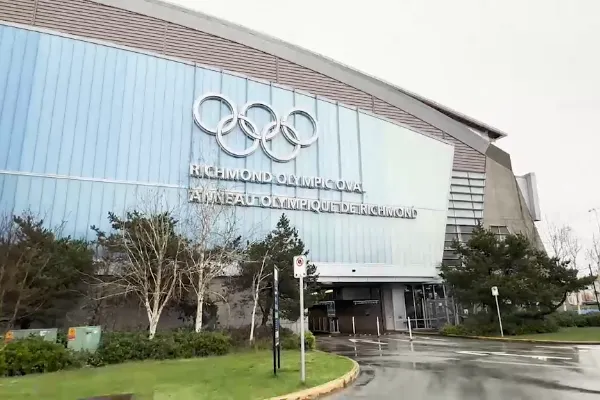
The Richmond Olympic Oval: From Olympic Venue to Community Powerhouse
What Happens After the Olympics?
What do you do with a $178-million Olympic building once the Games are over?
It’s a question cities around the world have struggled to answer. Too often, Olympic venues become expensive “ghost buildings”—impressive, but underused and costly to maintain.
But here in Richmond, something very different happened.
The Richmond Olympic Oval went from hosting the fastest athletes in the world during the 2010 Winter Olympics… to becoming one of the most successful community sports facilities in Canada.
And the story behind it is actually pretty fascinating.
Why the Richmond Olympic Oval Was Built
In the early 2000s, when Vancouver won the bid for the 2010 Winter Olympics, organizers needed a venue for long-track speed skating.
Richmond stepped forward with a bold idea: build it right along the banks of the Fraser River.
Construction began in 2006, and the Oval officially opened in December 2008. Just two years later, it welcomed the world.
During the 2010 Winter Olympics, the venue hosted 12 medal events in long-track speed skating, bringing elite athletes from across the globe to Richmond.
For a few unforgettable weeks, the city was truly on the world stage.
A Building Designed to Transform
Here’s what makes the Richmond Olympic Oval so unique…
It was never meant to stay the same.
During the Olympics, the building featured a 400-metre speed skating track and seating for approximately 8,000 spectators. But from the very beginning, architects designed the space with transformation in mind.
The speed skating track? Always temporary.
Once the Games ended, it was removed—and the massive interior space was completely reimagined into a multi-sport facility.
This level of foresight is exactly why the Oval avoided becoming what’s often called an Olympic “white elephant.”
The Architecture You Might Not Notice
Even if you’ve been inside the Oval, you might not realize just how remarkable it is.
Look up.
The sweeping wooden ceiling—known as the WoodWave roof—is made from thousands of pieces of timber. At the time it was built, it was one of the largest timber roofs of its kind in the world.
Its design was inspired by:
The flow of the Fraser River
Birds moving through the estuary
Richmond’s deep connection to the waterfront
From the outside, the building looks clean and simple. But inside, it’s an architectural standout.
The Early Controversy
Of course, the Oval wasn’t without its critics.
At roughly $178 million, many residents questioned whether Richmond could afford such a large-scale project—especially after the Olympics were over.
And to be fair, those concerns weren’t unfounded.
Around the world, many Olympic venues have struggled to remain relevant long after the Games ended.
But Richmond took a different approach.
Instead of letting the building sit unused, the city leaned into adaptability—and turned it into something the community could use every day.
What the Richmond Olympic Oval Is Today
Today, the Oval is one of Richmond’s most active and versatile community spaces.
Inside, you’ll find:
Multiple ice rinks
Basketball and volleyball courts
Indoor running tracks
Climbing walls
A full fitness centre
High-performance training programs
It’s used by everyone—from local families and youth athletes to Olympic-level competitors.
And it’s not just about what’s inside.
The surrounding waterfront area has become a destination of its own, with walking paths, public art, and nearby spots like the Water Sky Garden.
A True Richmond Success Story
More than a decade after the Olympics, the Richmond Olympic Oval stands as one of the most successful Olympic legacy projects in North America.
It’s a rare example of long-term vision done right.
So next time you pass by, remember:
This wasn’t just a building for a few weeks of Olympic competition.
It was built with the future in mind.
From hosting the world’s fastest speed skaters in 2010…
to serving thousands of people in the Richmond community every single week today…
The Richmond Olympic Oval is one of the city’s most impressive success stories.
Final Thoughts
Whether you’re new to Richmond or have lived here for years, the Oval is more than just a landmark—it’s a reflection of what thoughtful city planning and community-focused design can achieve.
And honestly… not every Olympic story ends this well.
