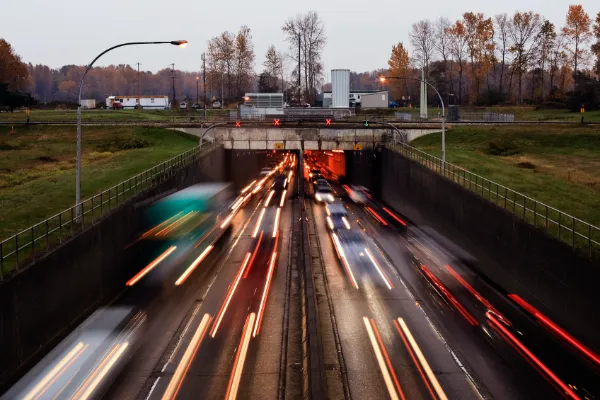
The George Massey Tunnel: From 1959 to the New Crossing Plan
The George Massey Tunnel has been a critical connection point for Richmond, Ladner, Delta, and South Surrey for over six decades. But with major changes on the horizon, it’s worth taking a closer look at how it started—and where it’s headed.
Before the Tunnel: Ferry Crossings & Delays
Before the tunnel was built, crossing the South Arm of the Fraser River meant relying on ferries. This often led to long wait times, weather-related disruptions, and significant congestion—especially as the region began to grow.
A Major Engineering Milestone (1959)
Originally named the Deas Island Tunnel, the crossing officially opened in 1959 and was inaugurated by Queen Elizabeth II during her visit to British Columbia.
At the time, it was considered groundbreaking. The tunnel is widely recognized as the first immersed tube tunnel in North America (constructed using reinforced concrete sections) and one of the earliest of its kind globally.
Length: ~629 metres
Built using six massive concrete sections
Each section was constructed in a dry dock, floated into place, and sunk into a trench beneath the river
For the late 1950s, this was cutting-edge engineering.
Renaming & Early Years
In 1967, the tunnel was renamed after George Massey, a former MLA and strong advocate for the project.
A lesser-known fact: the tunnel originally had a toll of 50 cents per crossing, which was removed in 1964 after construction costs were largely recovered.
Adapting to Growth
As traffic increased, the tunnel evolved:
1982: Introduction of the reversible lane system to manage rush hour flow
2006–2008: Seismic upgrades, including structural improvements to enhance earthquake resilience
Despite these updates, the tunnel was designed for a much smaller population than what we see today.
Today’s Reality: Aging Infrastructure
Now more than 65 years old, the George Massey Tunnel is one of the busiest corridors in the Lower Mainland.
With significant population growth in:
Richmond
Delta & Ladner
Surrey & South Surrey
Tsawwassen (including BC Ferries traffic)
…it’s no surprise congestion has become a daily challenge.
The Future: A New Fraser River Crossing
To address these issues, the Province of British Columbia is moving forward with a new immersed tube tunnel replacement.
What’s Planned:
8 lanes total
3 general-purpose lanes each direction
1 dedicated transit lane each direction
Improved transit efficiency
Dedicated walking and cycling paths (not available in the current tunnel)
Timeline:
Early works begin in 2026 (utilities, prep, roadwork)
Major construction ramps up shortly after
Target completion: early 2030s (current estimate ~2030–2031)
Once complete, the existing tunnel is expected to be decommissioned.
Why This Matters
For residents and commuters, this project is one of the most significant infrastructure upgrades in decades.
The goals are simple:
Reduce congestion
Improve travel times
Support transit
Better connect communities across the Fraser River
For anyone living in—or considering moving to—Richmond, Ladner, or Delta, this will directly impact daily life and long-term accessibility.
The George Massey Tunnel has served the region well for generations—but the way we move has changed.
The big question now is:
Will the new crossing finally solve the congestion problem?
