QUARTERLY ISSUES
Legacy in
Motion.
Building What
Lasts.
The magazine for social impact leaders who refuse to choose between purpose and sustainability. Strategic thinking for those rebuilding the systems that matter most.
OUR MISSION
We don't write for the sector.
We write for the leaders changing it.
Impctrs Magazine was built for the changemakers who sit at the intersection of purpose and pragmatism, people building organizations, leading movements, and reshaping systems that affect real lives.
Every issue challenges conventional nonprofit thinking, offers frameworks borrowed from the best minds in business, and connects a community of leaders who understand that lasting impact requires both vision and operational excellence.
4
ISSUES ANNUALLY
100%
PURPOSE-DRIVEN CONTENT
1st
IN STRATEGIC EDITORIAL FOR THE SECTOR
INSIDE THE ISSUE
What You'll Find
01
Deep Dive Features & Sector Analysis
Long-form reporting and strategic analysis that challenges orthodoxies and offers new frameworks for thinking about organizational effectiveness, sustainability, and relevance in a rapidly changing world.
02
Leader Spotlights
Intimate profiles of the changemakers building what lasts, their methods, their setbacks, and their vision.
03
Clever Solutions
Practical tools and frameworks drawn from business and applied to social impact contexts.
04
Impctrs Out Loud
Conversations from the podcast brought to the page, unfiltered voices from across the sector.
05
Off the Clock & Community
The human side of impact work: culture, reflection, and the moments that remind us why we do this.
OUR EDITORIAL PILLAR
Content built around what actually moves the needle.
Strategic Leadership
Moving beyond program management to organizational vision, board development, and the hard decisions that define an institution's future.
Financial Sustainability
Systems Thinking
Understanding the ecosystems in which organizations operate — and how to navigate, disrupt, and ultimately reshape them.
Community & Belonging
The connective tissue of this work — relationships, trust, accountability, and the cultures we build inside our organizations and beyond.
The sector doesn't need more inspiration. It needs leaders willing to do the hard, unglamorous work of building organizations that last beyond any one person's tenure.
— IMPCTRS EDITORIAL MISSION
IMPCTRS OUT LOUD
Latest Episodes
Ep. 047
When the Mission Outlives the Founder: Succession Planning for Social Impact Organizations
Guest: Dr. Angela Reeves, CEO — Reeves Leadership Group
What happens when the person who built the organization is the organization? This conversation gets into the hard truth about founder dependency and what it actually takes to build an institution that survives the transition.
58 min · Feb 2026
LISTEN NOW
Ep. 046
The Grant Trap: Why Nonprofits Stay Broke and What to Do Instead
Guest: Marcus T. Webb, Founder — Webb Philanthropy Advisors
A frank conversation about why the nonprofit funding model is broken and the concrete steps organizations are taking to build revenue streams that don't evaporate when a grant cycle ends.
44 min · Jan 2026
LISTEN NOW
Ep. 045
Building Boards That Actually Govern
Sandra Okoye · Board Strategy Institute
58 min · Dec 2025
Ep. 044
Community Trust as Organizational Currency
James Fortunato · Urban Futures Lab
58 min · Nov 2025
Ep. 043
Scaling Without Losing Your Soul
Priya Menon · The Scale Collaborative
58 min · Oct 2025
FROM THE ARCHIVE
Past Articles
Browse All Articles →
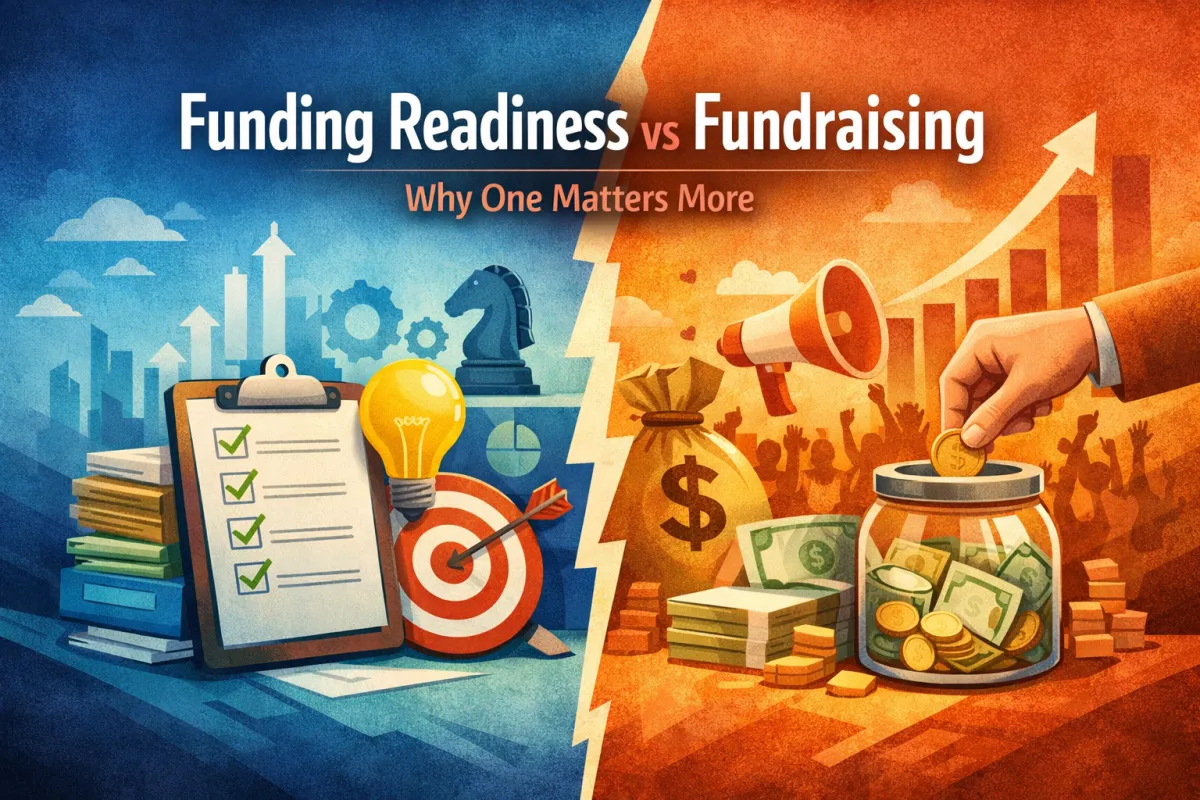
Funding Readiness vs Fundraising: Why One Matters More
Nonprofit leaders invest thousands in fundraising training, hire development directors, and launch campaigns while their organizations remain fundamentally unprepared to receive or manage significant funding.
The result is predictable: rejected grant applications, declined partnership opportunities, and donors who give once but never return. The problem isn't fundraising technique. It's funding readiness.
A nonprofit can execute flawless fundraising tactics and still fail to secure sustainable support if the organizational foundation can't demonstrate capacity, accountability, and alignment with funder expectations. Conversely, an organization with strong funding readiness often attracts resources with minimal traditional fundraising effort.
The distinction matters because most nonprofits waste limited development capacity on the wrong activities. They chase donors before building systems to steward them. They apply for grants without infrastructure to manage restricted funds. They launch campaigns without clarity about how additional revenue integrates into financial sustainability plans.
Funding readiness creates the conditions where fundraising tactics actually work. Without that foundation, even sophisticated fundraising strategies produce disappointing results.
2026 brings heightened competition for philanthropic resources and elevated funder expectations. Organizations that understand the difference between funding readiness and fundraising will secure sustainable support. Those that don't will continue the exhausting cycle of perpetual resource scarcity despite significant fundraising effort.
What Funding Readiness Actually Means
Funding readiness encompasses the organizational infrastructure, governance practices, financial systems, and strategic clarity that demonstrate capacity to receive, manage, and account for external resources effectively.
It's not about having perfect systems. It's about having functional systems that meet basic standards of accountability and effectiveness.
Financial Management Capacity forms the foundation of funding readiness. This includes current bookkeeping, budgets that reflect actual operations, cash flow projections, and ability to track restricted versus unrestricted funds. Organizations lacking these basics can't demonstrate financial stewardship to potential funders. Many small nonprofits operate with checkbook accounting or severely outdated financial records. These organizations genuinely struggle to answer basic questions about program costs, revenue sources, or financial sustainability. No amount of compelling storytelling overcomes this fundamental gap.
Governance Structure signals organizational maturity. Active boards that actually govern, documented policies covering conflicts of interest and whistleblower protections, regular meeting schedules with recorded minutes, and clear delineation between board and staff roles all indicate serious organizational management. Funders reviewing governance often request board lists, meeting minutes, and policy documentation. Nonprofits discovering they lack these materials during application processes can't create legitimate governance overnight. These structures require time to develop and implement authentically.
Program Design and Evaluation demonstrate that organizations think rigorously about their work rather than operating on passion alone. Logic models connecting activities to outcomes, clear theories of change, established evaluation frameworks, and baseline data collection show program sophistication. Organizations unable to articulate how their programs create change or what evidence would demonstrate success raise immediate concerns about effectiveness and learning capacity. Funders increasingly require evidence-based approaches, not just good intentions.
Operational Systems allow nonprofits to function efficiently at scale. This includes human resources practices, technology infrastructure, communications capacity, and administrative procedures that enable growth without chaos. Small nonprofits sometimes resist investing in operational systems, viewing them as overhead rather than essential infrastructure. But organizations attempting to scale without systems collapse under growth pressure or fail to meet new obligations.
Strategic Clarity means understanding organizational identity, priorities, and direction. Mission statements everyone can articulate, strategic plans guiding decision making, clear target populations, and defined geographic scope all demonstrate focused leadership. Organizations trying to be everything to everyone or constantly shifting priorities based on available funding lack strategic clarity. Funders recognize this pattern and question whether these nonprofits can execute effectively or sustain focus long enough to generate meaningful impact.
Why Most Nonprofits Confuse Activity With Readiness
The nonprofit sector has created an entire industry around fundraising tactics while largely ignoring funding readiness assessment and development.
Conferences offer countless sessions on donor cultivation strategies, grant writing techniques, and campaign management. Far fewer address financial system development, governance strengthening, or program evaluation design. This emphasis shapes where organizations invest limited professional development resources.
The fundraising focus also reflects timeline pressures. Organizations facing immediate budget gaps need money now. Fundraising tactics promise immediate results. Funding readiness requires infrastructure building that takes months or years to complete.
But this short-term thinking perpetuates chronic instability. Organizations that focus exclusively on closing immediate funding gaps never build capacity for sustainable resource development. They remain trapped in survival mode, constantly chasing the next grant or donor without creating conditions for long-term support.
Visible Activity also creates psychological comfort. Sending appeal letters, attending networking events, and submitting grant applications all generate tangible output. In contrast, developing financial systems or strengthening governance produces less visible results, making it harder to justify time investment to boards and stakeholders. Yet the invisible infrastructure work determines whether visible fundraising activities produce lasting results. An appeal letter sent from an organizationally ready nonprofit generates different outcomes than the same letter from an unprepared organization.
Consultant Incentives reinforce the problem. Fundraising consultants typically charge for campaign execution, not organizational readiness assessment. Development directors are evaluated on dollars raised, not infrastructure strengthened. The incentive structure rewards activity over preparation. Consequently, nonprofits hire consultants who launch them into fundraising campaigns without first assessing whether organizational readiness supports those efforts. The campaigns may raise some money short-term but fail to build sustainable funding because foundational capacity gaps remain unaddressed.
The Hidden Costs of Premature Fundraising
Organizations launching major fundraising initiatives before achieving adequate funding readiness incur costs that extend beyond wasted effort.
Damaged Funder Relationships may represent the highest long-term cost. Foundations that decline grant applications due to organizational capacity concerns remember those applicants. When the nonprofit strengthens capacity later and reapplies, previous negative impressions create skepticism. Similarly, individual donors who give once but experience poor stewardship rarely give again. Organizations lose these relationships permanently, not temporarily. The pool of potential supporters shrinks each time premature fundraising damages a relationship.
Staff Burnout accelerates when development teams work exhaustively on fundraising activities that consistently underperform. Talented development professionals leave organizations where structural barriers prevent success regardless of individual effort. The sector loses skilled practitioners who become disillusioned after repeatedly being asked to "just raise more money" from organizations unable to demonstrate funding readiness. This turnover creates instability and forces organizations to restart development efforts with new staff lacking institutional knowledge.
Opportunity Costs compound as organizations pursue funding from poorly matched sources because they haven't developed clarity about their identity and strategic direction. Time spent chasing inappropriate funding opportunities could have been invested in building organizational capacity or cultivating better-aligned funders.
Mission Drift occurs when organizationally unprepared nonprofits accept funding that doesn't align with core purpose because they need revenue desperately. These organizations gradually evolve into whatever funders will support rather than remaining anchored in community-identified needs and organizational strengths. The pattern becomes self-reinforcing. Financial pressure drives acceptance of misaligned funding. That funding supports programs outside core competency. Those programs underperform. Organizational reputation suffers. Securing aligned funding becomes even harder.
The Funding Readiness Assessment Nonprofits Need
Organizations serious about sustainable resource development should conduct comprehensive funding readiness assessments before launching major fundraising initiatives.
Financial Health Review examines whether financial systems meet basic standards. Can the organization produce current financial statements on demand? Does the budget reflect realistic revenue and expense projections? Are cash reserves adequate to manage timing gaps between revenue and expenses? Organizations discovering significant financial health gaps need to address those issues before pursuing major grants or donor investments. The work isn't glamorous, but it's essential.
Governance Audit evaluates board functionality, policy documentation, and decision-making processes. Active boards demonstrate organizational stability. Documented policies signal professionalism. Clear governance processes enable confident leadership. Nonprofits with weak governance should invest in board development and policy creation before seeking six-figure grants or approaching major donors. Funders conducting due diligence will discover governance gaps regardless, and premature applications waste everyone's time.
Program Evaluation Capacity assessment determines whether organizations can articulate program logic, measure outcomes, and demonstrate impact. This doesn't require sophisticated research methodologies. It requires clear thinking about how programs create change and basic data collection to track progress. Organizations lacking evaluation frameworks should develop them before claiming impact in fundraising materials. Vague promises about "changing lives" without supporting evidence undermine credibility.
Operational Infrastructure Review identifies whether systems can support organizational growth. Technology, human resources, communications capacity, and administrative processes all require assessment. Nonprofits planning to double in size need infrastructure that supports that growth. Attempting to scale without adequate systems creates chaos, undermines program quality, and damages organizational reputation.
Strategic Clarity Verification tests whether organizational leadership can articulate identity, priorities, and direction clearly. Confusion about mission, target populations, or geographic focus signals readiness gaps that must be resolved before seeking major funding.
Building the Foundation Before Building the Campaign
The sequence matters enormously. Organizations that build funding readiness before launching fundraising campaigns achieve dramatically better results than those pursuing both simultaneously.
Timeline Realism requires accepting that infrastructure development takes time. A nonprofit with significant capacity gaps might need 6-12 months of focused organizational strengthening before being genuinely ready for major fundraising. This timeline frustrates boards and leaders facing immediate budget pressures. But launching premature campaigns that fail wastes more time than investing in proper preparation. Failed campaigns damage relationships and morale while preparation builds sustainable capacity.
Resource Allocation must prioritize infrastructure investment over fundraising activity when readiness gaps exist. This might mean delaying campaign launches, focusing on small individual donors while building capacity, or pursuing modest grants that don't require extensive organizational infrastructure. The investment in systems, governance, and program development will produce returns for years. Rushed fundraising campaigns produce short-term revenue at best and relationship damage at worst.
Professional Support accelerates readiness development. Organizations attempting to build financial systems, strengthen governance, and develop evaluation frameworks while managing daily operations often make limited progress. External expertise in organizational development and capacity building provides structured pathways to readiness. The cost of professional capacity building support typically represents a fraction of potential funding that becomes accessible once readiness improves. It's infrastructure investment with measurable ROI.
Incremental Advancement allows organizations to pursue fundraising appropriate to current capacity while building toward greater readiness. A nonprofit might engage individual donors and small grants while developing systems needed for major foundation support or capital campaigns. This staged approach generates revenue to support operations while creating space for infrastructure development. It prevents the all-or-nothing trap where organizations must choose between immediate survival and long-term sustainability.
When Fundraising Finally Works
Organizations that achieve funding readiness before intensive fundraising discover that donor cultivation and grant seeking become dramatically more effective.
Foundation applications succeed at higher rates because organizational infrastructure matches funder requirements. Individual donors remain engaged because stewardship systems demonstrate appreciation and impact. Corporate partners commit to multi-year relationships because operations inspire confidence.
The fundraising doesn't become effortless, but it becomes productive. Effort yields results. Rejected applications provide useful feedback rather than vague concerns about organizational capacity. Development staff can focus on relationship building rather than constantly explaining infrastructure gaps.
Most importantly, the funding secured actually strengthens organizations rather than creating new management burdens. Restricted grants get tracked properly. Donor expectations are met. Program commitments are fulfilled. The positive cycle of demonstrated effectiveness leading to increased support begins.
Funding readiness transforms fundraising from exhausting obligation to strategic opportunity.
Assess Your Organization's True Funding Readiness
Stop wasting development capacity on fundraising tactics deployed from organizations not ready to receive significant support. Start building the infrastructure that makes fundraising actually work.
Impctrs Management Group specializes in funding readiness assessment and organizational capacity building for nonprofits and social enterprises. Discover exactly where readiness gaps exist and develop actionable plans to address them.
Book a discovery call today!
Transform funding readiness from a barrier to a competitive advantage. Build the organizational foundation that attracts sustainable resources and supports meaningful impact.
Keywords: funding readiness assessment, nonprofit organizational capacity, fundraising vs funding readiness, nonprofit infrastructure development, grant readiness nonprofit, nonprofit capacity building, sustainable nonprofit funding, organizational readiness funding, nonprofit systems development, funding capacity assessment

FALL 2025 ISSUE
READ ARTICLES →
FALL 2025 ISSUE
READ →
FALL 2025 ISSUE
READ →
THE ARCHIVE
VIEW ALL ISSUES →
Past Issues
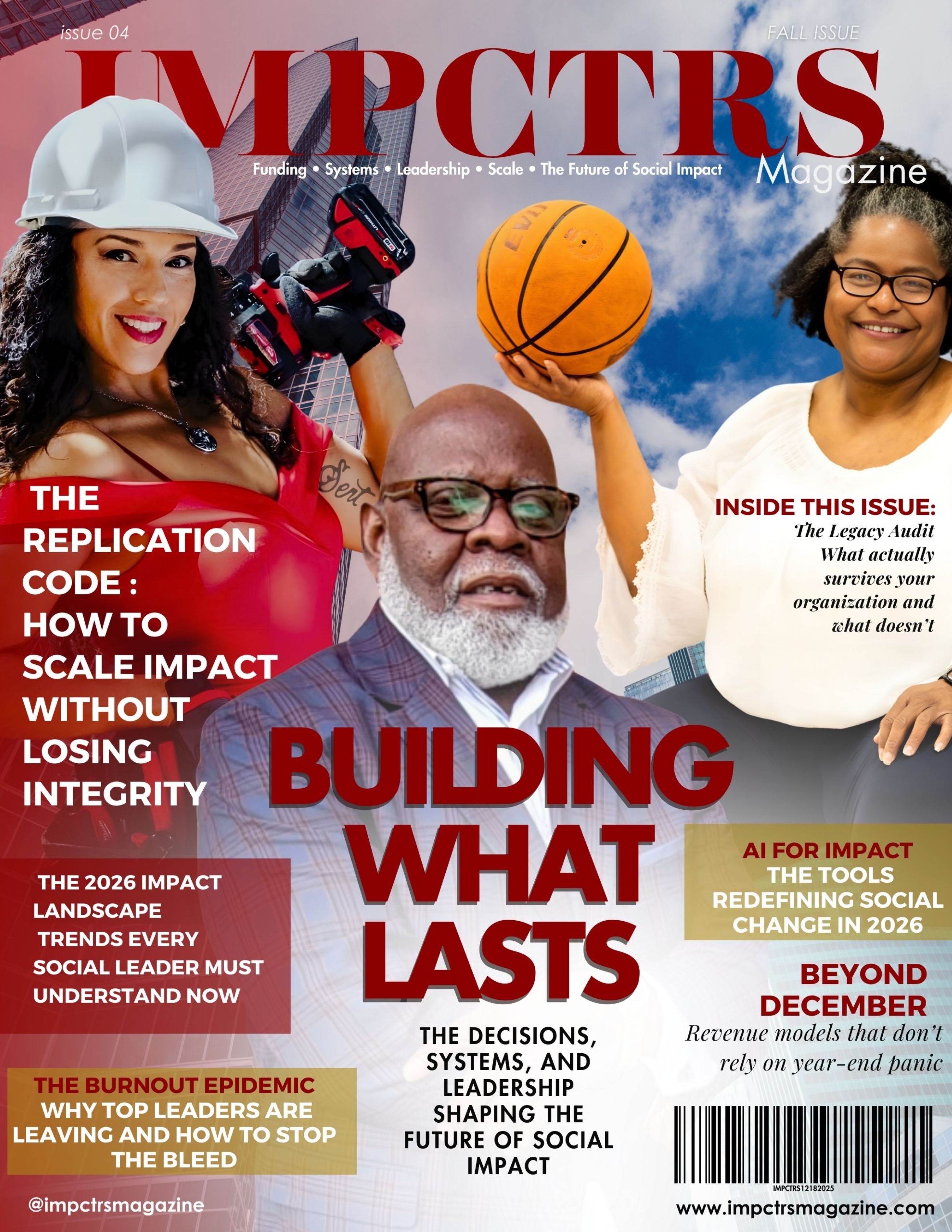
FALL 2025 · 04
Resetting the System: Rebuilding for Stability, Scale & Relevance
VIEW FULL ISSUE →
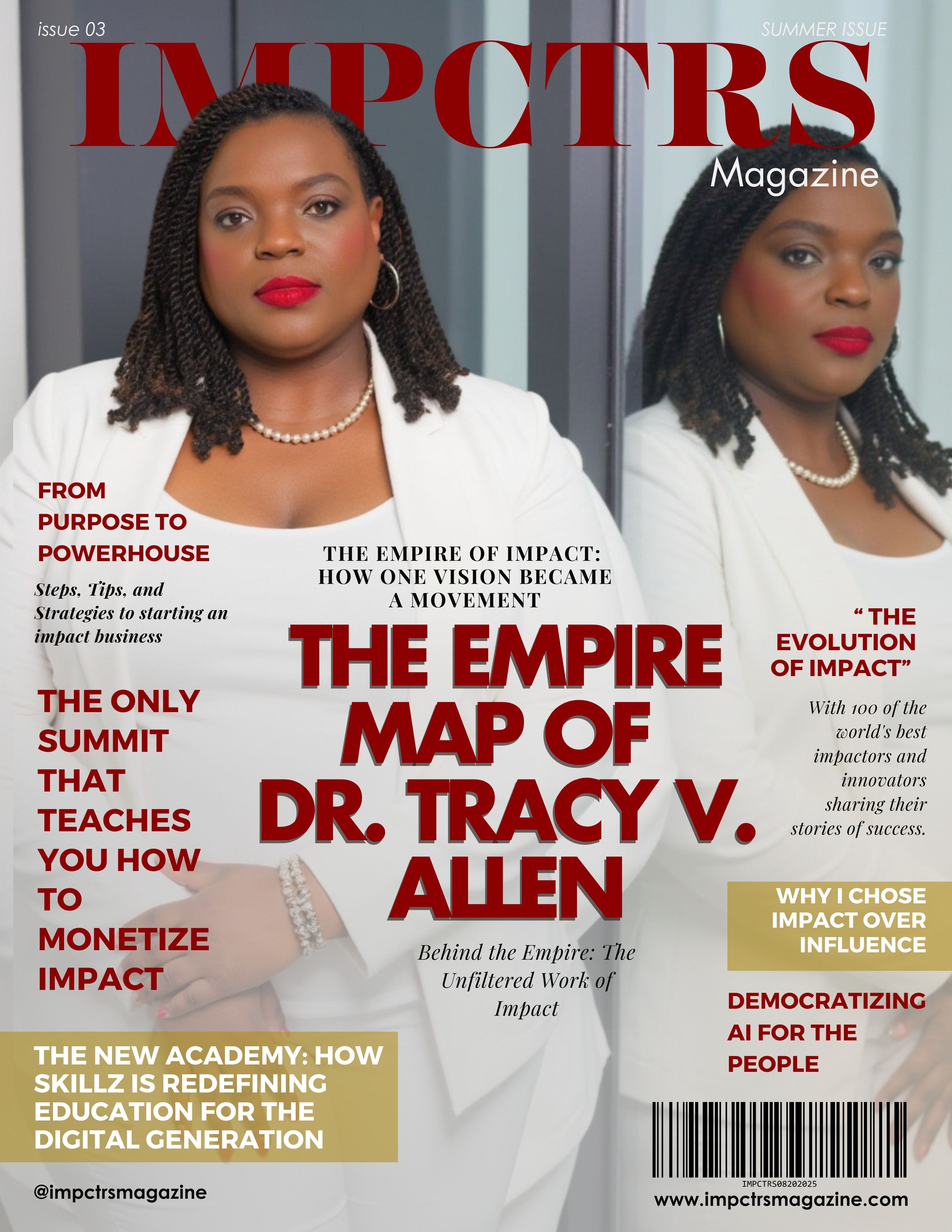
SUMMER 2025 · 03
The Money Question: Funding Models That Actually Work
VIEW FULL ISSUE →
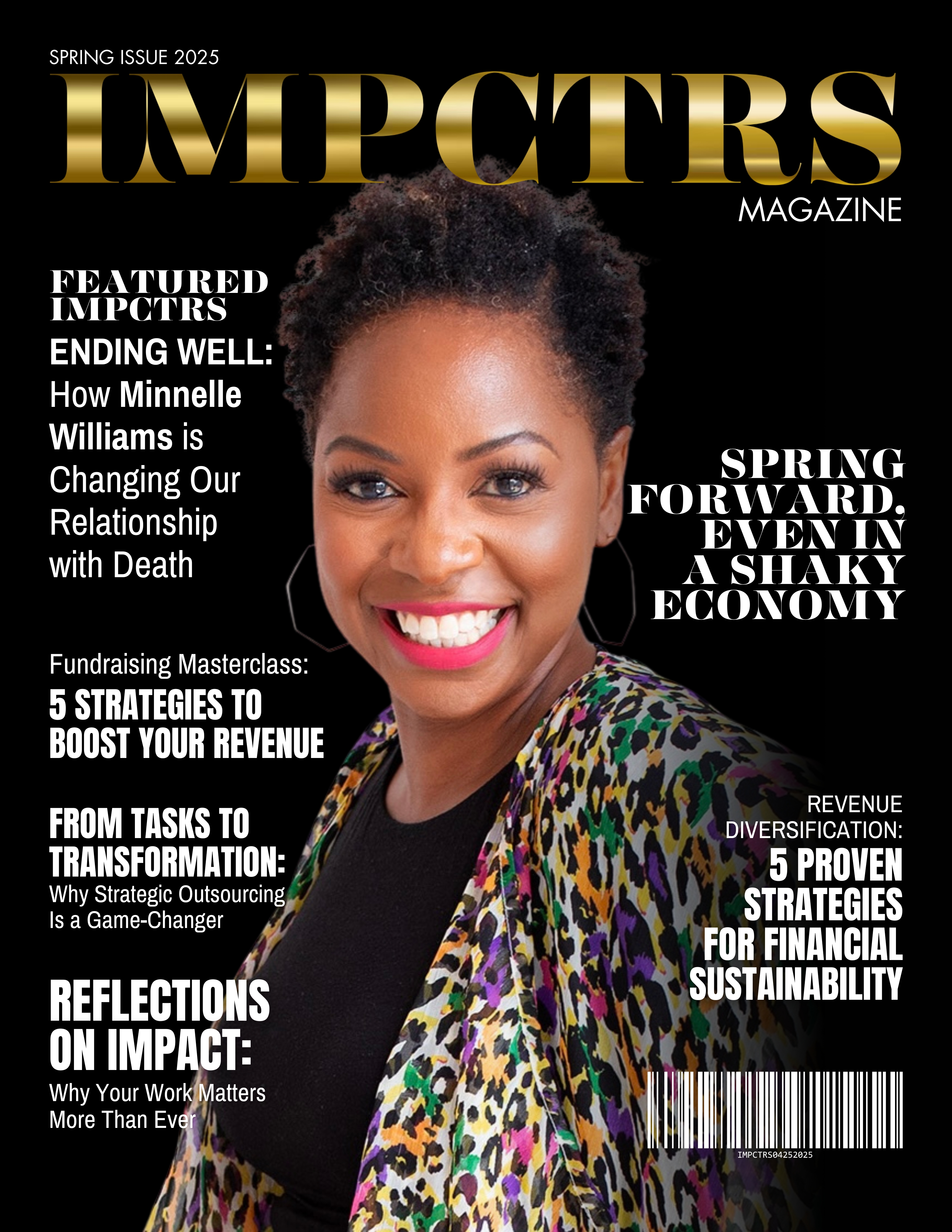
SPRING 2025 · 02
Power, People & Purpose: Reimagining Leadership in the Sector
VIEW FULL ISSUE →
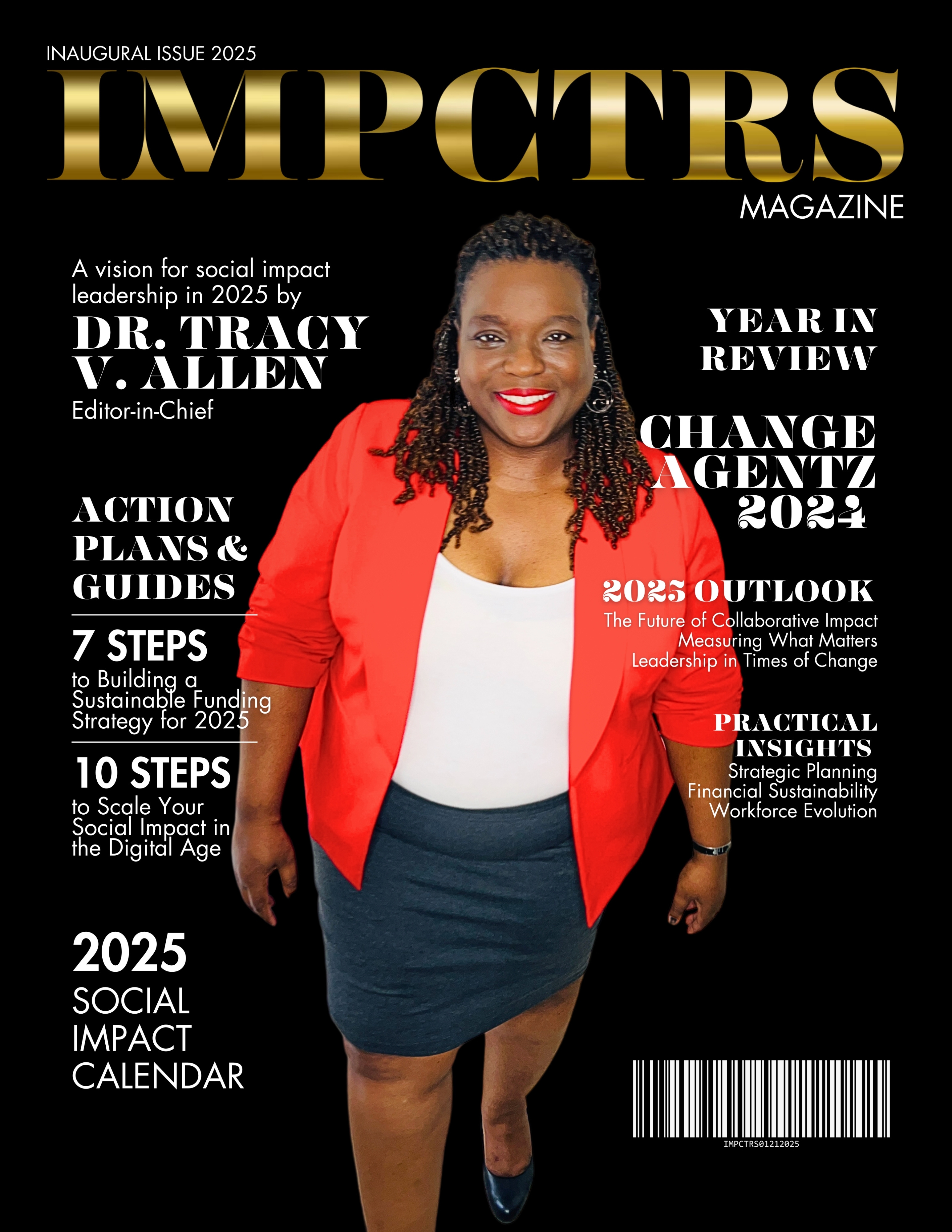
WINTER 2025 · 01
The Inaugural Issue: Why the Sector Needs a Different Conversation
VIEW FULL ISSUE →
Every issue, a new conversation about what it means to build something that lasts.
— JOIN THE COMMUNITY
Receive Impctrs Magazine every quarter.
Delivered to social impact leaders, nonprofit executives, and changemakers who are serious about building organizations and movements that outlast them. No recycled platitudes. No echo chamber content. Just strategic content worth your time.

"For Those Who Change the World — and Intend to Keep Doing It."
FOLLOW US
© 2026 Impctrs Magazine powered by Impctrs Management Group. All rights reserved.