QUARTERLY ISSUES
Legacy in
Motion.
Building What
Lasts.
The magazine for social impact leaders who refuse to choose between purpose and sustainability. Strategic thinking for those rebuilding the systems that matter most.
OUR MISSION
We don't write for the sector.
We write for the leaders changing it.
Impctrs Magazine was built for the changemakers who sit at the intersection of purpose and pragmatism, people building organizations, leading movements, and reshaping systems that affect real lives.
Every issue challenges conventional nonprofit thinking, offers frameworks borrowed from the best minds in business, and connects a community of leaders who understand that lasting impact requires both vision and operational excellence.
4
ISSUES ANNUALLY
100%
PURPOSE-DRIVEN CONTENT
1st
IN STRATEGIC EDITORIAL FOR THE SECTOR
INSIDE THE ISSUE
What You'll Find
01
Deep Dive Features & Sector Analysis
Long-form reporting and strategic analysis that challenges orthodoxies and offers new frameworks for thinking about organizational effectiveness, sustainability, and relevance in a rapidly changing world.
02
Leader Spotlights
Intimate profiles of the changemakers building what lasts, their methods, their setbacks, and their vision.
03
Clever Solutions
Practical tools and frameworks drawn from business and applied to social impact contexts.
04
Impctrs Out Loud
Conversations from the podcast brought to the page, unfiltered voices from across the sector.
05
Off the Clock & Community
The human side of impact work: culture, reflection, and the moments that remind us why we do this.
OUR EDITORIAL PILLAR
Content built around what actually moves the needle.
Strategic Leadership
Moving beyond program management to organizational vision, board development, and the hard decisions that define an institution's future.
Financial Sustainability
Systems Thinking
Understanding the ecosystems in which organizations operate — and how to navigate, disrupt, and ultimately reshape them.
Community & Belonging
The connective tissue of this work — relationships, trust, accountability, and the cultures we build inside our organizations and beyond.
The sector doesn't need more inspiration. It needs leaders willing to do the hard, unglamorous work of building organizations that last beyond any one person's tenure.
— IMPCTRS EDITORIAL MISSION
IMPCTRS OUT LOUD
Latest Episodes
Ep. 047
When the Mission Outlives the Founder: Succession Planning for Social Impact Organizations
Guest: Dr. Angela Reeves, CEO — Reeves Leadership Group
What happens when the person who built the organization is the organization? This conversation gets into the hard truth about founder dependency and what it actually takes to build an institution that survives the transition.
58 min · Feb 2026
LISTEN NOW
Ep. 046
The Grant Trap: Why Nonprofits Stay Broke and What to Do Instead
Guest: Marcus T. Webb, Founder — Webb Philanthropy Advisors
A frank conversation about why the nonprofit funding model is broken and the concrete steps organizations are taking to build revenue streams that don't evaporate when a grant cycle ends.
44 min · Jan 2026
LISTEN NOW
Ep. 045
Building Boards That Actually Govern
Sandra Okoye · Board Strategy Institute
58 min · Dec 2025
Ep. 044
Community Trust as Organizational Currency
James Fortunato · Urban Futures Lab
58 min · Nov 2025
Ep. 043
Scaling Without Losing Your Soul
Priya Menon · The Scale Collaborative
58 min · Oct 2025
FROM THE ARCHIVE
Past Articles
Browse All Articles →

What Funders Look for Before Saying Yes in 2026
The grant proposal that lands on a program officer's desk has already passed through multiple filtering stages before anyone reads the narrative.
Funders make preliminary decisions about organizational viability, strategic fit, and likelihood of success based on factors most nonprofits never mention in their applications. These pre-narrative assessments eliminate substantial percentages of applicants before mission statements, program descriptions, or budget justifications receive any consideration.
Understanding what funders evaluate before they evaluate proposals changes how prepared organizations approach grant seeking entirely.
The assessment process isn't mysterious or arbitrary. Funders follow consistent patterns when reviewing potential grantees, looking for specific organizational characteristics and capacity indicators that predict successful partnerships. But these criteria rarely appear in published grant guidelines, leaving many nonprofits blind to the actual decision factors.
2026 brings particular scrutiny as economic pressures increase competition for limited philanthropic resources. Funders responding to higher application volumes by strengthening filtering mechanisms and raising minimum thresholds for serious consideration. Organizations that understand these unstated criteria position themselves for funding success. Those operating without this knowledge continue submitting applications that never had realistic approval chances.
The gap between what funders ask for in applications and what they actually evaluate when making decisions creates the difference between funded organizations and perpetually rejected ones.
The Financial Health Evaluation That Happens First
Before program officers read compelling narratives about community impact, finance staff review Form 990s, audited statements, and budget documents looking for red flags that disqualify applicants immediately.
Cash Reserve Adequacy receives immediate attention. Funders want to see operating reserves covering at least three months of expenses, preferably six. Organizations operating month-to-month or showing negative net assets signal financial instability that makes them risky investments.
The logic is straightforward: nonprofits without financial cushions can't weather unexpected challenges, manage cash flow gaps between grant disbursements, or sustain operations if individual funding sources get delayed or reduced. Investing in financially fragile organizations often means watching grant funds get diverted to crisis management rather than program execution.
Revenue Diversity demonstrates reduced dependency risk. Funders reviewing income sources heavily concentrated in one or two streams see vulnerability. What happens if that major government contract doesn't renew? What's the contingency if the largest individual donor relocates?
Organizations showing healthy revenue distribution across grants, individual donors, earned income, and other sources present lower risk profiles. They've built resilience against inevitable funding fluctuations rather than depending on perpetual stability from specific sources.
Expense Distribution reveals operational priorities. Funders compare program spending, administrative costs, and fundraising expenses looking for reasonable ratios. Organizations with disproportionate administrative costs or minimal program spending raise questions about mission focus and efficiency.
The specific ratios matter less than trends over time. Growing administrative costs without corresponding program growth suggests inefficiency. Declining program spending despite stable revenue indicates mission drift or operational problems.
Historical Performance Patterns show whether organizations are growing, stable, or declining. Funders review three to five years of financial data looking for trajectories. Consistent growth suggests effective management and community support. Stagnation raises questions about relevance and leadership capacity. Decline signals serious organizational challenges.
These financial assessments happen before program staff review applications. Organizations failing financial screening never reach program evaluation stages, regardless of how compelling their proposed projects might be.
The Governance and Leadership Assessment
Funders invest in organizations, not just programs. Consequently, they assess leadership quality and governance functionality as thoroughly as they evaluate proposed activities.
Board Composition and Engagement receive detailed scrutiny. Funders want to see boards with diverse expertise, community representation, and active participation. Board lists full of honorary members, relatives, or individuals clearly uninvolved raise immediate concerns about governance quality.
Evidence of board engagement appears in meeting frequency, attendance records, committee structure, and financial contribution patterns. Boards meeting quarterly or less suggest limited oversight. Low attendance indicates disengaged directors. Missing committee structure points to underdeveloped governance. Boards where few members make financial contributions suggest lack of personal investment.
Leadership Stability and Depth influence funder confidence significantly. Organizations with frequent executive turnover face skepticism about underlying organizational health. What's driving the revolving door at the top? Why can't leadership retain qualified executives?
Similarly, organizations where a single individual holds multiple executive roles or where all institutional knowledge resides with one person present succession risk. What happens if that person leaves? Does the organization have leadership depth to ensure continuity?
Strategic Planning Evidence demonstrates intentional organizational direction. Funders want to see documented strategic plans guiding decision making, not reactive responses to whatever opportunities emerge. Strategic plans don't need to be elaborate, but they should articulate clear organizational identity, priorities, and direction.
Organizations unable to produce strategic planning documentation or whose actions contradict stated strategies signal weak leadership and governance. Funders interpret this as lack of organizational discipline and increased likelihood that grant funds will be redirected toward urgent needs rather than intended purposes.
Policy Infrastructure indicates operational maturity. Documented policies covering conflicts of interest, whistleblower protections, document retention, gift acceptance, and financial controls demonstrate professional management practices.
Absence of basic policies suggests organizations operating informally without adequate accountability structures. Funders have little interest in being the first major investor in organizationally immature nonprofits.
The Program Design and Impact Evaluation
Once organizations pass financial and governance screening, funders evaluate program quality and the applicant's ability to demonstrate effectiveness.
Logic Model Clarity shows rigorous program thinking. Funders want to see clear connections between activities, outputs, outcomes, and long-term impact. Organizations that can't articulate program theory or explain how their interventions create change raise doubts about effectiveness.
This doesn't require academic sophistication. It requires clear thinking about why specific activities will produce intended results. Programs built on assumptions and tradition rather than evidence-informed design concern funders investing in measurable outcomes.
Evaluation Framework Existence demonstrates commitment to learning and accountability. Funders expect to see established methods for measuring progress, collecting relevant data, and analyzing results. Organizations claiming they'll "develop evaluation plans if funded" signal that assessment is an afterthought rather than integral to program design.
Strong evaluation frameworks include baseline data, clear indicators, data collection methods, analysis protocols, and reporting schedules. Organizations with these elements already functioning inspire far greater confidence than those promising to build them later.
Evidence of Effectiveness from existing work provides the strongest program validation. Funders prefer investing in proven approaches over experimental ones. Organizations that can demonstrate prior success through outcome data, participant testimonials, independent evaluations, or peer recognition substantially strengthen their applications.
New organizations or programs lack this advantage, which explains why first-time grant seekers face higher rejection rates than established applicants with track records. The absence of effectiveness evidence isn't disqualifying, but it increases perceived risk.
Realistic Project Scope aligned with organizational capacity prevents over-promising. Funders evaluate whether proposed activities match available staff time, expertise, and infrastructure. Ambitious projects from small organizations with limited capacity trigger skepticism about feasibility.
Organizations attempting to serve everyone everywhere with minimal resources appear naive about implementation complexity. Focused projects with clear boundaries and appropriate resource allocation demonstrate strategic thinking and planning sophistication.
The Relationship and Reputation Factors
Beyond formal application materials, funders assess organizational reputation and relationship history when making funding decisions.
Peer Funder Intelligence circulates through foundation networks. Program officers discuss applicants with colleagues at other foundations, seeking insights about organizational performance, stewardship quality, and reporting reliability. Positive references from trusted peer funders significantly strengthen applications. Negative feedback can sink them.
Organizations with poor reputations among funders due to missed reporting deadlines, misuse of funds, or difficult partnerships face barriers across multiple funding sources. Conversely, organizations known for excellent stewardship and strong outcomes benefit from positive reputations that open doors.
Community Standing and Partnerships signal effectiveness and collaborative orientation. Funders research how organizations are perceived by community members, partner agencies, and local stakeholders. Strong community relationships validate organizational relevance and impact claims.
Organizations operating in isolation without meaningful partnerships or community support raise questions about their understanding of local needs and ability to collaborate effectively. Funders increasingly prefer supporting collaborative approaches over isolated efforts.
Digital Presence Professionalism shapes first impressions before formal applications arrive. Funders research potential grantees online, reviewing websites, social media, and media coverage. Current, professional digital presence suggests organizational capacity. Outdated or absent online information creates doubt about operational functionality.
This doesn't require expensive communications infrastructure. It requires basic attention to how the organization presents itself publicly and whether that presentation aligns with claims made in funding requests.
Responsiveness and Communication Quality during the application process preview what the funding relationship will be like. Organizations that submit incomplete applications, miss deadlines, or communicate unprofessionally signal that the grant management relationship will likely be difficult.
Conversely, applicants who respond promptly to requests for clarification, provide thorough documentation, and communicate professionally demonstrate partnership readiness that funders value highly.
The Alignment Assessment Beyond Mission Statements
Even organizations passing financial, governance, program, and reputation screening face a final evaluation about strategic fit with current funder priorities.
Timing Alignment with funding cycles and strategic focus areas matters enormously. Foundations periodically shift priorities, emphasize different issue areas, or concentrate resources geographically. Applications submitted during these transitions may be technically eligible but strategically out of sync with current direction.
Organizations that monitor funder evolution through tax return analysis, conversation with program officers, and review of recent grant announcements position themselves to apply when alignment is strongest rather than when their own needs are most urgent.
Geographic Focus Accuracy determines eligibility more strictly than many applicants realize. Funders stating "interest in Midwest communities" may actually concentrate 90% of grants in three specific states. Applications from other Midwest locations are technically eligible but practically unlikely to receive funding.
Understanding actual geographic giving patterns requires research beyond published guidelines. Reviewing recent grant lists reveals where funders truly invest despite what they claim to support.
Population and Issue Area Fit needs to be precise, not approximate. A funder supporting "youth development" may heavily favor specific age ranges, intervention types, or outcome focuses. Applications addressing youth issues broadly but not matching the funder's particular interests face uphill battles.
Organizations that deeply research funder portfolios can identify these preferences and either align their applications accordingly or determine the funder isn't actually a good match despite superficial mission overlap.
Funding Request Sizing should match funder patterns. Some foundations rarely award maximum amounts to first-time grantees. Others prefer fewer, larger investments over many small grants. Requesting amounts inconsistent with typical giving patterns signals applicant hasn't adequately researched the funder.
The Stewardship Preview
Funders evaluate whether organizations demonstrate characteristics of responsible stewards before entrusting them with resources.
Grant Reporting History for organizations with prior foundation relationships heavily influences renewal decisions and recommendations to peer funders. Grantees who submit thorough, timely reports that honestly address challenges alongside successes build trust. Those who submit late, superficial, or overly promotional reports damage relationships.
Financial Tracking Capability for restricted funds must be evident. Funders need assurance that grant funds will be tracked separately, used only for approved purposes, and accounted for accurately. Organizations without adequate financial systems to manage restricted revenue can't provide this assurance.
Communication Practices throughout funded projects matter as much as formal reporting. Funders appreciate grantees who proactively communicate about project developments, challenges requiring adjustments, or relevant organizational changes. Radio silence until reports are due suggests minimal investment in the partnership.
Credit and Recognition Approach influences funder satisfaction. Organizations that acknowledge funder support appropriately without being self-promotional or giving inappropriate credit for work strike the right balance. Those who fail to recognize funders or who overstate funder impact in ways that misrepresent the relationship create discomfort.
These stewardship factors may seem secondary to program quality, but they determine whether initial grants lead to ongoing relationships or one-time investments.
Position Your Organization for Funder Approval
Understanding what funders evaluate before saying yes transforms how strategic organizations approach grant seeking. Success requires addressing unstated criteria, not just completing applications.
Impctrs Management Group helps nonprofits and social enterprises assess their readiness against actual funder decision criteria and develop strategies to strengthen organizational positioning.
Book a discovery call today!
Stop submitting applications to funders evaluating criteria your organization hasn't addressed. Start building the financial health, governance strength, program quality, and reputation that funders look for before approving grants.
Keywords: what funders look for 2026, grant approval criteria, funder decision factors, nonprofit grant success, foundation funding requirements, grant evaluation process, funder expectations nonprofits, how funders choose grantees, nonprofit funding criteria, grant application success factors

FALL 2025 ISSUE
READ ARTICLES →
FALL 2025 ISSUE
READ →
FALL 2025 ISSUE
READ →
THE ARCHIVE
VIEW ALL ISSUES →
Past Issues
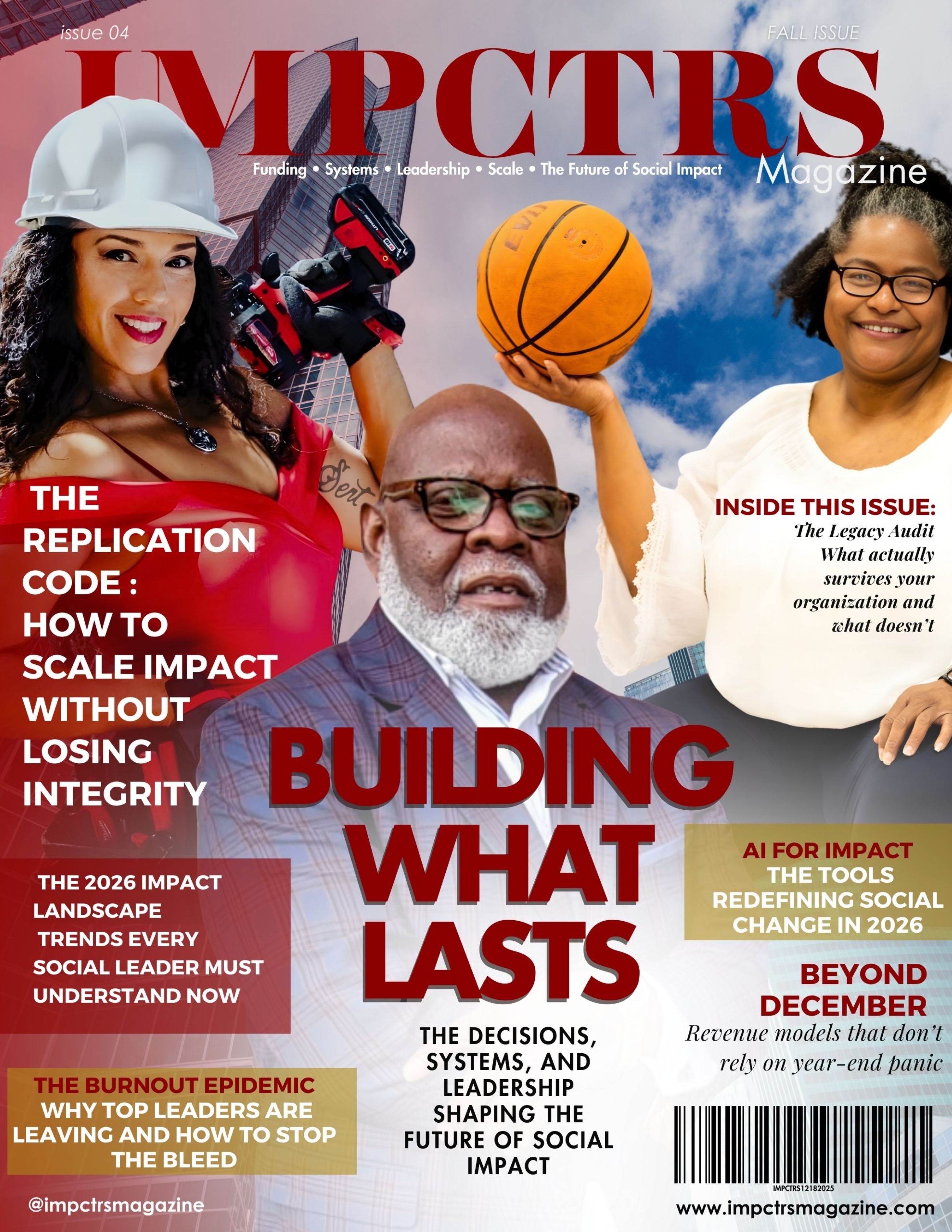
FALL 2025 · 04
Resetting the System: Rebuilding for Stability, Scale & Relevance
VIEW FULL ISSUE →
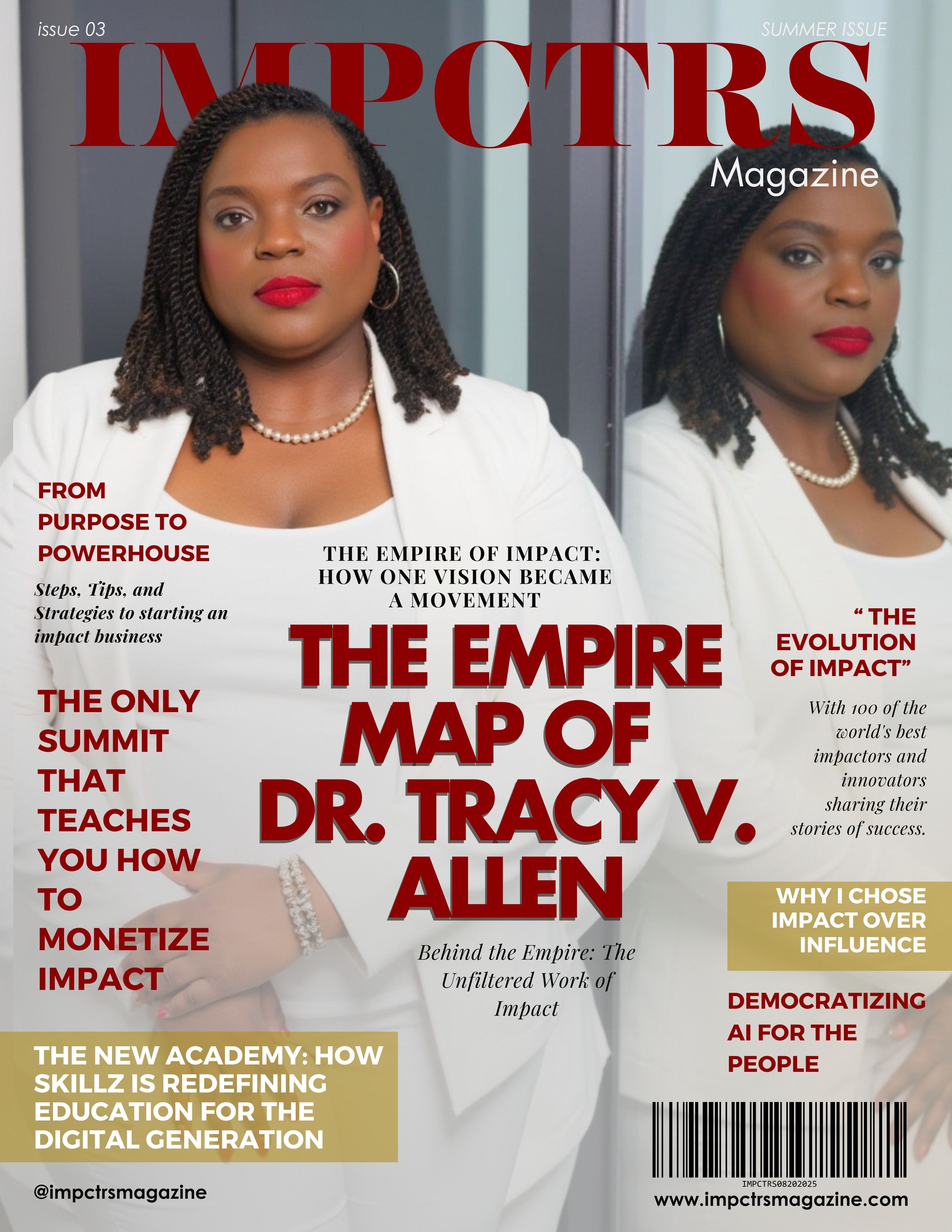
SUMMER 2025 · 03
The Money Question: Funding Models That Actually Work
VIEW FULL ISSUE →
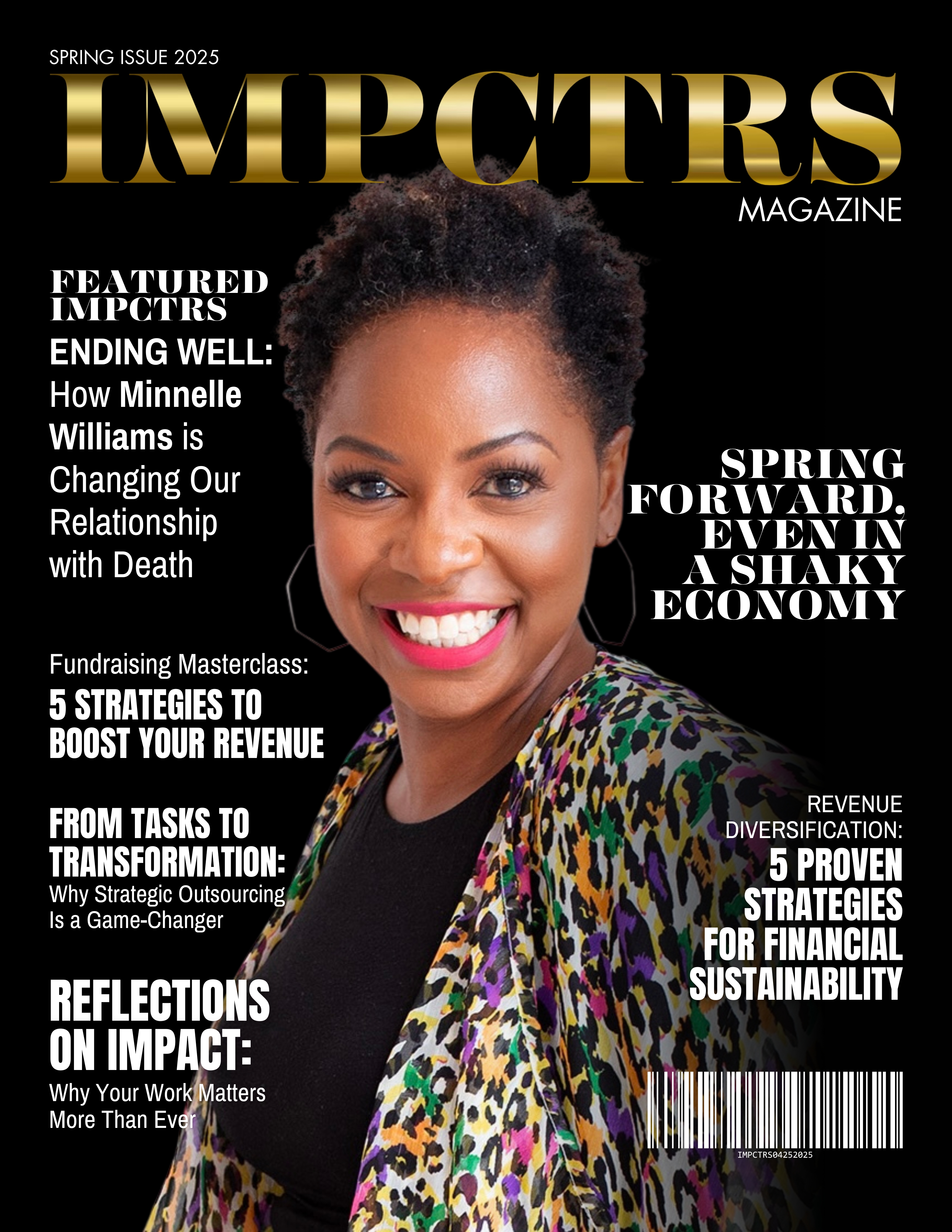
SPRING 2025 · 02
Power, People & Purpose: Reimagining Leadership in the Sector
VIEW FULL ISSUE →
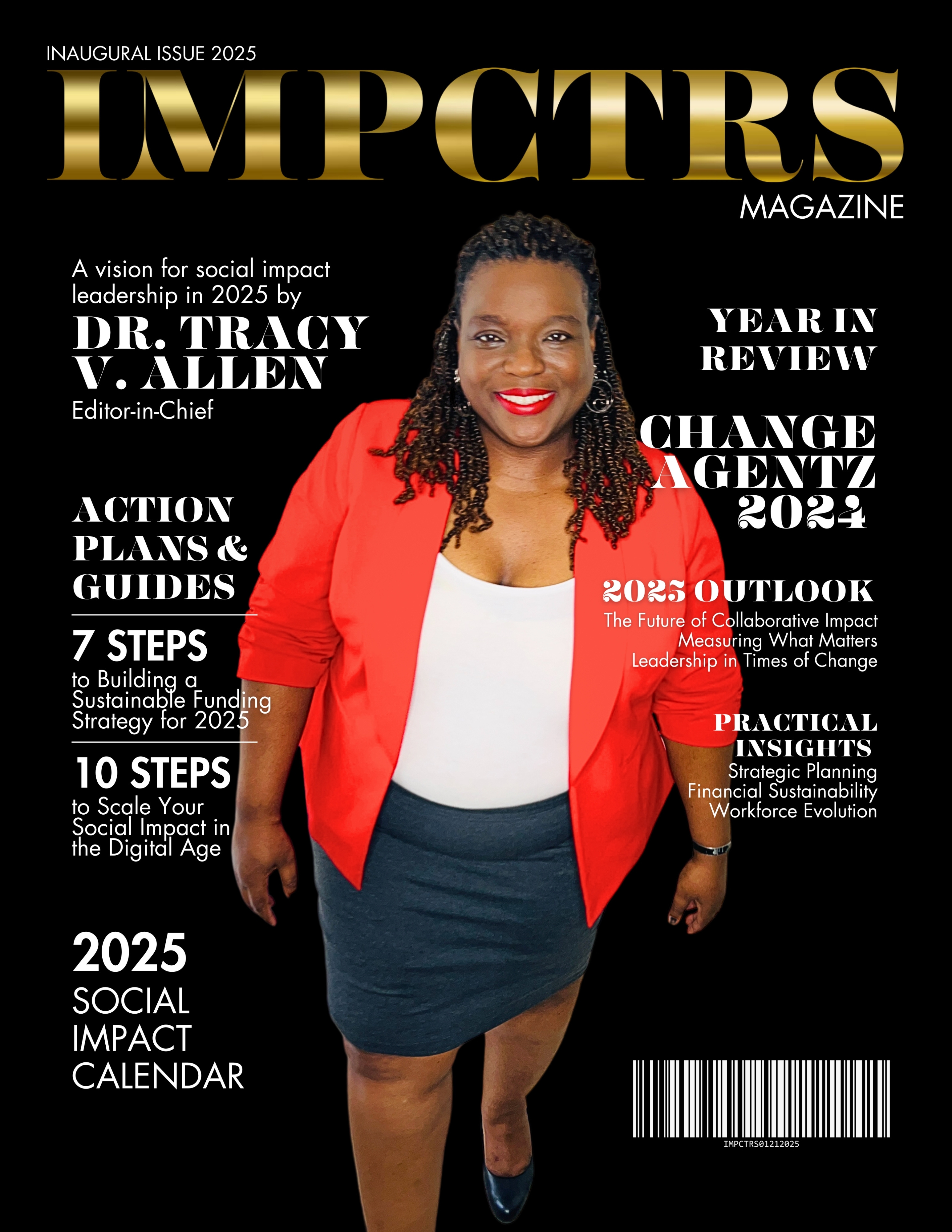
WINTER 2025 · 01
The Inaugural Issue: Why the Sector Needs a Different Conversation
VIEW FULL ISSUE →
Every issue, a new conversation about what it means to build something that lasts.
— JOIN THE COMMUNITY
Receive Impctrs Magazine every quarter.
Delivered to social impact leaders, nonprofit executives, and changemakers who are serious about building organizations and movements that outlast them. No recycled platitudes. No echo chamber content. Just strategic content worth your time.

"For Those Who Change the World — and Intend to Keep Doing It."
FOLLOW US
© 2026 Impctrs Magazine powered by Impctrs Management Group. All rights reserved.