QUARTERLY ISSUES
Legacy in
Motion.
Building What
Lasts.
The magazine for social impact leaders who refuse to choose between purpose and sustainability. Strategic thinking for those rebuilding the systems that matter most.
OUR MISSION
We don't write for the sector.
We write for the leaders changing it.
Impctrs Magazine was built for the changemakers who sit at the intersection of purpose and pragmatism, people building organizations, leading movements, and reshaping systems that affect real lives.
Every issue challenges conventional nonprofit thinking, offers frameworks borrowed from the best minds in business, and connects a community of leaders who understand that lasting impact requires both vision and operational excellence.
4
ISSUES ANNUALLY
100%
PURPOSE-DRIVEN CONTENT
1st
IN STRATEGIC EDITORIAL FOR THE SECTOR
INSIDE THE ISSUE
What You'll Find
01
Deep Dive Features & Sector Analysis
Long-form reporting and strategic analysis that challenges orthodoxies and offers new frameworks for thinking about organizational effectiveness, sustainability, and relevance in a rapidly changing world.
02
Leader Spotlights
Intimate profiles of the changemakers building what lasts, their methods, their setbacks, and their vision.
03
Clever Solutions
Practical tools and frameworks drawn from business and applied to social impact contexts.
04
Impctrs Out Loud
Conversations from the podcast brought to the page, unfiltered voices from across the sector.
05
Off the Clock & Community
The human side of impact work: culture, reflection, and the moments that remind us why we do this.
OUR EDITORIAL PILLAR
Content built around what actually moves the needle.
Strategic Leadership
Moving beyond program management to organizational vision, board development, and the hard decisions that define an institution's future.
Financial Sustainability
Systems Thinking
Understanding the ecosystems in which organizations operate — and how to navigate, disrupt, and ultimately reshape them.
Community & Belonging
The connective tissue of this work — relationships, trust, accountability, and the cultures we build inside our organizations and beyond.
The sector doesn't need more inspiration. It needs leaders willing to do the hard, unglamorous work of building organizations that last beyond any one person's tenure.
— IMPCTRS EDITORIAL MISSION
IMPCTRS OUT LOUD
Latest Episodes
Ep. 047
When the Mission Outlives the Founder: Succession Planning for Social Impact Organizations
Guest: Dr. Angela Reeves, CEO — Reeves Leadership Group
What happens when the person who built the organization is the organization? This conversation gets into the hard truth about founder dependency and what it actually takes to build an institution that survives the transition.
58 min · Feb 2026
LISTEN NOW
Ep. 046
The Grant Trap: Why Nonprofits Stay Broke and What to Do Instead
Guest: Marcus T. Webb, Founder — Webb Philanthropy Advisors
A frank conversation about why the nonprofit funding model is broken and the concrete steps organizations are taking to build revenue streams that don't evaporate when a grant cycle ends.
44 min · Jan 2026
LISTEN NOW
Ep. 045
Building Boards That Actually Govern
Sandra Okoye · Board Strategy Institute
58 min · Dec 2025
Ep. 044
Community Trust as Organizational Currency
James Fortunato · Urban Futures Lab
58 min · Nov 2025
Ep. 043
Scaling Without Losing Your Soul
Priya Menon · The Scale Collaborative
58 min · Oct 2025
FROM THE ARCHIVE
Past Articles
Browse All Articles →
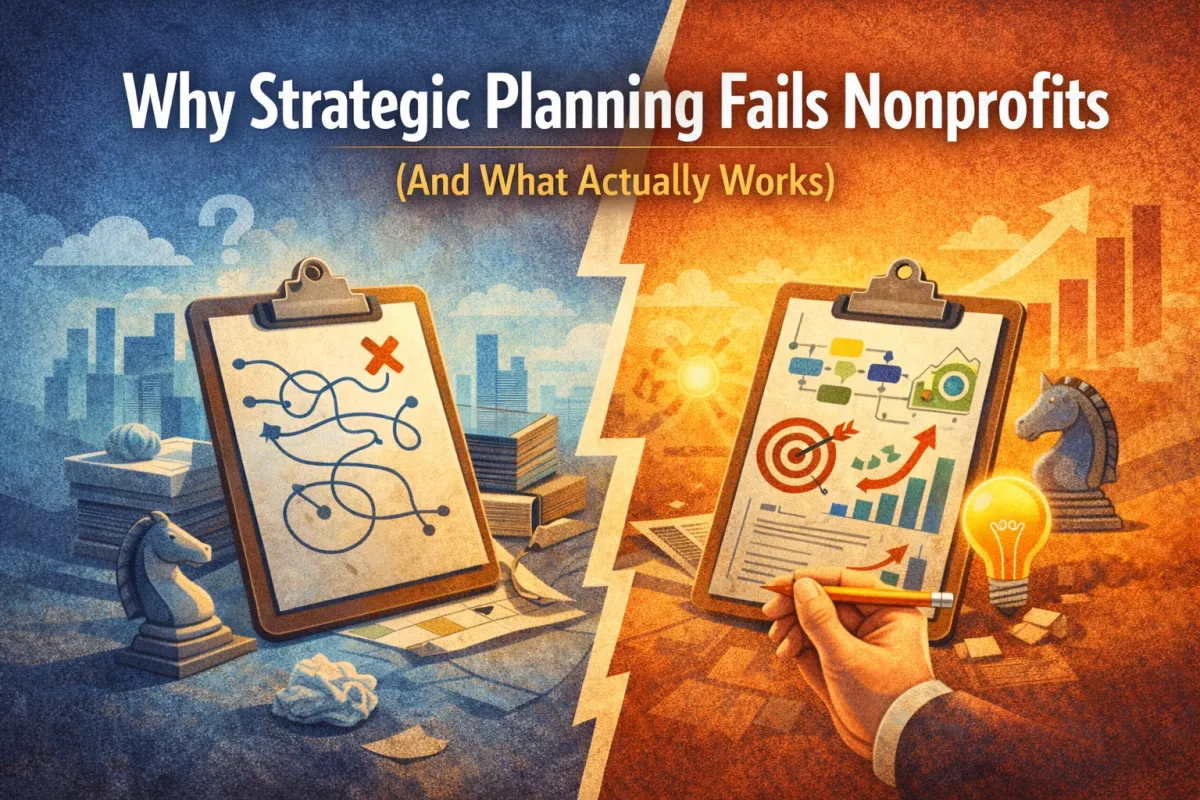
Why Strategic Planning Fails Nonprofits (And What Actually Works)
Boards approve strategic plans with enthusiasm in December, and by March those same plans sit abandoned while organizations revert to operating exactly as they did before planning began.
The cycle repeats across thousands of nonprofits annually. Hundreds of hours invested in strategic planning sessions. Thousands of dollars spent on facilitation. Elaborate documents produced with mission statements, vision declarations, SWOT analyses, and multi-year objectives. Then nothing changes.
Staff continue managing the same programs using identical approaches. Leadership makes decisions without referencing strategic priorities. Resources flow to traditional activities regardless of strategic commitments. Board meetings discuss operational details instead of strategic progress.
The problem isn't that nonprofits lack strategic thinking capacity. It's that they approach strategic planning using frameworks designed for corporate environments with fundamentally different operating realities, incentive structures, and success measures.
Corporate strategic planning assumes profit motive, market competition, shareholder accountability, and relatively straightforward performance metrics. Nonprofit strategic planning must navigate mission complexity, stakeholder diversity, funding restrictions, and impact measurement challenges that render traditional planning approaches ineffective.
Understanding why strategic planning fails nonprofits and what actually works matters now more than ever. 2026 brings heightened competition for resources, increased funder expectations, and rapidly evolving community needs. Organizations operating without genuine strategic direction won't just stagnate. They'll become irrelevant.
The Fatal Flaws in Traditional Nonprofit Strategic Planning
Most nonprofit strategic planning failures stem from predictable mistakes that organizations repeat despite consistently disappointing results.
Consultant-Driven Processes that extract organizational knowledge, disappear for analysis, and return with plans bearing minimal staff or board fingerprints doom implementation from the start. These plans may be professionally formatted and theoretically sound, but they lack the ownership necessary for execution.
When boards and staff view strategic plans as consultant products rather than organizational commitments they helped shape, implementation becomes optional. The plan sits on shelves because nobody feels responsible for making it happen. Consultants provided deliverables. Their work is done. Who owns execution becomes unclear.
Complexity Addiction creates strategic plans so elaborate that implementation becomes impossible for organizations with limited capacity. Fifty-page documents with dozens of goals, hundreds of objectives, complex matrices, and detailed implementation timelines overwhelm rather than guide.
The irony is brutal. Organizations seeking strategic clarity through planning processes emerge with documents too complicated to use for actual decision making. When faced with real choices about resource allocation or priority setting, leaders can't extract useful guidance from their own strategic plans.
Aspirational Fantasy produces plans describing organizations that don't exist pursuing goals disconnected from current capacity or realistic possibility. These plans reflect what boards wish their organizations could accomplish rather than honest assessment of what they can actually achieve.
The gap between aspiration and reality creates cynicism. Staff recognize immediately that strategic plans bear no relationship to available resources, existing capabilities, or genuine organizational capacity. When implementation inevitably falls short of unrealistic commitments, everyone points to resource constraints rather than acknowledging planning dysfunction.
Annual Revision Obsession prevents sustained focus by constantly changing strategic direction before previous initiatives mature enough to produce results. Some organizations treat strategic planning as yearly exercises, abandoning last year's priorities to chase new directions.
This constant strategic churning prevents the multi-year commitment necessary for meaningful organizational change or program development. Nothing receives adequate time or resources to succeed before attention shifts to the next priority.
Board-Only Engagement excludes staff from planning processes, creating strategies disconnected from operational realities and implementation wisdom. Boards approve strategic directions without input from people who will actually execute initiatives or who understand program delivery nuances.
The resulting plans often mandate approaches that sound reasonable in conference rooms but prove unworkable in practice. Staff inherit implementation responsibility for strategies they didn't shape and sometimes recognize as fundamentally flawed.
What Successful Nonprofits Do Differently
Organizations where strategic planning actually works approach the process with different assumptions, methods, and accountability structures.
Inclusive Planning Processes engage staff, board members, program participants, and community stakeholders in shaping strategic direction. This doesn't mean everyone votes on every decision, but it means diverse perspectives inform planning and create broad ownership of results.
When frontline staff contribute to strategic planning, they bring operational knowledge that prevents unrealistic commitments. When community members participate, they ensure strategies address actual needs rather than assumed problems. When multiple stakeholders shape plans, implementation becomes collective responsibility rather than leadership burden.
Radical Prioritization limits strategic focus to three to five areas receiving concentrated resources and attention. Everything else becomes secondary or gets eliminated. This discipline forces genuine choices about what matters most and prevents the resource diffusion that undermines implementation.
Saying no proves harder than saying yes, but it's essential for strategic effectiveness. Organizations can't excel at everything simultaneously. Attempting to do so guarantees mediocrity across all areas. Strategic planning should identify where concentrated effort will produce disproportionate impact.
Capacity-Grounded Goals stretch organizational capability without departing from reality. Plans acknowledge current constraints while building pathways to expanded capacity. Goals are ambitious but achievable within realistic resource and capability development scenarios.
This doesn't mean lowering standards or accepting stagnation. It means honest assessment of starting points and thoughtful planning about capacity building required for goal achievement. Strategic plans should describe how organizations will develop necessary capabilities, not just assume those capabilities exist.
Living Document Approach treats strategic plans as evolving frameworks requiring regular updates based on implementation learning. Rather than producing static documents that gather dust, successful organizations build dynamic strategic management practices with quarterly reviews and annual refinements.
This approach acknowledges uncertainty inherent in complex environments. Strategic plans can't predict every contingency or answer every question. They provide directional clarity and decision frameworks while allowing adaptation as circumstances change and learning occurs.
Integration Into Operations embeds strategic priorities into daily organizational life rather than treating them as separate from regular work. Job descriptions reference strategic contributions. Performance evaluations assess strategic progress. Budget processes align resources with strategic priorities. Team meetings include strategic updates.
When strategic planning remains leadership activity disconnected from staff responsibilities, implementation stalls. When strategic priorities permeate organizational systems and processes, they shape actual behavior and resource allocation.
The Resource Allocation Reality Check
Strategic planning fails most fundamentally when organizations refuse to reallocate resources toward new priorities.
Budget Alignment provides the clearest test of strategic commitment. If budgets allocate resources identically to pre-planning patterns, strategic plans aren't actually guiding organizational decisions. Real strategic planning requires redirecting financial resources from traditional activities toward strategic priorities.
This creates discomfort. Reducing funding for established programs to invest in strategic initiatives generates resistance from staff and stakeholders attached to those programs. But without resource reallocation, strategic planning becomes performance theater rather than genuine organizational change.
Staff Time Commitment represents the most constrained resource in most nonprofits. Strategic initiatives require staff attention, but existing responsibilities already consume available time. Organizations adding strategic initiatives without reducing other obligations guarantee implementation failure.
Successful strategic planning includes honest conversation about what organizations will stop doing to create capacity for new priorities. This might mean eliminating programs, reducing service frequency, or increasing efficiency through process improvement. Without these capacity-creating actions, strategic plans remain unfunded mandates.
Leadership Attention gravitates toward urgent operational issues unless deliberate structures maintain strategic focus. Executive directors facing immediate crises find strategic planning easy to postpone. Board meetings dominated by operational details leave no space for strategic discussion.
Organizations serious about strategic execution build accountability mechanisms that ensure leadership attention remains focused on strategic priorities despite operational urgency. This might include dedicated board committee oversight, quarterly strategic reviews, or executive dashboard metrics tracking strategic progress.
The Timeline Trap
Unrealistic timelines doom strategic planning as surely as poor goal setting or inadequate resources.
Multi-Year Horizons make sense for strategic planning, but many organizations expect immediate results from initiatives requiring extended development periods. Program launches need design time. Partnership development requires relationship building. Capacity expansion demands infrastructure investment. None of this happens quickly.
Strategic plans should phase initiatives across realistic timelines that acknowledge development periods necessary for meaningful progress. Expecting transformational results in six months from complex initiatives sets up inevitable disappointment.
Patience for Emergence allows strategic initiatives time to develop and demonstrate effectiveness before evaluation. New programs rarely perform optimally from launch. Organizational changes require adjustment periods. Strategic approaches need refinement based on experience.
Organizations abandoning strategic initiatives at first sign of difficulty or declaring failure after brief implementation miss the learning and adaptation necessary for success. Strategic execution requires tolerance for early imperfection and commitment to iterative improvement.
Milestone Clarity prevents vague implementation timelines that allow indefinite delay. Strategic plans should specify when particular developments will occur, creating urgency and enabling progress assessment. Without clear milestones, strategic initiatives drift endlessly without completion.
But milestones must be realistic. Arbitrary deadlines disconnected from actual development requirements create pressure for premature implementation or superficial compliance that checks boxes without achieving substantive progress.
The Measurement Mistake
Strategic planning often fails because organizations don't establish clear success metrics or collect data necessary for performance assessment.
Outcome Definition needs to occur during planning, not after implementation. What would success look like? How will it be recognized? What evidence would demonstrate goal achievement? Answering these questions during strategic planning prevents later disputes about whether initiatives succeeded.
Too many organizations launch strategic initiatives without clarity about desired outcomes beyond general aspirations. This ambiguity allows competing interpretations of success and prevents learning about effectiveness.
Data Collection Systems must be established before implementation begins. Organizations can't evaluate strategic initiatives if they never captured baseline data or implemented tracking mechanisms. Yet many nonprofits launch programs and later realize they can't demonstrate impact because they didn't build measurement into design.
Successful strategic planning includes data infrastructure development. This doesn't require sophisticated research methodologies. It requires basic discipline about defining indicators, establishing collection methods, and maintaining consistent tracking.
Progress Transparency keeps stakeholders informed about strategic advancement and creates accountability pressure. Organizations that publicly share strategic goals and regularly report progress build external expectations that reinforce internal commitment.
Conversely, organizations treating strategic plans as internal documents that stakeholders never see remove external accountability that could support implementation. When nobody outside leadership knows about strategic commitments, abandoning them carries no reputational cost.
What Actually Works: The Simplified Strategic Framework
Nonprofits need strategic approaches matched to their unique operating realities rather than corporate frameworks that ignore mission complexity and stakeholder diversity.
Three Core Questions provide sufficient strategic clarity for most nonprofits without elaborate planning processes. First, who are we and what's our distinctive contribution? Second, where will we focus limited resources for maximum impact? Third, how will we build capacity to sustain and grow our work?
Organizations that can answer these questions clearly and align stakeholders around shared responses have adequate strategic direction. They don't need 50-page plans with detailed implementation matrices. They need clarity, commitment, and accountability.
Quarterly Strategic Reviews maintain momentum and enable course correction. Rather than annual planning retreats producing static documents, successful organizations build regular strategic discussion into governance and management rhythms. These reviews assess progress, identify obstacles, adjust strategies, and reinforce commitment.
The discipline of quarterly review prevents the drift that occurs when months pass between strategic conversations. It creates regular opportunities to celebrate progress, address challenges, and make necessary adjustments based on implementation experience.
Action-Oriented Documentation replaces lengthy strategic plans with concise frameworks focused on decisions and actions rather than philosophy and analysis. One or two-page strategic summaries articulating priorities, goals, strategies, and accountability prove more useful than elaborate documents that nobody references.
The purpose of strategic planning documentation is utility, not comprehensiveness. If documents don't actually guide decisions or facilitate accountability, their length and sophistication are irrelevant.
Build Strategic Planning That Actually Drives Results
Strategic planning should create organizational clarity and alignment, not produce documents that gather dust. The right approach acknowledges nonprofit operating realities and builds frameworks that genuinely guide decision making.
Impctrs Management Group helps nonprofits and social enterprises develop strategic planning processes that produce actionable direction, stakeholder alignment, and accountability systems ensuring execution.
Book a discovery call today!
Stop investing in strategic planning processes that fail to change organizational behavior. Start building strategic frameworks that actually work for mission-driven organizations operating in complex environments with limited resources.
Keywords: why strategic planning fails nonprofits, nonprofit strategic planning mistakes, effective nonprofit planning, strategic planning best practices, nonprofit strategy implementation, strategic planning challenges, nonprofit planning framework, strategic planning success, nonprofit strategic direction, planning implementation nonprofits

FALL 2025 ISSUE
READ ARTICLES →
FALL 2025 ISSUE
READ →
FALL 2025 ISSUE
READ →
THE ARCHIVE
VIEW ALL ISSUES →
Past Issues
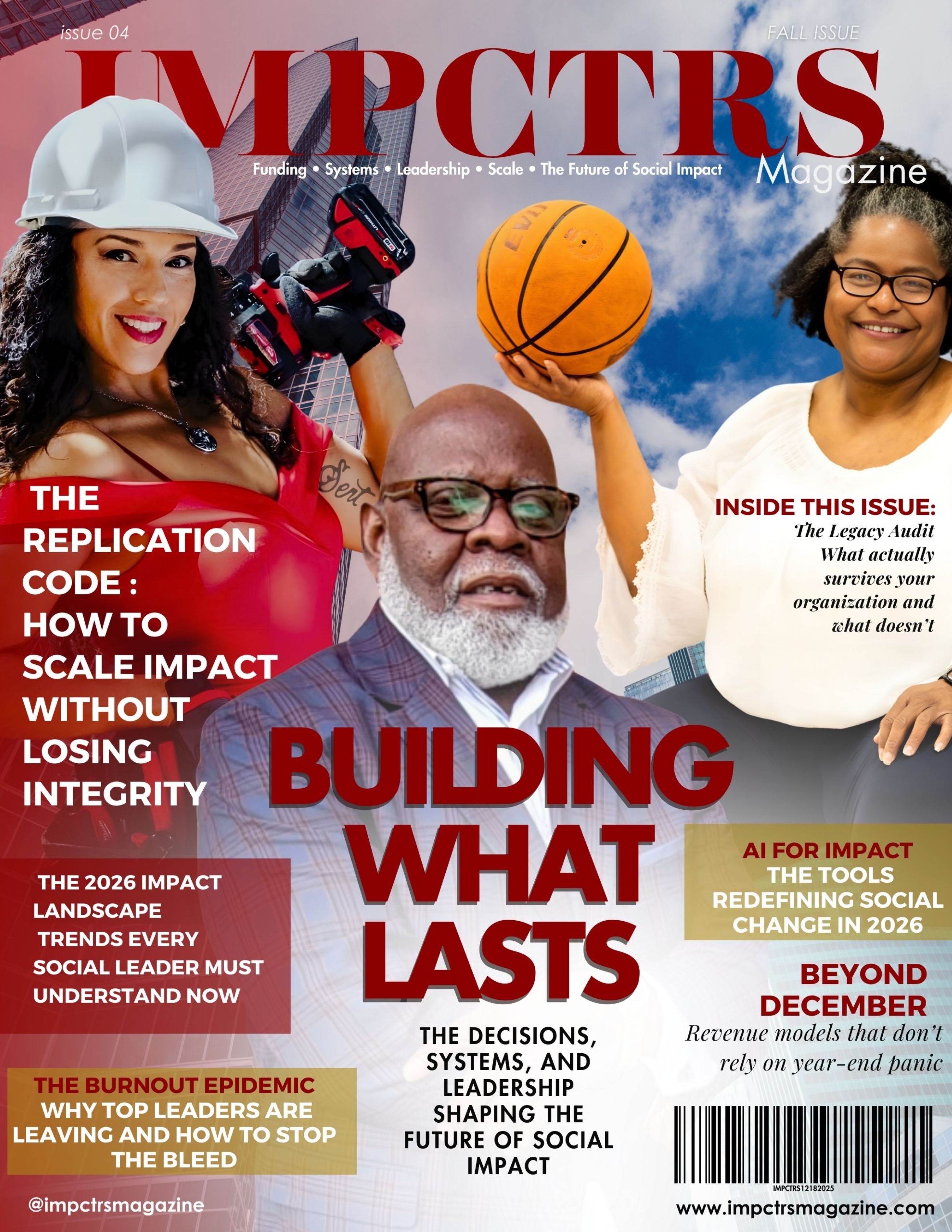
FALL 2025 · 04
Resetting the System: Rebuilding for Stability, Scale & Relevance
VIEW FULL ISSUE →
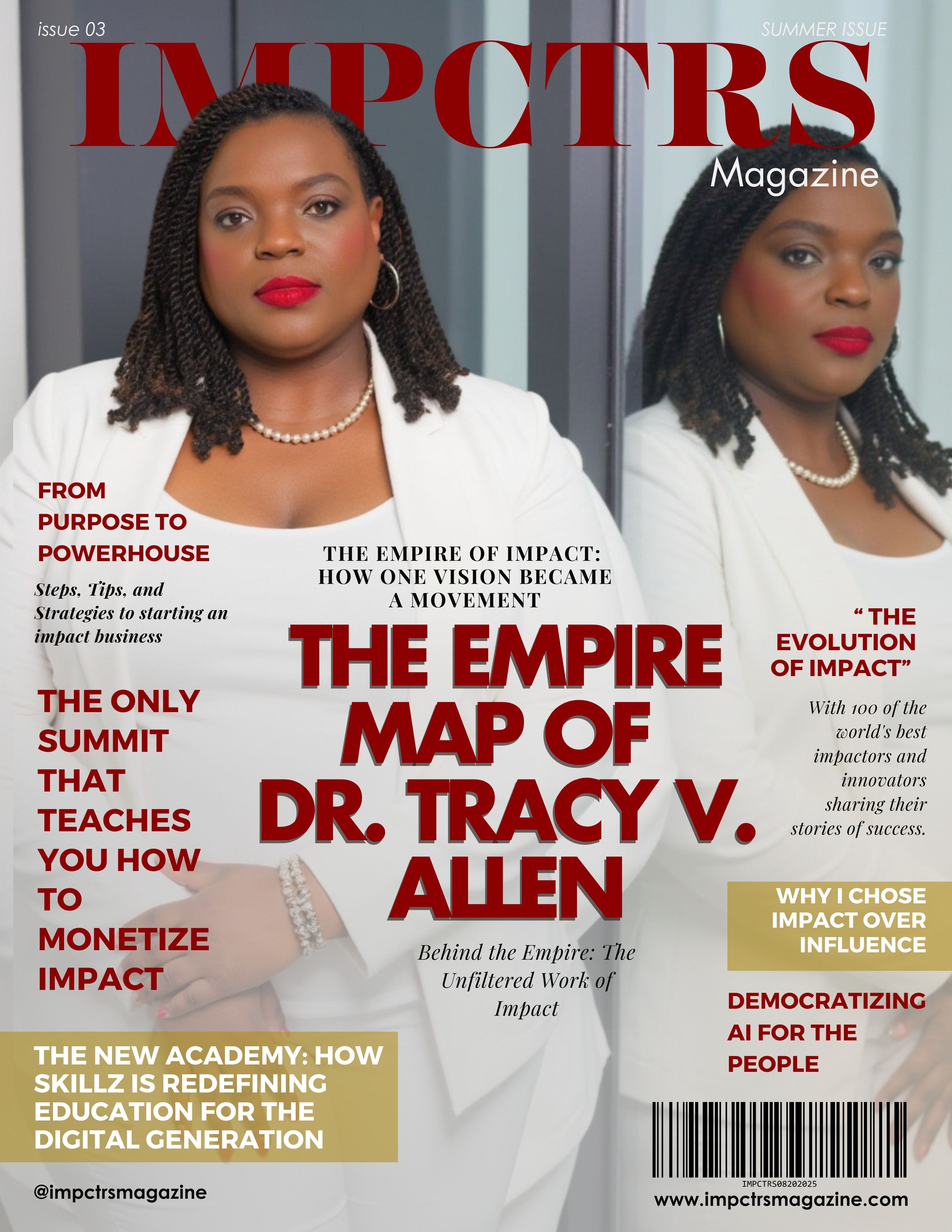
SUMMER 2025 · 03
The Money Question: Funding Models That Actually Work
VIEW FULL ISSUE →
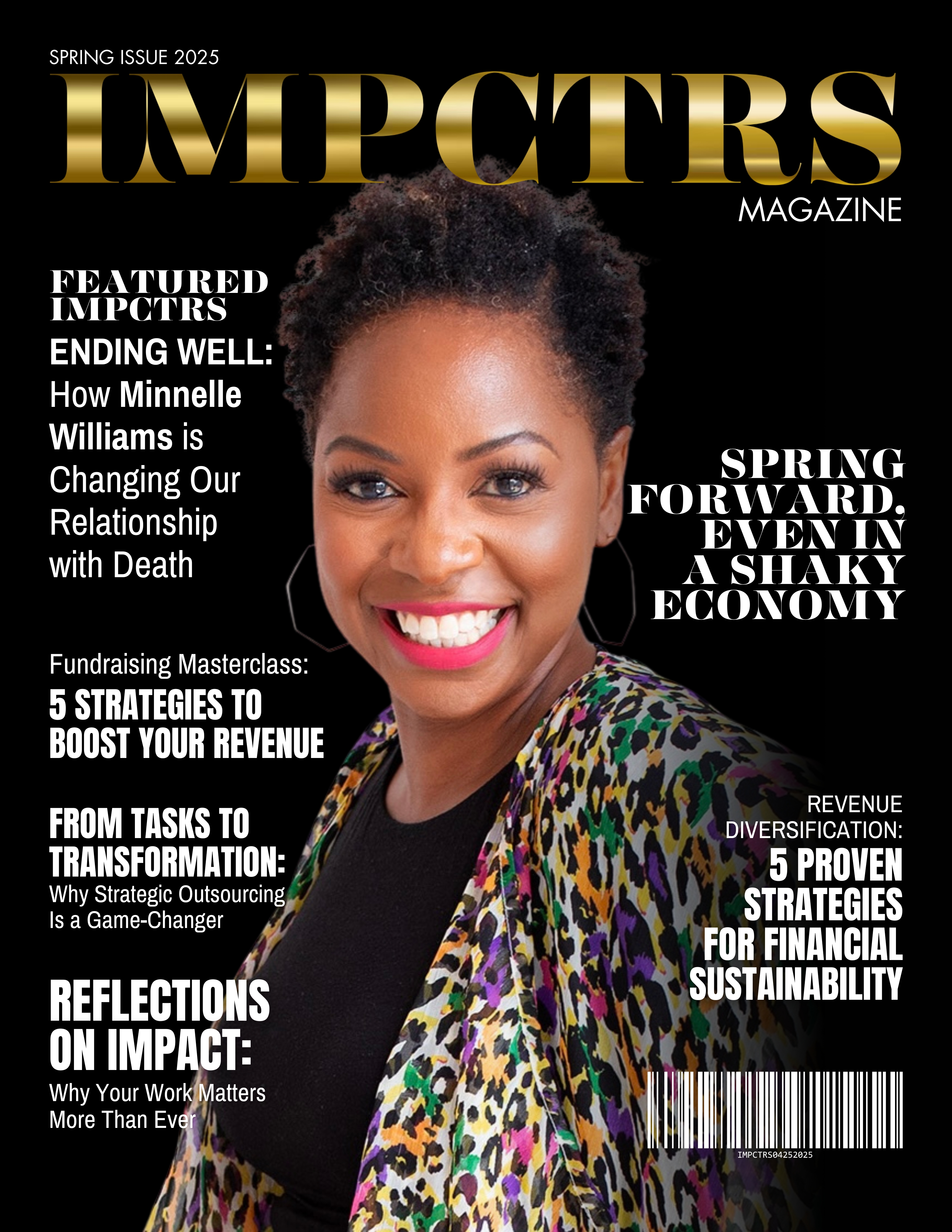
SPRING 2025 · 02
Power, People & Purpose: Reimagining Leadership in the Sector
VIEW FULL ISSUE →
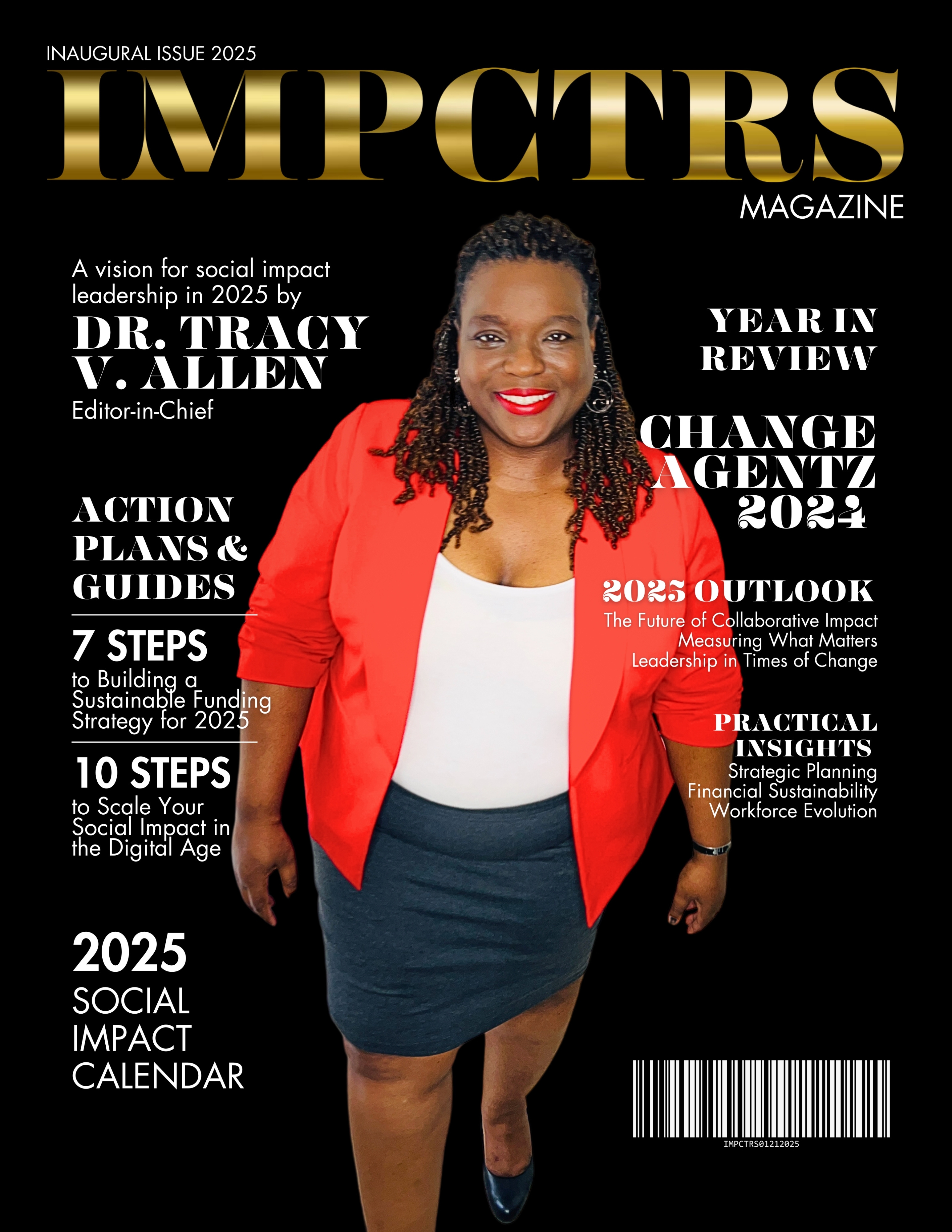
WINTER 2025 · 01
The Inaugural Issue: Why the Sector Needs a Different Conversation
VIEW FULL ISSUE →
Every issue, a new conversation about what it means to build something that lasts.
— JOIN THE COMMUNITY
Receive Impctrs Magazine every quarter.
Delivered to social impact leaders, nonprofit executives, and changemakers who are serious about building organizations and movements that outlast them. No recycled platitudes. No echo chamber content. Just strategic content worth your time.

"For Those Who Change the World — and Intend to Keep Doing It."
FOLLOW US
© 2026 Impctrs Magazine powered by Impctrs Management Group. All rights reserved.