QUARTERLY ISSUES
Legacy in
Motion.
Building What
Lasts.
The magazine for social impact leaders who refuse to choose between purpose and sustainability. Strategic thinking for those rebuilding the systems that matter most.
OUR MISSION
We don't write for the sector.
We write for the leaders changing it.
Impctrs Magazine was built for the changemakers who sit at the intersection of purpose and pragmatism, people building organizations, leading movements, and reshaping systems that affect real lives.
Every issue challenges conventional nonprofit thinking, offers frameworks borrowed from the best minds in business, and connects a community of leaders who understand that lasting impact requires both vision and operational excellence.
4
ISSUES ANNUALLY
100%
PURPOSE-DRIVEN CONTENT
1st
IN STRATEGIC EDITORIAL FOR THE SECTOR
INSIDE THE ISSUE
What You'll Find
01
Deep Dive Features & Sector Analysis
Long-form reporting and strategic analysis that challenges orthodoxies and offers new frameworks for thinking about organizational effectiveness, sustainability, and relevance in a rapidly changing world.
02
Leader Spotlights
Intimate profiles of the changemakers building what lasts, their methods, their setbacks, and their vision.
03
Clever Solutions
Practical tools and frameworks drawn from business and applied to social impact contexts.
04
Impctrs Out Loud
Conversations from the podcast brought to the page, unfiltered voices from across the sector.
05
Off the Clock & Community
The human side of impact work: culture, reflection, and the moments that remind us why we do this.
OUR EDITORIAL PILLAR
Content built around what actually moves the needle.
Strategic Leadership
Moving beyond program management to organizational vision, board development, and the hard decisions that define an institution's future.
Financial Sustainability
Systems Thinking
Understanding the ecosystems in which organizations operate — and how to navigate, disrupt, and ultimately reshape them.
Community & Belonging
The connective tissue of this work — relationships, trust, accountability, and the cultures we build inside our organizations and beyond.
The sector doesn't need more inspiration. It needs leaders willing to do the hard, unglamorous work of building organizations that last beyond any one person's tenure.
— IMPCTRS EDITORIAL MISSION
IMPCTRS OUT LOUD
Latest Episodes
Ep. 047
When the Mission Outlives the Founder: Succession Planning for Social Impact Organizations
Guest: Dr. Angela Reeves, CEO — Reeves Leadership Group
What happens when the person who built the organization is the organization? This conversation gets into the hard truth about founder dependency and what it actually takes to build an institution that survives the transition.
58 min · Feb 2026
LISTEN NOW
Ep. 046
The Grant Trap: Why Nonprofits Stay Broke and What to Do Instead
Guest: Marcus T. Webb, Founder — Webb Philanthropy Advisors
A frank conversation about why the nonprofit funding model is broken and the concrete steps organizations are taking to build revenue streams that don't evaporate when a grant cycle ends.
44 min · Jan 2026
LISTEN NOW
Ep. 045
Building Boards That Actually Govern
Sandra Okoye · Board Strategy Institute
58 min · Dec 2025
Ep. 044
Community Trust as Organizational Currency
James Fortunato · Urban Futures Lab
58 min · Nov 2025
Ep. 043
Scaling Without Losing Your Soul
Priya Menon · The Scale Collaborative
58 min · Oct 2025
FROM THE ARCHIVE
Past Articles
Browse All Articles →
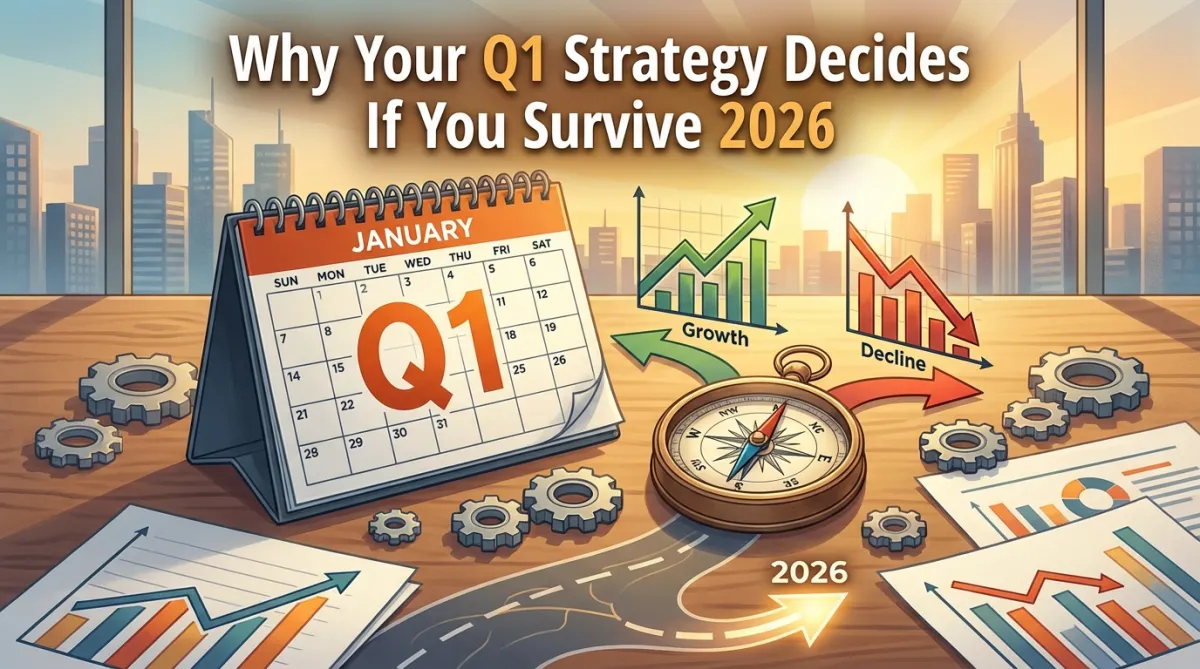
Why Your Q1 Strategy Decides If You Survive 2026
Most social impact organizations treat January like a fresh start. Clean slate. New year energy. Grand ambitions scribbled on vision boards.
But here's what the data shows: organizations that stumble in Q1 rarely recover by Q4.
The first 90 days of 2026 won't just influence your year. They'll determine whether you're fundraising from a position of strength or scrambling to cover payroll in November. Whether you're expanding programs or cutting staff. Whether funders see you as a strategic investment or a risky bet.
Q1 isn't a warm-up period. It's the foundation.
The Hidden Cost of a Weak First Quarter
When Q1 planning falls short, the consequences compound fast.
Grant deadlines get missed because organizational priorities weren't clear. Revenue projections turn into wishful thinking instead of actionable targets. Staff burnout accelerates when everyone's working hard but nobody knows what success actually looks like.
Perhaps most damaging: funders notice. They track patterns. An organization that can't articulate clear Q1 wins struggles to justify Q2 funding requests. Donors who don't see early momentum often redirect their support elsewhere.
This isn't about perfection. It's about intentionality.
Social enterprises and nonprofits operating without a strategic Q1 framework typically share common warning signs. Board meetings focus on problems instead of progress. Financial reports generate confusion rather than confidence. Program teams can't explain how their work connects to organizational sustainability.
These aren't just operational hiccups. They're symptoms of a missing foundation.
What Makes Q1 Different From Every Other Quarter
Think of your fiscal year as a building. Q1 is where you pour the concrete foundation. Try skipping that step and see how the rest holds up.
The first quarter establishes baseline metrics that determine everything else. Revenue patterns. Donor retention rates. Program effectiveness indicators. Staff capacity assessments. These early measurements create the benchmarks against which the entire year gets evaluated.
Funders making annual allocation decisions? They're watching Q1 performance data to predict your year-end results.
Beyond the numbers, Q1 sets cultural momentum. Organizations that execute strong first quarters create confidence. Teams believe the plan might actually work. Board members lean in with support instead of skepticism. Partners take calls and return emails.
Weak Q1 execution does the opposite. It breeds doubt, hesitation, second-guessing.
There's also a timing advantage built into the calendar. Many major grants operate on fiscal years ending in Q4. That means Q1 is when funding announcements get made and new cycles begin. Organizations ready to move fast capture opportunities. Those still figuring out their priorities watch those opportunities vanish.
The Five Financial Pillars Every Organization Needs by February 1
Smart Q1 planning isn't about creating complex spreadsheets nobody understands. It's about answering five fundamental questions with clarity.
Revenue Clarity: Where exactly is money coming from in 2026? Not vague categories like "grants and donations." Specific sources with realistic dollar amounts and acquisition timelines. If the plan says "secure three new corporate sponsors," it should also explain who those sponsors are, why they'd say yes, and when conversations start.
Expense Reality: What does it actually cost to operate this year? Include the hidden expenses that always surface later. Technology upgrades. Staff development. Insurance increases. Consultant fees. The organizations that thrive build cushions for unexpected costs instead of pretending everything will go according to plan.
Cash Flow Mapping: When does money come in versus when it goes out? This gap destroys more nonprofits than any other financial factor. A brilliant program generating $500K in annual grants still fails if those grants pay out in October but payroll happens every two weeks starting in January.
Funding Diversification: How many revenue streams exist and how healthy is each one? Over-dependence on any single source creates vulnerability. Government contracts get delayed. Major donors move cities. Foundation priorities shift. Organizations with multiple strong revenue channels survive these disruptions. Single-source operations don't.
Impact Metrics Alignment: Which outcomes actually matter to funders and how will they be measured? Generic impact statements don't open wallets. Specific, measurable results tied to community transformation do. Q1 is when smart organizations define exactly what success looks like and build systems to track it.
Answer these five questions with precision by February 1, and the rest of the year has direction. Leave them fuzzy, and every subsequent quarter becomes damage control.
Why Traditional Planning Fails Social Impact Organizations
Standard business planning templates don't work for mission-driven organizations. They ignore realities like restricted funding, compliance requirements, program delivery timelines, and stakeholder accountability that extends beyond shareholders.
Many nonprofits try adapting corporate frameworks and wonder why nothing fits right. A traditional business plan assumes profit motive and market competition. Social enterprises operate in a completely different ecosystem where impact measurement matters as much as revenue generation.
The planning tools need to match the work.
That's why effective Q1 strategies for nonprofits and social enterprises address both business sustainability and community outcomes simultaneously. They don't treat financial health and mission impact as competing priorities. They recognize these elements as interdependent.
Programs need funding to exist. Funding requires demonstrated impact. Impact demands well-designed programs. Financial sustainability enables consistent program delivery. The cycle connects.
Organizations that grasp this integration plan differently in Q1. They don't build separate tracks for "mission work" and "money work." They create unified strategies where every initiative serves both purposes.
The Q1 Actions That Separate Survivors From Thrivers
Successful organizations take specific steps in the first quarter that struggling ones skip.
They conduct honest financial health assessments before committing to ambitious plans. Not the sanitized version presented to boards. The real assessment that acknowledges cash reserves, pending obligations, and genuine capacity constraints.
They prioritize revenue-generating activities in January and February instead of waiting until funding gets tight later. Grant applications get submitted early. Donor cultivation meetings happen in Week One, not Week Ten. Partnership conversations start immediately.
They communicate financial realities to staff and board members with transparency. Hiding problems doesn't make them disappear. It just means fewer people can help solve them.
They build implementation timelines that account for actual organizational capacity, not ideal scenarios. A small team can't execute a plan built for an organization three times larger. Smart Q1 planning matches ambition to available resources.
They identify and address operational bottlenecks early. If grant reporting consistently runs late, Q1 is when that system gets fixed. If program data collection creates staff frustration, February is when new tools get implemented. Waiting until problems become crises makes everything harder.
What 2026 Demands From Social Impact Leaders
This year presents unique challenges and opportunities for nonprofits and social enterprises.
Economic uncertainty makes some funders more cautious while others increase investment in community solutions. Government funding priorities are shifting. Corporate social responsibility programs are being scrutinized for genuine impact versus performative gestures.
Organizations that treat Q1 as strategic foundation-building time will adapt successfully. Those that treat it as business as usual will struggle to keep pace.
The choice isn't really about working harder. Most nonprofit leaders already work unsustainably hard. It's about working with greater strategic clarity and financial intentionality from day one of the fiscal year.
Building Financial Strength That Lasts Beyond Q1
Strong first quarters create momentum, but sustainable organizations think beyond 90-day windows.
The systems and habits established in Q1 become the operational rhythm for the entire year. Monthly financial reviews. Consistent fundraising activity. Regular program evaluation. Proactive board engagement.
Organizations that front-load this work in the first quarter find the rest of the year becomes more manageable. Not easy, exactly, but definitely more manageable.
Q1 2026 can be different from every Q1 that came before it. Different because the planning is sharper, the financial strategies are clearer, and the entire organization understands how daily work connects to long-term sustainability.
It starts with deciding that this quarter matters more than any other. Then backing that decision with action.
Position Your Organization for a Powerful 2026
The first quarter determines everything. Revenue trajectory. Funder confidence. Team morale. Program impact. Organizational sustainability.
Social impact work is too important to leave financial health to chance. Organizations ready to build strategic Q1 foundations can access expert guidance designed specifically for nonprofits, hybrids, and social enterprises navigating the complexities of mission-driven growth.
Book a discovery call today!
Impctrs Management Group helps organizations develop financially strong roadmaps that generate measurable results and lasting community impact. Start 2026 from a position of strength instead of hope.
Keywords:Q1 planning nonprofits, nonprofit financial health 2026, social enterprise financial strategy, first quarter planning, nonprofit sustainability, grant funding strategy, nonprofit revenue planning, social impact financial planning, nonprofit Q1 strategy, fiscal year planning nonprofits

FALL 2025 ISSUE
READ ARTICLES →
FALL 2025 ISSUE
READ →
FALL 2025 ISSUE
READ →
THE ARCHIVE
VIEW ALL ISSUES →
Past Issues
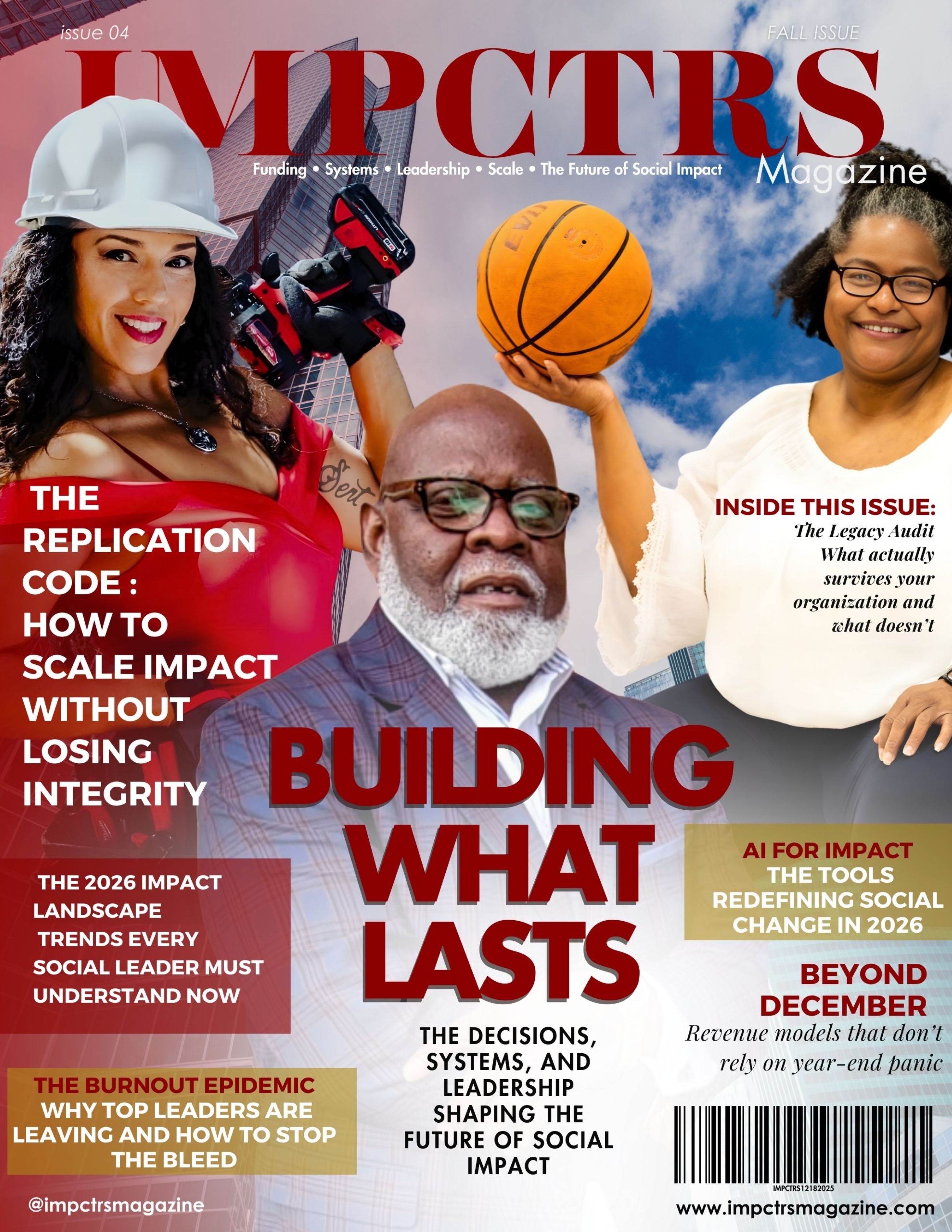
FALL 2025 · 04
Resetting the System: Rebuilding for Stability, Scale & Relevance
VIEW FULL ISSUE →
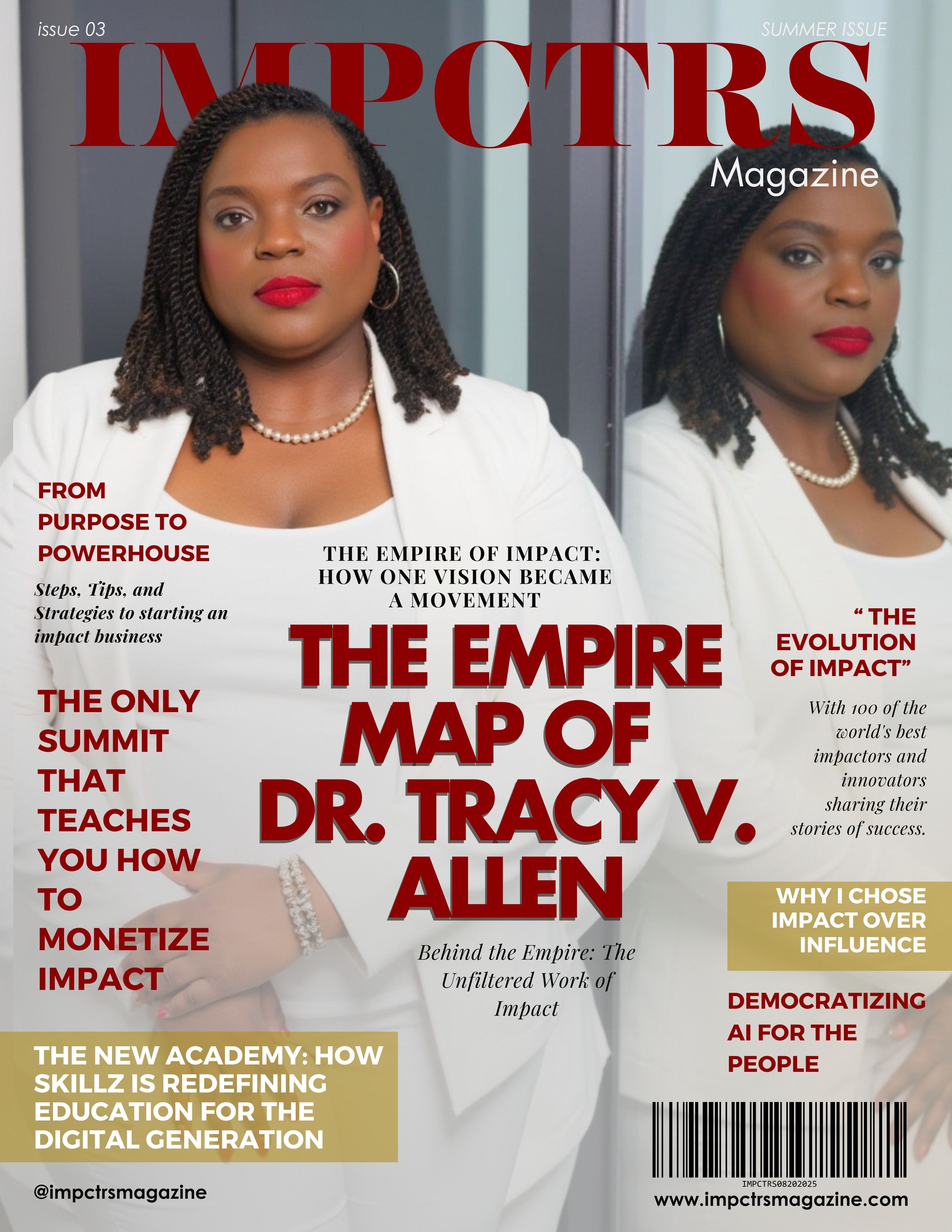
SUMMER 2025 · 03
The Money Question: Funding Models That Actually Work
VIEW FULL ISSUE →
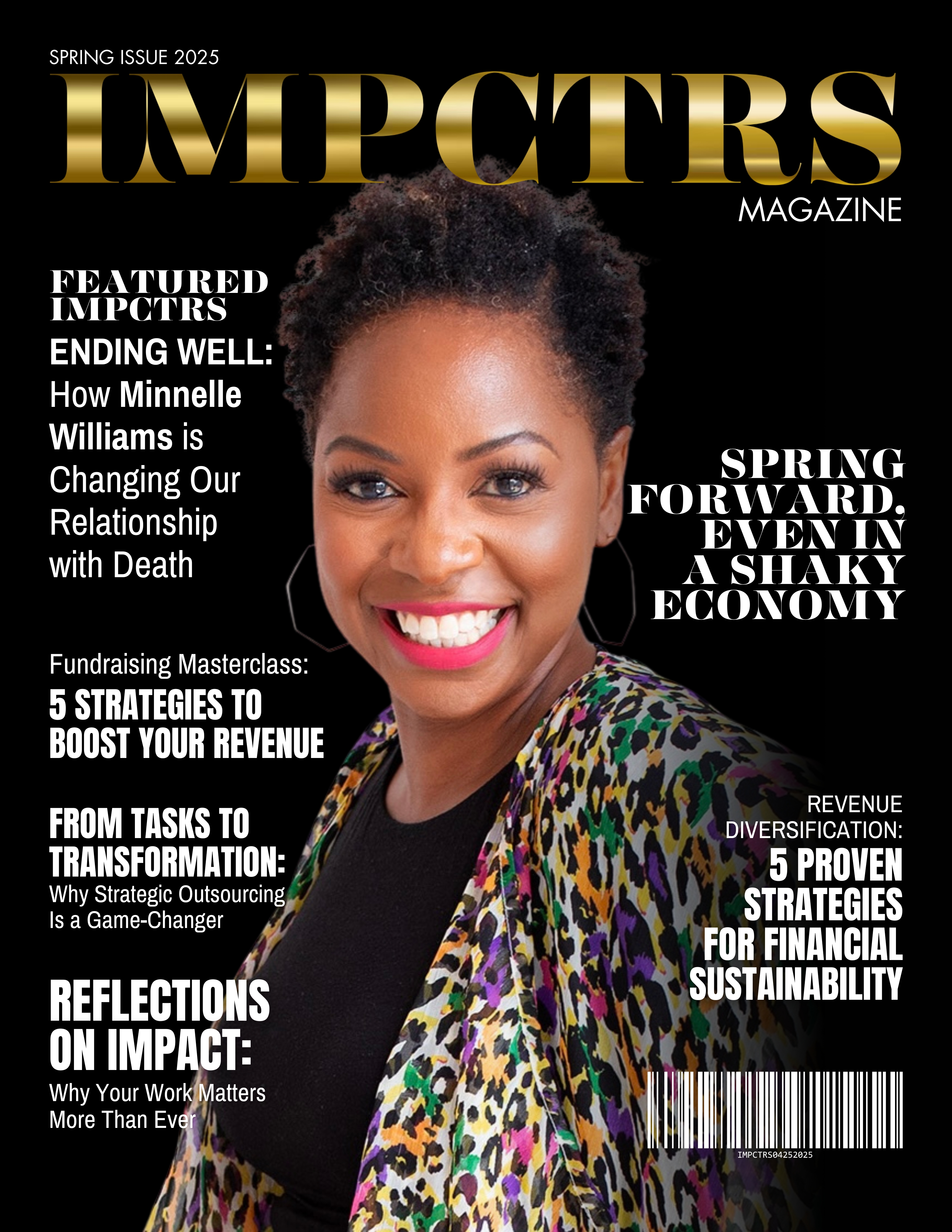
SPRING 2025 · 02
Power, People & Purpose: Reimagining Leadership in the Sector
VIEW FULL ISSUE →
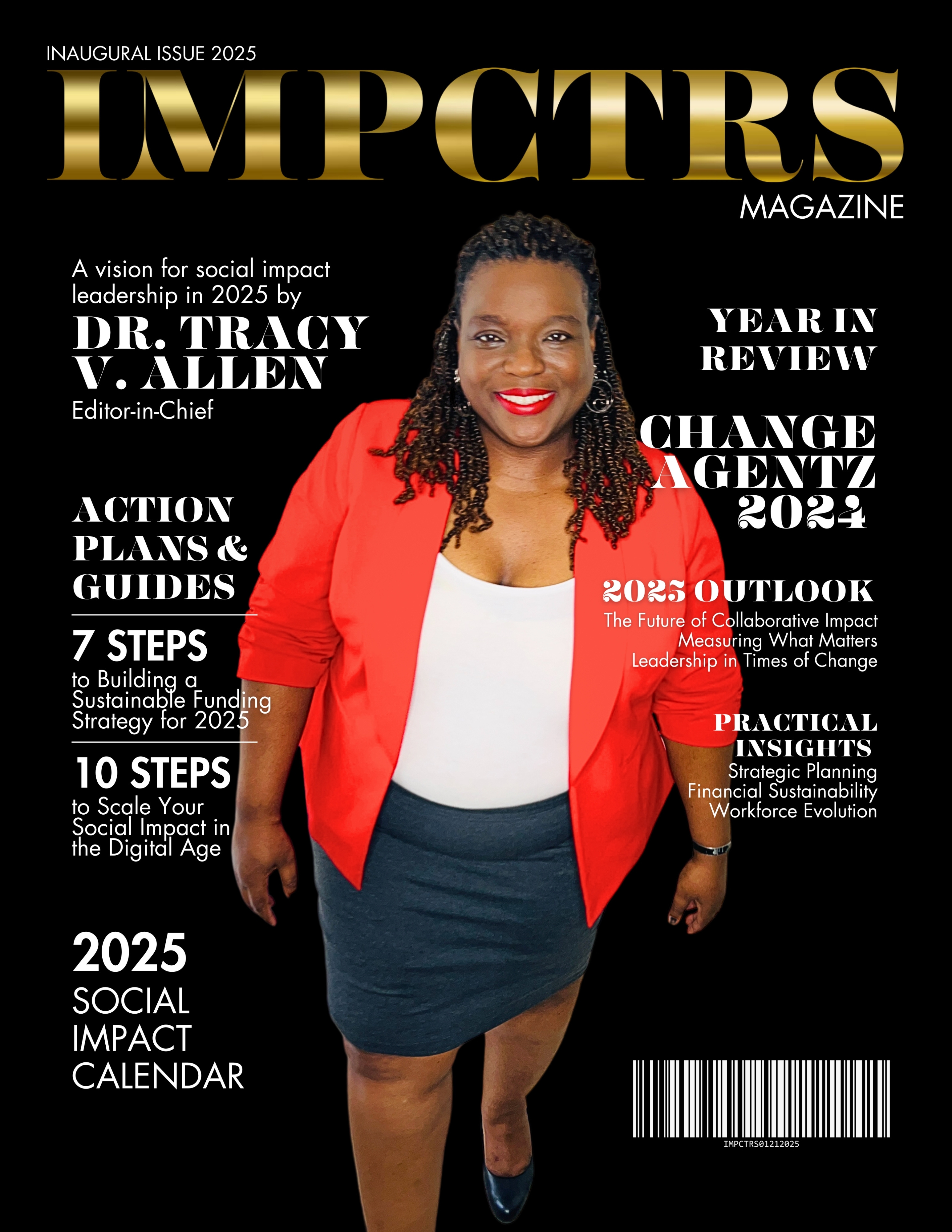
WINTER 2025 · 01
The Inaugural Issue: Why the Sector Needs a Different Conversation
VIEW FULL ISSUE →
Every issue, a new conversation about what it means to build something that lasts.
— JOIN THE COMMUNITY
Receive Impctrs Magazine every quarter.
Delivered to social impact leaders, nonprofit executives, and changemakers who are serious about building organizations and movements that outlast them. No recycled platitudes. No echo chamber content. Just strategic content worth your time.

"For Those Who Change the World — and Intend to Keep Doing It."
FOLLOW US
© 2026 Impctrs Magazine powered by Impctrs Management Group. All rights reserved.