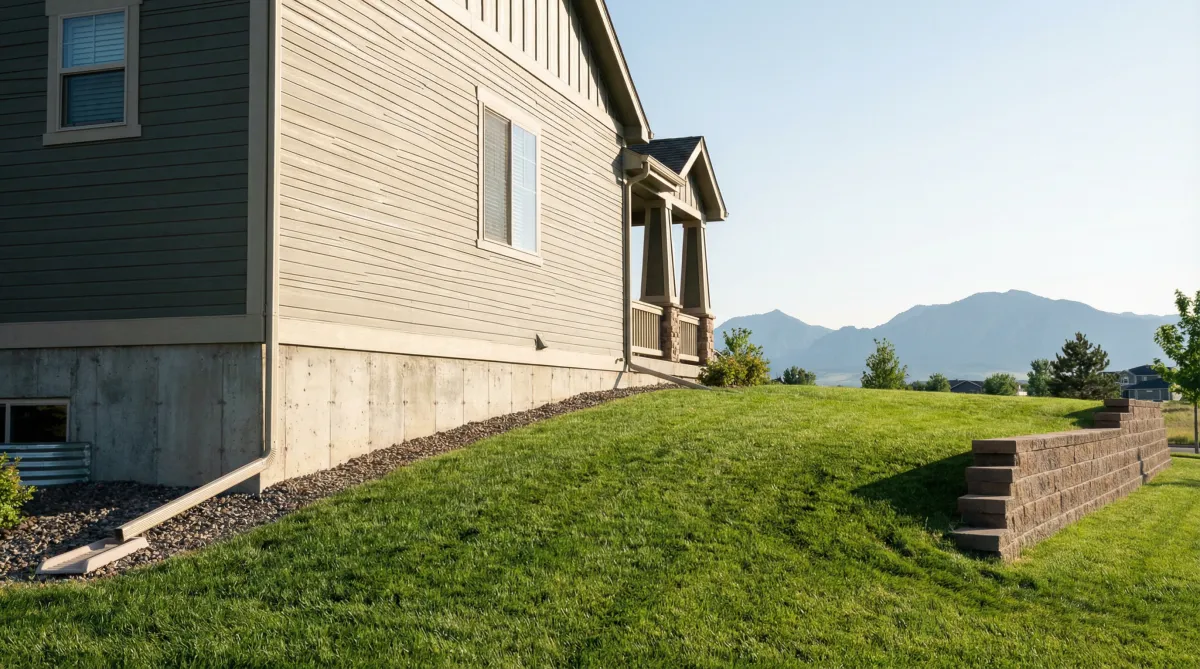
Why Proper Yard Grading is Your Home's First Line of Defense
PART 1 OF 3-PART SERIES
Why Proper Yard Grading is Your Home's First Line of Defense
Expert Insights from Grade A Excavation & Landscape
For many homeowners in the Denver and Thornton area, the slope of their yard is an afterthought. However, that seemingly insignificant detail is one of the most critical factors in protecting your home from costly water damage. Proper yard grading is your home's first and most important line of defense against foundation cracks, basement flooding, and structural instability. At Grade A Excavation & Landscape, with nearly 20 years of experience protecting homes in the Denver metro area, we've seen firsthand how devastating the consequences of poor grading can be.
This article will explain what yard grading is, why it is so important for homes in our region, and the risks associated with improper slope. By the end, you will understand how to identify potential issues and why professional grading is a wise investment in your property's future.
What is Yard Grading and Why is it So Important?
Yard grading is the process of shaping the land around your home to control the flow of surface water. The goal is to create a gentle slope that directs rainwater and snowmelt away from your foundation, preventing it from pooling and seeping into the ground where it can cause damage. A properly graded yard ensures that water is channeled to a safe location, such as a street or a designated drainage area.
In the Denver and Thornton area, where we experience heavy clay soils and periods of intense rainfall, proper grading is especially critical. Clay soil does not absorb water quickly, which means that surface water can accumulate rapidly during a storm. If the ground around your home is flat or, even worse, slopes toward your foundation, that water has nowhere to go but down, where it can exert immense pressure on your foundation walls.
The Science of a Proper Slope
For effective drainage, a yard should have a minimum slope of 2-5% away from the foundation. This means that for every 10 feet of distance from your home, the ground should drop by at least 2.5 inches. This may not seem like much, but it is enough to ensure that water flows away from your home instead of toward it. The following table illustrates the minimum recommended slope:
Foundation
10 feet
20 feet
30 feet
Minimum Drop in Elevation
5 inches
2.5 inches
7.5 inches
This slope, often referred to as "positive drainage," is the single most effective way to prevent water from accumulating around your foundation. Without it, you are leaving your home vulnerable to a host of problems.
The Risks of Improper Yard Grading
Ignoring the grade of your yard is a gamble that can have severe consequences. The following are some of the most common and costly problems that can arise from poor drainage:
Foundation Damage
When water pools around your foundation, it creates hydrostatic pressure, which is the force exerted by a fluid at rest. This constant pressure can cause foundation walls to crack, bow, or even collapse. The freeze-thaw cycles we experience in Colorado can exacerbate this problem, as water that has seeped into cracks can freeze and expand, causing further damage.
Basement Flooding and Water Intrusion
If water is not directed away from your home, it will find its way into your basement or crawl space. This can lead to flooding, which can damage your belongings and create a breeding ground for mold and mildew. Even minor water intrusion can cause significant problems, including wood rot, musty odors, and damage to finished basement walls and floors.
Landscape and Soil Erosion
Poor grading can also lead to soil erosion, which can damage your landscaping and expose the roots of your trees and shrubs. When water flows uncontrollably across your yard, it can wash away topsoil, mulch, and even small plants. This not only makes your yard look unsightly but can also destabilize the ground around your home.
Pest Infestations
Standing water is a breeding ground for mosquitoes and other pests. If your yard has areas where water pools after a storm, you are creating an ideal habitat for these unwanted guests. This can make it difficult to enjoy your outdoor space and can even pose a health risk to your family.
How to Identify a Grading Problem
Fortunately, you don't have to be an expert to spot the signs of a grading problem. Here are a few things to look for:
Standing Water: Do you notice puddles of water near your foundation after it rains? This is the most obvious sign of a grading problem.
Soggy Lawn: Is your lawn consistently wet and spongy, even when it hasn't rained recently? This could be a sign that water is not draining properly.
Foundation Cracks: Have you noticed new or expanding cracks in your foundation? This could be a sign of hydrostatic pressure.
Basement Water Stains: Have you seen water stains on your basement walls or floor? This is a clear indication that water is seeping into your home.
⚠️ DON'T WAIT UNTIL IT'S TOO LATE
If you notice any of these signs, it is important to take action right away. The longer you wait, the more damage can be done.
The Professional Solution
While it may be tempting to try to fix a grading problem yourself, this is a job that is best left to the professionals. A professional grading contractor will have the knowledge, experience, and equipment to do the job right. At Grade A Excavation & Landscape, we use laser-guided technology to ensure that your yard is graded to the perfect slope. We also offer a variety of other drainage solutions, such as French drains and catch basins, to provide you with a comprehensive solution to your water problems.
Investing in professional yard grading is one of the smartest things you can do to protect your home and your property. It is a proactive measure that can save you thousands of dollars in repairs down the road. If you are concerned about the grading of your yard, we encourage you to contact us for a free, no-obligation assessment. We will be happy to answer your questions and provide you with a customized solution that meets your needs and your budget.
📖 COMING UP IN THIS SERIES
In our next post, we will discuss the five telltale signs that your Denver yard has a drainage problem in more detail. Stay tuned to learn how to protect your home from water damage!
Grade A Excavation & Landscape
Protecting Denver Metro Homes for Nearly 20 Years
Contact us for a free assessment: https://gradeaexandland.com/contact
