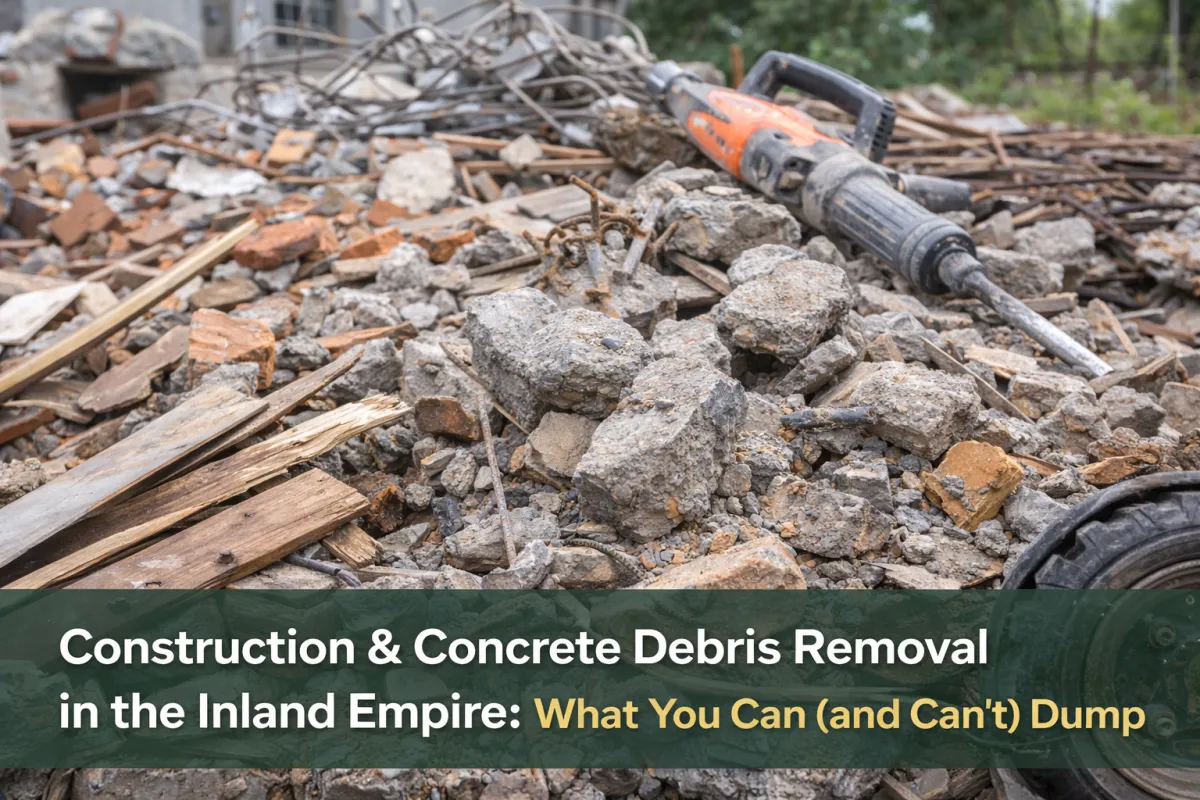
Construction & Concrete Debris Removal in the Inland Empire: What You Can (and Can’t) Dump
Construction Debris Becomes a Problem Faster Than You Expect
Home renovation and construction projects often start with excitement and end with one unexpected issue: debris. Piles of broken concrete, drywall, wood, tile, and leftover materials can build up quickly and turn a productive project into a stressful cleanup situation.
For homeowners and contractors alike, understanding construction and concrete debris removal in the Inland Empire is essential. Dumping the wrong materials in the wrong place can lead to fines, delays, and unnecessary costs. Knowing what can be removed and how to handle it properly saves time and avoids frustration.
Why Construction Debris Disposal Is Different in the Inland Empire
The Inland Empire has specific regulations when it comes to construction and demolition waste. Not all landfills accept the same materials, and some items require special handling or separation.
Concrete, in particular, is heavy and often subject to weight-based disposal fees. Improper dumping can result in rejected loads or additional charges. This is why many homeowners underestimate the complexity of construction debris removal until they are already dealing with it.
Local knowledge plays a major role in handling these materials correctly and efficiently.
What Qualifies as Construction and Demolition Debris
Construction debris includes materials left over from remodeling, renovation, or demolition projects. Common examples include broken drywall, wood framing, tiles, cabinets, doors, flooring, and concrete slabs.
Concrete debris is one of the most challenging materials to deal with because of its weight and disposal requirements. Even small projects like patio removal or sidewalk demolition can generate thousands of pounds of waste.
Understanding what qualifies as construction debris helps determine the best removal approach and pricing expectations.
What You Can Dump and What You Cannot
Many construction materials can be legally removed and disposed of through professional junk removal services. These include clean concrete, bricks, lumber, drywall, tiles, and general renovation debris.
However, some materials cannot be dumped through standard construction debris removal. Items such as hazardous waste, chemicals, asbestos-containing materials, and certain treated woods require specialized disposal methods. Attempting to dump restricted materials can result in penalties and environmental harm.
A professional service helps identify what is acceptable and ensures everything is handled properly.
Why DIY Construction Debris Removal Often Fails
DIY construction debris removal seems straightforward until the first trip to the landfill. Heavy loads, limited vehicle capacity, and unexpected fees quickly turn cleanup into an all-day project.
Concrete is especially difficult to handle without proper equipment. Loading and unloading heavy debris increases the risk of injury and vehicle damage. Multiple trips are often required, increasing fuel costs and lost time.
For most homeowners and contractors in the Inland Empire, professional removal is the safer and more efficient option.
How Professional Construction Debris Removal Works
Professional construction and concrete debris removal in the Inland Empire simplifies the entire process. A trained crew arrives with the equipment needed to safely remove heavy materials. Debris is loaded efficiently and transported to the appropriate disposal or recycling facility.
This approach eliminates guesswork and ensures compliance with local regulations. It also allows projects to stay on schedule without cleanup delays.
Recycling and Responsible Disposal Matter
Many construction materials can be recycled, including concrete and metal. Recycling reduces landfill waste and supports environmentally responsible practices.
Professional junk removal companies often separate materials to maximize recycling opportunities. This not only benefits the environment but can also reduce disposal costs in some cases.
Responsible disposal is especially important in the Inland Empire, where growth and development continue to increase waste volume.
Who Typically Needs Construction Debris Removal
Construction debris removal services are commonly used by homeowners completing remodels, contractors managing job sites, landlords preparing rental properties, and businesses upgrading facilities.
Whether the project is large or small, timely debris removal keeps work areas safe and organized.
Need Construction or Concrete Debris Removal in the Inland Empire?
If you are dealing with renovation waste, broken concrete, or demolition debris, S&N Hauling & Trash Removal provides reliable construction and concrete debris removal in the Inland Empire.
Our team handles heavy materials safely, follows local disposal guidelines, and keeps your project moving forward. You can visit us to learn more or contact us to schedule service.
Frequently Asked Questions About Construction & Concrete Debris Removal in the Inland Empire
Can concrete be removed through junk removal services in the Inland Empire?
Yes, concrete can be removed through professional junk removal services. Because of its weight, pricing is often based on volume and weight, and proper disposal methods are required.
What construction materials are commonly accepted for removal?
Most services remove drywall, wood, tiles, cabinets, flooring, bricks, and clean concrete. It is always best to confirm material types when scheduling service.
What materials cannot be dumped with construction debris?
Hazardous materials, chemicals, asbestos-containing materials, and certain treated woods cannot be dumped with standard construction debris and require specialized disposal.
Is construction debris removal better than renting a dumpster?
For many projects, professional debris removal is more efficient than renting a dumpster. It eliminates loading labor, multiple trips, and disposal concerns.
Do construction debris removal services recycle materials?
Many providers recycle concrete, metal, and other materials whenever possible. This helps reduce landfill waste and supports responsible disposal practices.
