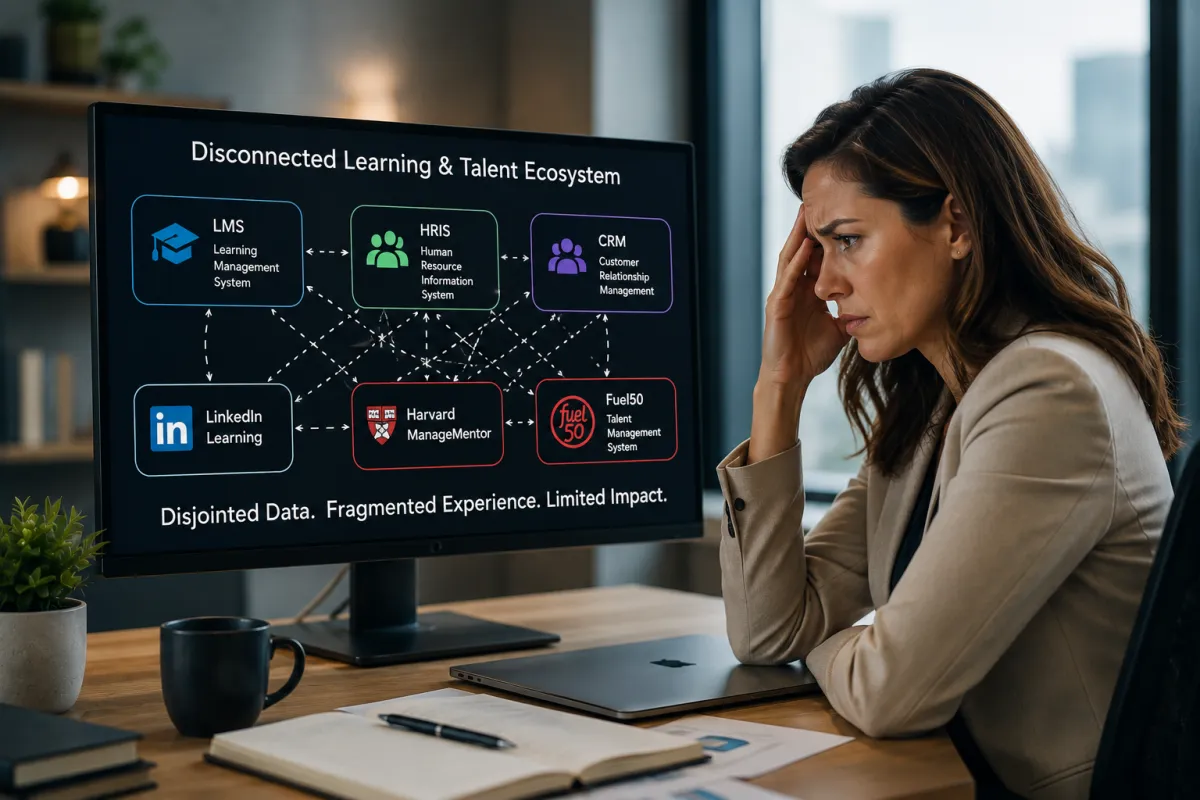
The Hidden Cost of Disconnected Learning Systems
In my last article, Why AI Adoption Fails Without Workforce Readiness, I talked about how organizations are struggling because technology is moving faster than the people expected to use it.
But workforce readiness does not happen in isolation.
It is shaped by the systems employees interact with every single day.
And right now, many organizations are operating inside fragmented learning environments that were never designed to support the pace of change happening today.
Employees are expected to continuously learn, adapt, reskill, and navigate transformation while moving across disconnected platforms, inconsistent processes, outdated content, and siloed systems that rarely work together.
Then organizations wonder why adoption is low.
Why employees feel overwhelmed.
Why managers struggle to support development.
Why transformation initiatives stall.
The reality is:
Disconnected learning systems create disconnected workforce experiences.
And disconnected workforce experiences make transformation harder than it needs to be.
Learning Should Not Feel This Complicated
Most employees are not resisting learning.
They are resisting friction.
Too many systems.
Too many logins.
Too many disconnected experiences.
Too much uncertainty around where to go, what matters, or how development connects to career growth.
Learning becomes another task employees are expected to manage on top of already overwhelming workloads.
Meanwhile managers are trying to coach employees through growth conversations while navigating fragmented reporting, inconsistent visibility into skill development, and limited time to support their teams effectively.
None of this creates confidence.
It creates fatigue.
And fatigue slows adoption.
Technology Alone Does not Create Alignment
Organizations often invest heavily in learning technology without fully evaluating whether the ecosystem itself supports the employee experience they are trying to create.
A new platform may solve one problem while unintentionally creating three more:
disconnected workflows
duplicate content
inconsistent reporting
poor adoption
limited visibility into workforce skills
fragmented communication across systems
Over time, learning becomes reactive instead of strategic.
Employees stop engaging consistently.
Managers stop using the tools effectively.
Leadership loses visibility into workforce capability and development progress.
And organizations slowly drift further away from the workforce agility they are trying to build.
The Cost Is Bigger Than Most Organizations Realize
Disconnected learning systems impact far more than training completion rates.
They affect:
employee confidence
manager effectiveness
workforce adaptability
internal mobility
leadership development
onboarding
retention
AI adoption
organizational trust
When employees cannot clearly navigate learning and growth within an organization, development starts to feel disconnected from the business itself.
And employees notice that.
Especially now.
Employees want development experiences that feel:
accessible
personalized
connected
relevant
supported
aligned to growth
Not fragmented across systems that do not communicate with each other.
Workforce Transformation Requires Ecosystem Thinking
Organizations that are adapting well right now are thinking differently about learning systems.
They are not simply asking:
“What platform should we buy?”
They are asking:
“How do we create an ecosystem that supports continuous growth, adaptability, and workforce transformation?”
That is a very different conversation.
Because workforce transformation does not happen through isolated technology decisions.
It happens when organizations align:
learning strategy
leadership development
workforce planning
employee experience
skills development
technology infrastructure
change management
Into something employees can actually navigate successfully.
The organizations leading through transformation are simplifying the employee experience, not complicating it further.
The Future of Learning Is Connected
Employees should not have to work harder to learn.
Managers should not have to search across multiple systems to support development conversations.
Leadership teams should not struggle to understand workforce capability because data is fragmented across disconnected platforms.
And organizations should not mistake implementation for adoption.
Modern learning ecosystems should create:
clarity
accessibility
visibility
alignment
adaptability
Because the future of workforce development is not about adding more systems.
It is about creating connected experiences that help people grow through change instead of getting lost inside it.
Final Thought
Organizations are moving quickly to modernize technology.
But many are still operating inside learning ecosystems that were built for a very different pace of work.
And that disconnect is becoming harder to ignore.
Employees do not experience transformation through strategy decks or implementation plans.
They experience it through the systems they use every day.
And when those systems feel fragmented, transformation does too.
Ready to Modernize the Learning Experience?
Simply Innovative Consulting helps organizations evaluate, modernize, and align learning ecosystems to support workforce transformation, employee growth, leadership development, and long-term adoption.
Because successful transformation requires more than technology.
It requires systems that actually support people through change.
Start by scheduling a free-no-risk consultation with us: Schedule time with me: Book a meeting