How to Measure the ROI of Learning and Development
One of the biggest mistakes organizations continue making with learning and development is confusing activity with impact.
Completion rates.
Training hours.
Course attendance.
Content consumption.
Dashboard engagement.
Organizations are collecting more learning data than ever before, yet many leaders are still struggling to answer a much more important question:
Is learning actually helping employees grow in ways that move the organization forward?
Because participation alone does not necessarily mean development has happened.
And honestly, employees feel that disconnect too.
Most employees do not want more disconnected training experiences or learning libraries that they are expected to navigate on their own. They want learning that helps them become more capable, adaptable, confident, and prepared for where work is going next.
Especially now, as AI and workforce transformation continue to reshape roles, responsibilities, and expectations at an incredibly fast pace.
That is where the ROI conversation around learning becomes much more meaningful.
Because the value of learning is not simply whether employees completed something. The value is whether learning helped employees apply skills differently, navigate change more effectively, collaborate more successfully, lead more confidently, or prepare for future opportunities inside the organization.
Those are very different measurements.
And honestly, this is where many organizations are still stuck, measuring vanity metrics instead of valuable insights.
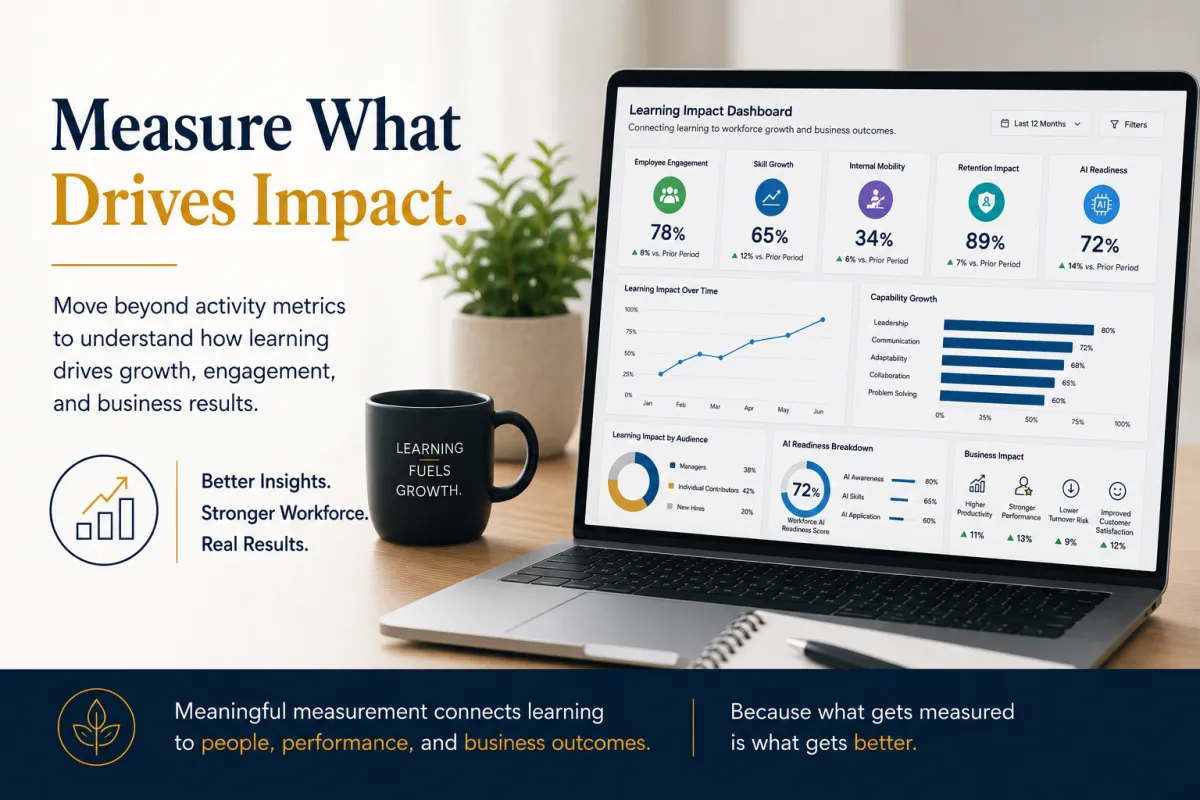
In my article for Training Industry, From Vanity Metrics to Valuable Training Insights, I talked about the importance of moving beyond surface-level reporting and creating measurement strategies that actually connect learning to business outcomes, skill development, and workforce performance.
Organizations do not need more learning data right now.
They need more meaningful visibility into whether learning is creating real workforce impact.
Especially during periods of transformation.
Organizations are asking employees to continuously adapt while simultaneously navigating burnout, workforce instability, changing skill demands, AI disruption, and growing uncertainty around the future of work itself.
That means learning can no longer operate separately from workforce strategy.
Measurement should help organizations understand whether employees feel more capable of navigating change, whether managers are leading more effectively, whether onboarding is improving confidence and readiness, whether learning is supporting internal mobility, whether employees can see clearer growth pathways, and whether skill development is improving workforce adaptability over time.
Because those outcomes directly impact organizational performance.
This is also why learning measurement has to become more intentional.
Organizations often overwhelm themselves trying to measure everything instead of measuring what actually matters. Strong measurement strategies begin by identifying clear learning outcomes, aligning those outcomes to business priorities, and embedding the right tools to gather meaningful insights that support better decision-making.
That creates a much clearer picture of whether learning is truly helping employees and organizations evolve together.
Organizations that are doing this well are not treating learning as a disconnected training function. They are aligning learning strategy, onboarding, workforce development, leadership growth, employee engagement, and business priorities into connected ecosystems designed to support long-term adaptability and workforce stability.
And honestly, that is where the real ROI conversation begins.
Not with dashboards alone.
But with whether employees are actually growing in ways that help organizations navigate change more successfully.
The ROI of learning is not just about what employees have completed.
It is about whether learning helped people and organizations grow together in meaningful ways.
Measuring Learning in Ways That Actually Matter
Simply Innovative Consulting helps organizations align learning strategy, workforce development, onboarding, leadership growth, and measurement frameworks that connect learning experiences to workforce adaptability, engagement, retention, and organizational performance.
Because meaningful measurement should do more than track activity.
It should help organizations understand whether learning is creating the growth, capability, and workforce readiness needed for the future of work.
Are you struggling to measure whether learning is actually creating meaningful organizational impact?
Let’s talk about how Simply Innovative Consulting can help you build measurement frameworks and dashboards that connect learning to workforce growth, engagement, adaptability, and business outcomes that truly matter.
Schedule a complimentary consultation with us: Book a meeting