Why Manager Burnout Is Becoming a Talent Risk
There is a growing conversation happening right now around employee burnout, disengagement, and retention. But underneath all of those conversations is another issue many organizations are still underestimating:
Manager burnout.
And honestly, it is becoming one of the biggest talent risks organizations are facing right now.
Managers are carrying an extraordinary amount of emotional, operational, and organizational weight. At the same time, they are expected to lead teams through uncertainty, maintain productivity, support employee engagement, navigate constant change, coach performance, manage conflict, adapt to evolving technology, and now help employees make sense of how AI is changing work itself.
All while often receiving very little support themselves.
Many managers are exhausted. Not because they do not care, but because they care deeply and have been operating in survival mode for far too long.
And employees feel it.
They feel it in the absence of feedback. In delayed communication. In disconnected development conversations. In leaders who are technically present but emotionally depleted. Teams begin losing connection, clarity, trust, and momentum long before organizations recognize there is a leadership issue developing underneath the surface.
Because leadership energy shapes workplace culture far more than most organizations realize.
When managers are overwhelmed, employees often begin feeling unsupported. Collaboration changes. Engagement changes. Development conversations become reactive instead of intentional. Teams become more transactional with one another because everyone is simply trying to keep up.
And over time, that exhaustion spreads.
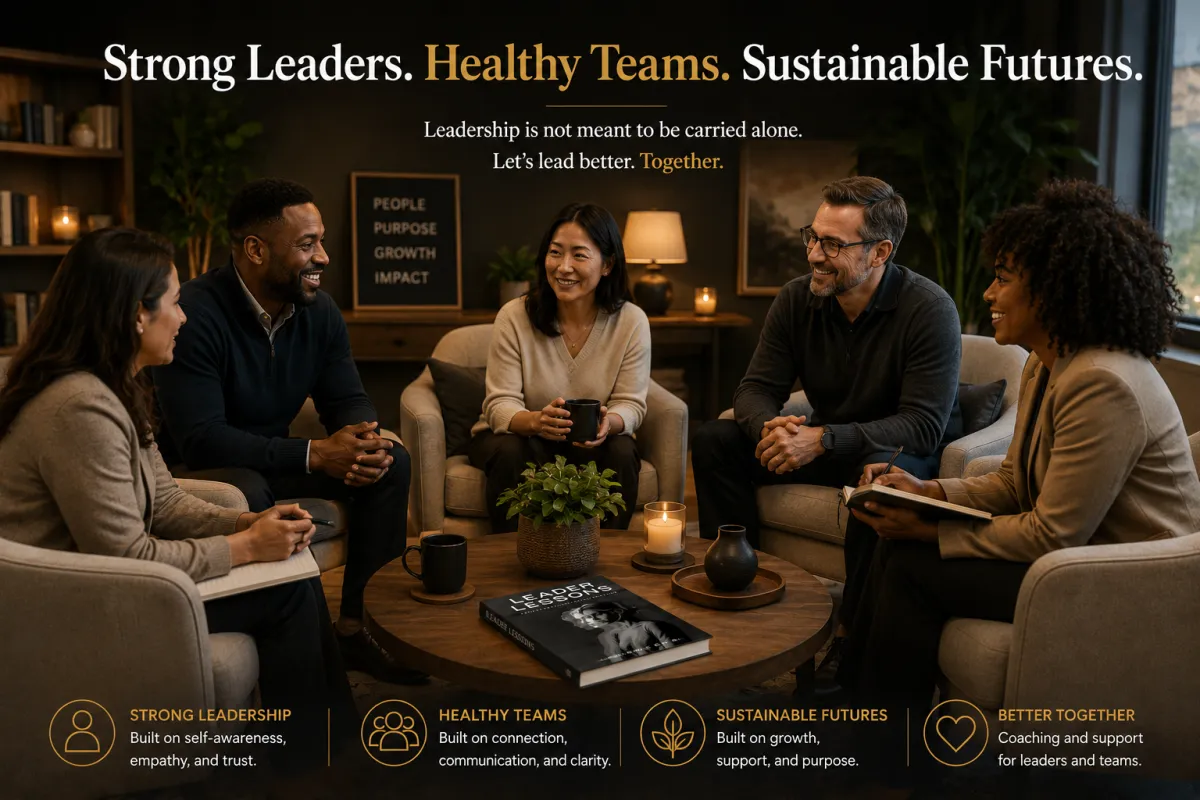
This is one of the reasons I wrote Leader Lessons. Because leadership is not just about strategy, performance metrics, or operational execution. Leadership is deeply human work. It requires presence, trust, communication, self-awareness, empathy, accountability, and the ability to help people navigate uncertainty together.
And honestly, many leaders are trying to carry all of that without enough space to reset, develop, or lead themselves sustainably.
That is where burnout becomes much bigger than an individual's well-being issue.
It becomes a workforce stability issue.
Because employees often do not leave organizations first. They leave environments where leadership feels disconnected, unsupported, inconsistent, or emotionally unavailable over time.
Especially now, as organizations continue moving through rapid transformation, restructuring, AI adoption, workforce shifts, and increasing pressure to do more with less.
Managers are expected to absorb pressure from every direction while continuing to create stability for everyone around them.
That is not sustainable without intentional support.
Organizations that are navigating this well are starting to recognize that leadership development can no longer be treated as a one-time workshop or occasional training event. Managers need ongoing coaching, support, reflection, skill development, and practical tools that help them lead people through change in healthier and more sustainable ways.
They also need environments where leadership is not isolated.
Because leadership can become incredibly lonely during periods of uncertainty.
This is where team coaching and leadership coaching become incredibly important. Not just for leadership development, but for organizational health. Coaching creates space for leaders to process challenges, strengthen communication, rebuild trust, navigate conflict, develop emotional intelligence, and reconnect to the human side of leadership that often gets lost during periods of pressure and constant change.
And honestly, employees feel the difference when leaders feel supported, too.
Healthy leaders create healthier teams.
Managers who feel equipped, connected, and supported are far more likely to create environments where employees feel seen, heard, developed, and engaged. That directly impacts retention, engagement, collaboration, and workforce stability across the organization.
Organizations cannot continue expecting managers to carry growing levels of emotional and operational responsibility without investing in leadership support alongside it.
Especially now.
Because manager burnout does not just impact leaders themselves.
It impacts culture.
It impacts engagement.
It impacts trust.
It impacts retention.
And eventually, it impacts the long-term stability of the workforce as a whole.
Supporting Leaders Through Change
Simply Innovative Consulting helps organizations strengthen leadership capability through team coaching, leadership coaching, workforce development, and human-centered leadership strategies that support healthier teams and more sustainable organizational growth.
Because leadership was never meant to be carried alone.
And organizations that invest in supporting their leaders are far better positioned to support everyone else through change as well.
Want to learn about our leadership coaching or team coaching services? Schedule time with me: Book a meeting