


WELCOME
to the blog
FEATURED POSts
Read Our Blog
Form is found when space is made functional.
You Don’t Always Need More Space. You Need a Better System.
Last month I shared a garage transformation in this home.
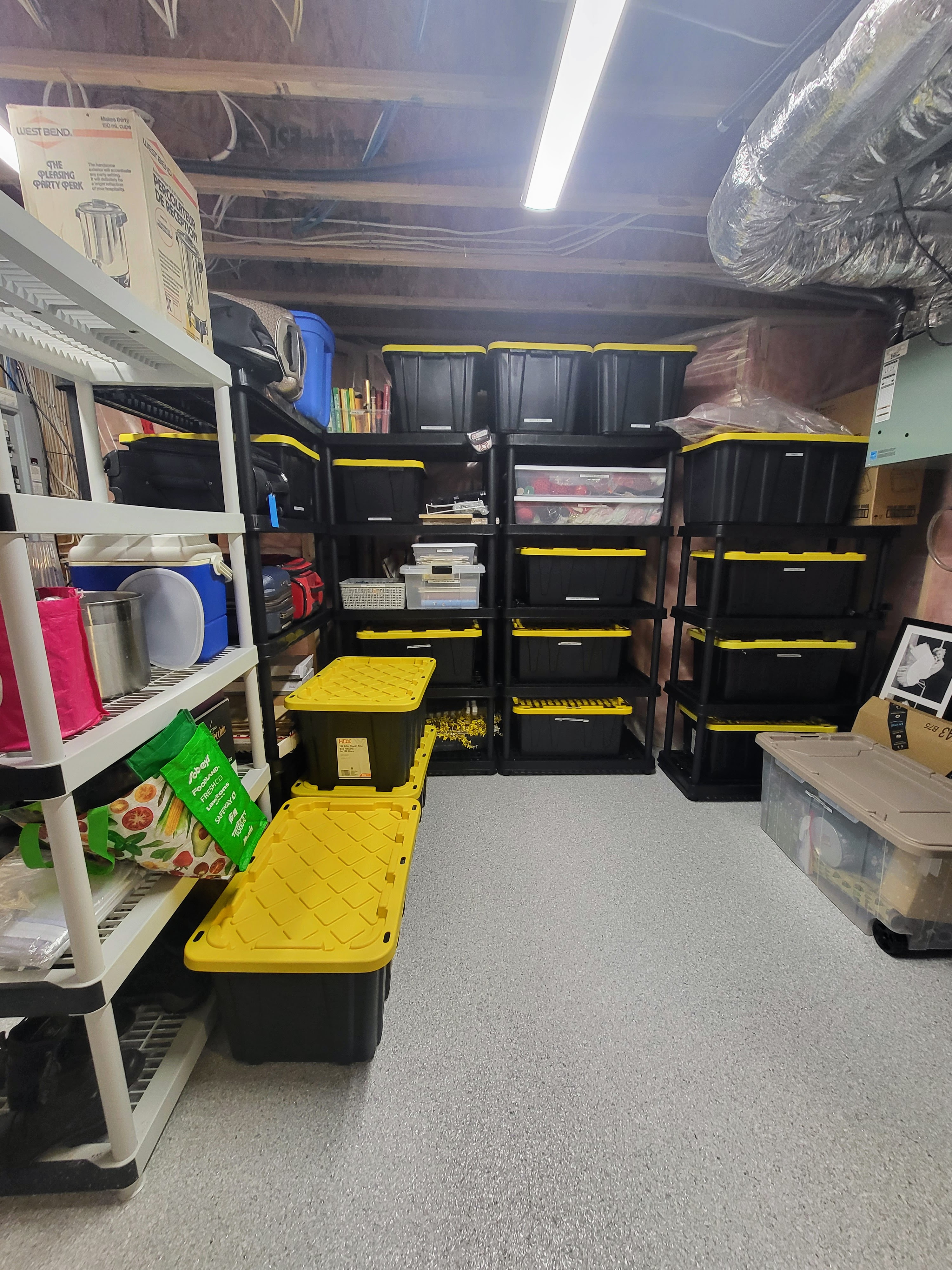
This month, we move downstairs — into a basement storage room that technically had plenty of square footage.
But it wasn’t functioning.
Everything was lined along the perimeter walls. Boxes stacked. Items loosely grouped. No defined zones. No containment. No plan for growth.
And here’s what I see all the time:
People think they’ve outgrown their space.
But more often than not, they haven’t outgrown it — they’ve just never designed it to work.
The Real Problem: Layout Without Intention
This basement storage room wasn’t overflowing. It was underperforming.
When storage hugs the walls without structure:
Vertical capacity gets wasted.
Access to panels and utilities becomes awkward (or blocked).
Retrieval turns into digging.
And the room slowly starts feeling “too small.”
It’s not the space that fails.
It’s the system — or the absence of one.
This is a common pattern I see across homes in Durham Region. Clients will tell me, “We need more storage,” when what they really need is clarity, containment, and a layout strategy.
Step One: Empty It — For a Reason
This project had an added layer.
The homeowners were planning to epoxy the storage room floor to create a more durable, water-resistant surface. So we used that upcoming work as a strategic opportunity.
Instead of simply shifting items around, we:
Emptied the entire room.
Categorized everything.
Edited what no longer made sense to keep.
Seasonal décor.
Household overflow.
Tools and maintenance.
Keepsakes.
Only once everything was sorted did the epoxy team come in and complete the floor.
And this matters.
Because organizing into a dirty, unfinished space is short-term thinking. Designing after structural improvements? That’s long-term strategy.
Step Two: Build the System Back Intentionally
Once the epoxy cured, we came back in to rebuild the room — properly.
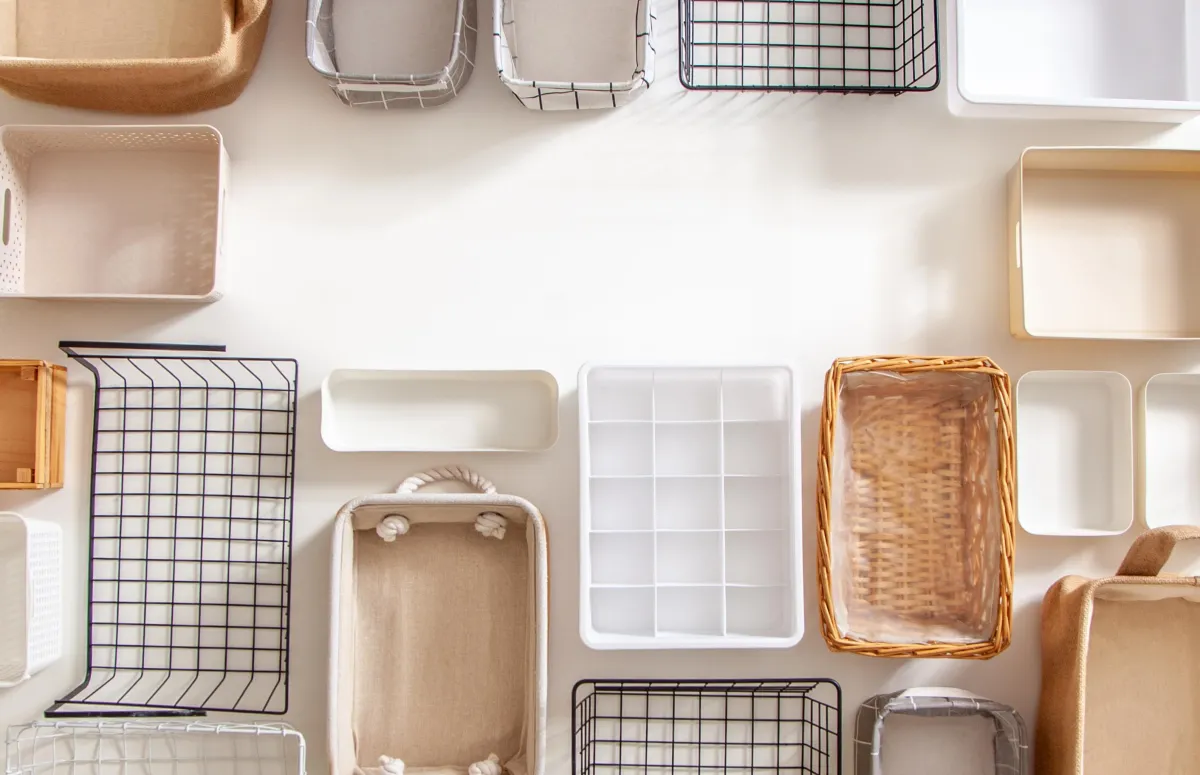
We selected uniform, stackable bins and labeled everything clearly and simply. No guessing. No opening five containers to find one item.
Then we installed off-the-rack shelving sized to fit the bins — maximizing height without wasting depth.
But the real shift was the layout.
Instead of lining every wall with shelving (which would have recreated the same inefficiency), we installed the units in an L-shape configuration.
That decision:
Opened the center of the room.
Preserved access to panels and mechanical systems.
Improved flow and visibility.
Created intentional room for future expansion.
Because growth without space planned for it is how clutter returns.
Room to Grow — Without Returning to Chaos
We deliberately left space for additional shelving and bins.
This couple can now add to their storage system without breaking it.
That’s the difference between organizing and system design.
One looks tidy for a moment.
The other supports you for years.
The Bigger Conversation
I want to say this clearly:
Most people don’t lack space.
They lack a system.
It’s easier to blame the square footage.
It’s harder — and more powerful — to redesign how the space works.
When you shift from “We need more room” to “How can we use this room better?” everything changes.
This storage room didn’t get bigger.
It got smarter.
And now it’s:
Waterproofed.
Structured.
Accessible.
Expandable.
Calm.
That’s what thoughtful storage should feel like.
Ready to Make Your Space Work Smarter?
If you’re looking around your basement, garage, condo locker, or utility room thinking, “We’re out of space,” pause.
You may not need more square footage.
You may need a better system.
Maximizing storage isn’t about buying more containers. It’s about understanding how you live, what you truly need access to, and designing a layout that supports that — efficiently and intentionally.
If you’re ready to:
Reclaim underperforming storage areas
Create structure that actually lasts
Improve access to what you already own
And design a system that grows with you
Let’s build it properly.
Book a consultation and we’ll assess your space, identify opportunities you may not see, and create a plan that makes your home work harder for you — without adding an inch of square footage.
Because smart storage isn’t accidental. It’s designed.
Be Well,
Kira

BOOK YOUR FREE CONSULTATION TODAY
Want to know more about the services provided by Kira? Fill out the form below or give me a call; I can't wait to hear from you!
Get the Checklist
GUIDE TO PURCHASING ORGANIZING PRODUCTS
Form and Function by Kira is a top professional organizer in the Ajax, ON professional organizers directory on FindMyOrganizer.com.Greater Toronto kira@formandfunctionbykira.com
©2023 by Form and Function by Kira | privacy policy | terms & conditions