Discover About Us: Our Family Dental Practice Team
Learn About Our Family Dental Practice at Lifetime Family Dental in Kaysville
Lifetime Family Dental is a family-focused dental clinic serving Kaysville residents with comprehensive, patient-centered care that emphasizes prevention, comfort, and lasting oral health. This article explains what a modern family dental practice does, how it organizes care across ages, and what families should expect at their first visit. Many families face uncertainty about choosing a dentist, understanding treatment options, and preparing children for dental visits; this guide clarifies the patient journey from scheduling through follow-up while describing common procedures and practical preparation steps. You will learn how general, pediatric, cosmetic, restorative, and orthodontic dentistry work together to protect and improve smiles, how technology and office practices reduce appointment time and increase accuracy, and how to prepare financially and logistically for your visit. Throughout, the piece highlights how a trusted Kaysville dentist balances high-quality care with affordable, family-friendly policies and direct patient communication.
What Makes Lifetime Family Dental the Trusted Kaysville Family Dentist?
A trusted family dental practice combines clinical competence, a clear patient-first philosophy, and operational practices that reduce stress and cost for families. Trust forms when clinicians prioritize prevention, explain procedures in plain language, and show consistent follow-through from exams to recall scheduling. Patients benefit because early detection and preventive plans reduce the need for complex restorative work and shorten treatment timelines, improving comfort and lowering lifetime costs.
The following bullets summarize why a family chooses a practice and what each benefit means in practice.
- Lifetime, patient-centered care emphasizes prevention and education to reduce cavities and gum disease.
- Flexible financing and emergency availability limit barriers to timely treatment and reduce escalation of problems.
- Compassionate staff and efficient scheduling respect family time and make visits predictable and manageable.
These distinguishing elements set expectations for the team’s role in coordinating care, which leads directly into a closer look at the clinical leadership and the team that delivers this care.
Who Is Dr. Chris Godfrey and What Is His Role in Our Practice?
Dr. Chris Godfrey leads clinical care and coordinates treatment planning to ensure families receive consistent, evidence-informed dentistry focused on prevention and function. As the primary clinical contact, Dr. Godfrey evaluates oral health, prioritizes treatment needs, and collaborates with hygienists and specialists to create long-term plans that fit family schedules and budgets. His role is to translate clinical findings into clear, actionable recommendations so patients can make informed choices and avoid unnecessary procedures. This leadership model supports continuity of care and allows the practice to focus on lifetime oral health rather than episodic fixes.
Dr. Godfrey was born in a small town in Idaho and grew up planning on being a dentist. He was mentored by his grandfather and two uncles who are dentists. He graduated from Bountiful High in 1998, and after a two-year Spanish-speaking mission to Argentina, he married his high school sweetheart. Before becoming a dentist, Dr. Godfrey worked as a dental hygienist for seven years and learned the importance of preventive dentistry. While working in the dental field, numerous dentists, hygienists, and patients recognized his skill and urged him to continue his education to become a dentist. He decided to pursue this and was accepted into dental school at Roseman University in 2012. He has worked in multiple dental offices and has seen a lot of good ways to practice and a lot of things he wanted to stay away from. In 2019, when he purchased Lifetime Family Dental, he incorporated all of the good experiences and examples that were set for him while he prepared to own his own office. (lifetimefd.com)
How Does Our Compassionate Team Enhance Your Dental Experience?
A compassionate team reduces anxiety, improves communication, and streamlines visits so clinical time is focused and effective. Dental hygienists perform thorough cleanings and patient education, assistants prepare treatment rooms and support clinical flow, and front-desk staff handle scheduling and insurance questions to minimize administrative friction. Together the team uses friendly communication, simple explanations, and behavioral techniques for children to make visits predictable and less stressful. This coordinated approach improves treatment acceptance, follow-through on home care, and long-term oral health outcomes for every family member.
What Are Our Core Values and Philosophy of Family Dental Care?
The practice philosophy centers on prevention-first care, accessibility, respect for patient time, and compassionate service that spans childhood through adulthood. Preventive pathways—regular exams, cleanings, and risk-based interventions—form the backbone of long-term oral health planning and reduce cumulative treatment needs. Accessibility shows through flexible scheduling, transparent cost discussions, and emergency responsiveness to limit the impact of acute problems. These values translate into practical policies that keep care predictable and affordable while supporting families across life stages.
Which Comprehensive Dental Services Are Offered at Lifetime Family Dental?
Comprehensive family dentistry integrates preventive services, routine restorative care, pediatric-specific approaches, cosmetic options, and orthodontic solutions to manage oral health across the lifespan. Each service category focuses on outcomes that matter to families: fewer emergencies, healthier mouths, and confident smiles. Below is a concise list of service categories with short, patient-centered benefits to help you quickly identify what fits your family’s needs.
- General dentistry: Routine exams, cleanings, and preventive procedures that reduce decay and gum disease.
- Pediatric dentistry: Child-friendly care, early habit coaching, and preventive sealants to support lifelong oral health.
- Cosmetic dentistry: Whitening and smile-focused treatments that improve appearance with minimally invasive techniques.
- Restorative dentistry: Fillings, crowns, and bridges that restore function and protect remaining tooth structure.
- Orthodontics: Clear aligner options and conventional treatments to align teeth and improve bite, benefiting speech and chewing.
These categories reflect standard practice offerings and help families decide which visits apply to each member. The next table offers a quick, scannable comparison of services, typical procedures or tools used, and direct patient benefits.
| Service Category | Typical Procedure or Tool | Patient Benefit |
|---|---|---|
| General Dentistry | Prophylaxis cleanings, digital exams | Prevents decay and gum disease; maintains oral health |
| Pediatric Dentistry | Fluoride applications, sealants | Protects primary teeth and builds preventive habits |
| Cosmetic Dentistry | Whitening, veneers (selective) | Enhances smile appearance with conservative options |
| Restorative Dentistry | Fillings, crowns, bridges | Restores chewing function and protects teeth from further damage |
| Orthodontics | Clear aligner treatment (Invisalign-style) | Improves alignment and bite, supporting long-term function |
This table helps families compare core offerings at a glance and decide which appointments to schedule first. The next section explains what to expect during typical general and preventive visits.
What General Dentistry Services Do We Provide for All Ages?
General dentistry focuses on routine prevention, diagnostic screening, and conservative treatments that preserve natural teeth and prevent complications. Typical preventive visits include a clinical exam, cleaning, risk assessment, and digital x-rays when indicated to detect hidden issues early. These visits often include personalized oral hygiene coaching and sealant or fluoride recommendations for at-risk patients, which reduce future restorative needs. Regular general dentistry visits form the foundation of lifelong oral health by catching problems early and reinforcing daily habits, helping families avoid emergency treatments.
How Does Our Pediatric Dentistry Support Children’s Oral Health?

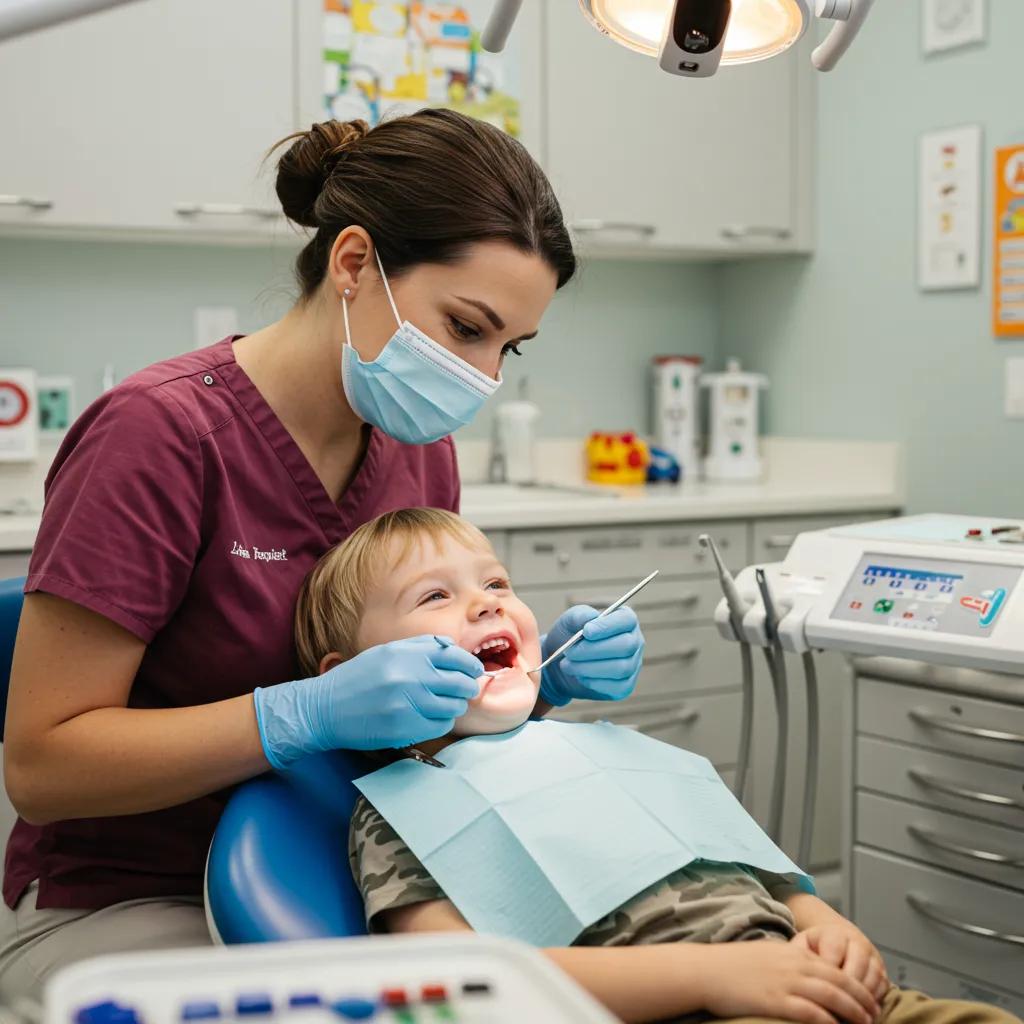
Pediatric dentistry at a family practice emphasizes gentle behavior guidance, early habit counseling, and targeted prevention such as sealants and fluoride to protect growing mouths. Appointments are structured to build trust through clear explanations, child-friendly language, and parental involvement as needed so children leave with positive dental experiences. Early education about home care and diet helps prevent decay and set routines that carry into adolescence and adulthood. Supporting children early also streamlines future care by reducing the need for complex interventions later in life.
Pediatric Dentist Behavior Guidance Methods for Children
A pediatric dentist recommends behavior guidance methods for the child based upon his/her health history, the complexity of the dental procedure, and the child's developmental level. These techniques are crucial for ensuring a positive and comfortable experience for children during dental visits, promoting cooperation and reducing anxiety.
Parental attitudes toward advanced behavior guidance techniques used in pediatric dentistry, DJ McTigue, 2016
What Cosmetic and Restorative Treatments Are Available?
Cosmetic treatments are designed to improve appearance with conservative options like whitening and veneers when appropriate, while restorative care addresses function and structural integrity. Restorative techniques—such as tooth-colored fillings and crowns—repair damage and protect remaining tooth tissue, often requiring one or two visits depending on the procedure. Cosmetic work is evaluated in context of function and oral health so aesthetic improvements do not compromise long-term outcomes. Together, these treatments restore comfort, chewing ability, and smile confidence, which supports quality of life for patients of all ages.
How Do Our Orthodontic Services Improve Your Smile?
Orthodontic solutions, including clear aligner approaches, gently move teeth to correct crowding, spacing, and bite problems that affect chewing and oral hygiene. Aligning teeth improves the effectiveness of home care and reduces risk of uneven wear, decay, and gum disease. Treatment candidacy is determined by diagnostic records and individualized plans that consider age, growth, and patient goals. Orthodontic outcomes support both function and appearance, offering long-term benefits for speech, bite efficiency, and self-confidence.
How Do We Ensure a Comfortable and Personalized Patient Experience?
A personalized patient experience combines clear intake processes, patient education, comfort measures, and efficient workflow so families spend less time in the office and more time focused on health. From initial scheduling through follow-up, the practice applies consistent communication, thorough treatment planning, and comfort accommodations to reduce anxiety and improve adherence to recommended care. Technology plays a role in diagnostics and efficiency, and staff practices prioritize transparency and patient preferences.
Below is a short checklist describing what new patients can expect and how care is personalized.
- Easy scheduling and clear intake: Staff confirm needs, expected visit length, and any urgent concerns before appointments.
- Thorough exam and diagnosis: The clinician uses modern diagnostics to explain findings and propose staged care when appropriate.
- Comfort measures: Options for local comfort, behavior guidance for children, and empathetic staff interactions reduce stress.
- Follow-up and recall: Personalized recall intervals and home-care instructions support prevention and continuity.
These steps reduce surprises and make it easier for families to attend and complete recommended care. The following subsection explains what to expect during the first visit.
What Can New Patients Expect During Their First Visit?
A first visit generally includes paperwork, a comprehensive exam, risk assessment, and discussion of any immediate needs followed by a treatment plan. The visit begins with a health-history review and new-patient forms, then proceeds to an exam and targeted x-rays as needed to assess underlying issues. After diagnosis, the clinician explains options, timelines, and prioritization so families can make informed scheduling and financial decisions. Clear next steps and an individualized recall plan are provided before the visit ends to ensure continuity and follow-through.
Mapping the Dental Patient Journey for Enhanced Experience
In the dental sector this could also be a useful tool to enhance the service experience and improve strategic tools of modern dental offices. It seems that as care becomes more patient-centered, care teams need a “single pane” view of the entire dental patient journey. Aim: In this article, we aim to share insights on the importance of mapping out the dental patient’s journey to better understand the needs and the impulses that make him choose practitioners and services, and we will mainly focus on identifying dental patients’ touchpoints. Dental Patient's Journey Map: Introduction to Patient's
Touchpoints, M Antoniadou, 2021
How Does Advanced Dental Technology Enhance Your Care?
Modern tools—such as digital x-rays, intraoral cameras, and digital scanners—improve diagnostic accuracy, reduce radiation exposure, and speed treatment planning. Digital x-rays reveal structures with clarity while minimizing dose, intraoral cameras show patients exact findings to support shared decision-making, and scanners enable faster, more precise restorative workflows. These technologies shorten visit times, reduce guesswork, and improve fit and outcomes for restorations or aligner therapy. The table below summarizes key technologies, their functions, and direct benefits for patients.
| Technology | Function | Benefit to Patient |
|---|---|---|
| Digital X-rays | High-resolution imaging with reduced radiation | Faster diagnosis and earlier detection of hidden problems |
| Intraoral Camera | Real-time intra-mouth imaging | Better patient understanding and informed decisions |
| Digital Scanners | 3D impressions for restorations/aligners | More accurate restorations and fewer retakes |
| Sedation Options | Patient relaxation for anxious cases | Greater comfort and ability to complete necessary care |
This technology-centered approach means procedures are more predictable and often require fewer appointments, which supports families with busy schedules.
What Flexible Scheduling and Emergency Dental Options Are Available?
Efficient practices offer same-day or next-available visits for urgent needs and flexible appointment blocks to accommodate school and work schedules. For common urgencies—like sudden tooth pain or a lost filling—the recommended step is to call the office phone to describe symptoms and request an urgent appointment so the team can triage and prioritize care. Clear communication protocols and pre-visit guidance help manage pain and limit damage until definitive treatment. These policies reduce the risk of complications and shorten the window during which a problem can worsen.
How Can New Patients Prepare for Their Visit to Lifetime Family Dental?
Preparing for a dental visit reduces time in the office and ensures the clinician has the information needed to provide tailored care. New patients should gather relevant health information, list current medications, and be ready to describe dental concerns and recent symptoms. Completing new-patient forms and, when available, using an online portal before arrival saves time and allows clinicians to focus on the exam and treatment plan. The following checklist helps families approach their first appointment with confidence.
- Bring a list of medications and any relevant medical history.
- Note symptoms you or family members are experiencing and preferred days/times for appointments.
- Complete new-patient forms in advance or arrive 10–15 minutes early to fill them out.
- Prepare insurance details or questions about financing to discuss during check-in.
Completing these steps streamlines the first visit and aids accurate diagnosis. The next subsection explains typical financial options and how they match common patient scenarios.
What Financial Options and Insurance Plans Do We Accept?
The practice works with many common insurance arrangements and provides flexible financing options to help families manage out-of-pocket costs when needed. Insurance typically covers preventive care and partially covers restorative treatment depending on plan specifics; patients are encouraged to verify benefits beforehand. When insurance gaps exist, in-office payment plans or third-party financing can spread costs over time for larger treatments, making staged care more accessible. The table below clarifies typical options and situations where they are most useful.
| Payment Option | What It Covers | Typical Patient Scenario |
|---|---|---|
| Insurance (in-network/out-of-network) | Preventive and partial restorative coverage | Routine care for families with dental benefits |
| Flexible financing | Spreads larger treatment cost over time | Major restorative or orthodontic plans needing staged payments |
| Self-pay with estimates | Full payment with upfront cost clarity | Patients without insurance wanting predictable pricing |
Knowing these options ahead of time reduces surprises and supports timely completion of recommended care.
How Do You Access Online Forms and the Patient Portal?
Many practices provide online new-patient forms and a patient portal where families can complete paperwork, view treatment plans, and request appointments. To use these tools, patients typically access the portal from a smartphone or computer, enter identifying details, and complete forms in advance to decrease arrival time. Portals also centralize treatment summaries, upcoming appointment information, and care instructions so families can reference them between visits. Using the portal saves administrative time and improves communication with the care team.
Are There Special Offers for New Patients in Kaysville?
New-patient value is often delivered through comprehensive first exams and clear diagnostic plans rather than one-off discounts; the initial visit prioritizes assessment, preventive actions, and a clear plan to avoid unnecessary treatments. Many families find that early detection and prevention during the first visit save more in the long run than minor promotional pricing. If specific promotions are available, staff will explain eligibility and redemption during scheduling so families can take advantage of introductory options where applicable.
Why Should Families Choose Lifetime Family Dental for Their Kaysville Dental Care?
Families should choose a practice that provides coordinated, age-appropriate care, clear communication, and support for long-term oral health goals. Continuity—seeing the same clinicians and hygienists over time—allows the team to track development, preempt problems, and tailor prevention to each family member. Testimonials and patient feedback often highlight reliability, gentle care for children, and transparent billing as decisive factors. The benefits accumulate: proactive care reduces emergency visits, improves comfort, and lowers overall lifetime oral healthcare costs.
What Do Our Patients Say About Their Experiences?
Patients commonly report appreciation for staff empathy, clear explanations, and efficient visits that respect family schedules. Representative feedback themes emphasize reduced anxiety for children, straightforward treatment plans, and follow-up communication that keeps families informed. These themes reflect the practice’s values and reinforce trust for prospective patients considering where to receive lifelong care. Encouraged by this feedback, the practice continues to refine communication and scheduling processes to meet family needs.
How Does Our Practice Support Lifelong Oral Health?
Lifelong oral health is supported through scheduled recalls, tailored preventive interventions, and education that evolves as children become adults. Recall intervals are set based on individual risk assessments so high-risk patients receive more frequent monitoring while low-risk patients have longer intervals between visits. The team coordinates referrals for specialized care when needed, ensuring continuity and minimizing treatment gaps. This proactive model helps families avoid complex interventions through early detection and consistent preventive care.
What Community Involvement and Local Initiatives Do We Participate In?
Community involvement typically includes school outreach, public education events, and partnerships that promote oral health awareness and access for families. Engaging with local initiatives helps the practice support broader preventive efforts and reinforces trust within the community. Families are invited to participate in educational programs and contribute feedback to shape outreach priorities. Community work strengthens relationships and demonstrates commitment beyond direct clinical care.
How Does Lifetime Family Dental Stand Out Among Kaysville Dental Practices?
A practice stands out by combining advanced diagnostics, efficient operations, respectful scheduling, and affordability measures that reduce barriers to care. Using technology such as digital imaging and digital impressions shortens appointments and increases precision, while policies for same-day care and flexible payment options minimize treatment delays. Emphasizing education and prevention distinguishes the approach from more episodic care models.
- Technology-driven diagnostics and restorative workflows that reduce chair time.
- Patient-first scheduling practices and clear administrative communication.
- Transparent financing conversations and options to support treatment completion.
What Technology and Techniques Set Us Apart?
Specific technologies—digital x-rays, intraoral imaging, and digital scanning—improve diagnostic clarity and reduce the need for repeat visits. Clinicians use these tools to produce precise treatment plans and to communicate findings visually so patients can participate in decisions. Techniques such as minimally invasive restorations and preventive sealant programs prioritize tooth preservation and reduce the scope of future treatments. These methods reduce chair time, enhance outcomes, and improve long-term oral health trajectories for families.
How Do We Respect Patient Time and Comfort?
Respecting patient time means efficient check-in, clear time estimates for procedures, and streamlined clinical workflows that minimize waiting. Comfort is improved through patient education before procedures, empathetic staff interactions, and behavior management techniques for children. Appointment reminders and pre-visit forms reduce administrative delays, and clinicians aim to complete planned treatments with minimal chair-side interruptions. These practices combine to make visits predictable, dignified, and focused on patient well-being.
What Makes Our Family Dental Care Affordable and Accessible?
Affordability is approached through transparent cost estimates, insurance guidance, and financing options that spread larger bills over manageable payments. The team discusses priorities so essential treatments are scheduled first, and optional treatments are planned without pressure. Accessibility also means offering urgent care access and flexible appointment times to accommodate school and work needs. Together, these measures reduce financial and logistical barriers that commonly delay necessary care.
Where Is Lifetime Family Dental Located and How Can You Contact Us?
The practice maintains a visible local presence through its Google Business Profile and an informational website where families can learn about services, the team, and how to prepare for visits. For appointment requests or urgent concerns, calling the office phone is the primary and direct way to connect with staff who triage needs and schedule visits. Using the practice’s online forms and patient portal—when available—also speeds registration and communicates treatment preferences. Below are practical steps for contacting and preparing to reach the team.
What Are Our Office Hours and Location in Kaysville, UT?
Office hours and precise location details are maintained on the practice’s Google Business Profile; prospective patients are encouraged to check that profile for current hours and map directions. The profile also contains updates and quick access information to help families plan visits. Relying on the GBP ensures you see the most current scheduling and location information before traveling. If you need help interpreting the posted details, calling the office phone will connect you with staff who can assist.
How Can You Schedule an Appointment or Request Emergency Care?
To schedule routine or urgent appointments, call the practice phone to describe symptoms and request available times; staff will triage emergencies and offer same-day or next-available options when appropriate. For non-urgent scheduling, the team can add you to recall lists or discuss best timing for family blocks. In emergencies, describing the nature of pain, swelling, or trauma when calling allows the team to prioritize response. Clear phone communication ensures prompt triage and reduces time to definitive care.
What Are the Best Ways to Connect With Our Team?
The best ways to reach the team are by phone for urgent needs and scheduling, and by the practice’s online forms or patient portal for intake, records, and routine messages. Use the portal for secure communication about appointments and to review treatment plans, and call for immediate concerns that require rapid response. Staff aim to respond to portal messages and calls in a timely manner and will guide you to the most efficient route for the question at hand. For direct scheduling or urgent triage, calling the office phone number is recommended.