Mould and Water Damage to Kitchen Cabinetry in Bondi NSW
Mould and Water Damage to Kitchen Cabinetry in Bondi NSW
The client reported that they experienced two separate flood events caused by a leaking hose connected to the dishwasher in their kitchen. The water damage affected the kitchen cabinetry, particularly the shelving beneath the sink, and raised concerns about possible secondary damage to the kitchen benchtop and the living/dining area parquetry flooring.
Inspection and Findings
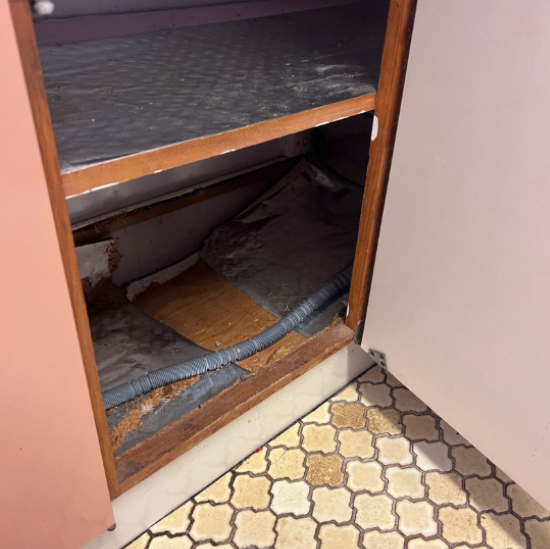
On arrival, cracking was observed in the caulking along the kitchen benchtop, along with significant damage to cabinetry shelving beneath the sink and adjacent to the washing machine. Visible mould growth was present on affected sections of the cabinetry below the sink, consistent with long term moisture exposure from the leaking dishwasher hose.
Moisture testing was carried out to assess any remaining moisture. The masonry wall behind the washing machine, kitchen kickboards, affected shelving, and the living/dining room flooring all returned dry readings at the time of inspection, indicating no ongoing moisture impacts in these areas.
Remediation Works
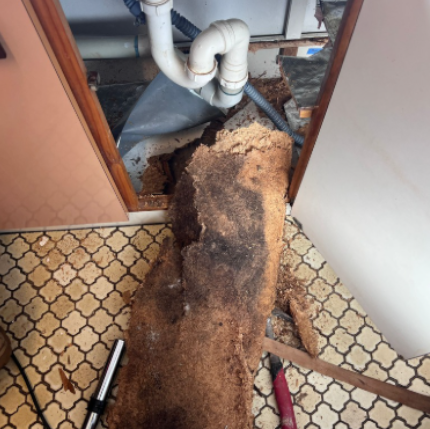
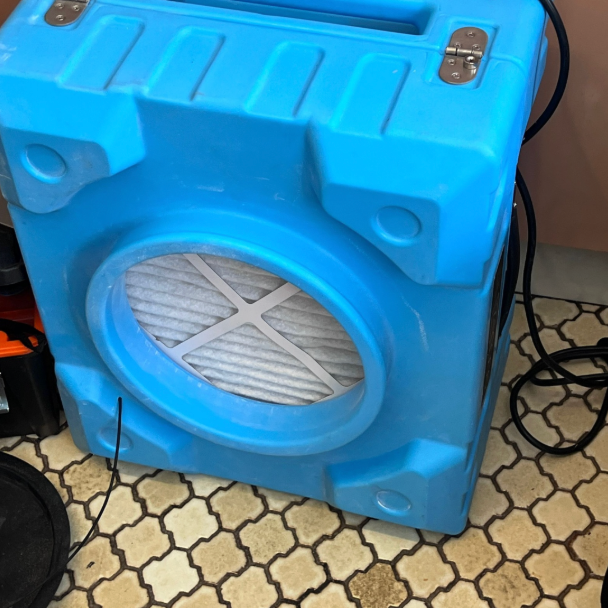
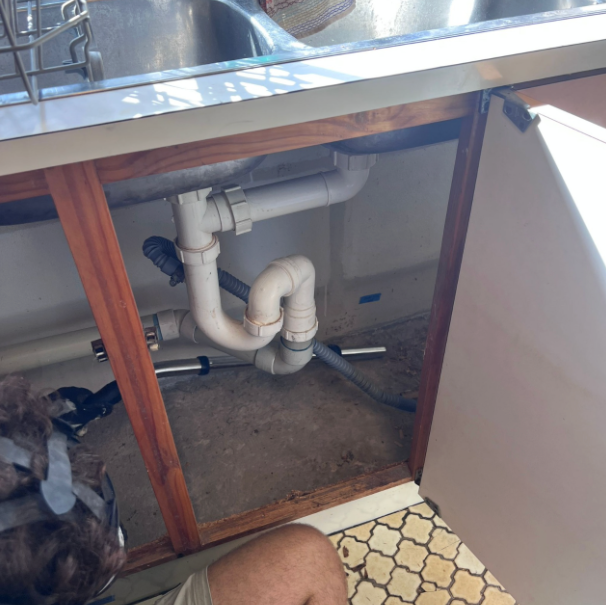
Remediation options were discussed with the client, and it was agreed that physical removal of the mould-affected shelving was the most appropriate action. The affected shelving was carefully removed while operating an Air Filtration Device (AFD) and HEPA vacuum to reduce the risk of mould and debris spreading. All removed materials were bagged and disposed of appropriately.
After removal, residual mould was identified on lower sections of the remaining cabinetry. These areas were treated with a mould removal agent. Upon completion, the site was HEPA vacuumed and left clean and tidy.
Why This Matters
Repeated water leaks can cause hidden damage inside cabinetry, even when surfaces appear dry and clean. Removing mould-affected materials and treating remaining surfaces helps reduce the risk of ongoing mould growth and supports a healthier indoor environment.
The Result
The mould-affected shelving was successfully removed under controlled conditions, residual mould was treated, and moisture testing confirmed dry conditions at the time of attendance. The kitchen area was left clean, stable, and ready for any future repairs if required.