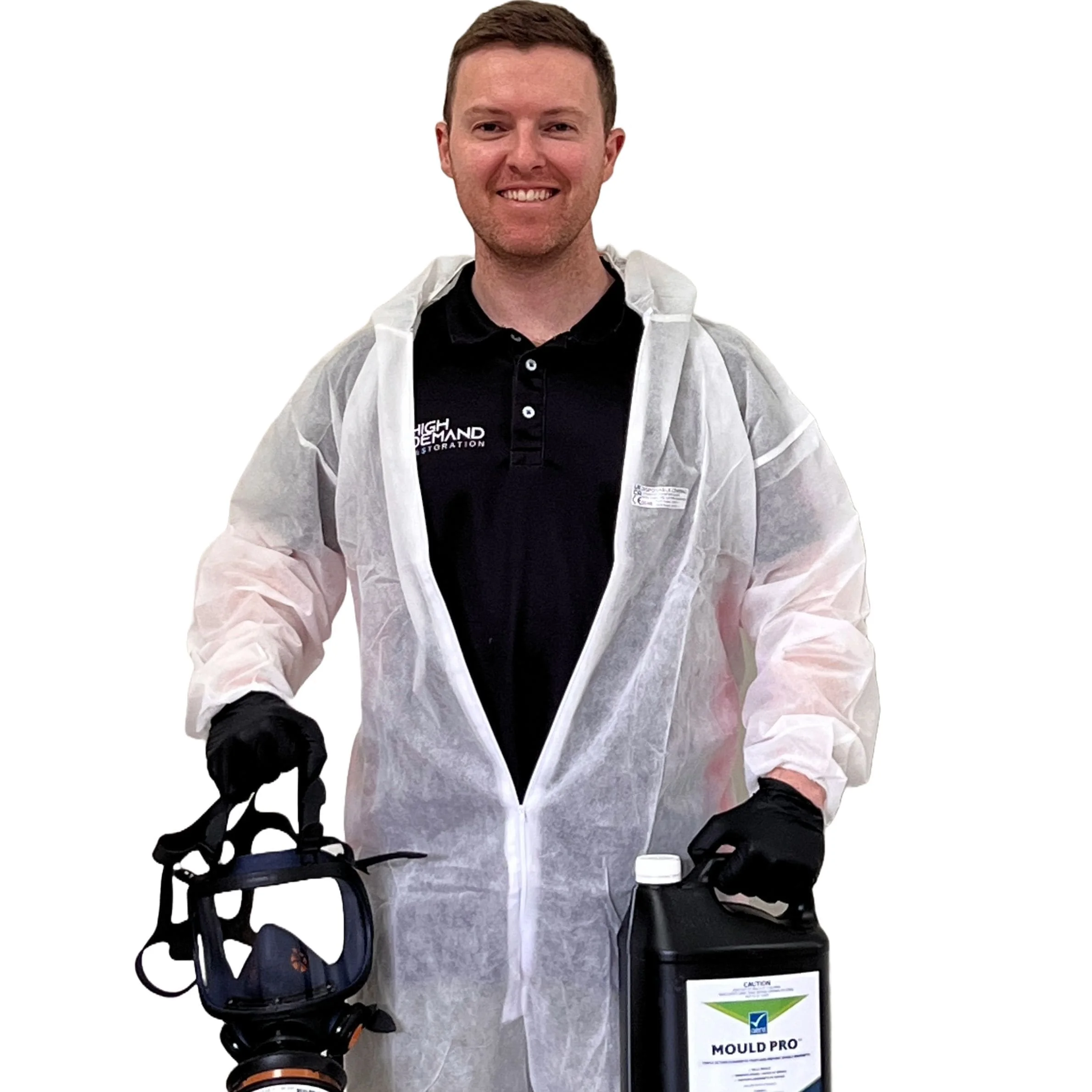
Strong Mould Odours and Significant Mould Damage to Kitchen in Kirrawee, The Sutherland Shire
A homeowner in Kirrawee contacted High Demand Restoration after discovering mould growth forming at the bottom of their kitchen cabinet beneath the sink area.
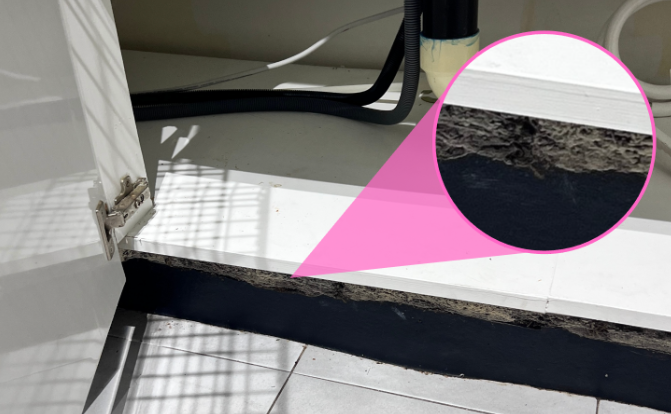
Visible mould growth was present along the base of the cabinetry where moisture had previously affected the materials.
Inspection showed mould contamination along the base of the kitchen cabinetry, which had likely developed due to moisture previously absorbed into the cabinet materials. In this instance there was also a strong musky smell that pointed to a significant mould problem.
Inspection Findings
Mould contamination was present along the lower section of the cabinetry and kickboards beneath the kitchen sink.
When cabinetry materials such as timber or particleboard are exposed to moisture from plumbing leaks, they retain moisture. Even after the leak has been stopped, the remaining moisture within the materials can create conditions suitable for mould growth.
In this case, the contamination was concentrated in the lower cabinet structures where moisture exposure had previously occurred.
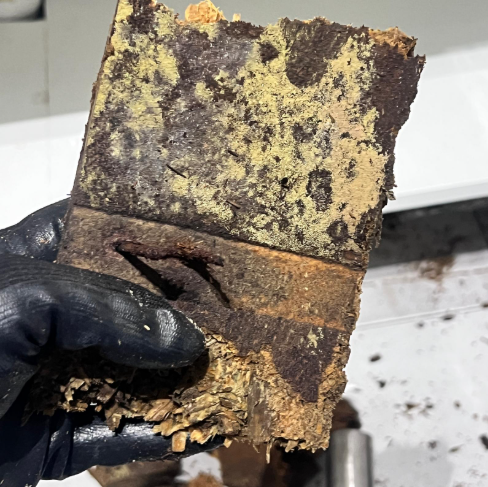
Sections of mould-contaminated cabinet materials were removed during the remediation process.
Mould Remediation Works
To address the contamination safely and effectively, High Demand Restoration carried out mould remediation works in the affected kitchen area.
The remediation process included:
Physical removal of mould-affected kickboards and contaminated cabinetry materials
Establishment of containment zone around the work area to prevent cross-contamination
Operation of an Air Filtration Device (AFD) during the works to capture airborne mould particles
Decontamination of the surrounding surfaces after removal works were completed
Safe removal and disposal of mould-affected materials in accordance with industry practices
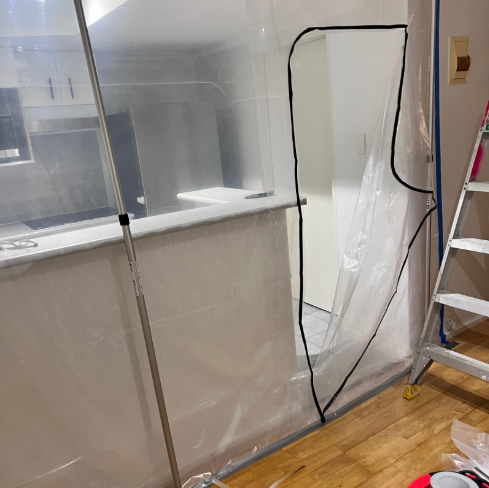
Containment barriers were installed to isolate the affected area and prevent the spread of mould particles during remediation works.
These steps help ensure that contaminated materials are removed safely while maintaining controlled conditions within the work area.
Why Mould in Kitchen Cabinets Should Be Addressed
Mould growth inside cabinetry often develops following water leaks or long-term moisture exposure. Because cabinetry materials are typically porous, they can absorb and retain moisture, allowing mould to develop even after the source of water has been repaired.
Removing mould-affected materials and properly decontaminating the surrounding area helps prevent the spread of contamination and improves the overall hygiene of the kitchen environment.
Addressing mould contamination early also helps prevent further deterioration of cabinetry components.
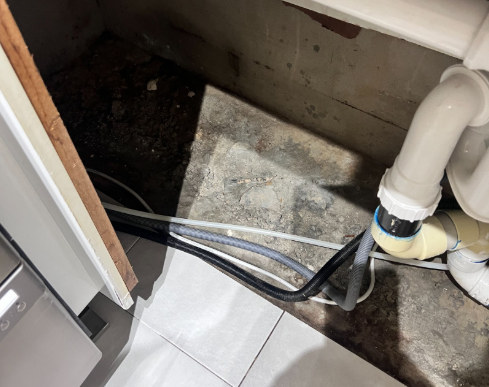
All mould affected cabinetry was removed and the area was left clean and mould free, ready for new cabinetry to be installed.
Completed Remediation
Following approval of the remediation works, High Demand Restoration attended the property and completed the mould removal process.
The affected kickboards and contaminated cabinetry components were safely removed, the area was contained and air filtered during works, and the surrounding surfaces were decontaminated to address any remaining mould spores.
By removing the contaminated materials and cleaning the affected area, the mould issue within the cabinet structure was addressed.