

Fun Ways to Stimulate Your Pet at Home (and When to Call in Backup)
If your dog steals socks, follows you from room to room, or stares at you like something important is missing, you are not dealing with bad behavior. You are dealing with boredom.
Boredom does not announce itself. It settles in quietly through repetition and empty time. Pets want engagement the same way people want something interesting between meals and sleep.
The good news is stimulation does not require fancy gear or hours of effort. Small changes create better days. Better days shape behavior.
This article explores fun, realistic ways to stimulate your pet at home and explains when daycare or boarding becomes the missing piece rather than a last resort.
Fun Ways to Stimulate Your Pet at Home (and When to Call in Backup)
What “Stimulation” Actually Means
Meals Are Enrichment Opportunities
Scent Games Turn Any Room Into an Adventure
Training Counts as Stimulation
Toys Work Better When They Feel New
Window Watching Is Not Always Helpful
Why Physical Exercise Is Only Part of the Picture
Social Stimulation Is Not One-Size-Fits-All
When Home Stimulation Works Best
When Home Efforts Start to Strain
How Daycare Extends Home Enrichment
Why Boarding Is About More Than Travel
The Power of Variety Without Chaos
Signs Your Pet Wants More Engagement
You Do Not Have to Fill Every Hour
Why Support Makes You a Better Pet Parent
What “Stimulation” Actually Means
Stimulation is not about wearing your pet out. It is about giving their brain something to do.
Pets need chances to think, solve problems, and make choices. When that happens, focus replaces restlessness. Calm follows engagement.
A tired brain settles faster than a tired body.
Meals Are Enrichment Opportunities
Feeding time happens every day. That makes it one of the easiest places to add stimulation.
Instead of placing food in a bowl and walking away, turn meals into an activity.
Try:
Puzzle feeders
Scatter feeding
These approaches slow eating and engage problem-solving instincts. They also stretch mealtime into something that feels satisfying rather than rushed.
If your pet finishes eating and looks for something to destroy, the meal ended too soon.
Scent Games Turn Any Room Into an Adventure
Your pet experiences the world through scent. You can use that instinct without changing your schedule.
Hide treats in plain sight at first. Let your pet search. Increase difficulty over time.
Scent games offer focus without chaos. They work well on busy days and bad weather days.
This kind of mental work often leads to deeper rest afterward.
Training Counts as Stimulation
Training does not need a whistle or a clipboard. It can be playful and brief.
Teaching a new cue or reinforcing an old one gives your pet structure and purpose. Five minutes counts.
Training strengthens communication and confidence. Your pet learns how to succeed. That matters more than perfection.
End sessions before frustration appears. Success builds interest.
Toys Work Better When They Feel New
Leaving every toy available all the time reduces interest. Novelty drives engagement.
Rotate toys instead of offering everything at once. Put some away. Bring them back later.
Two interesting toys beat a pile that feels familiar.
This approach costs nothing and keeps play engaging.
Window Watching Is Not Always Helpful
Some pets enjoy watching the world outside. Others fixate.
If your pet barks, paces, or stiffens at windows, that stimulation adds tension rather than relief.
Balanced engagement includes resolution. Endless watching without interaction leaves energy stuck.
Pay attention to how your pet reacts. That reaction tells you whether the activity helps or harms.
Why Physical Exercise Is Only Part of the Picture
Walks matter. Play matters. They are not complete on their own.
Some pets return from long walks wired instead of calm. Movement without mental engagement can raise arousal without releasing it.
Pair physical activity with thinking. A short walk followed by a scent game often settles energy better than distance alone.
Balance creates regulation.
Social Stimulation Is Not One-Size-Fits-All
Some pets thrive around others. Some prefer space. Most sit between those extremes.
Unstructured social time overwhelms many pets. Structure allows interaction without pressure.
Healthy social stimulation includes:
Supervised play
Planned breaks
This balance protects confidence and reduces conflict.
Providing that structure at home can feel hard. That is where outside support helps.
When Home Stimulation Works Best
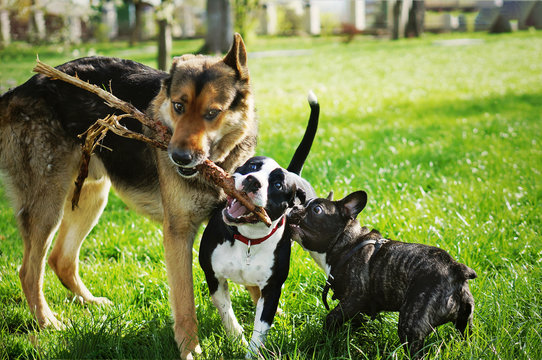
Home enrichment shines when your schedule allows consistency and your pet settles after activity.
Pets who relax after engagement are getting what they need. They nap, stretch, and reset.
Home routines work well when days feel predictable.
The goal is not constant entertainment. The goal is rhythm.
When Home Efforts Start to Strain
Life shifts. Workdays stretch. Energy drops.
High-energy pets, social pets, or pets prone to frustration often need more than one person can provide alone.
This does not mean you failed. It means your pet’s needs exceed what the home can offer on some days.
Recognizing that moment protects both of you.
How Daycare Extends Home Enrichment
Quality daycare builds on what you already do.
Instead of guessing how the day will unfold, your pet follows a rhythm. Activity happens with intention. Rest follows engagement.
Daycare provides:
Guided social interaction
Predictable daily structure
Pets return home satisfied rather than overstimulated.
The difference shows up in calmer evenings and smoother routines.
Why Boarding Is About More Than Travel
Boarding supports pets during disruption, not just vacations.
Moves, holidays, renovations, or long absences interrupt routines. Boarding offers continuity when home feels unsettled.
Predictable days protect appetite, sleep, and emotional balance.
Boarding becomes support rather than separation when structure exists.
The Power of Variety Without Chaos
Pets benefit from variety. They also need consistency.
Home enrichment offers familiarity. Daycare and boarding add new environments and experiences within clear boundaries.
This combination builds resilience. Pets learn to adapt without stress.
Variety works best when guided.
Signs Your Pet Wants More Engagement
Behavior tells the story before problems escalate.
Watch for:
Increased clinginess
Destructive habits
These signs often point to unmet mental or social needs rather than training failure.
Addressing stimulation early prevents frustration from becoming routine.
You Do Not Have to Fill Every Hour
Good care does not mean nonstop activity. Pets need permission to rest.
Structured engagement followed by quiet time creates balance. That balance supports emotional health.
Burnout happens when stimulation lacks recovery.
Rest is part of enrichment.
Why Support Makes You a Better Pet Parent
Trying to do everything alone leads to fatigue. Fatigue reduces patience.
Support creates space. Space improves consistency.
Choosing help is not giving up control. It is protecting quality of care.
Your pet benefits when you feel supported.
Build a Bigger World for Your Pet
Your home matters. Your routine matters. Some needs extend beyond both.
When home enrichment meets professional structure, pets thrive rather than cope.
That partnership creates better days and calmer nights.
Give Your Pet More Ways to Think, Play, and Relax
If you want to expand your pet’s routine with structured play, mental engagement, and predictable rest, Furry Pet Resort offers daycare and boarding designed to complement the enrichment you provide at home. Schedule a visit and give your pet a world that feels full in the right ways.