BLOG
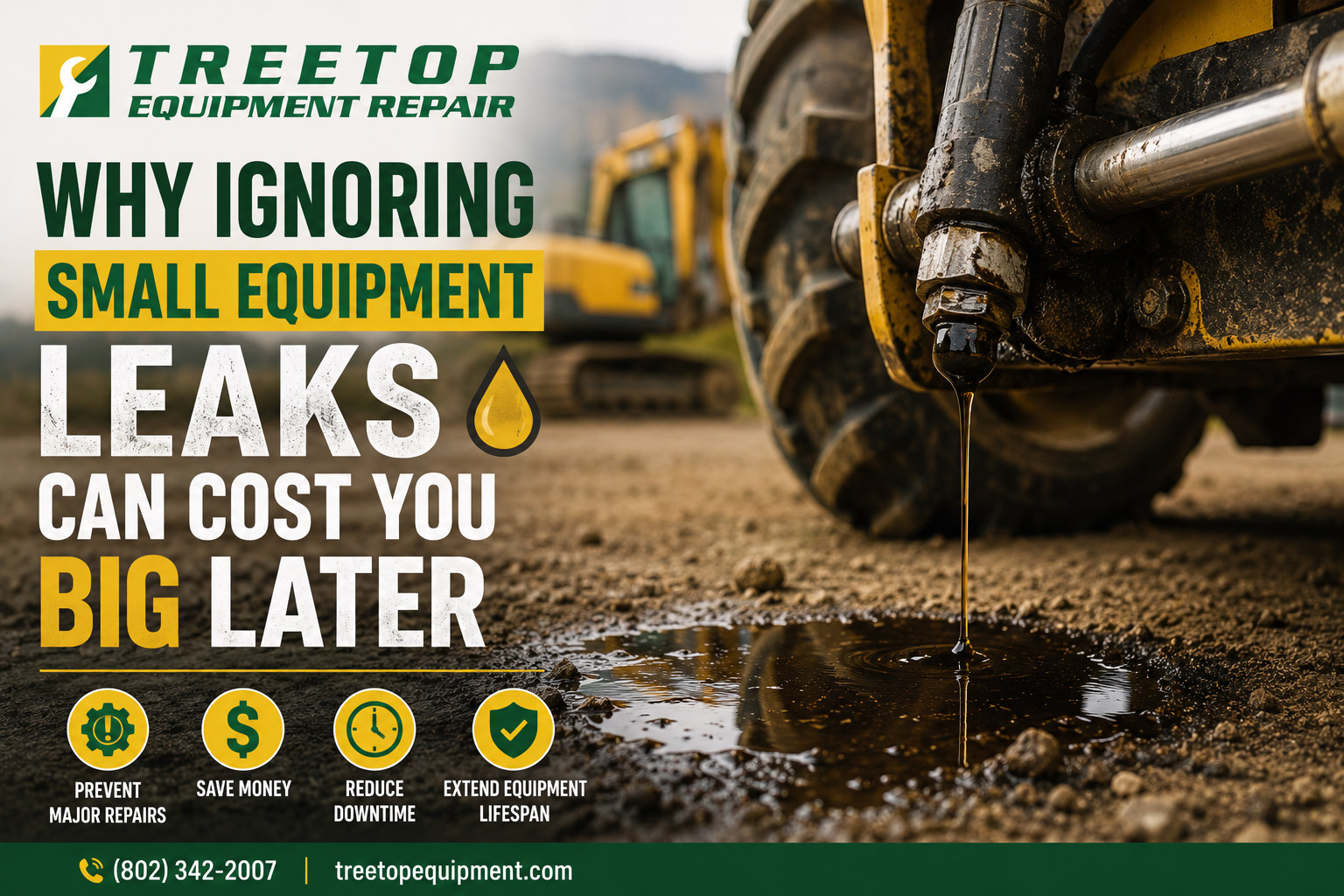
Why Ignoring Small Equipment Leaks Can Cost You Big Later
It is just a small spot of oil under the excavator. The hydraulic line is seeping, but the pressure seems fine. The coolant level drops a little between service intervals, but it has been like that for months. These are the rationalizations that experienced equipment operators have made right before a very expensive breakdown. Small leaks on heavy equipment are not maintenance footnotes — they are early warnings of failures that can destroy major components, create environmental liability, and sideline machines for weeks. Understanding why minor leaks escalate, and how fast they do it, is one of the most important things any Vermont equipment operator can know.
Why Small Leaks Are Never Actually Small
Heavy equipment systems operate under conditions that make even a tiny leak a dynamic problem. Hydraulic systems run at pressures between 3,000 and 6,000 PSI. Engine cooling systems cycle through extreme temperature ranges during Vermont's seasons. Gear oil in final drives is the only barrier between metal-on-metal contact in components that cost thousands of dollars to replace. When a leak develops in any of these systems, three things begin happening simultaneously: the fluid level drops, system performance degrades, and the remaining fluid is often compromised by contamination.
What makes this especially dangerous is that machines frequently continue to run through early leak stages. Operators see no immediate performance loss, so the leak gets ignored. Meanwhile, the conditions causing that leak — a worn seal, a cracked fitting, a fatigued hose — are getting worse with every operating hour. By the time the problem becomes undeniable, what was a straightforward seal replacement has often become a component replacement.
Hydraulic Leaks: From Drip to Disaster
Hydraulic leaks are the most common type on construction and forestry equipment, and they are among the most misunderstood. A weeping hydraulic cylinder seal might lose less than a quart of fluid per week in its early stages. That seems manageable. But the real damage is not the lost fluid — it is what happens to the system while it operates with reduced fluid volume and compromised pressure.
Low hydraulic fluid causes cavitation, a condition in which air bubbles form in the hydraulic pump and then violently collapse against metal surfaces. Cavitation damage is rapid and catastrophic. A pump that costs $1,200 to replace can be destroyed within hours of severe cavitation. The cylinder rods and seals that were weeping in the first place also accelerate their wear rate as pressure fluctuates, eventually leading to full seal failure and potential cylinder damage.
For operations in Huntington, Vermont, the seasonal freeze-thaw cycle adds another dimension. Hydraulic fluid exposed to air through a leaking fitting can absorb moisture, which then freezes in cold temperatures, damages seals, and compromises fluid viscosity. What was a $150 seal replacement in October can become a $4,000 hydraulic pump rebuild by spring if the underlying leak is left unaddressed through the off-season.
Engine and Cooling System Leaks: The Hidden Threat
Oil and coolant leaks on the engine side are just as serious as hydraulic leaks, and they are more likely to cause permanent engine damage. Engine oil leaks reduce lubrication volume, which increases friction and heat at every bearing surface in the engine. Running even a quart low on oil in a high-hours diesel engine under load accelerates wear rates dramatically. Over time, continued operation with reduced oil pressure from a leak can cause main bearing failure — a repair that runs $8,000 to $25,000 or more depending on engine size.
Coolant leaks present an even faster risk pathway. Heavy equipment diesel engines can overheat within minutes of coolant loss under full load. A small external coolant leak that goes unnoticed during a long work shift can result in complete coolant loss, leading to a cracked engine block or warped cylinder head. Either failure typically ends the conversation about repair and begins a very expensive discussion about engine replacement. The cost difference between catching a leaking coolant hose early and replacing an engine block is not marginal — it is the difference between a few hundred dollars and tens of thousands.
Environmental and Liability Implications in Vermont
Beyond the mechanical consequences, equipment leaks carry real environmental and legal exposure in Vermont. The state has strict regulations around petroleum product discharge, and a hydraulic leak on a jobsite that contaminates soil or a nearby waterway can result in cleanup costs and fines that far exceed any repair bill. Vermont's Agency of Natural Resources takes hydrocarbon contamination seriously, and documented discharge events can affect future project permitting.
Contractors operating near wetlands, rivers, or ecologically sensitive areas — common throughout the Vermont landscape — face heightened scrutiny. Keeping equipment leak-free is not just good maintenance practice in Huntington, Vermont; it is a legal and regulatory obligation that protects your business license and your standing with project owners. A single significant discharge event can follow a contractor's record for years, affecting bids and relationships with municipal and state project managers who check environmental compliance history.
Frequently Asked Questions
How do I distinguish between a serious leak and normal seepage on older equipment?
Normal seepage might appear as a slight film of oil around a fitting without active dripping or pooling. A serious leak creates visible fluid accumulation under the machine after sitting, leaves a trail during operation, or shows a measurable drop in fluid level between daily checks. When in doubt, have a technician inspect it — the cost of a diagnostic is trivial compared to the cost of ignoring a real leak.
Can I use stop-leak additives as a temporary fix on heavy equipment?
Stop-leak products are not recommended for heavy equipment. These additives can temporarily reduce seepage by swelling seals, but they do not address the underlying cause and can clog small hydraulic orifices, damage pump seals, and complicate future repairs. They may be appropriate for passenger vehicle emergencies but are not suitable for industrial hydraulic or diesel engine systems.
How quickly can a small hydraulic leak progress to a system failure?
The rate of progression depends on operating conditions, load cycles, temperature, and the specific component involved. A weeping fitting in a low-pressure return line might remain stable for months. A failing high-pressure cylinder seal on a heavily loaded machine can progress from seepage to full failure within a few operating shifts. This unpredictability is exactly why early inspection matters.
Do equipment leaks void manufacturer warranties?
Operating equipment with known leaks can complicate warranty claims. If a component fails and the manufacturer or dealer can demonstrate that the machine was operated with a known fluid deficiency that contributed to the failure, warranty coverage may be denied. Addressing leaks promptly protects your warranty position on covered components.
What fluid colors should I know to identify different types of leaks?
Hydraulic fluid is typically light amber to red-orange and feels slippery. Engine oil is darker amber to black with a distinct burned smell when hot. Coolant is usually green, orange, or pink with a sweet smell. Gear or final drive oil is very dark and thick. Fuel is clear to light amber with a strong petroleum odor. Knowing what you are looking at helps you assess urgency before calling for service.
Conclusion
A small leak is a machine trying to tell you something. The cost of listening early is a service call and a seal replacement. The cost of ignoring it can be catastrophic component failure, environmental cleanup liability, or a machine permanently out of commission during your busiest season. Operators across Huntington, Vermont know that Vermont's compressed working season leaves no margin for avoidable downtime. Tree Top Equipment Repair provides fast diagnostics and comprehensive leak repairs to catch small problems before they become large ones. Call (802) 598-8375 to schedule an inspection before the next operating day.

Our Services
Contact Information
Phone:
Address:
113 Maple Ridge Ln, Huntington, VT 05462, United States of America
Helpful Links
Mon - Fri : 7:00AM - 5:00PM
Sat - Sun : Closed
Tips & Articles
© 2025 All Rights Reserved | Tree Top Equipment Repair | Privacy Policy