
Support Politikanta Minute
Your support keeps independent commentary alive.
☕ Buy us a coffee and keep the conversation going
Latest Videos
Curated Politikanta Minute playlists by focused political topic.
HOR Issues
Latest HOR-related updates, reactions, political tension, hearing clips, and issue breakdowns.
Watch MoreDuterte Legacy Playlist
Senate Circus Playlist
House of Representatives Scandals Playlist
18 Marines Playlist
Global Entertainment Playlist
Global News Playlist
Bible Scripture Playlist
Breaking News Playlist

“Kinain Siya Ng Sistema O Kinain Niya Ang Sistema?”
Baligod Questions Erwin Tulfo’s Shift From Critic To Senator
The political and institutional tensions surrounding the Senate Blue Ribbon controversy intensified further after Atty. Levi Baligod publicly questioned what he described as Senator Erwin Tulfo’s apparent transformation from aggressive corruption critic to silent insider within the political system.
In a social media post accompanied by Tulfo’s photo, Baligod — legal counsel of the group known as the “Brave 18” — revisited Tulfo’s previous reputation as a fearless broadcaster who frequently attacked alleged corruption involving prominent political personalities.
According to Baligod:
“Noon ay puro banat kuno ito sa mga kurap…”
He specifically referenced Tulfo’s past criticisms against figures such as Antonio Trillanes IV, Risa Hontiveros, and Kiko Pangilinan.
But Baligod argued that Tulfo’s posture allegedly changed once he became part of the legislative system itself.
“Pero noong nasa HOR at Senado siya ay nanahimik na tungkol sa korapsyon.”
Then came the line that immediately spread online:
“Kinain siya ng sistema o kinain niya ang sistema?”
The Growing Political Collision
Baligod’s statement surfaced amid the increasingly chaotic conflict surrounding the Senate Blue Ribbon Committee hearings linked to alleged flood control anomalies and supposed cash deliveries involving several political personalities.
The “Brave 18” group, represented legally by Baligod, has been central to many of the testimonies and allegations now fueling institutional conflict inside the Senate.
These allegations, however, remain strongly denied by personalities implicated in the hearings and have not yet been proven in court or through any final official investigation.
At the time of publication, Senator Erwin Tulfo had not yet publicly responded to Baligod’s latest remarks.
More Than A Personal Attack
What makes Baligod’s statement politically explosive is that it taps into a deeper frustration many Filipinos have long carried toward politics:
the belief that reformers often change once they become part of the establishment.
That is the emotional power behind the question:
Does the system corrupt people —
or do people willingly adapt to survive inside the system?
For critics of government institutions, Baligod’s remarks reflect growing skepticism toward politicians who build careers criticizing corruption but later appear less confrontational once holding power themselves.
Supporters of Tulfo, however, may argue that governance is far more complicated than media commentary and that legislative realities require different approaches than broadcasting rhetoric.
Why This Matters
This controversy is not simply about Erwin Tulfo.
It reflects a broader national frustration with political consistency.
Filipinos have repeatedly seen personalities rise to popularity by promising accountability, transparency, and reform —
only to later face accusations of silence, compromise, or political accommodation once inside government.
That pattern creates deep public cynicism.
Because every time a once-vocal critic becomes quieter after gaining power, citizens begin questioning whether real institutional reform is even possible.
Here’s What This Really Means…
Baligod’s statement became viral not merely because it was provocative —
but because it struck a nerve.
Many Filipinos already feel trapped between competing political camps accusing one another of corruption while ordinary citizens continue struggling economically.
In that environment, people naturally become suspicious of politicians who change tone after entering the system they once criticized.
And once public trust begins shifting from hope to cynicism, institutions become harder to defend.
Because eventually, the public no longer asks:
“Who is right?”
Instead, they begin asking:
“Is anyone still different?”
That question may be the most politically dangerous of all.
Public Reaction Online
Online reactions quickly became divided after Baligod’s post circulated.
Critics of Tulfo agreed with Baligod’s observation, arguing that many anti-corruption figures lose momentum once they become part of the political establishment.
Supporters of Tulfo, however, dismissed the statement as politically motivated and accused Baligod of attempting to discredit personalities connected to the opposing Senate faction.
Meanwhile, others expressed exhaustion over the intensifying political warfare surrounding the Blue Ribbon controversy and questioned whether the investigations are still focused on public accountability or have already become full-scale political battles.
Still, one reality remains clear:
the fight over credibility inside Philippine politics is growing more personal — and more public — every day.
Exegesis Bible Verse
Mark 8:36
“What good is it for someone to gain the whole world, yet forfeit their soul?”
Exegesis
This verse warns about the danger of compromising principles in pursuit of power, influence, or survival within worldly systems. Leadership becomes strongest when integrity remains consistent even after gaining authority. In political life, the greatest test is not merely reaching power — but whether convictions remain intact after entering the system itself.
Senate Watch | Padilla Files Bill to Protect and Expand Benefits for Barangay Health Workers
January 15, 2026•1 min read
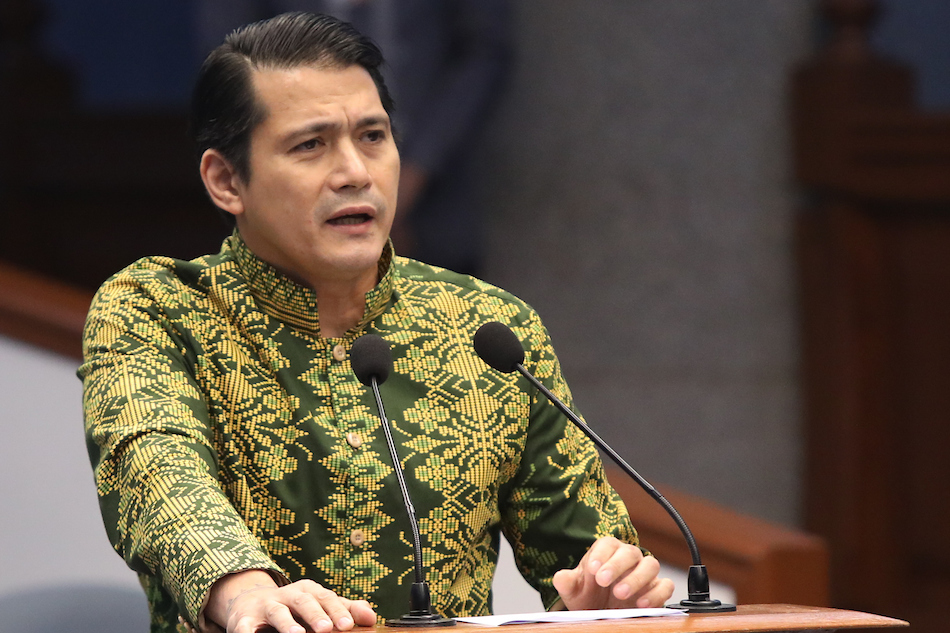
Senator Robin Padilla has filed a bill seeking stronger protection and expanded benefits for barangay health workers (BHWs)—a move that places grassroots health care front and center in the Senate’s legislative agenda.
The proposed measure recognizes BHWs as frontliners who often operate with limited compensation, minimal legal protection, and uneven benefits across local governments. Padilla’s bill aims to standardize support by providing clearer guidelines on allowances, insurance coverage, training, and workplace safety—particularly during public health emergencies.
Supporters of the bill note that BHWs serve as the first point of contact for millions of Filipinos, especially in far-flung communities. Their work ranges from basic medical assistance and health monitoring to vaccination drives and emergency response—often carried out without formal employment status.
The proposal also seeks to strengthen legal protection for BHWs while performing their duties, addressing concerns about harassment, liability, and lack of institutional backing. By formalizing benefits and safeguards, lawmakers hope to improve morale, retention, and service quality at the community level.
As the measure moves through committee deliberations, it adds to a broader Senate discussion on reinforcing the country’s primary health care system—one that depends heavily on workers closest to the people.
Quiet takeaway: Health systems are only as strong as the frontliners who carry them—especially at the barangay level.




More House of Representa’thieves Stories
FOLLOW US


Disclaimer: This site uses publicly available images and materials for news, satire, and commentary. All rights belong to their respective owners. No copyright infringement intended.
© 2025 Politikanta Minute. All Rights Reserved.
Political Commentary • Satire • Faith-Based Reflection
Some visuals may be AI-generated for satire and illustration. Not real footage unless stated.
FOLLOW US

Disclaimer: This site uses publicly available images and materials for news, satire, and commentary. All rights belong to their respective owners. No copyright infringement intended.
© 2025 Politikanta Minute. All Rights Reserved.
Political Commentary • Satire • Faith-Based Reflection
Some visuals may be AI-generated for satire and illustration. Not real footage unless stated.