
Dynasty
“THE POLITICAL FAMILY OF SUANSING.
Tap to view
👁
HOR

Your support keeps independent commentary alive.
☕ Buy us a coffee and keep the conversation going


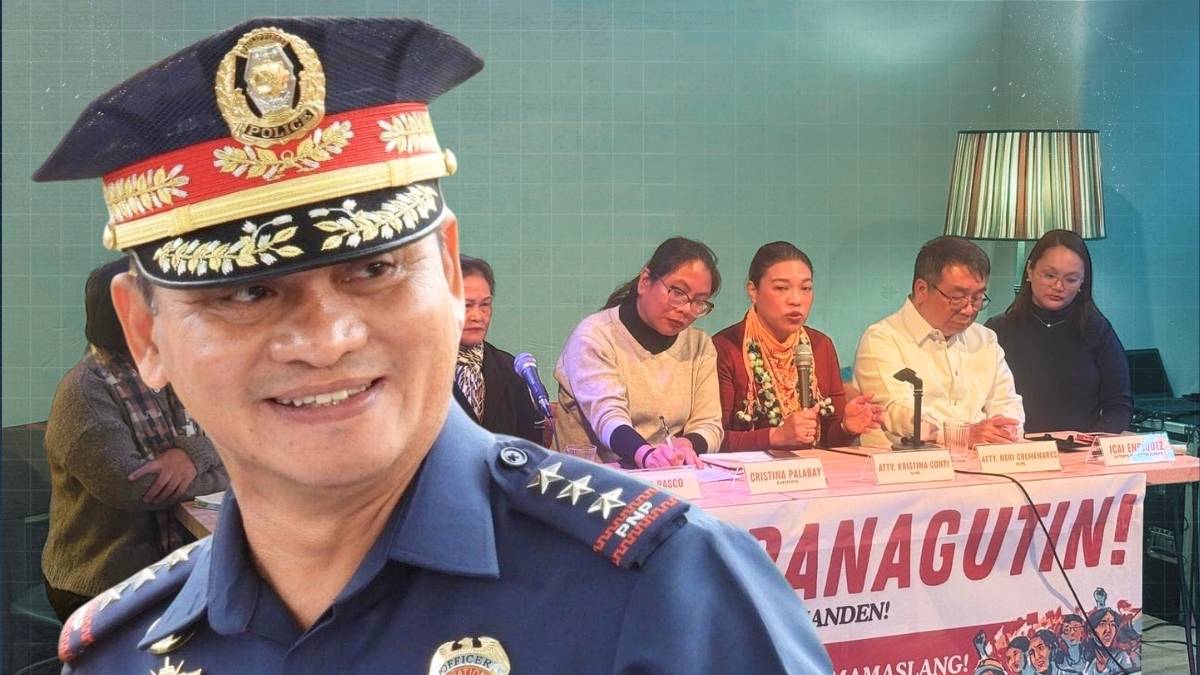
As the confirmation of charges hearing of former President Rodrigo Duterte approaches in The Hague, tensions are once again rising — not only internationally, but also within Philippine political discourse.
A Europe-based network held a press conference in The Hague a day before the scheduled proceedings, calling for accountability and justice for alleged victims of the drug war. The banner displayed during the event read:
“Duterte Panagutin!
Duterte schande, bloed aan je handen!
Hustisya para sa mga biktima ng pamamaslang!”
The location itself carries symbolic weight. The Hague is globally recognized as a center of international justice. By staging the press conference there, organizers ensured the issue remains framed in the language of international law and human rights.
But as expected, reactions from back home were swift and divided.
Retired police general Filmore Bondilles Escobal publicly criticized the organizers, alleging links to left-leaning groups operating under NGO fronts. His statement reflects a long-standing political narrative — that criticism of Duterte’s anti-drug campaign is often politically motivated rather than purely humanitarian.
This divide is not new. For years, discussions about the drug war have been shaped by two powerful narratives:
One side views it as a necessary campaign for national security and public order.
The other frames it as a systemic violation of human rights that demands accountability.
Both perspectives remain deeply embedded in Philippine society.
The confirmation of charges hearing is not a final judgment. It is a procedural stage where judges determine whether there is sufficient evidence to proceed to trial.
However, politically, the impact is much larger than the legal process itself.
International Perception
The Philippines’ image abroad is once again under scrutiny. International institutions and foreign governments are watching closely.
Domestic Political Alignment
Allies of Duterte are consolidating narratives around sovereignty and political persecution. Critics are amplifying calls for justice and institutional reform.
2028 and Beyond
The issue continues to influence long-term political positioning, especially among figures aligned with the former administration.
For many Filipinos, Duterte represents decisive leadership during a time of chaos. Supporters argue that crime levels fell, drug syndicates were disrupted, and communities felt safer.
They emphasize sovereignty — the idea that the Philippines should handle its internal matters without foreign intervention.
At the same time, international legal mechanisms exist precisely to address allegations of crimes that transcend borders. That tension between national sovereignty and global accountability is at the heart of this moment.
The debate is no longer simply about one man.
It is about how a nation defines justice.
Political discourse today moves faster than legal proceedings. Social media commentary, televised reactions, and international headlines often shape perception before courts shape conclusions.
Supporters say:
The campaign was tough but necessary.
Leadership requires difficult decisions.
Foreign bodies should not override national authority.
Critics say:
The rule of law must prevail.
Justice for victims must be pursued.
International law applies when domestic remedies are questioned.
The reality? The conversation is layered and complex.
A strong nation must be confident enough to face scrutiny.
Strength is not silence.
Strength is not panic.
Strength is standing firm — whether in defense or in accountability.
Filipinos have weathered colonization, dictatorship, natural disasters, and economic crises. Political storms are not new.
What matters most is that institutions hold steady, emotions remain grounded, and the Filipino people remain united beyond partisan lines.
“He that ruleth over men must be just, ruling in the fear of God.”
— 2 Samuel 23:3 (KJV)
Leadership carries weight. Justice carries responsibility. And sovereignty carries accountability.
It’s fascinating how some international critics suddenly become experts in Philippine street crime — usually from countries where you need three locks and a guard dog just to receive a package safely.
But satire aside, this isn’t about applause or condemnation.
It’s about ensuring that the Philippines writes its own story — not as a defendant in global opinion, but as a sovereign nation capable of facing scrutiny with dignity.
No matter which side of the debate you stand on, one truth remains:
The strength of a nation is not measured by how loud its arguments are — but by how steady its foundations remain during pressure.
The Philippines must move forward with clarity, fairness, and courage.
History will record the verdicts.
But the Filipino people will define the legacy.











Disclaimer: This site uses publicly available images and materials for news, satire, and commentary. All rights belong to their respective owners. No copyright infringement intended.
© 2025 Politikanta Minute. All Rights Reserved.
Political Commentary • Satire • Faith-Based Reflection
Some visuals may be AI-generated for satire and illustration. Not real footage unless stated.
Disclaimer: This site uses publicly available images and materials for news, satire, and commentary. All rights belong to their respective owners. No copyright infringement intended.
© 2025 Politikanta Minute. All Rights Reserved.
Political Commentary • Satire • Faith-Based Reflection
Some visuals may be AI-generated for satire and illustration. Not real footage unless stated.
