What No One Tells You About Your Child’s Brain at Age 3 — Kidazzle Memphis Flying Start Edition

3-Year-Old Brain Development: What Memphis Parents Should Know | Kidazzle Flying Start
At Kidazzle Flying Start in Memphis, we see something amazing every day — the incredible growth happening inside your three-year-old’s mind.
At age three, a child’s brain develops faster than at almost any other stage of life. In fact, research shows that over one million neural connections form every second during early childhood. For Memphis parents searching for high-quality preschool programs, understanding 3-year-old brain development is essential when choosing the right learning environment.
That’s why Kidazzle Memphis doesn’t just teach — we build brains. Through guided play, emotional connection, and early learning experiences, we help children develop the skills that power a lifetime of confidence and curiosity.
Learn more about how early experiences shape growth in our Early Brain Development & Learning Guide.
Why Age 3 Is the Brain’s Sweet Spot
Your three-year-old is experiencing one of the biggest growth spurts in human development — and not just in height.
According to the Harvard Center on the Developing Child, early experiences directly shape the architecture of the brain.
Their brain is rapidly developing pathways for language, empathy, memory, and motor control.
At Kidazzle Memphis, we use this “sweet spot” for learning to encourage exploration and problem-solving through:
Open-ended play and storytelling
Social-emotional learning through group activities
Music and movement to strengthen coordination
Teacher-guided reflection to build focus and patience
You might also enjoy: The Art of Patience: Helping Children Manage Frustration and Build Resilience
The Feelings Frontier: Big Emotions, Big Growth
Three-year-olds feel everything — joy, frustration, pride, and independence — often all before lunch.
At Kidazzle Flying Start, we help children make sense of those emotions through gentle coaching and consistent structure.
Our teachers help children:
Recognize and name feelings (“I’m sad,” “I’m excited,” “I’m mad”)
Use calm-down tools like deep breathing or quiet corners
Express empathy by helping friends and sharing
Learn that mistakes aren’t failures — they’re part of learning
These early lessons in emotional intelligence build the foundation for empathy and self-confidence later in life.
Parents may also enjoy reading about Emotional Intelligence in Early Childhood.
Read next: Emotional Intelligence in Early Childhood: Teaching Kids to Understand and Express Their Feelings
Play Is Brainwork
At three, children learn best when their hands — and hearts — are busy.
Playtime isn’t just fun; it’s brain fuel.
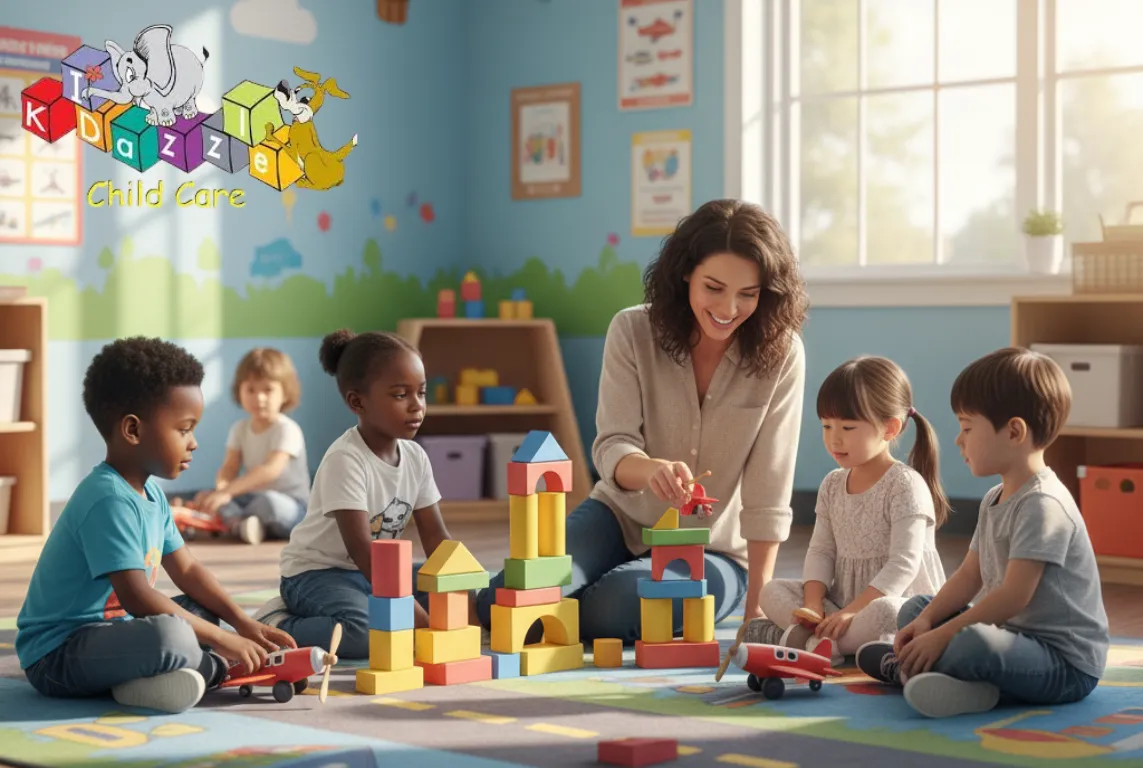
Every puzzle, block tower, and story builds pathways for focus, coordination, and problem-solving.
Our classrooms at Kidazzle Flying Start are designed to make learning joyful and natural, with a mix of movement, music, and imagination every day.
Explore more: Healthy Minds, Happy Bodies: How Nutrition and Movement Boost Early Learning
A Memphis Community That Helps Young Minds Take Flight
Here in Memphis, our community is full of dedicated people and businesses who help families thrive — and that same care extends to our youngest learners.
Near Kidazzle Flying Start, families find trusted neighbors and essential support:
FAA Memphis Air Route Traffic Control Center (ARTCC ZME) — a symbol of focus, teamwork, and precision.
FAA Federal Credit Union Center — helping families plan for brighter futures.
Sage Parts Plus Inc. and Tristate Used Tire Recycling — showing that growth and renewal are part of every process.
Caap International Inc. — reflecting innovation, just like our classrooms.
Each of these local leaders reminds us that care, consistency, and communication are what keep both planes — and young minds — flying steady.
Explore our full Memphis preschool programs to see how we support age-specific milestones.
The Kidazzle Difference: Building Confidence, One Connection at a Time
At Kidazzle Memphis Flying Start, every “why,” “how,” and “what if” is a chance to grow.
We believe in nurturing the whole child — body, mind, and heart — through curiosity, consistency, and care.
When your child feels safe, heard, and supported, their brain opens up to endless possibilities.
Because every child deserves a flying start.
The CDC developmental milestone guide outlines key social and emotional skills typically developing at age three.
📍 Visit Kidazzle Flying Start in Memphis to see how we help children grow confident, curious, and ready to take on the world.
FAQs
What happens in a child’s brain at age 3?
At age three, the brain forms rapid neural connections that support language, emotions, memory, and motor skills. It’s one of the most important growth stages.
Why is age 3 important for emotional development?
Children begin learning how to name feelings, manage frustration, and build empathy. Early guidance helps develop confidence and self-control.
How does preschool support brain development?
Preschool strengthens brain growth through play, social interaction, language activities, and structured routines.
What skills should a 3-year-old develop?
Most develop basic sentences, follow simple instructions, show curiosity, and improve coordination.
How can parents support brain growth at home?
Read daily, encourage play, talk about feelings, and maintain consistent routines.
