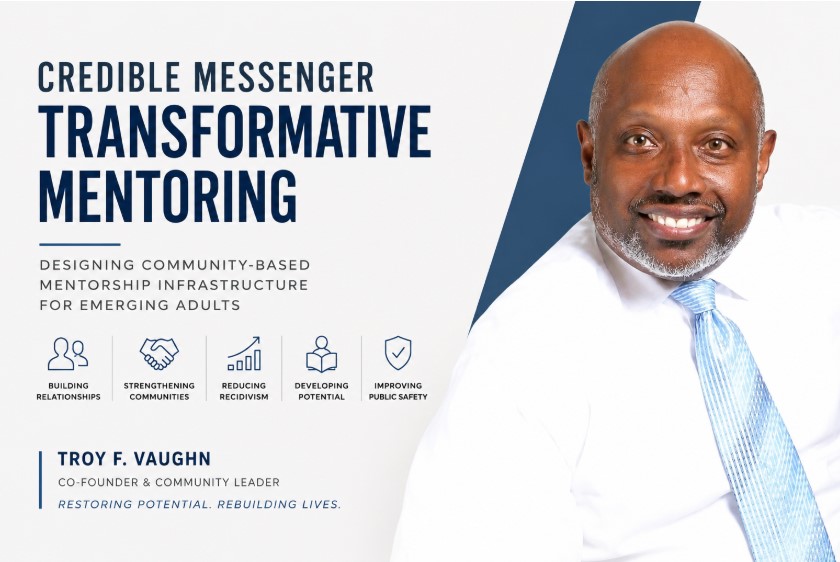
Designing Community-Based Mentorship Infrastructure for Emerging Adults
Developed in collaboration with the Los Angeles County Probation Department and the Office of Diversion and Reentry (ODR), Credible Messenger Transformative Mentoring outlines a countywide implementation framework designed to strengthen community-based mentorship, improve engagement outcomes, and support successful reintegration for emerging adults impacted by the justice system.
The initiative centers on the development of a transformative mentoring model utilizing credible messengers, individuals with lived experience of incarceration and successful community reintegration; to build trust, improve system engagement, reduce re-arrest rates, and strengthen supportive peer and community relationships for probation-involved young adults ages 18–25.
Grounded in cognitive behavioral principles, positive youth development practices, and community-centered implementation strategies, the framework emphasizes voluntary participation, relational accountability, mentorship, and pro-social community engagement as core drivers of long-term transformation.
The document details:
implementation strategy,
community engagement processes,
landscape assessments,
operational planning,
RFP development,
program evaluation,
and cross-sector collaboration structures involving county agencies, community-based organizations, and reentry stakeholders.
The work positions credible messenger mentorship not simply as supportive programming, but as a critical systems intervention capable of strengthening public safety outcomes, reducing recidivism, and improving long-term reintegration success through trusted community relationships and culturally responsive engagement.
Topics Covered:
Credible Messenger Mentorship Models
Emerging Adult Reentry Systems (Ages 18–25)
Community-Based Justice Reform Strategies
Positive Youth Development Frameworks
Cognitive Behavioral Mentoring Approaches
Public Health & Justice System Collaboration
Community Engagement & Town Hall Strategy
Cross-Sector Government Collaboration
LA County Probation & ODR Partnership Models
Reentry Infrastructure Development
Community Steering Committee Design
Program Design & Operational Planning
Landscape Assessments & Systems Mapping
RFP Development & Implementation Strategy
Community-Based Organization (CBO) Partnerships
Relational Accountability & Peer Support Systems
Evidence-Based Reintegration Models
Recidivism Reduction Strategies
Culturally Responsive Engagement Practices
Long-Term Program Evaluation & Replication Models