
Golden Globes
Golden Globes Winners & Nominees: The Names Shaping This Awards Season
Tap to view
👁
Mixed

Your support keeps independent commentary alive.
☕ Buy us a coffee and keep the conversation going


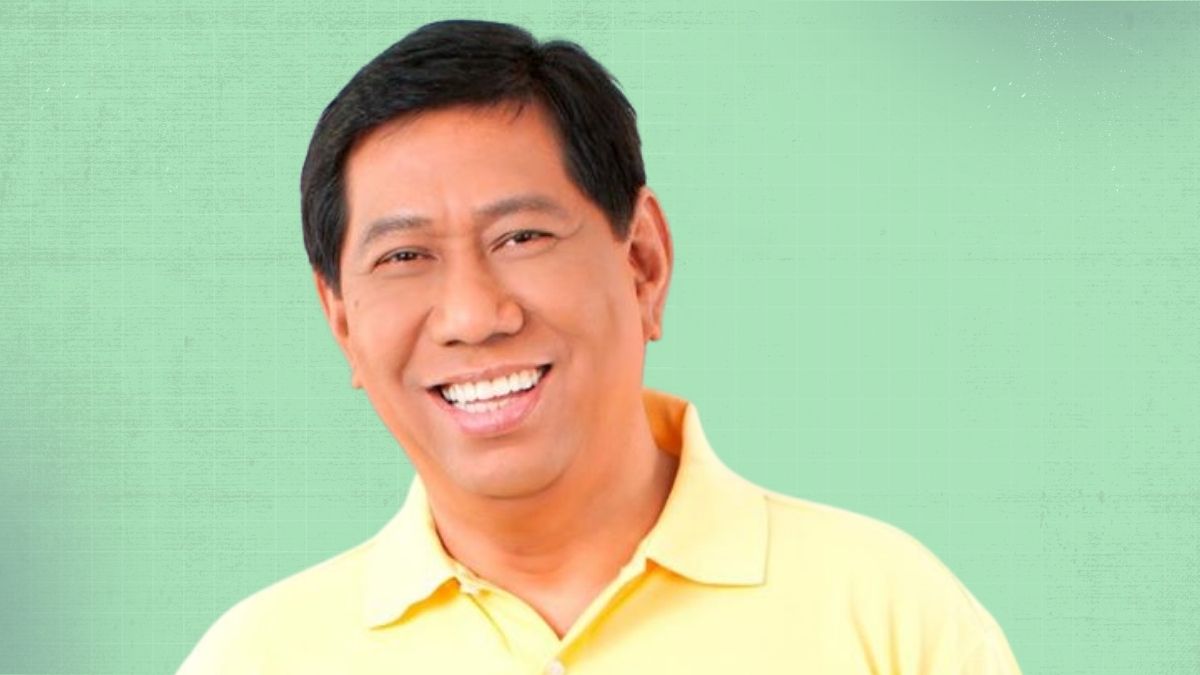
Political observers are calling Vice President Sara Duterte’s recent positioning a “magandang strategy.”
The reasoning is straightforward: political survival.
According to commentary circulating online, many members of the House of Representatives of the Philippines — especially those representing Mindanao districts — may hesitate to take aggressive action against VP Sara if they believe it could cost them their seats.
The logic is simple.
When reelection is on the line, lawmakers calculate risk.
Mindanao remains a Duterte stronghold.
From former President Rodrigo Duterte’s rise to national leadership to VP Sara’s overwhelming vice-presidential victory, the region has shown consistent support for the Duterte political brand.
The statement claims that “almost 80%” of Mindanao voters favor VP Sara.
Whether that exact percentage holds today is subject to polling, but few deny her continued regional strength.
For congressmen elected by Mindanao voters, this creates a dilemma:
Vote against a popular regional figure — or align with local sentiment?
The phrase “political survival” may sound dramatic, but it reflects an enduring truth in democratic systems.
Elected officials are accountable to:
Their constituents
Party alliances
National coalitions
Future electoral prospects
If a lawmaker believes a vote could trigger backlash at home, hesitation becomes rational.
That is not necessarily fear.
That is political arithmetic.
Impeachment votes are among the most politically sensitive decisions a legislator can make.
They are:
Public
Recorded
Campaign-weaponizable
In regions where VP Sara commands strong loyalty, representatives may calculate that opposing her could:
Alienate their voter base
Invite strong challengers in the next election
Damage long-term political viability
Thus, what some label as “takot” (fear) may actually be strategic caution.
Calling it a “strategy” implies deliberate design by VP Sara.
But an alternative perspective exists:
Strong support naturally creates leverage.
If a public official enjoys high approval in a region, that approval becomes political gravity.
Lawmakers adjust not because they are controlled — but because they respond to voters.
That is democracy functioning.
Everything now operates under the shadow of 2028.
Political alliances are forming.
Presidential positioning is underway.
Coalitions are recalibrating.
If VP Sara signals electoral viability early, that affects calculations in the House.
A congressman may think:
Will she be the dominant candidate in 2028?
Should I burn bridges now?
Will my district punish me later?
Momentum creates psychological pressure.
Even before ballots are printed.
However, regional dominance does not automatically translate to national inevitability.
Mindanao is powerful — but so are Luzon and the Visayas.
Presidential elections are shaped by:
Economic performance
National coalition-building
Cross-regional alliances
Public sentiment at the time of voting
Overestimating regional strength can be politically dangerous.
But underestimating it can be fatal.
This situation raises a deeper democratic issue:
Should lawmakers prioritize constitutional judgment — or electoral consequence?
In theory, impeachment decisions must rest on evidence and constitutional grounds.
In practice, elected officials are never fully insulated from voter reaction.
The tension between legal duty and political survival is not new.
It is inherent in representative democracy.
If VP Sara’s base remains consolidated in Mindanao, congressional dynamics could shift in subtle ways:
Slower momentum on impeachment efforts
More cautious public statements
Behind-the-scenes negotiations
None of these necessarily confirm victory or defeat.
But they indicate that regional strength carries weight.
Calling it a “magandang strategy” may capture the political moment.
But whether it is calculated brilliance or natural democratic response depends on perspective.
What is clear is this:
Mindanao remains a decisive political force.
And lawmakers from the region cannot ignore the will of their voters.
As 2028 approaches, today’s impeachment debates may be less about immediate outcomes — and more about long-term positioning.
























Disclaimer: This site uses publicly available images and materials for news, satire, and commentary. All rights belong to their respective owners. No copyright infringement intended.
© 2025 Politikanta Minute. All Rights Reserved.
Political Commentary • Satire • Faith-Based Reflection
Some visuals may be AI-generated for satire and illustration. Not real footage unless stated.
Disclaimer: This site uses publicly available images and materials for news, satire, and commentary. All rights belong to their respective owners. No copyright infringement intended.
© 2025 Politikanta Minute. All Rights Reserved.
Political Commentary • Satire • Faith-Based Reflection
Some visuals may be AI-generated for satire and illustration. Not real footage unless stated.
