The Architecture of Hospitality
What a night on the water revealed about operators, real estate, and stacked wins
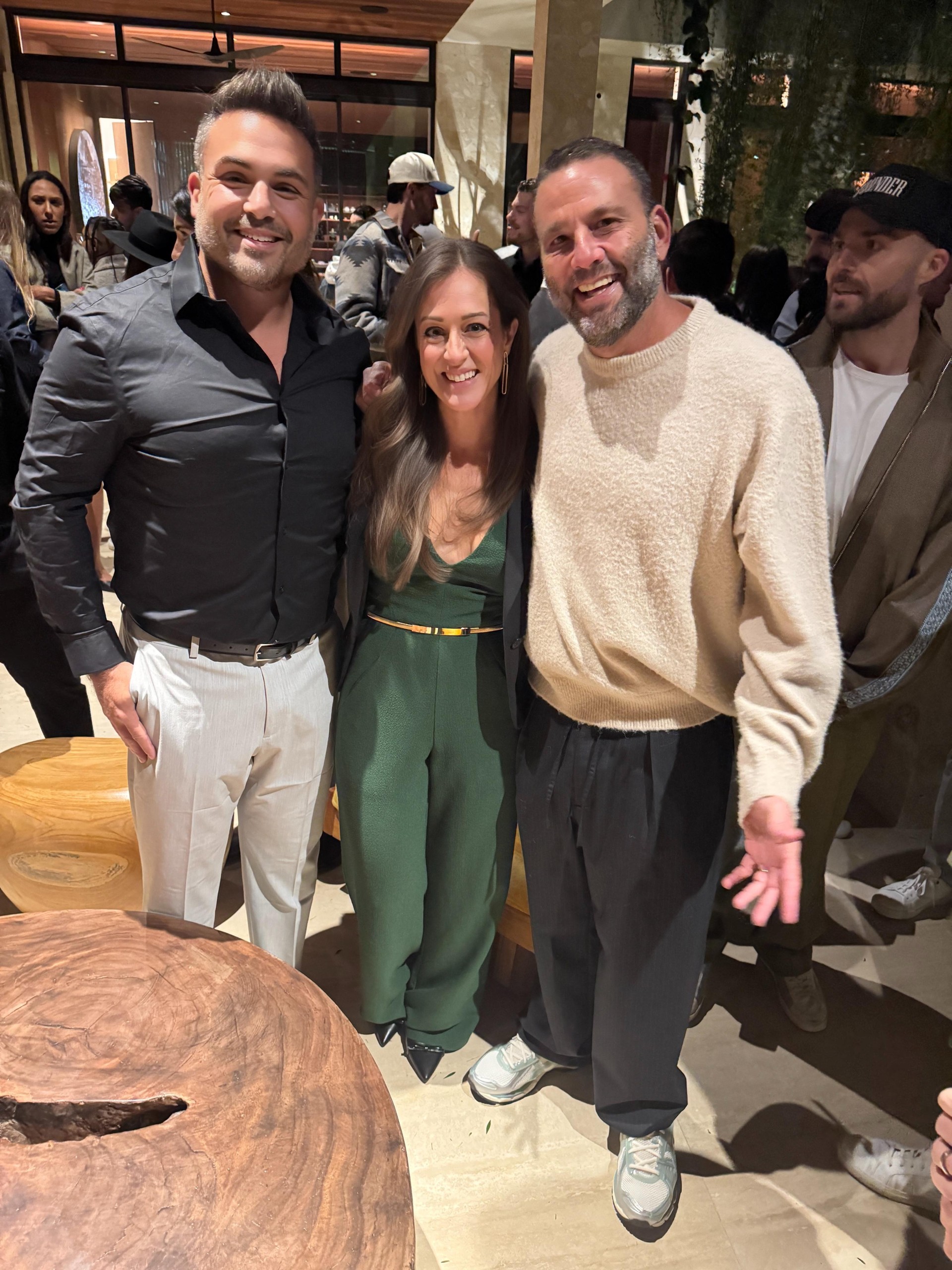
Seventy-five founders gathered at the home of David Grutman and Isabela Rangel Grutman in Miami Beach.
The evening was hosted in partnership with The Founders Club, a community intentionally built by Aaron Spivak and Chris Meade for operators who are past theory and deep in execution. This is not performative networking. It is a space where builders compare notes on capital allocation, hiring mistakes, exits, and second-order consequences. The impact compounds quickly because people sharpen faster when they are surrounded by others who are free to be candid.
The setting itself was intentional. Not extravagant. Not performative. Designed to hold conversation, not distract from it.
That distinction matters, because the real lesson of the night had nothing to do with hosting a dinner. It had everything to do with how operators think about space, capital, and experience across every domain they touch.
Dave’s "unreasonable hospitality" lives inside his restaurants and clubs. The home simply revealed the same operating system, applied elsewhere.
Real estate as both capital and environment
Before nightclubs, Michelin buzz, or celebrity density, there is dirt and timing.
Dave and Isabela’s home was not acquired as a trophy. It was purchased in late 2020, during peak uncertainty, out of a distressed foreclosure. Hospitality was under pressure. Miami had not yet entered its relocation-fueled boom. Closings were delayed. Risk felt elevated.
They moved anyway.
This is what experienced operators understand about real estate. It is not just an asset class. It is a mechanism for deploying and redeploying capital while simultaneously shaping the way you live.
They sold a prior home, redeployed liquidity, and leaned into dislocation. Buy when conviction is required. Improve with discipline. Hold only as long as the asset serves both financial and life goals. Reinvest without sentimentality.
That is wealth architecture, not speculation.
Overseeing a single-family waterfront development of this scale is not passive ownership. It is active orchestration. Architecture that respects light and flow. Design that supports gathering without chaos. Sightlines that calm rather than stimulate. Transitions that reduce friction between indoor and outdoor space.
Where you live directly affects how you think, regulate stress, host relationships, and recover between decisions. Homes are not neutral containers. They either support wellbeing or erode it.
This is why real estate sits at the center of how we think about wealth. Not as a quick win, but as a long-term foundation. For us, long-term real estate investments are one of the core pillars of our retirement plan and how we think about generational wealth. Assets that produce cash flow, appreciate over time, and create optionality. Structures that outlast market cycles and give future decisions more room to breathe.
Operators stack wins before they scale brands
Dave started as a bartender. Actually behind the bar. Making drinks. Reading the room. Understanding what makes people stay versus what makes them leave. He stacked wins. Bartender to bar manager to nightclub operations to hospitality empire. Each step taught him something the next level required.
That progression explains everything about how he operates today.
Dave talks openly about growth paths and about showing appreciation through action, not words. His most cited principle says it all. Walk guests to the restroom, do not point to it. That is not hospitality theater. It is operational excellence embedded into company DNA. When standards are modeled at the top, they scale without dilution.
Last night, that resonated. I recognized this path as he detailed his own, because I lived my own version of it.
Sales. Management. Recruiting. Training. Underwriting. Processing. CRM architecture. Integrating Salesforce with Encompass. Building systems that eventually supported a seven-figure exit from Fortren Funding.
At Princeton Mortgage, we did not chase growth without structure. We protected standards. We achieved industry-leading NPS not through incentives, but through clarity. Just being "in the room" with Mark D. Gordon & Rich Weidel was enough to shift everything I thought about company culture and what it really meant to foster an environment where motivated people could thrive. We paid people to leave if it was not a fit, because A players do not thrive in mixed-standard environments.
Similarly, this is why LIV, Komodo, and Papi Steak scale without losing soul. Hospitality is infrastructure, not personality.
Powerhouse partnerships and parallel lanes
Dave and Isabela do not operate as a single identity. They operate as aligned builders.
Isabela contributes creatively and strategically across Groot Hospitality while building her own ventures. She is not adjacent to the business. She is part of the architecture.
Mark and I live this same model. Separate lanes. Shared values. Multiple businesses. Three daughters watching how ambition and partnership coexist in real time.
Raising girls, while building, forces honesty. It removes performative balance. It demands integration. Children do not absorb what you say. They absorb how you move.
Home, not just in architectural design, matters here too. Environment shapes nervous systems. Design influences presence. Flow affects how families gather, disconnect, and reset. This is not lifestyle content. It is structural thinking applied to life.
Intuition, exits, and decision ownership
Dave relies heavily on intuition. Once he decides, he surrounds himself with smart people and invites them to challenge him. Not to weaken conviction, but to pressure-test it.
He spoke about exiting an investment early that later attracted massive capital. No regret. No second-guessing. The decision made sense at the time, for the goals he had then.
You do not need to be the last person standing to win.
Negotiate the best deal available. Own it. Learn from it. Move on cleanly. Operators understand this because they live inside incomplete information daily. Waiting for certainty is not strategy. It is avoidance.
As Mark said afterward, “I agreed with everything he said. I listened to every word.”
That recognition only happens when you hear your own operating principles reflected back by someone who has lived them longer.
From Tunnel to LIV
When Founders Club announced the dinner at The Grutman's home , we were immediately intrigued. We have loved LIV for more than fifteen years. Long before it became shorthand for Miami nightlife, it was already a masterclass in energy, flow, and experience done right.
Growing up in New Jersey, weekends for me meant trips into New York City to place like Tunnel and Exit. Underground rooms or nightclubs where music felt like religion and DJs controlled the energy of the space. Those nights shaped how I understand experience design. Sound, lighting, layout, crowd flow, and timing all working together. When everything aligns, people do not just attend an event, they are the event. They feel part of something.
20 years later I'm still in love with a nightclub. Our friends own Trio Charleston and Trio Charlotte, and a growing portfolio of bars and lounges, including Blue Door and Groovers. They understand what Dave pioneered long ago. Clubs are not about bottle service or headliners. They are about identity, belonging, and the deliberate curation of moments people remember for years.
That understanding deepened further when I watched Eric Gussin co-produce a major festival in Chicago. Behind the scenes, it was pure operations. Thoughtful artist infrastructure. Private trailer layouts that worked. Simple design choices that made performers feel supported without overproduction. Infrastructure. Crowd control. Hundreds of contract workers moving in sync for a single weekend.
That weekend, while others were celebrating the outcome, I kept finding myself pulled into side conversations, grabbing someone’s ear to ask how the production actually worked. Later that night, we met with a leadership member from Live Nation Entertainment at a club. The conversation stayed where my curiosity naturally goes. What it takes to move tens of thousands of people through an experience that feels effortless and memorable. My first question was, “What is the liability insurance like for something like this?”
I saw the operational complexity required to create something that looks simple on the surface, the part most people never see, but always feel.
The foundation determines everything
At its core, Dave Grutman’s philosophy is simple and demanding. Make everything personal. Build real relationships. Play the long game. Pay attention to the details that compound over time. Hospitality is not a tactic for him. It is a way of moving through the world. Adding value without immediate expectation. Building ecosystems where people feel seen, supported, and connected. That mindset carries through his businesses, his real estate decisions, his partnerships, and the way he prioritizes family and personal health as inputs to clarity and energy. Persistence, intentionality, and continuous refinement matter more than flash. You learn from what fails. You adapt. You keep going.
That is why his real estate philosophy mirrors everything else he has built. The foundation determines everything. He buys with vision, develops with precision, sells with timing, and reinvests with discipline. Not as transactions, but as long-term structures that support life, relationships, and optionality. This is not hospitality as performance or real estate as accumulation. It is architecture. Of capital. Of experience. Of people. And when the foundation is right, everything built on top of it holds.