
How Buyers Use Case Studies During the Buying Process
Case stories are rarely read in one sitting. They are encountered gradually, often alongside other information, and revisited as a decision takes shape.
This is an important point, because many businesses treat case studies as static assets.
They are published, linked once, and assumed to have done their job.
In reality, buyers use case stories differently.
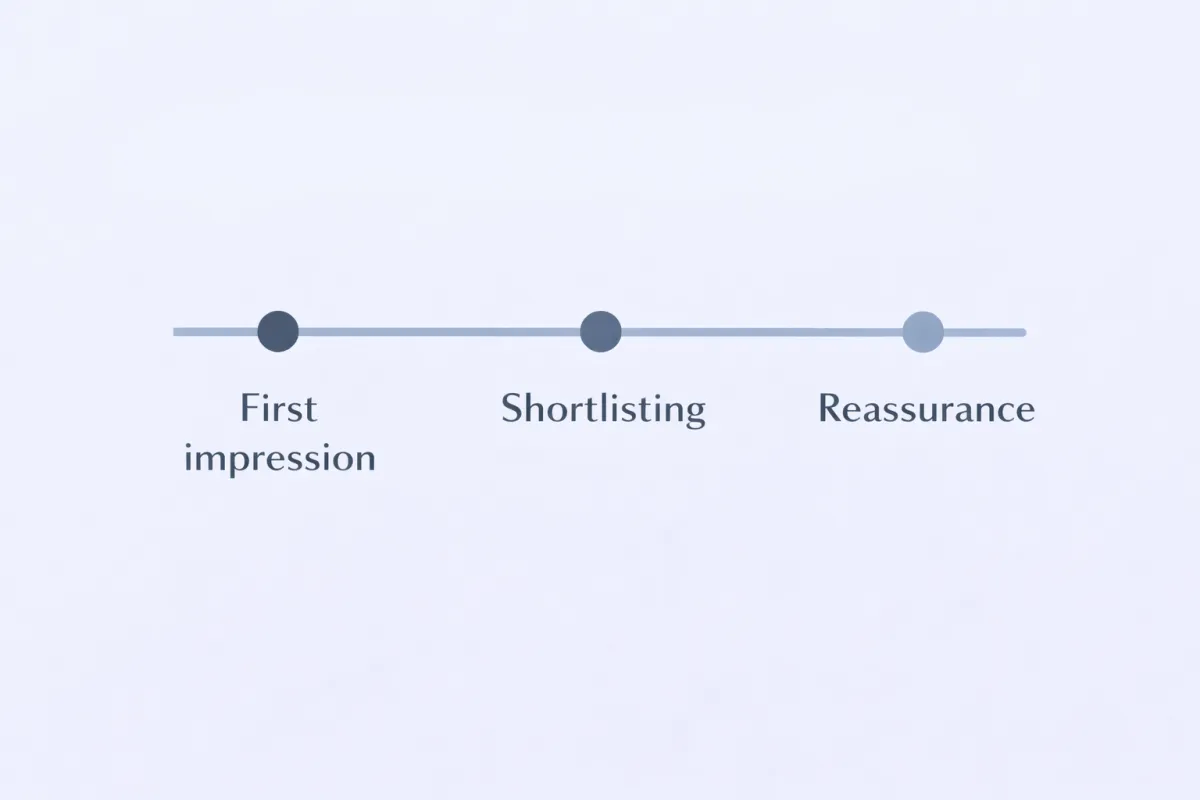
Early in the buying process, a prospect may skim a case story while researching options. At this stage, they are not looking for depth. They are simply trying to understand whether a supplier feels relevant and credible enough to consider further.
Later, during shortlisting, the same case story may be revisited.
This time, the reader is more attentive. They are looking for reassurance that the supplier understands situations like theirs and can navigate similar constraints.
Closer to a decision, case stories often play a quieter but more significant role. They are used to reduce remaining doubt and confirm that the choice feels sensible rather than risky.
This behaviour explains why placement and accessibility matter so much. Case stories that are difficult to find, poorly organised, or treated as one-off downloads are less likely to support this kind of repeated use.
It also explains why consistency matters. If a case story feels different each time it is encountered or appears disconnected from other information, its value diminishes.
Effective case stories are designed to be returned to. They reward rereading rather than requiring a single, uninterrupted moment of attention.
Understanding how prospects use case stories helps explain why some assets quietly support decisions, while others fail to influence them at all.
Repeated exposure only works if the story holds attention.
The Difference Between a Case Story That Gets Read and One That Gets Skipped.