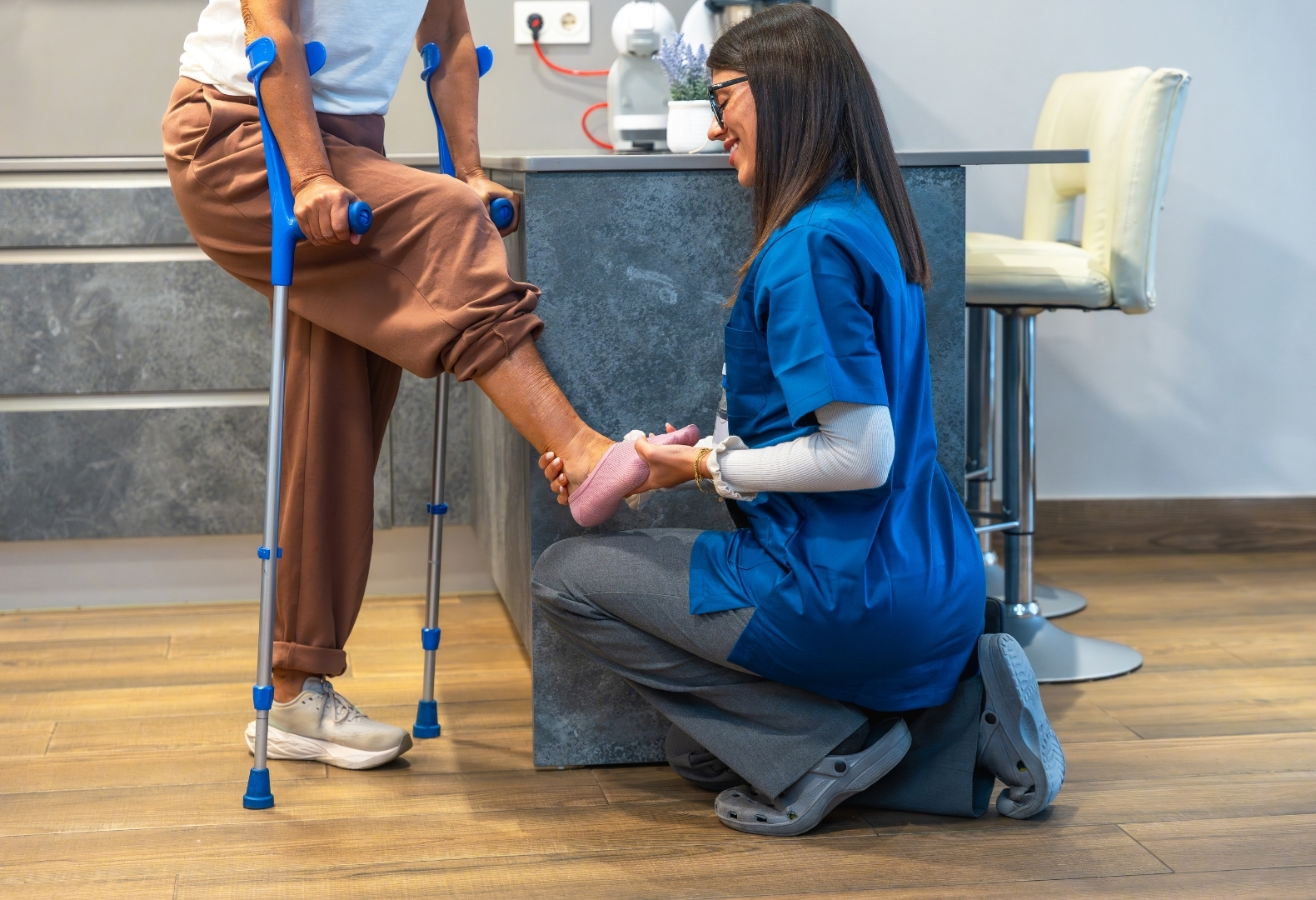
The Most Effective Approaches in Today’s Sports Injury Rehabilitation
An injury changes more than how the body feels. It changes how movement is approached, how training is structured, and how confidence shows up under load. Modern sports injury rehabilitation has moved away from passive rest and isolated fixes, focusing instead on strategies that restore function, reduce inflammation, and help the body adapt again.
Effective rehabilitation recognizes that recovery is not linear. Pain, stiffness, and performance setbacks often reflect unresolved tissue stress, altered mechanics, and delayed healing rather than a lack of effort. Addressing those factors together creates a clearer path forward.
Why Sports Injury Rehabilitation Must Address More Than the Injury Site
Injuries rarely exist in isolation. A strained knee may reflect limited hip mobility. Shoulder pain may be influenced by spinal stiffness or wrist mechanics. When rehabilitation focuses only on the painful area, compensations often remain in place.
A comprehensive sports injury rehabilitation approach looks at how force moves through the entire body. Joint mechanics, soft tissue quality, and nervous system input are evaluated together to identify why stress accumulated in the first place.
This broader view explains how chiropractic adjustments help with sports injuries by restoring joint motion and reducing mechanical stress that overloads surrounding tissue. When joints move efficiently, muscles no longer need to guard excessively, and recovery becomes more sustainable.

Hands On Care and Tissue Restoration in Sports Injury Rehabilitation
Hands on care remains a cornerstone of effective rehabilitation. Manual techniques address soft tissue restrictions that limit circulation, reduce elasticity, and interfere with movement quality.
Adhesions often develop after injury or repeated strain. These restrictions bind tissue layers together, increasing resistance during movement and slowing recovery. Hands on care works to restore tissue glide so muscles and connective tissue can function normally again.
This approach also supports nerve mobility. When nerves move freely through surrounding tissue, muscle coordination improves and protective tension decreases. The result is smoother movement and reduced recurrence of pain.
The Role of Extremity Focus in Sports Injury Rehabilitation
Spine centered care alone does not fully address how injuries develop. Extremities absorb and transmit force during nearly every athletic movement. When these joints lose mobility or alignment, stress shifts elsewhere.
Addressing how a hand and foot chiropractor evaluates and treats extremity mechanics plays an important role in rehabilitation outcomes. Restoring function in the shoulders, hips, knees, ankles, wrists, and jaw helps normalize movement patterns and reduce compensatory strain.
This whole body focus allows rehabilitation to support performance rather than simply resolving symptoms.
Decompression and Pressure Reduction During Recovery
Compression related stress is common after injury, especially when inflammation and altered mechanics increase joint loading. Spinal pressure can contribute to nerve irritation, reduced mobility, and delayed recovery.
Non-surgical spinal decompression offers a way to reduce this pressure without invasive intervention. Controlled traction supports disc hydration and creates space around irritated structures, improving comfort and movement tolerance.
Reducing compression allows hands on care and movement based strategies to work more effectively by minimizing ongoing mechanical irritation.
Shockwave Therapy and Tissue Responsiveness
Some injuries stall because tissue stops responding to traditional care. Circulation slows, cellular signaling becomes inefficient, and healing plateaus.
Shockwave technology supports tissue responsiveness by delivering mechanical stimulation at the cellular level. This input encourages circulation and metabolic activity in areas affected by chronic stress or micro trauma.
Athletes involved in high-impact training often explore the benefits of shockwave treatment for martial arts enthusiasts, where repeated force creates dense tissue stress that resists conventional approaches. Improved tissue responsiveness allows rehabilitation progressions to resume instead of remaining stalled.
Structured Progressions in Sports Injury Rehabilitation
Recovery improves when care follows a clear structure. Random sessions without progression often lead to inconsistent results.
A well-designed sports injury treatment program integrates hands-on care, joint mechanics, tissue stimulation, and movement progression into a cohesive plan. Each phase builds on the last, supporting adaptation rather than overload.
This structure allows rehabilitation to transition smoothly from pain management to performance restoration.

Nutrition and Inflammation Management
Recovery does not happen only during treatment sessions. Internal factors strongly influence how tissue responds to care.
Understanding the role of nutrition in sports injury recovery helps reduce systemic inflammation and support oxygen delivery at the cellular level. Proper nutrition improves tissue adaptability, enhances circulation, and supports the effectiveness of hands-on and movement-based therapies.
When internal stress is reduced, external treatments tend to produce more consistent and lasting results.
Why Modern Sports Injury Rehabilitation Prioritizes Integration
No single modality resolves complex injuries. Sustainable recovery requires coordination between joint mechanics, soft tissue health, nervous system regulation, and lifestyle support.
An integrated chiropractic recovery plan brings these elements together in a way that supports both healing and long-term performance. This approach helps reduce setbacks and allows individuals to return to activity with confidence rather than hesitation.
Moving Forward With a Smarter Rehabilitation Strategy
Effective sports injury rehabilitation focuses on restoring function, not just eliminating pain. Hands on care, decompression, shockwave therapy, and structured progressions work together to reduce inflammation, improve tissue quality, and support efficient movement.
At Optimal Health Members, we provide progressive, non-surgical care that integrates chiropractic treatment for the spine and extremities, SoftWave tissue regeneration technology, advanced decompression, red light therapy, and nutritional support.
Our goal is to help people recover fully so they can return to the activities they love without lingering limitations. Begin a structured, non-surgical path toward better movement and lasting recovery: book a session today.
