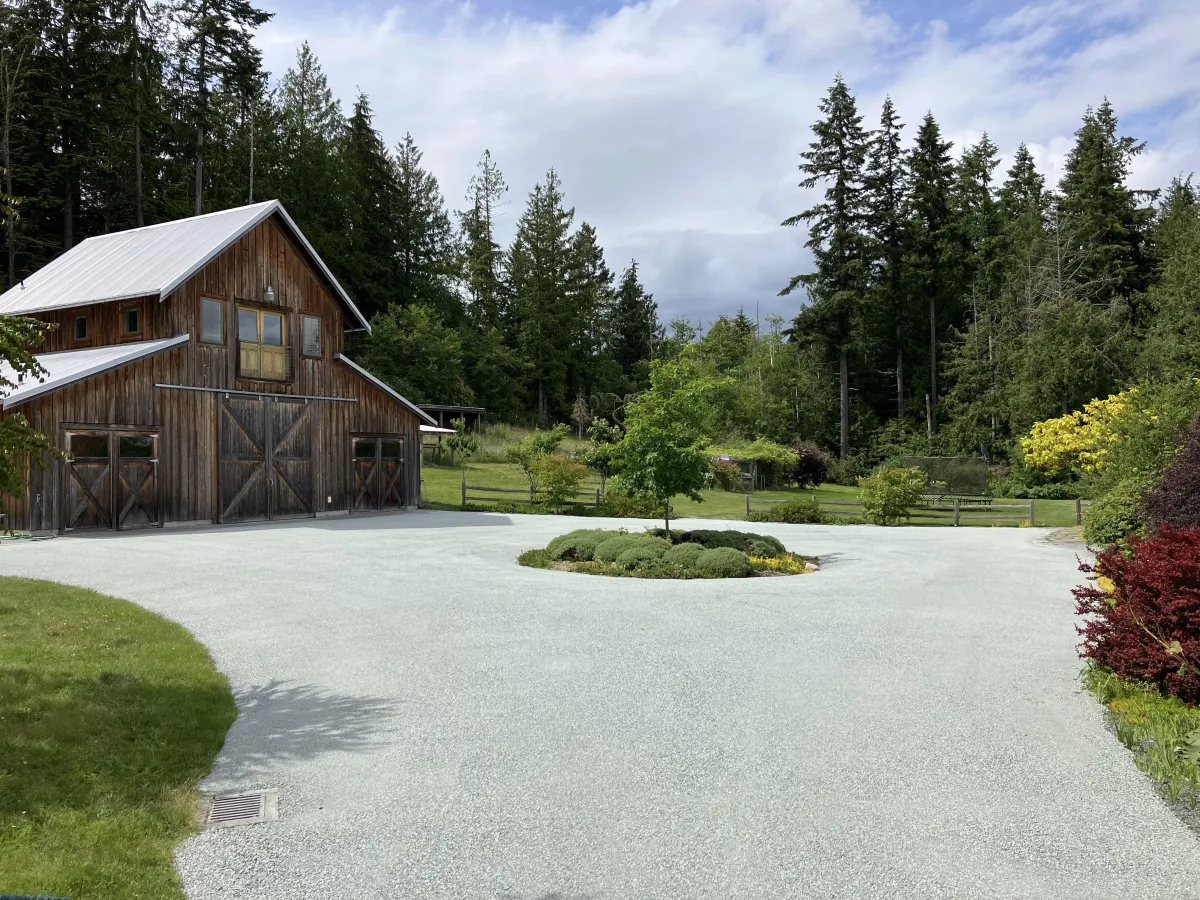
The Hidden Art Behind a Great Gravel Driveway
The Hidden Art Behind a Great Gravel Driveway (And Why Drainage Is Everything)
Most people think doing a gravel driveway is pretty simple.
You bring in the rock, spread it around, roll it out, and boom — done.
Honestly, I used to think the same thing before I got into this business.
But after building hundreds of driveways out here in the PNW — in rain, mud, clay, and every kind of “surprise” Whidbey Island soil can throw at you — I can tell you there’s a whole lot more going on under those tires.
A good gravel driveway is basically a recipe:
Part gravel. Part grading. Part drainage. And part “reading the land like it’s trying to tell you something.”
And that last part? That’s the art of it.
Shaping and Drainage Matter More Than People Think
Here’s something nobody realizes until they’ve dealt with a few winters:
Water is the #1 enemy of a gravel driveway.
Not cars.
Not kids on bikes.
Not your neighbor who turns around in your driveway without asking.
Water.
If the driveway isn’t shaped correctly, water does whatever it wants — usually finding the one low spot you didn’t notice and turning it into a pothole the size of a coffee cup. Or worse, it washes out all the good gravel you just paid for.
A proper crown and proper drainage can save a driveway.
No joke — it can add years to its life.
Reading the Terrain (aka: The Part Non-Contractors Don’t See)
One thing we hear all the time is:
“I had a guy with a machine come do this last year, and it looked good at first… but then the rain hit.”
And that’s the difference between someone who runs a machine…
and someone who actually knows how a driveway should work.
When we walk a property, we’re looking at every detail:
Where is water already trying to flow?
What’s the soil type — clay, sand, loam, or “mystery material”?
Are there tire ruts or spots where people always cut corners?
Is the ground soft underneath?
Does the driveway need more crown or a place for water to “escape”?
None of that shows up on a blueprint.
It comes from experience — and honestly, a little bit of instinct built from years of watching water behave like it has a personality.
The Gravel Matters, But It’s Not the Magic Fix
People always ask:
“What gravel do you recommend?”
And sure — picking the right gravel matters.
We use a mix depending on the project: 5/8” minus for most driveways and 3/8” minus on steeper parts so it locks together better.
But even the best gravel won’t help if the driveway isn’t shaped correctly.
Think of it like this:
Good gravel is the skin.
Drainage is the skeleton underneath.
You need both if you want the driveway to last.
What Makes Us Different
We try not to be “just another contractor with equipment.”
There are plenty of those.
What sets us apart is that we treat each driveway like its own little ecosystem.
Every one is different.
Every one needs its own approach.
We look at the land, the soil, the weather, the traffic, the slope — everything — before we even touch the gravel. That’s why our driveways hold up so well, and why a lot of our customers come back years later instead of months later.
We take pride in doing it right, not just doing it fast.
If Your Driveway Is Fighting With the Rain, We Can Help
Potholes, washouts, soft spots — none of it happens “randomly.”
It’s almost always a drainage or shaping issue.
And luckily, that’s the part we’re really good at.
If you want someone who will actually take the time to shape the driveway the right way — not just dump material and disappear — we’d be happy to help.
Call, text, or message us anytime.
I
