
Our Blogs
Lorem ipsum dolor sit amet, consectetuer adipiscing elit. Aenean commodo ligula eget dolor. Aenean massa. Cum sociis natoque penatibus et magnis dis parturient montes, nascetur ridiculus mus.
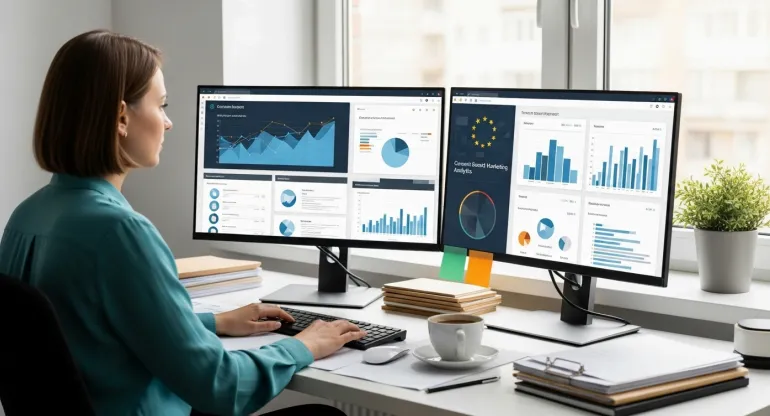
The Death of Cookies: How to Build Your Brand's First-Party Data for Long-Term Growth
(1) Question: What is “First-Party Data”?
Answer: Data you collect directly from your audience through your own channels, like website sign-ups, purchase history, or app usage.
(2) Question: Why is First-Party Data now essential?
Answer: It is the most accurate and privacy-compliant data source, replacing the unreliable third-party cookies for personalization and targeting.
(3) Question: What’s the best way to encourage customers to share their data?
Answer: Offer a clear value exchange, such as exclusive content, a discount, or a better, more personalized service, in exchange for their consent.
(4) Question: What immediate step should a business owner take?
Answer: Centralize the data you already own (CRM, website analytics) and clearly map out all your customer touchpoints for collection.
Third-party cookies powered digital advertising for two decades; that era ends in 2025.
Google announced the phase-out. Safari and Firefox already block them. Privacy regulations across Europe are tightening continuously. The tracking mechanisms that allowed businesses to follow customers across the internet are disappearing rapidly.
Small UK businesses face a fundamental shift. The advertising strategies that previously delivered customers now produce diminishing returns. This transition creates two distinct paths.
Businesses clinging to disappearing tracking methods (cookies)
Businesses building first-party data infrastructure.
First-party data means information customers provide directly to your business rather than data collected through external tracking. Email addresses. Purchase histories. Preference information. Behavioral data from your own platforms. This information belongs to you, operates independently of browser policies, and strengthens rather than weakens over time.
Understanding how to collect, manage, and activate first-party data separates businesses that thrive from those struggling in the post-cookie world.
Why Cookies Are Going Away
Cookies are tiny files that websites put on your computer to track what you do online. They helped businesses show you ads for things you looked at on other websites. That's how you search for trainers once and then see trainer ads everywhere for the next week.
People got uncomfortable with this tracking. Privacy laws like GDPR in the UK made it harder to track customers without their permission. Apple, Mozilla, and Google listened and started blocking these tracking cookies. It's not coming back.
Small business owners relied on this tracking without realizing it. Facebook ads worked better because they could follow people around. Google ads showed up for people who visited your website but didn't buy. That all becomes much harder without cookies.
Big companies with huge advertising budgets will figure out alternatives. Small businesses that adapt now actually get an advantage. The solution is called first-party data, and it's simpler than it sounds.
What First-Party Data Actually Means
First-party data is just information customers give you directly. Not data bought from Facebook or Google. Not tracking what people do on other websites. Just the information people share with your business.
Think about what you already collect.
Email addresses are collected when someone signs up for your newsletter.
Names and addresses when they buy something.
Their purchase history in your shop.
What pages do they look at on your website? Which emails they open and click. All of this is first-party data.
This information is more valuable than tracking cookies ever were. Someone who gives you their email address actually wants to hear from you. Someone who buys from you three times clearly likes your products. Someone who opens every email you send pays attention to what you say.
The best part? This data belongs to you. Google can't take it away. New privacy laws don't affect it because customers choose to share it. Browser updates don't break it. You control it completely.
Small businesses already collect some of this data. They just don't organize it properly or use it well. That's the real opportunity.
How to Start Collecting Customer Data (The Right Way)

You need to give people a reason to share their information. Nobody hands over their email address for nothing anymore. Too much spam. Too many pointless newsletters. You need to offer something actually useful.
Create something people actually want. Write a helpful guide about your industry. Make a template that customers can use. Build a simple calculator or tool. Put it on your website and ask for an email address to download it. If it genuinely helps people, they'll happily trade their email for it.
Let people create accounts on your website. This works especially well if you sell products online. Accounts let customers track their orders, save their preferences, and check out faster next time. Each time they use their account, you learn more about what they like.
Ask what people want to hear about. Give customers choices. Let them pick which topics interest them. Let them choose how often they want emails. This works much better than blasting everyone with the same message. People appreciate the control, and you get clear information about their interests.
Request feedback after purchases. Send a simple survey asking about their experience. Keep it short. Three questions maximum. This gives you valuable information about what works and what doesn't. Plus, people feel heard when you ask their opinion.
The pattern is simple. Offer real value. Get information in exchange. Use that information to serve customers better. Repeat.
Where to Store All This Information
Collecting data doesn't help if you can't find it later. You need simple systems to keep everything organized.
Get a CRM system. CRM stands for Customer Relationship Management. These are platforms that store all your customer information in one place. HubSpot, Zoho, and Mailchimp all offer free versions that work fine for small businesses starting out. They track who your customers are, what they've bought, and how you've communicated with them.
Use proper email marketing tools. Tools like Mailchimp or Klaviyo do more than just send emails. They track who opens your emails, who clicks on links, and who ignores you completely. This behavior tells you what content people actually care about. You can then send more of what works and less of what doesn't.
Set up Google Analytics properly. This free tool shows you what people do on your website. Which pages do they visit? How long do they stay? Where do they come from? The new version, Google Analytics 4, works without tracking cookies. You just need to set it up correctly.
Connect your shop to your email system. If you sell online, your shop system, like Shopify or WooCommerce, should talk to your email system. When someone buys something, that information should automatically update their customer profile. No manual work. No spreadsheets. Everything connects automatically.
You don't need expensive software. Start with free tools. Upgrade only when you actually need more features. The important thing is using systems that connect together rather than keeping information scattered across different places.
How to Use the Data You Collect
Data sitting in a system helps nobody. You need to put it to work

Send different emails to different people. Stop sending the same message to everyone. Someone who bought from you last week should get different emails than someone who hasn't bought in six months. Your email system can handle this automatically once you set it up.
Recommend products based on past purchases. If someone bought a coffee machine from you, email them about coffee beans or filters later. If they bought running shoes, tell them about running socks. Use what you know about their interests to suggest relevant products.
Follow up with people who almost bought. When someone adds items to their cart but doesn't complete the purchase, send them a reminder. A simple email saying "you left something in your cart" brings back a surprising number of customers. This works better than any cookie-based retargeting ad.
Show customers you remember them. When someone returns to your website, recognize them. Show their account information. Suggest products similar to what they looked at before. Make them feel like you actually know who they are.
Find more people like your best customers. Upload your customer list to Facebook or Google. They'll find other people with similar characteristics and show your ads to them. This works without tracking cookies because you're using your own customer data.
The key is relevance. Use what you know to be more helpful, not more annoying. People don't mind marketing that actually relates to their interests.
Simple Framework: Value, Exchange, Trust
Every successful first-party data strategy follows three basic principles.
Value. Only ask for information you'll actually use. Every form field you add makes fewer people to complete it. If you won't use someone's phone number, don't ask for it.
Exchange. Give people something worth the information they provide. Their email address for a useful guide.
Trust. Be clear about how you'll use their information. Don't sell their details to other companies. Don't spam them. Honor their preferences when they say they want less email.
Review your data collection monthly. Ask these questions:
Are we collecting information we never actually use?
Do we give people enough value for what we ask?
Are we respecting customer privacy and preferences?
Honest answers keep your approach fair and effective.
Final Thoughts
Cookies going away isn't a disaster. It's a reset that advantages businesses willing to do things properly.
Companies that built everything on tracking cookies are scrambling. They relied on following people around the internet rather than building real relationships. Their costs are rising and results are falling. Businesses building first-party data are strengthening their position. They own their customer relationships. They understand their audience directly. They don't depend on platforms that change rules constantly.
We help UK small businesses implement AI marketing systems, delivering measurable operational improvements. Chatbots convert website visitors into qualified leads. Automated email sequences maintain customer engagement. AI content tools preserve your brand voice while scaling production. Working systems return time while improving results.
Schedule your free AI marketing audit. We analyze your current marketing operations, identify immediate automation opportunities, and demonstrate which specific tools address your operational bottlenecks.
Let’s talk.
Check Our Other Blogs
Beyond Cookies: Building Trust and Hyper-Personalization with First-Party Data
🚀 Want more high-impact guides like this? Stay tuned for next week’s edition where we dive further into the [topic]. Subscribe now and stay on top of the automation world.


Frequently Asked Questions
Q:
Lorem ipsum dolor sit amet, consetetu sadipscing elitr, sed diam nonumy!
Lorem ipsum dolor sit amet, consetetur sadipscing elitr, sed diam nonumy eirmod tempor invidunt ut labore et dolore magna aliquyam erat, sed diam voluptua. At vero eos et accusam et justo duo dolores et ea rebum. Stet clita kasd gubergren, no sea takimata sanctus est.
Q:
Lorem ipsum dolor sit amet, consetetu sadipscing elitr, sed diam nonumy!
Lorem ipsum dolor sit amet, consetetur sadipscing elitr, sed diam nonumy eirmod tempor invidunt ut labore et dolore magna aliquyam erat, sed diam voluptua. At vero eos et accusam et justo duo dolores et ea rebum. Stet clita kasd gubergren, no sea takimata sanctus est.
Q:
Lorem ipsum dolor sit amet, consetetu sadipscing elitr, sed diam nonumy!
Lorem ipsum dolor sit amet, consetetur sadipscing elitr, sed diam nonumy eirmod tempor invidunt ut labore et dolore magna aliquyam erat, sed diam voluptua. At vero eos et accusam et justo duo dolores et ea rebum. Stet clita kasd gubergren, no sea takimata sanctus est.
Q:
Lorem ipsum dolor sit amet, consetetu sadipscing elitr, sed diam nonumy!
Lorem ipsum dolor sit amet, consetetur sadipscing elitr, sed diam nonumy eirmod tempor invidunt ut labore et dolore magna aliquyam erat, sed diam voluptua. At vero eos et accusam et justo duo dolores et ea rebum. Stet clita kasd gubergren, no sea takimata sanctus est.
Get in touch with us
Lorem ipsum dolor sit amet, consectetuer adipiscing elit. Aenean commodo ligula eget dolor. Aenean massa. Cum sociis natoque penatibus et magnis dis parturient montes, nascetur ridiculus mus.
Donec quam felis, ultricies nec, pellentesque eu, pretium quis, sem. Nulla consequat massa quis enim. Donec pede justo, fringilla vel, aliquet nec, vulputate eget, arcu. In enim justo, rhoncus ut, imperdiet.
020 3633 5331
Suite b, 42-44 Bishopsgate
- Monday - Friday, 8:00 am - 5:00 pm
Learn More

Follow Us
Follow Us
Lorem ipsum dolor sit amet, consectetuer adipiscing elit. Aenean commodo ligula eget dolor. Aenean massa. Cum sociis natoque penatibus et magnis dis parturient montes, nascetur ridiculus mus. Donec quam felis, ultricies nec, pellentesque eu, pretium!
Services
More
Contact Us
020 3633 5331
Suite b, 42-44 Bishopsgate
- Monday - Friday, 8:00 am - 5:00 pm
© Copyright 2025. Company Name. All rights reserved.