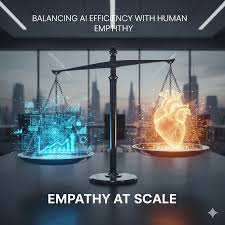
Balancing Efficiency with Empathy in Mindful Leadership
Leadership requires more than mere efficiency; it requires a commitment to cultivating an environment of shared awareness and a sophisticated understanding of interconnectedness. Mindful leadership, at its core, moves beyond traditional models focused on productivity to emphasize not just self-awareness, but a deep understanding of the emotional and psychological landscape of the entire organizational system. This necessitates a shift from linear, goal-oriented strategies to a holistic approach that integrates nuanced empathy with strategic vision.
Beyond Short Term Efficiency Towards Long Term Sustainability
It's incorrect to assume efficiency and empathy must be balanced against each other as they are not opposing forces. True mindful leadership recognizes that efficiency is inextricably linked to synergistic relationships built upon mutual understanding.
By creating a culture of psychological safety and shared understanding, leaders unlock intrinsic motivation, creativity, and collaborative problem-solving. This approach moves beyond more transactional interactions, to enable a dynamic where individual and collective well-being are prioritized, leading to sustainable individual and organizational growth.
The Presence and Systemic Insight of Leadership
Mindfulness, as applied to leadership, is not merely a set of techniques but a cultivated state of embodied awareness, which involves not only being present in the moment but also understanding the implications of one's actions and decisions. It requires developing a heightened sensitivity to the subtle cues of situational dynamics, recognizing the emotional climate, and understanding the impact of leadership behaviors on the shared psychological landscape.
Moving Beyond Linear Efficiency
Over-reliance on linear efficiency models creates systemic blind spots, leading to a work environment that is often dehumanized where employees are viewed as resources rather than being integral to delivering profitable outcomes. This approach disregards the intricate web of emotional and relational dynamics that drive performance, ultimately undermining long-term success.
Empathy, in this context, is not a soft skill but a strategic imperative. It involves understanding the emotional landscape of the organization, recognizing the impact of leadership decisions on individual and collective well-being, and engendering a culture of collaborative and social effectiveness. This requires a deep understanding of people and the team with the ability to navigate the interpersonal relationships involved to create a shared sense of purpose and belonging.
Creating a culture of open communication involves establishing spaces where open dialogue and diverse perspectives are encouraged and valued. This means moving beyond hierarchical communication so that a more trusting, collaborative environment can emerge.
Embracing Systemic Transformation
Implementing mindful leadership requires a systemic approach to change, addressing not only individual behaviors but also organizational structures and cultural norms. This involves challenging ingrained assumptions at all levels in the organization, so that a culture of continuous learning can emerge and recognizing that resistance is often a symptom of conflicting viewpoints around leadership.
The impact of mindful management requires a shift from traditional Key Performance Indicators and objectives to other metrics that reflect systemic well-being. This includes measuring relational trust, collective creativity, and the organization's capacity for adaptive learning. Feedback mechanisms should move beyond individual evaluations to include systemic assessments that capture the overall emotional and psychological climate. These are a lot less easy to quantify and measure.
Mindful leadership is a continuous process of self-reflection, systemic awareness, and relational cultivation. It requires all leaders to embrace complexity, navigate ambiguity, and encourage a culture where individual and collective well-being are interwoven with organizational success. This approach moves beyond transactional leadership, to nurture an environment where purpose, meaning, and interconnectedness drive sustainable transformation.
Robin Hills is an emotional intelligence leadership coach, trainer and facilitator who helps people lead with clarity, empathy, and confidence. His work spans global workshops, online courses, and keynote talks that bring human centered skills to life for diverse audiences.
His company is Ei4Change, an award-winning source of emotional intelligence courses used by learners and organizations around the world.
Further details about robin and Ei4cahnge can be found at ei4change.com or emotional.intelligence.courses


© 2023 Sankofa Healing and Enrichment, Inc. - All Rights Reserved,
(850) 273-8786