Prophetic Leaders in African and Afro-Diasporic Hebraic Movements
William Saunders Crowdy
• Time Period: Lived 1847–1908; active as a religious leader in the 1890s–1900s .
• Country/Region: United States (born into slavery in Maryland; ministry began in Kansas and later headquartered in Washington, D.C.) .
• Spiritual Experience: In 1896 he claimed to receive a divine revelation informing him that African Americans are descendants of the ancient Israelites . This vision prompted him to preach a return to Hebraic teachings among his people.
• Role in Community: Founder and prophetic leader of the Church of God and Saints of Christ (established 1896). He blended Old Testament practices (such as Sabbath observance on Saturday, dietary laws, and circumcision) with Christian elements like baptism . Crowdy referred to himself as a “Prophet” and taught adherence to the Ten Commandments and love among his followers .
• Legacy/Impact: Crowdy is regarded as a pioneer of the Black Hebrew Israelite movement. His church became one of the largest Black Hebrew organizations , spreading to multiple U.S. cities and even abroad in Africa . After his death in 1908, the movement continued to grow under successive leaders, establishing dozens of congregations (“tabernacles”) by the mid-20th century . Crowdy’s work laid a foundation for African-American adoption of Hebraic identities and inspired later figures in Afro-diasporic Hebraic traditions .
Frank S. Cherry
• Time Period: Flourished in the late 19th and mid-20th centuries (founded his movement in 1886 and led it until his death in 1963) .
• Country/Region: United States (initially in the American South – Chattanooga, Tennessee – later Philadelphia, Pennsylvania) .
• Spiritual Experience: Cherry claimed to have received visions revealing that African Americans are the true descendants of the biblical Hebrews . He recounted a prophetic testimony that God showed him the identity of black people as Israelites, which became the cornerstone of his teachings.
• Role in Community: Founder and self-proclaimed prophet of the Church of the Living God, the Pillar Ground of Truth for All Nations (established 1886) . He taught a mixture of Judaic and Christian doctrines: his congregation observed elements of Judaism (such as keeping kosher and facing east for prayer) while also using the New Testament and gospel music in worship . Cherry was strict in his observances, forbidding practices like playing pianos in services and denouncing “white Jews” as impostors .
• Legacy/Impact: Cherry’s church is recognized as the oldest known Black Hebrew Israelite organization . He set a precedent for integrating Hebrew rituals into an independent black church structure. After his passing at about 95 years old, he was succeeded by his son, and members believed Cherry’s spirit would continue guiding the church through his lineage . Cherry’s movement established a template for later Black Hebrew congregations, and his emphatic message that African Americans are the true Hebrews influenced many subsequent leaders .
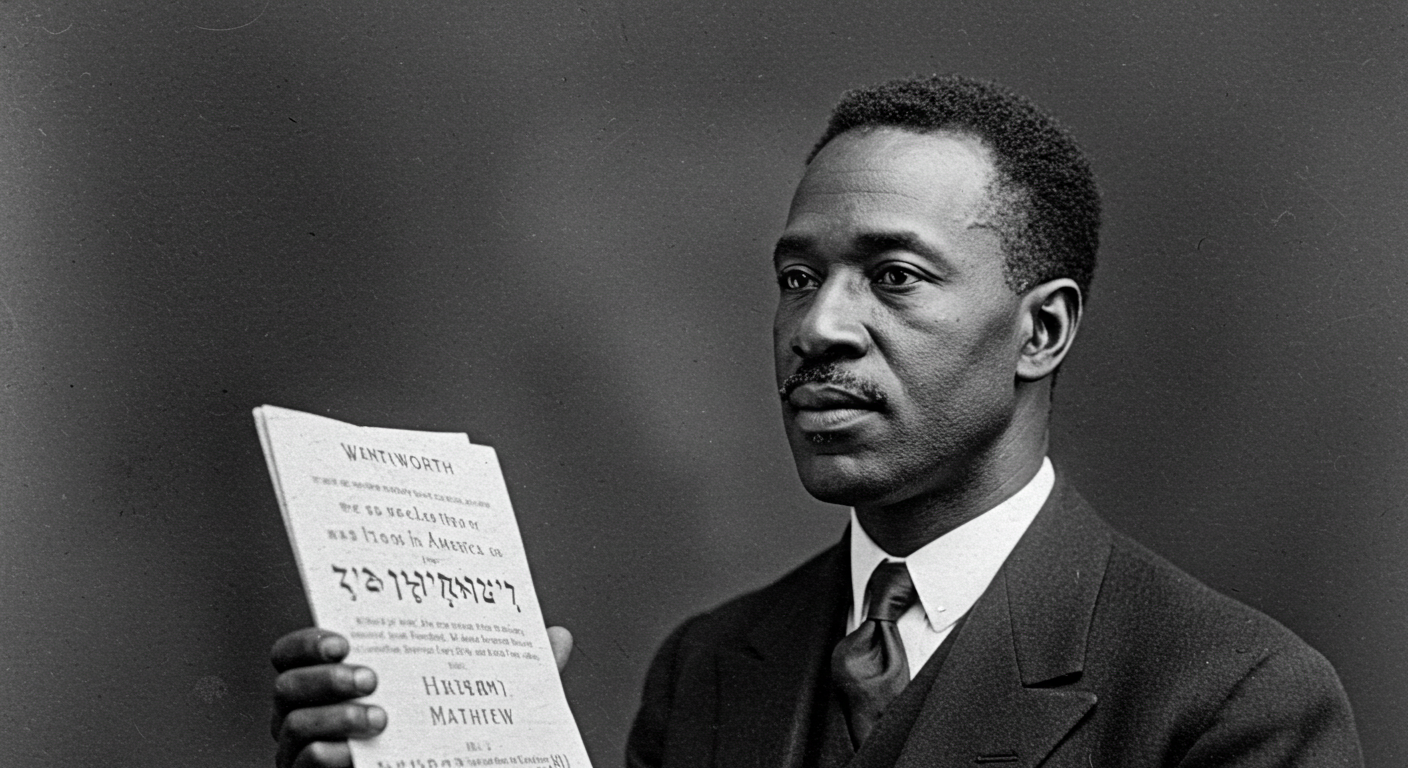
Wentworth Arthur Matthew
• Time Period: Lived 1892–1973; active leadership from the 1910s through the early 1970s .
• Country/Region: Caribbean and United States (born in Saint Kitts, later based in Harlem, New York City) .
• Spiritual/Prophetic Experience: While Matthew did not claim a single dramatic vision like some others, he was deeply moved by Pan-African and biblical ideas. He was influenced by Marcus Garvey’s message that likened the plight of blacks to the biblical Jews in exile and by knowledge of Ethiopian Jewry. He taught a theology that Africans in the diaspora were linked to the ancient Israelites, encapsulated in his saying that “the Black man is a Jew” . This conviction served as a guiding “vision” for his life’s work.
• Role in Community: Rabbi and founder of the Commandment Keepers Ethiopian Hebrew Congregation in Harlem (established 1919) . He styled the congregation in the form of a traditional synagogue. In 1930 he also founded the Ethiopian Hebrew Rabbinical College (later the Israelite Rabbinical Academy) in New York to train Black rabbis . Matthew ordained over 20 rabbis who went on to lead Black Jewish congregations across the U.S. and the Caribbean . He served as the community’s spiritual head for over five decades, often called “Chief Rabbi.”
• Legacy/Impact: Matthew’s efforts firmly established a lasting Afro-diasporic Hebraic movement in America. He created enduring institutions – many Commandment Keepers synagogues persisted in New York and beyond . Uniquely, he maintained cordial ties with white Jewish leaders and acknowledged mainstream Judaism even as he asserted an African Hebrew identity . Through his work, he cemented the idea of a Black Judaic heritage and inspired later groups (for example, some of his ideological descendants were the founders of Black Hebrew communities that emigrated to Israel) . Today, the Commandment Keepers and related congregations continue to observe orthodox Jewish practices (Sabbath, kosher laws, holy days) within a culturally black context, a direct result of Matthew’s leadership .
Simon Kimbangu
• Time Period: Early to mid-20th century; ministry in 1921 until his imprisonment (he lived 1887–1951) .
• Country/Region: Belgian Congo (modern-day Democratic Republic of Congo).
• Spiritual Experience: In April 1921, Simon Kimbangu believed he was called through a vision of Jesus Christ to “wake up the work of God.” He began preaching that year, and according to his followers he was gifted with miraculous powers: “Kimbangu cured the sick, raised the dead back to life, [and] prophesied the future and the liberation of black people” under colonial oppression . His ministry was filled with dramatic healing events and prophetic utterances of an Africa free from Belgian rule, which gave hope to the people. Kimbangu’s birth itself was wrapped in prophecy — Congolese oral history holds that a 17th-century prophetess (Kimpa Vita) foretold the coming of a special messianic messenger, and Kimbangu’s supporters saw him as that fulfillment .
• Role in Community: Prophet and founder of Kimbanguism (the Church of Jesus Christ on Earth by His Special Envoy Simon Kimbangu, established 1921). Within months, his revivalist movement drew tens of thousands, alarming the Belgian colonial authorities. Kimbangu is regarded by his followers as an incarnation of the Holy Spirit – a divine envoy to Africa . He led an anti-colonial spiritual uprising, preaching biblical salvation and black liberation. His charismatic ministry lasted only a few months before he was arrested; he spent the rest of his life imprisoned for defying colonial religious bans.
• Legacy/Impact: Despite his imprisonment, Kimbangu’s movement not only survived but flourished. It evolved into one of Africa’s largest independent church organizations, now officially recognized as the Kimbanguist Church, with millions of adherents across several countries. Kimbangu is honored as a national hero in the D.R. Congo and a saintly figure – in church doctrine he enjoys “messianic status” as the liberator of the Congolese . His prophetic ministry “provided hope and defiance during Belgian rule, positioning him as a liberator and messiah figure among his people” . To this day (with May 25 celebrated as Kimbangu Day), his followers uphold his teachings that Christianity must be interpreted through an African lens, and they credit him with empowering Africans to reclaim spiritual and cultural dignity in the face of oppression .
Isaiah Mloyiswa Shembe
• Time Period: Early 20th century; active ministry from 1910 until his death in 1935 (born c.1865) .
• Country/Region: South Africa (KwaZulu-Natal).
• Spiritual Experience: Isaiah Shembe was regarded as a prophet who experienced numerous divine revelations. As a young man he “was visited by God on many occasions”, teaching him how to pray and guiding him in doctrinal matters . For example, Shembe recounted that God’s voice instructed him in a vision to observe baptism by immersion and other Old Testament laws, leading him to break from the mission churches that did not follow these practices . In 1910, Shembe felt a call to evangelism and healing. By 1911, he reported that God commanded him to observe the Sabbath on Saturday (the traditional Hebrew Sabbath) rather than Sunday, which prompted him to found a new religious community separated from the European churches . He also believed in strict personal holiness based on what “the Word” (as he called the divine voice) taught him in visions.
• Role in Community: Prophet, healer, and founder of the Ibandla lamaNazaretha (Nazareth Baptist Church) in 1911 . Shembe’s church combined evangelical Christianity with Hebraic practices and Zulu custom. He led an itinerant revival: preaching, performing faith healings, exorcising spirits, and baptizing converts in rivers in the manner of John the Baptist . Shembe also introduced Mosaic observances – for instance, his community kept the Saturday Sabbath as holy and followed dietary restrictions – which earned him and his followers the nickname “the Black Jews” in some accounts, even though they centered on Jesus alongside Old Testament law. Within a decade, he gathered a large following in Natal (dozens of congregations by 1920) , indicating the resonance of his message among the Zulu people.
• Legacy/Impact: Shembe’s Nazareth Baptist Church became one of the largest African-initiated church movements in southern Africa . He is remembered for fostering a uniquely African expression of Christianity that uplifted Zulu identity – “restoring Zulu cultural pride” even as it preached the Bible . Many of his followers revered him as a Messiah-like figure (some called him “the Black Messiah” in his time ), and a rich hagiography grew around him (legends of him being raised from the dead as a child, miracles, etc.) . After Shembe’s death in 1935, his church continued under his descendants’ leadership and eventually split into several denominations, but collectively the amaNazaretha remain a vibrant faith community in South Africa, numbering in the millions . Isaiah Shembe’s integration of Hebrew Sabbath observance, African dance and dress in worship, and prophetic leadership model has had a lasting influence on Afro-Christian and Afro-Hebraic religious movements in the region.
Simeon Toko
• Time Period: Mid-20th century; active from the late 1940s until his death in 1984 (born 1918) .
• Country/Region: Angola (then Portuguese Angola), with influence also in neighboring Congo.
• Spiritual Experience: Simeon Toko is known for an extraordinary spiritual narrative. In 1949, during a public prayer gathering, he petitioned God for an outpouring of the Holy Spirit in Africa to end colonial oppression . Many accounts say that miraculous signs followed – Toko and his followers reported manifestations of the Holy Spirit and angels. He soon gained a reputation for miracles: he allegedly healed the sick and even survived deadly assaults on his life. In fact, Toko’s followers recount jaw-dropping testimonies – some witnesses claim they saw Simeon Toko killed and dismembered, only for him to rise up and restore himself to life before their eyes . Because of such stories, he was revered by many as an embodiment of divine power. Toko himself reportedly never claimed to be Christ reborn, but the legends of his Christ-like miracles (earning him titles like “Black Jesus of Africa”) spread widely .
• Role in Community: Founder and prophetic leader of the Tokoist Church, officially Igreja de Nosso Senhor Jesus Cristo no Mundo (“Church of Our Lord Jesus Christ in the World”), established in 1949–1950. Originally, Toko had been part of a Congolese prophetic church (Kimbanguist-influenced) before breaking off to lead his own flock . His role was that of a messianic figure – though he was a Christian minister, his followers saw him as a modern-day messiah or avatar sent to Africa . Toko preached the imminent end of colonial rule and the dawn of a divine era for Africans. He led his community through persecution; the colonial authorities and even the Catholic Church viewed his growing influence with alarm. Despite arrests and harassment, Toko continued ministering and organizing the movement, which included a large choir and prayer groups that attracted thousands (often accompanied by what followers described as manifestations of the Holy Spirit) .
• Legacy/Impact: Simeon Toko’s legacy is one of faith-fueled resilience and Afrocentric messianism. Many Angolans consider him a folk hero of spirituality; he foretold Angola’s independence and future prosperity, which earned him devotion as a prophet of liberation. The Tokoist Church survived his passing in 1984 and remains active in Angola and among diaspora communities, continuing to honor Toko’s teachings and reputed miracles. In the narrative of African initiated churches, Toko stands out as “the Black Christ of Africa,” a leader whose life became legend due to the astounding miracle stories . His movement exemplifies how Afro-diasporic Hebraic-Christian traditions often identify African deliverers in a biblical mold. Today, Simeon Toko is venerated by his followers as a symbol of hope, healing, and divine justice against oppression.
Ben Ammi Ben-Israel (Ben Carter)
• Time Period: Late 20th century; prominent leadership from the 1960s until his death in 2014 (he lived 1939–2014) .
• Country/Region: United States (Chicago) and Israel (Negev Desert, esp. the community in Dimona).
• Spiritual Experience: In 1966, Ben Ammi (born Ben Carter) experienced a defining vision. He stated that the archangel Gabriel appeared to him in Chicago and “told him to lead his people to Israel and establish the Kingdom of God there.” In this revelation, Ben Ammi was charged to “lead the children of Israel among African Americans to the Promised Land” . This profound spiritual testimony became the mandate for his life’s mission. He embraced the belief that Black Americans are descendants of the biblical Twelve Tribes of Israel – the true inheritors of the land of Israel .
• Role in Community: Founder and spiritual leader of the African Hebrew Israelites of Jerusalem (also known as the African Hebrew Israelite Nation of Jerusalem), established in 1967 . Following his vision, Ben Ammi gathered a group of like-minded African Americans in 1967 and led an initial exodus first to Liberia, West Africa, as a staging ground, and then on to Israel in 1969 . He and about 30 followers settled in Dimona, Israel, where they sought to live by a nearly Mosaic code: they observed the Sabbath, biblical dietary laws (a vegan interpretation of kosher), circumcised their sons, and adopted Hebrew names . Ben Ammi was regarded as a prophet or messianic leader by his community; he organized their communal life and preached a return to what he called authentic Hebrew faith, rejecting both mainstream Christianity and Rabbinic Judaism as corrupted forms . Under his leadership, the community grew, establishing itself firmly in Israel over decades despite legal challenges (early on, Israeli authorities did not recognize them as Jews and attempted deportations) . Ben Ammi navigated negotiations that eventually gained the community permanent residency and a degree of acceptance in Israel.
• Legacy/Impact: Ben Ammi Ben-Israel is remembered as the driving force behind one of the most remarkable modern repatriation movements of the African Diaspora. He led hundreds of African-American Hebrews to resettle in Israel, affirming an identity as returning biblical Israelites . Today around 3,000 members of his community live in Israel, mainly in Dimona, thriving with their own schools, agriculture, and cultural institutions. Ben Ammi’s teachings also spurred the growth of Black Hebrew congregations in U.S. cities (such as Chicago, St. Louis, D.C.), and he is often cited alongside earlier prophets like Crowdy and Matthew as a key figure in the broader Hebrew Israelite movement . His legacy is a community that straddles two worlds – embracing a spiritual vision of Zion in the Holy Land while fostering pride in African heritage. Even amid controversies (Israeli officials at times accused the group of extremist views ), Ben Ammi remained, to his followers, a visionary who fulfilled a modern-day “Exodus” – a journey from exile back to the promised land, guided by what he believed was prophetic instruction from God .
Yahweh ben Yahweh (Hulon Mitchell Jr.)
• Time Period: Late 20th century (movement peaked in the 1980s; he lived 1935–2007) .
• Country/Region: United States (based in Miami, Florida).
• Spiritual Experience: Hulon Mitchell Jr. was raised in a Christian (Pentecostal) environment, but in the 1960s he was drawn to Black nationalist religious ideas – first the Nation of Islam, and later Black Hebrew Israelite teachings . He underwent a spiritual transformation that culminated in him taking the name Yahweh ben Yahweh, meaning “God, Son of God.” By the late 1970s, Mitchell was preaching that he himself was a divine messianic figure for Black people. He claimed to have “rose from the dead to be messiah to the Black tribe of Israel in America,” positioning himself as the savior who would liberate Black Americans from white oppression . This self-identification as the Messiah and “real son of God” was the cornerstone of his spiritual testimony and was fervently believed by his followers .
• Role in Community: Founder and leader of the Nation of Yahweh (founded in 1979 in Miami). Yahweh ben Yahweh built his following in the Liberty City area, establishing a headquarters called the “Temple of Love” . He taught a doctrine derived from Hebrew Israelite belief – that Black people are the true Jews of the Bible and that God and biblical prophets were Black . He integrated Black Nationalist ideas and even some Nation of Islam influence (for instance, early on he had followers adopt the surname Israel much as Nation of Islam members use X or Muslim surnames ). As the group’s charismatic leader, Yahweh ben Yahweh required absolute loyalty, styling himself as a modern prophet-king. By 1986, he had about 300 core disciples living communally and thousands of supporters nationwide . Under his direction, the Nation of Yahweh engaged in extensive community work: they bought up properties, renovated blighted neighborhoods, ran businesses like bakeries, restaurants, and shops – all part of a plan to achieve Black economic empowerment and self-sufficiency . He often cited these successes as proof of his divine mandate, telling followers that he had made them prosper by following his example .
• Legacy/Impact: Yahweh ben Yahweh’s legacy is complex and controversial. On one hand, he was seen by many impoverished Black Miami residents as a savior figure who rejuvenated their community – so much so that in 1990 the city’s mayor declared an official “Yahweh ben Yahweh Day” in recognition of the group’s positive contributions . He gave hundreds of African-Americans a renewed sense of identity as the “original Jews” and instilled discipline and entrepreneurship, which garnered him respect and a substantial following . On the other hand, Yahweh ben Yahweh’s movement veered into extremist territory. He preached racial separatism (denouncing whites and Jews as oppressors or “devils”) and allegedly enforced his rule with violence. In the early 1990s his empire collapsed when he and several disciples were indicted and later convicted on charges related to conspiring in murders of dissenters and perceived enemies . He served years in prison, and the Nation of Yahweh fragmented as a result. Despite this downfall, Yahweh ben Yahweh remains a notable figure in the panorama of Afro-diasporic Hebraic movements. His life story – from a preacher seeking identity to a self-declared messiah – highlights both the aspiration behind these movements (the longing for a Black savior and community uplift) and their potential pitfalls. In the narrative of Black religious leadership, he is often cited as an example of a charismatic messianic leader who had a dramatic rise and fall. His teachings still have a small number of adherents, and he is remembered in both fear and reverence: by detractors as a cult leader, but by his devoted followers as a modern prophet who boldly declared the Black Christ in America .
Sources: Primary and scholarly sources documenting these figures include historical overviews and Afrocentric analyses. For example, Wikipedia articles on early Black Hebrew Israelite pioneers detail Crowdy’s and Cherry’s visions and organizations . Academic journals and texts on African Independent Churches record the prophetic careers of Kimbangu and Shembe . Contemporary African writers (e.g., Lwandiso Dlokweni in TGC Africa) have reflected on the “messiah” roles of leaders like Shembe and Kimbangu in resisting colonialism . Accounts from movement insiders and journalists provide information on later figures: Ben Ammi’s own writings and interviews recount his 1966 angelic vision , while reports in the Los Angeles Times and others note the community he built in Israel . Coverage in black media (such as Face2Face Africa) chronicles Yahweh ben Yahweh’s rise, including his self-claim as “the real son of God” and the Nation of Yahweh’s activities . These sources, alongside oral histories within the respective communities, form a rich tapestry preserving the prophetic testimonies and legacies of these notable individuals in African and Afro-diasporic Hebraic movements.
