
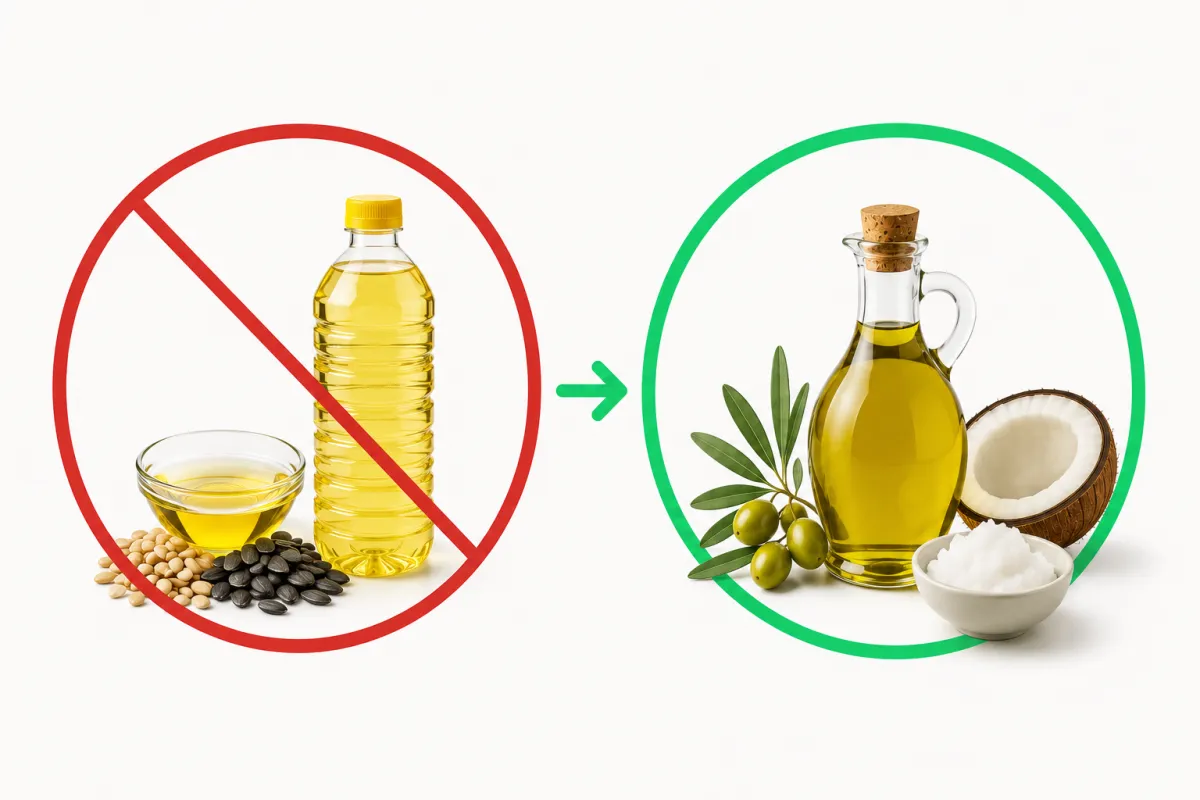
US States Are Voting to Ban Seed Oils in School Cafeterias. What Are Seed Oils, and Should Australian Parents Be Paying Attention?
A quiet but significant shift is happening in American public health policy. Several US states have introduced or passed legislation targeting seed oils in school cafeterias — a move that would have been considered fringe thinking just a few years ago but is now entering mainstream political debate.
For Australian parents, it raises an obvious question: should we be paying attention too?
What Are Seed Oils?
Seed oils are vegetable oils extracted from the seeds of plants. The most common ones you’ll encounter in everyday food are:
• Canola oil (also called rapeseed oil)
• Soybean oil
• Sunflower oil
• Cottonseed oil
• Corn oil
• Safflower oil
• Grapeseed oil
• Rice bran oil
These oils have dominated food manufacturing and home cooking for the past several decades, largely because they are cheap to produce, have a long shelf life, and were actively promoted as a healthier alternative to saturated fats like butter, lard, and coconut oil — a position that has since been significantly challenged by research.
How Are Seed Oils Made?
Understanding why seed oils are controversial starts with understanding how they’re produced — because unlike traditional fats, the process is far from simple.
Most seed oils are extracted using a process that involves:
1. High heat — seeds are heated to high temperatures to release oil, which begins
oxidising and degrading the oil’s chemical structure
2. Chemical solvents — hexane, a petroleum-derived solvent, is typically used to extract
the remaining oil from the seed material
3. Degumming, bleaching, and deodorising — the crude oil is then processed through
a series of chemical and physical treatments to remove colour, smell, and flavour —
producing the pale, neutral oil you see on supermarket shelves
The end product is a highly refined, industrially processed oil that bears little resemblance to the original seed. The processing generates oxidised compounds and trans fats, depletes natural antioxidants, and alters the fatty acid profile of the oil.
Cold-pressed or expeller-pressed versions of some seed oils do exist and are produced without chemical solvents, but these represent a small fraction of what is used in commercial food manufacturing.
The Omega-6 Problem
The primary nutritional concern with seed oils centres on their fatty acid composition,specifically their very high concentration of omega-6 polyunsaturated fatty acids (PUFAs).
Omega-6 and omega-3 fatty acids are both essential — the body needs them and cannotproduce them on its own. But they compete for the same metabolic pathways in the body, and the ratio between them matters enormously.
For most of human history, the omega-6 to omega-3 ratio in the diet was estimated to besomewhere between 1:1 and 4:1. In the modern Western diet, that ratio has shifted dramatically — some estimates put it as high as 15:1 or even 20:1, driven largely by the widespread use of seed oils.
When omega-6 is consumed in excess relative to omega-3, research links this imbalance to:
• Chronic systemic inflammation — a driver of many modern chronic diseases
• Metabolic dysfunction — including insulin resistance and obesity
• Cardiovascular risk — with oxidised linoleic acid (the main omega-6 in seed oils)
implicated in arterial inflammation
• Brain and mental health — omega-3 is critical for brain function and mood
regulation; a high omega-6 environment crowds it out
• Gut health — emerging research links high seed oil consumption to changes in gut microbiome composition
For children, whose brains and bodies are still developing, the quality of dietary fat isparticularly relevant. The brain is approximately 60% fat, and the types of fat consumed directly influence its structure and function.
What’s Happening in the US?
The movement to remove seed oils from school cafeterias in the US is part of a broader cultural shift around food quality and ultra-processing, accelerated in part by the MAHA (Make America Healthy Again) movement and increased political attention on what is served to children in institutional settings.
Several states have taken action:
• West Virginia passed legislation in 2025 removing seed oils and other ultra-processed
ingredients from school meal programs
• Oklahoma, Texas, and Florida have introduced similar bills targeting seed oils in
school cafeterias
• Multiple states are reviewing school meal standards more broadly, with seed oils featuring prominently in those reviews
The argument behind these moves is straightforward: if the research increasingly suggests that seed oils contribute to inflammation and metabolic dysfunction, and if children are consuming them daily through school meals, then removing them from that environment is a logical precautionary step.
Traditional cooking fats being proposed as replacements include beef tallow, butter, lard, and olive oil — fats with longer histories of human consumption and more stable chemical profiles when heated.
Where Are Seed Oils Hiding in Everyday Food?
One of the most significant issues with seed oils is not just that they’re in obvious products like cooking oils and spreads — it’s that they’re the default fat used across the entire processed food industry. They appear in products where most consumers would never think to look.
Common sources include:
• Packaged crackers, biscuits, and rice cakes
• Muesli bars and snack bars marketed as healthy
• Bread and wraps
• Flavoured nuts and trail mixes
• Salad dressings and mayonnaise
• Chips and crisps
• Instant noodles
• Ready meals and frozen food
• Sauces, dips, and condiments
• School canteen food and fast food
On Australian labels, seed oils typically appear as “canola oil,” “sunflower oil,” “soybean oil,” “vegetable oil,” or “blended vegetable oil.” The term “vegetable oil” is particularly opaque — it rarely specifies which seed oil is being used.
What About Australia?
Seed oils are the dominant cooking fat in Australian food manufacturing and food service.School canteens, like most commercial kitchens, use them as a standard ingredient. There is currently no regulatory discussion in Australia about restricting seed oils in schools or in food more broadly.
The broader conversation about seed oils is beginning to reach Australian health and wellness communities, but it remains largely absent from mainstream dietary guidance. Heart Foundation and government dietary recommendations still broadly endorse polyunsaturated vegetable oils as heart-healthy choices — a position increasingly at odds with emerging research on omega-6 oxidation and inflammation.
Healthier Alternatives
Reducing seed oil intake doesn’t require a dramatic overhaul. Practical swaps that work well for cooking include:
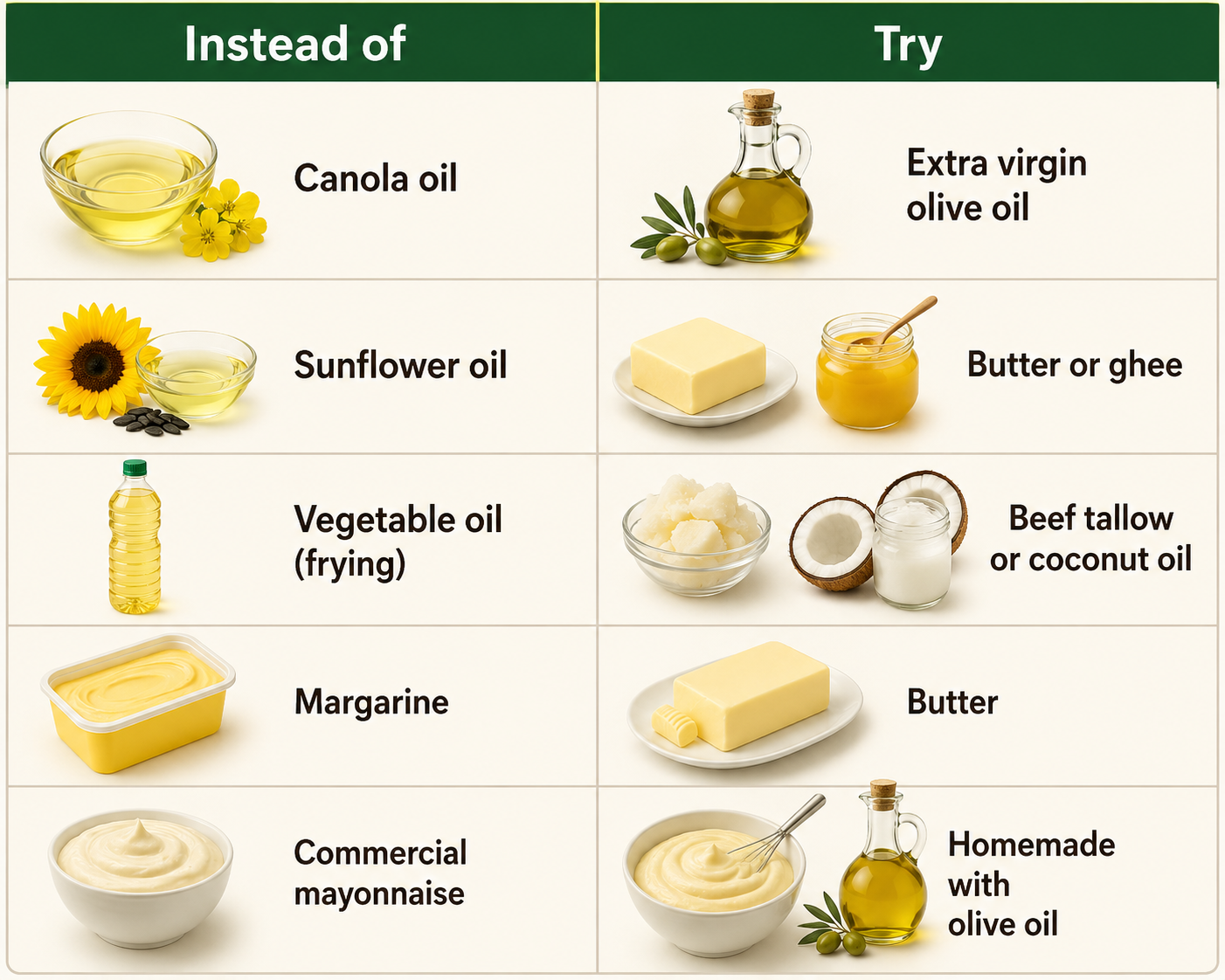
For packaged foods, the practical step is reading ingredient lists and choosing products that use olive oil, coconut oil, or butter rather than canola, sunflower, or soybean oil. These products exist — they often just require a little more label reading to find.
Scanning with Goodnessly shows you the full ingredient list of any product clearly, making it easier to identify which oils are being used without having to read every label from scratch.
The Bottom Line
The US states moving to ban seed oils from school cafeterias are responding to a growing body of research suggesting that these highly processed industrial fats — consumed in large quantities through everyday food — may be contributing to inflammation, metabolic issues, and the broader chronic disease burden affecting children and adults alike.
Australia has not yet begun that conversation at a policy level. But as a parent, you don’t need to wait for regulation to make different choices for your family.
Knowing what’s in your food is the first step. And that’s always been the point.

Facebook
Instagram
X
TikTok