Southampton & Surrounding Areas


Level 3 Horticulture Qualified


RHS Wisley
Trained
Fencing Installation
Southampton puts fences under real pressure. Winds push in from the southwest across the Solent and funnel up the Itchen and Test corridors, and the ground in low lying parts of the city can stay wet for months at a time. Fencing Installation by Edens Edge landscaping is built for those conditions, using the right posts, the right materials, and the right depth to give you a fence that holds.

New Fence Installations
Post and Panel Replacement
Suitable for All Garden Sizes
Garden Trouble? Let Us Help.
Best Price Guarantee
Every Project Tailored To You
After a period of strong south westerly winds, the same question comes up in gardens across Southampton: the fence held last year, so why has it gone now? Cheap timber posts driven too shallow into wet ground do not have enough depth to resist sustained wind load. Once the ground softens through winter around the Itchen and Test corridors, a post that was borderline before quickly becomes a problem. Fencing Installation by Edens Edge landscaping starts with the right foundation so the fence does not repeat the same failure. Every installation covers post specification, correct setting depth for the ground conditions, and a finish that looks right for the property.
Time for a New Fence
Signs Your Fence Needs Replacing in Southampton
The clearest sign is a fence that moves when you push it. This is not just a loose panel. It means the post at ground level has rotted or shifted, and the whole run is no longer structurally sound. In Southampton, the combination of frequent wet winters and ground that can sit saturated for months in low lying areas like Millbrook and Redbridge accelerates timber rot at the base of posts faster than it does in drier inland locations. Timber posts set in concrete in waterlogged ground can look fine above the surface while the section below has completely broken down. A fence that moves is a fence that will come down in the next storm, and on many Southampton estates the panels are old enough that a failure tends to take several posts with it rather than just one.
The second sign is panels that are bowing, splitting, or sitting unevenly in the frame. This is common on estates across Southampton where the original developer fencing was installed to a minimum specification and has now been through fifteen or twenty years of the city's wet winters. Standard overlap panels are not designed for exposed positions, and many gardens in areas like Woolston and Weston Shore face the prevailing south westerly winds with little shelter. Once a panel starts to bow, the timber has taken on water unevenly and the structural integrity is already compromised. Forcing a replacement panel into an existing run with rotting posts just moves the problem on for another season.
The third sign is a fence that has already been repaired more than once. A post spiked back in, a panel cable tied to a neighbouring post, a run propped up with a stake after the last storm. These fixes are common across Southampton because reactive repairs after winter damage feel cheaper in the moment than a full replacement. The problem is that once a run has needed two repairs it is usually at the point where the whole line needs replacing. The posts that have not failed yet are typically in the same condition as the ones that have. A proper installation with concrete posts and gravel boards removes the cycle of repair calls and gives you a boundary that stands for years rather than being patched together through each winter.
How Our Fencing Installation Service Works
The first step on every job is checking the ground before anything goes in. Post depth and setting method are determined by what the ground is actually doing, not a fixed standard applied to every garden. In Southampton, ground conditions vary a lot across a short distance. Gardens in Bassett and elevated parts of Portswood tend to sit on freer draining ground where a standard concrete set works well. Gardens closer to the Itchen and Test corridors, in lower lying parts of Millbrook, Weston and Redbridge, can be on heavier, wetter ground that stays soft for long stretches through winter. Posts going into that kind of ground need greater depth and the right concrete mix to prevent movement once the ground softens again in autumn. Getting that judgement right at the outset is what makes the installation last.
Once the ground is assessed, old posts and panels are stripped and the line is cleared properly before anything new goes in. Leaving old concrete stumps in the ground and driving new posts alongside them is a common shortcut that creates problems later. The stump acts as an obstruction, it prevents the new post from being set at the correct angle, and it leaves decay in the ground next to fresh timber. Edens Edge landscaping removes the old material fully so the new installation starts with a clean line. This matters most on runs where the original posts were spiked or insufficiently concreted, which is the case on a significant number of Southampton estate builds from the 1980s and 1990s.
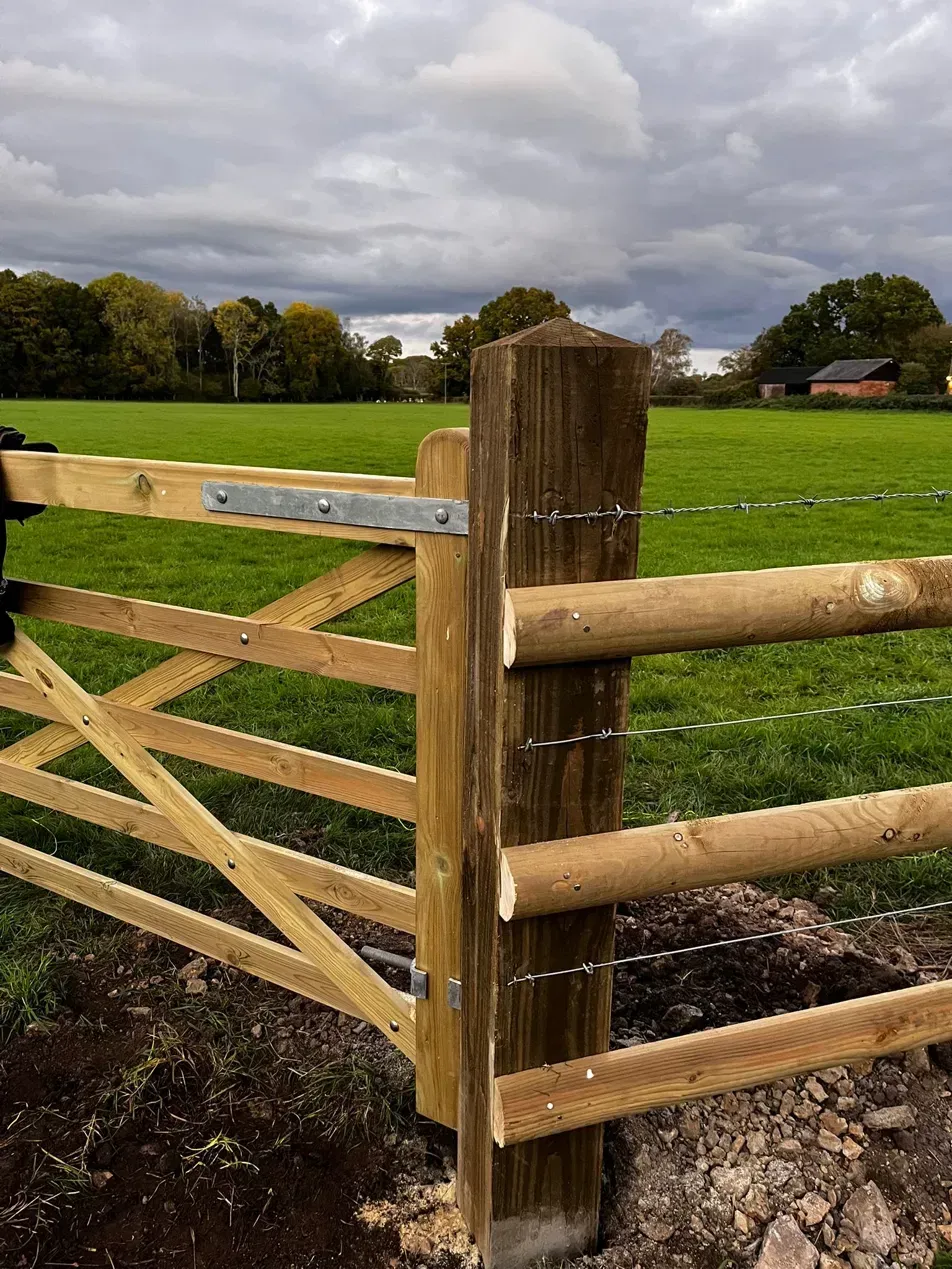
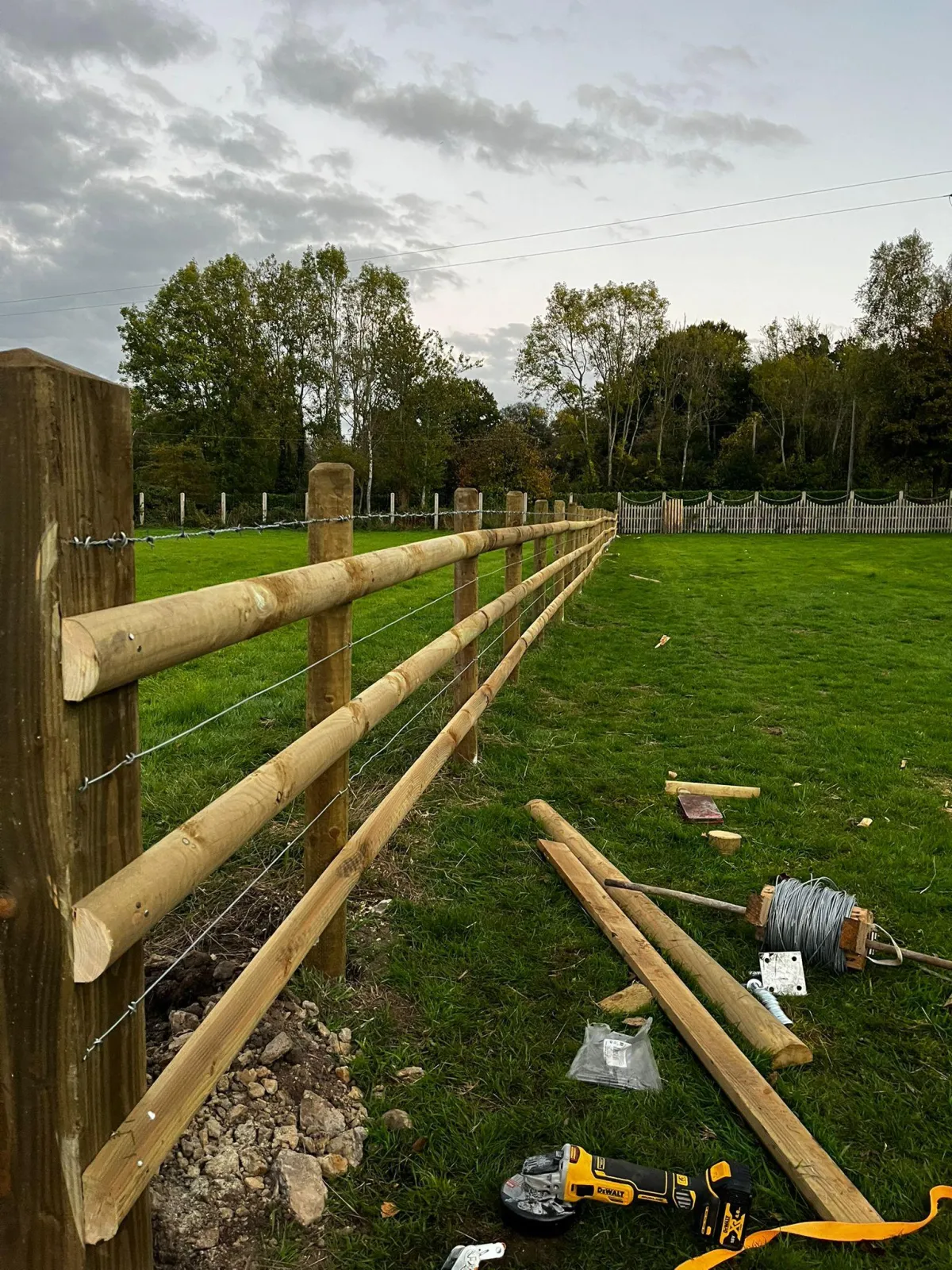
Post specification is chosen for the position and exposure of the fence. Gardens in Woolston, Weston Shore and other areas exposed to winds funnelling up the Solent estuaries need a more robust post and panel combination than a sheltered rear garden in Shirley or Bitterne Park. Concrete posts with gravel boards are a practical choice for exposed or wet positions because they remove the most vulnerable part of the installation, the post base, from the rot cycle entirely. Gravel boards protect the bottom of the panels from ground contact and allow individual panels to be replaced later without disturbing the posts. This is not always necessary in every position, but it is the right call in a significant proportion of Southampton gardens based on ground and exposure conditions.
Panels are fitted level and square, and every post is checked for plumb before the concrete sets. A fence installed on a slight lean may look acceptable when the work is done but will look noticeably wrong within a season and can create uneven loading on the posts over time. Edens Edge landscaping takes the time to set each post correctly rather than packing out gaps later. The finished line is checked end to end before the job is signed off and the site is left clean, with all old timber and waste removed.
FAQ's
Frequently Asked Questions
Common questions about Fencing Installation from Edens Edge landscaping, covering Southampton and surrounding areas.
How deep do fence posts need to be set in Southampton?
As a general rule, posts should be set to a minimum of one third of their total length, but the right depth for any given garden in Southampton depends on the ground conditions. In lower lying parts of the city where ground stays wet through winter, around the Itchen and Test corridors and in areas like Millbrook and Redbridge, posts need to go deeper and be set in a stronger concrete mix to cope with the softer, saturated ground. In freer draining gardens further from the river corridors, a standard depth and set is usually sufficient. Edens Edge landscaping assesses the ground on every job before deciding on post depth and setting method.
Should I use timber posts or concrete posts?
It depends on the position and exposure of the fence. Concrete posts are the better choice for exposed gardens, gardens that face prevailing winds, and any position where the ground stays wet for long periods. They remove the base of the post from the rot cycle entirely, which is the part that fails first in wet conditions. Timber posts are fine in more sheltered, drier positions and can be a practical choice where budget is a consideration. Edens Edge landscaping will advise on the right post type for your specific garden and location in Southampton before any work starts.
Do you need to remove the old fence before installing a new one?
Yes. Old posts and any remaining concrete stumps need to be fully removed before new posts are set. Leaving old material in the ground and installing new posts alongside it is a shortcut that causes problems later. It prevents the new post from sitting at the correct angle, and the old decay in the ground accelerates rot in the new timber nearby. Full removal takes more time but it is what gives the new installation the best chance of lasting. Edens Edge landscaping removes all old fencing material and disposes of it as part of the installation.
What are gravel boards and do I need them?
Gravel boards are horizontal timber or concrete boards that sit at the base of a fence between the posts, just above ground level. They protect the bottom edge of the panels from direct ground contact, which is where moisture damage starts. They also allow individual panels to be replaced later without needing to move the posts. In Southampton, gardens that sit on wetter ground or are in exposed positions benefit most from gravel boards because panel bases in those conditions deteriorate faster without them. Edens Edge landscaping will advise whether gravel boards are the right choice for your fence run based on the garden conditions.
Are you insured and do you have a cancellation policy?
Edens Edge landscaping holds £5m public liability insurance. If you need to cancel a booked job, the cancellation policy allows a full refund with three days notice. For any questions about bookings or to get a quote for Fencing Installation in Southampton, call 07850412717 directly.
Get in touch
Get Your New Fence Installed
Edens Edge landscaping covers Southampton, Romsey, Winchester and the surrounding areas. [CLIENT TO CONFIRM: response time or booking window]
Edens Edge landscaping
Professional Gardener in Southampton
Unit 4, Riverside Court, Cupar KY15 5JY, United Kingdom
Quick Links
Service areas
Opening Hours
Mon - Fri
8am – 6pm
Saturday
9am – 4pm
Sunday
Closed
© 2026 Edens Edge landscaping. All rights reserved.
Privacy Policy
Terms & Conditions